Flea Bite — Explained by Medical Evidence, Not Myths

A flea bite often appears as a small itchy bump, commonly on the ankles, feet, or lower legs. Flea bites can resemble other insect bites, but their pattern, location, and intense itch can offer clues.
Key Takeaways
- A flea bite often appears as a small itchy bump, commonly on the ankles, feet, or lower legs.
- Flea bites can resemble other insect bites, but their pattern, location, and intense itch can offer clues.
- Most cases improve with washing, cold compresses, and anti-itch measures while avoiding scratching.
- Medical advice is important for severe swelling, signs of infection, breathing symptoms, or ongoing bites at home.
- The most effective prevention combines skin care with treatment of pets, bedding, carpets, and living spaces.
A flea bite is usually a small, itchy, red bump caused by a flea feeding on the skin. Most bites are mild and settle within days, but stronger allergic reactions, skin infection, or repeated bites may need medical care and better pest control.
What a Flea Bite Is
A flea bite is a skin reaction that happens when a flea pierces the skin and feeds on blood. In most people, it causes a small raised red spot with noticeable itching. The bite itself is usually not dangerous, but the scratching and the body’s immune response often cause more discomfort than the bite wound.
Fleas are tiny wingless insects that commonly live on cats, dogs, and other animals, but they can also survive in carpets, bedding, upholstered furniture, and cracks in flooring. People are often bitten when fleas jump from an infested pet or environment onto exposed skin. Because fleas can bite more than once, several marks may appear close together.
A useful medical point is that the skin changes from a flea bite come mainly from sensitivity to flea saliva. That is why some people have only mild marks while others develop stronger itching, larger welts, or prolonged irritation. Understanding this can help separate myth from fact: the problem is not “dirty blood” or “toxins leaving the body,” but an insect bite and an inflammatory skin response.
How Flea Bites Look and Feel

A flea bite often appears as a small red or pink bump with a tiny central puncture point. The most common symptom is itching, which may start quickly and sometimes feels intense compared with the size of the mark. The surrounding skin can become slightly swollen, warm, or irritated, especially after scratching.
Many bites occur on the feet, ankles, and lower legs because fleas tend to jump from the floor or bedding onto nearby skin. In children, bites may also appear on the waist, arms, or areas where skin touches infested fabrics. Groups of two or three bites or a scattered line of itchy spots can be a clue, although not every case follows the same pattern.
Symptoms may include:
- Small, itchy red bumps
- Bites clustered together or appearing in a short line
- Redness or a pale halo around the bite
- Temporary swelling or tenderness
- Scratch marks, crusting, or skin darkening as the bite heals
Most flea bites improve over several days. In some people, especially those with more sensitive skin, the itching can last longer and lead to secondary irritation such as eczema-like patches or broken skin from scratching.
Flea Bite or Something Else?
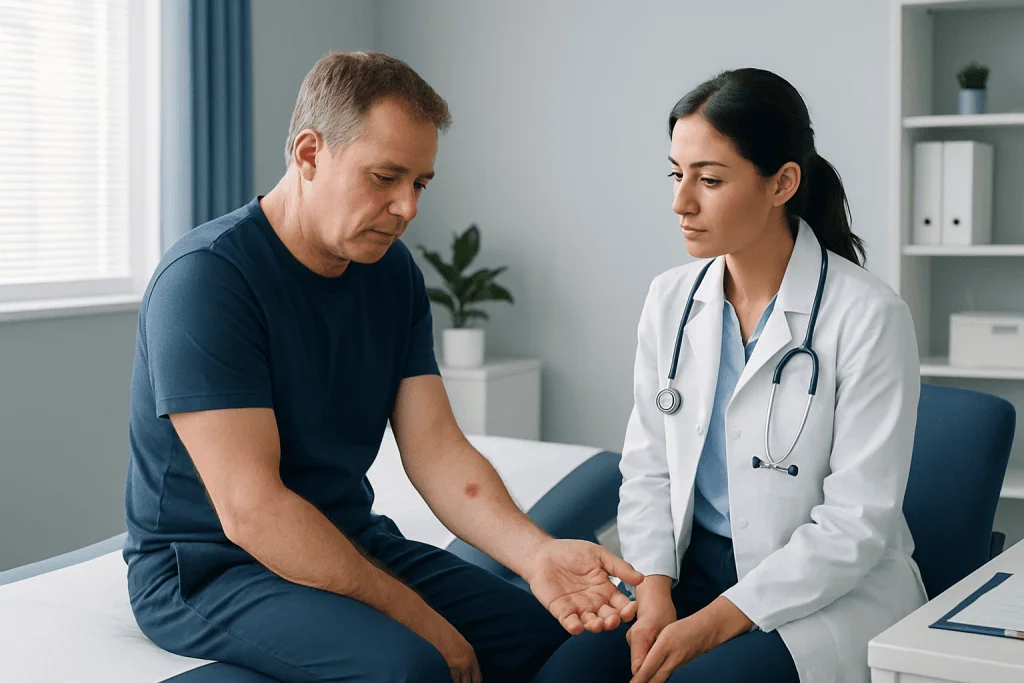
Not every itchy bump is a flea bite. Mosquito bites are often larger and more isolated, while bed bug bites may appear after sleep on exposed areas such as the face, neck, arms, or shoulders. Contact dermatitis can cause an itchy rash without a central bite point, and hives may come and go rapidly in different places.
Doctors look at the appearance, location, timing, and any evidence of pets or household infestation. Flea bites are more likely when symptoms affect the ankles and lower legs, when there are pets in the home, or when others in the same environment are also getting bites. If the rash is widespread or unusual, a clinician may consider other conditions such as eczema or an allergic skin reaction.
Distinguishing the cause matters because treatment may involve more than soothing the skin. If a home source is missed, new bites can continue even when creams or tablets reduce the itching. This is one reason repeated “mystery bites” often need both medical review and environmental control.
Causes, Risk Factors, and Possible Complications
Flea bites are caused by exposure to fleas, most often cat fleas or dog fleas, although these species can bite humans as well. Risk rises in homes with untreated pets, wildlife near the house, second-hand furniture, shared residential buildings, or warm indoor conditions that help fleas survive. Flea eggs and larvae can persist in fabrics and flooring even if adult fleas are hard to see.
Some people react more strongly than others. Children, people with sensitive skin, and those with allergies may develop larger itchy welts. Repeated exposure can also increase skin sensitivity in some individuals. Scratching, especially during sleep, increases the risk of broken skin and bacterial infection.
Possible complications are usually limited but important to recognize:
- Secondary skin infection from scratching, with increasing redness, pain, warmth, pus, or crusting
- Allergic reactions, ranging from large local swelling to more generalized symptoms
- Worsening of existing skin conditions such as dermatitis
- Rare infection concerns depending on geography, travel history, animal exposure, and public health context
Although serious illness from a flea bite is uncommon, symptoms should never be dismissed if there is fever, expanding rash, swollen lymph nodes, or severe illness after an insect exposure. A doctor can decide whether the problem is a simple bite reaction or something that needs further testing.
Diagnosis and What Doctors Check
Diagnosis is usually clinical, meaning it is based on medical history and skin examination rather than a special test. A doctor may ask when the rash started, whether there are pets at home, whether anyone else has similar bites, and whether the itching is worse at night or after contact with certain rooms, carpets, or bedding.
The examination focuses on the size, pattern, and distribution of the bites and whether there are signs of infection or allergy. If the skin is unusually inflamed, blistered, or widespread, the clinician may consider other causes such as scabies, bed bugs, medication reactions, or inflammatory skin disease. If symptoms suggest infection, blood tests or a skin swab are sometimes needed, though this is not common.
The bigger diagnostic challenge is often identifying the source. Doctors may advise checking pets with a veterinarian and looking for evidence of infestation in bedding, upholstery, and flooring. Persistent unexplained itching can sometimes overlap with other skin conditions, and a specialist in dermatology evaluation may be helpful when the diagnosis is uncertain.
Treatment Options and Relief at Home
Most flea bites can be managed with basic skin care. The first step is to wash the area gently with soap and water. A cool compress can reduce swelling and calm the itch. Avoid scratching if possible, because scratching delays healing and raises the risk of infection.
Common symptom relief may include anti-itch creams, soothing lotions, or an oral antihistamine if a clinician or pharmacist considers it appropriate. If the reaction is more inflamed, a doctor may recommend a short course of a stronger topical treatment. When there is significant redness, tenderness, drainage, or crusting, medical review is important because treatment may need to address a bacterial skin infection.
Helpful self-care steps include:
- Wash the bites gently and keep nails short
- Use a cold pack wrapped in cloth for brief periods
- Wear loose clothing to reduce friction
- Avoid fragranced products on irritated skin
- Seek advice before using medicated creams on young children or broken skin
Skin treatment alone is not enough if fleas remain in the environment. Lasting relief usually depends on veterinary care for pets and careful home cleaning. In some situations, a doctor may also advise allergy assessment if reactions are unusually strong or recurrent, though routine allergy testing is not needed for most simple bites.
Prevention and Self-Care Beyond the Bite
The best way to prevent a flea bite is to control fleas at the source. Pets should be examined and treated using veterinarian-guided flea control products. Bedding, pet blankets, rugs, and upholstery should be cleaned regularly, and vacuuming should focus on corners, baseboards, and soft furnishings where eggs and larvae may hide.
Because flea life cycles continue in the environment, one round of cleaning may not be enough. Washing fabrics at appropriate temperatures, emptying vacuum contents safely, and repeating home treatment measures can help break the cycle. In some homes, professional pest control may be necessary, especially when infestations are widespread or keep returning.
Personal protection can also help. Wearing socks or long trousers in infested settings may reduce bites on the lower legs. If skin becomes very itchy or inflamed, a clinician may recommend allergy and immunology care or skin-focused follow-up to manage the reaction while the environmental source is addressed.
Near the end of the care pathway, some people need coordinated support rather than home advice alone. Acibadem International’s multidisciplinary specialists and JCI-accredited hospitals diagnose and treat skin reactions, allergic responses, and related conditions for international patients when further medical assessment is needed.
When to Seek Medical Care
Medical care is advisable if a flea bite becomes increasingly painful, swollen, or warm, or if pus, yellow crusting, or expanding redness appears. These can be signs of infection rather than a simple bite reaction. A doctor should also evaluate symptoms that do not improve, especially if new bites continue to appear despite home cleaning and pet treatment.
Urgent medical attention is needed for breathing difficulty, swelling of the lips or face, dizziness, faintness, or a widespread rash after a bite, as these may indicate a significant allergic reaction. Fever, severe illness, or a rash that spreads far beyond the bite area also deserves prompt assessment.
Parents should consider medical advice sooner for infants, young children with extensive scratching, or anyone with a weakened immune system or a chronic skin disease. If there is uncertainty about whether the problem is a flea bite or another condition, timely medical review can help clarify the diagnosis and prevent complications.
Frequently asked questions
How long does a flea bite last?
A flea bite often starts improving within a few days, but the itching may last longer in sensitive skin. If scratching causes irritation, healing can take more time. Ongoing new bites usually suggest that fleas are still present in the environment.
Why are flea bites so itchy?
The itching comes mainly from the body’s reaction to substances in flea saliva. Some people are only mildly affected, while others develop a stronger inflammatory or allergic response. Scratching can make the itch feel even worse and damage the skin.
Can humans get flea bites even if they do not have pets?
Yes. Fleas can enter a home through previous pet exposure, neighboring animals, wildlife, shared buildings, or infested furniture and fabrics. A person does not need to own a pet to be bitten.
Do flea bites spread from person to person?
No, a flea bite itself does not spread between people. However, multiple people in the same home may develop bites if they are exposed to the same flea infestation. The key is treating the source, not isolating the person with bites.
What is the best immediate treatment for a flea bite?
A good first step is to wash the area gently and apply a cool compress to reduce itch and swelling. Avoid scratching, and consider an anti-itch product if a pharmacist or doctor says it is suitable. If the skin becomes more painful, red, or oozing, medical advice is important.
Can flea bites become infected?
Yes, especially when repeated scratching breaks the skin. Warning signs include increasing redness, warmth, swelling, pain, crusting, or pus. A clinician can decide whether antibiotics or another treatment is needed.
References
- American Academy of Dermatology
- Centers for Disease Control and Prevention
- Mayo Clinic
- Merck Manual Consumer Version
- World Health Organization
This article is for general information only and is not a substitute for professional medical advice. Please consult a qualified doctor about your individual situation.
Explore treatments in Turkey — costs, top hospitals & a free quote
JCI-accredited · board-certified surgeons · reply within 24h
Add us as a Preferred Source to see more of our trusted health content across Google Search, AI Overviews and Discover.