Gluteal Tendinopathy: Early Signs, Risk Factors, and How It Is Treated

Gluteal tendinopathy commonly causes pain on the outside of the hip, especially when walking, climbing stairs, or lying on one side. It often develops from repeated tendon overload rather than a single injury.
Key Takeaways
- Gluteal tendinopathy commonly causes pain on the outside of the hip, especially when walking, climbing stairs, or lying on one side.
- It often develops from repeated tendon overload rather than a single injury.
- Treatment usually starts with education, activity modification, and a structured exercise program.
- Recovery can take weeks to months, but most people improve without surgery.
- Persistent or severe hip pain should be assessed to confirm the diagnosis and rule out other conditions.
Gluteal tendinopathy is a common cause of pain on the outside of the hip, often linked to irritation or degeneration of the gluteal tendons where they attach near the greater trochanter. Early treatment usually focuses on reducing tendon strain, improving hip muscle strength, and gradually returning to everyday activity.
Overview
Gluteal tendinopathy is a painful condition affecting the tendons of the gluteus medius and gluteus minimus muscles, usually where they attach to the outer part of the hip. These tendons help stabilize the pelvis during walking and standing on one leg. When they become irritated, overloaded, or develop degenerative changes, pain can appear around the bony area called the greater trochanter.
This condition is one of the most common reasons for persistent outer hip pain in adults. It is often discussed within the broader group of problems called greater trochanteric pain syndrome, but gluteal tendinopathy refers specifically to tendon involvement. In some people, nearby bursae may also become irritated, yet the tendon problem is often the main driver of symptoms.
Unlike a sudden muscle strain, gluteal tendinopathy usually develops gradually. It may start with mild discomfort after long walks or exercise and slowly progress to pain during routine daily activities. Understanding the early pattern of symptoms can help people seek care before pain becomes more limiting.
Early signs and symptoms
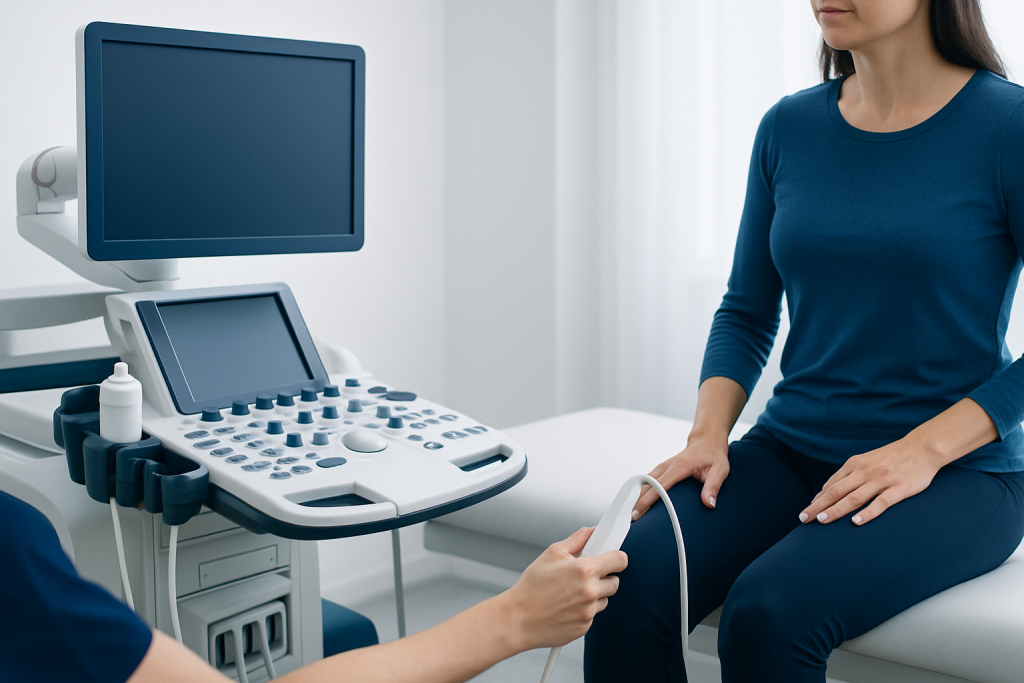
The most typical symptom of gluteal tendinopathy is pain on the outside of the hip. Many people can point with one finger to the tender area over the greater trochanter. The pain may spread down the outer thigh, but it usually does not travel below the knee in the same way nerve-related pain often does.
Early symptoms are often activity-related. Pain may appear when walking longer distances, climbing stairs, hiking, running, or standing on one leg to get dressed. Lying on the affected side at night is especially common and can disturb sleep. Some people also notice pain when sitting with crossed legs or when standing with most of the body weight shifted onto one hip.
As the condition becomes more established, the tendon may react not only to exercise but also to compression. Positions that press the tendon against the hip bone can make symptoms worse. This is why side-lying, crossing the legs, or a “hip hanging” standing posture may be uncomfortable.
- Outer hip tenderness
- Pain when walking, climbing stairs, or rising from a chair
- Discomfort lying on the painful side
- Pain during single-leg standing, such as putting on shoes
- Reduced confidence in balance because the hip feels weak or sore
Why it happens: causes and risk factors
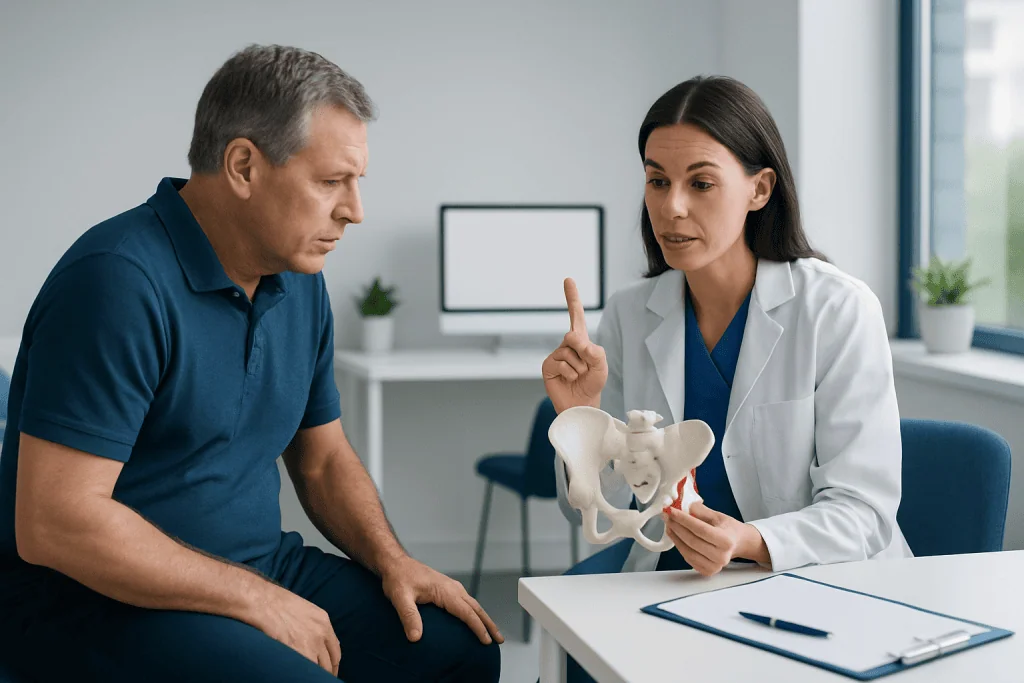
Gluteal tendinopathy is usually related to repeated mechanical overload rather than a major traumatic injury. Tendons adapt to healthy loading, but they can become painful when the demand placed on them exceeds their ability to recover. This may happen after a sudden increase in walking, hill training, stair climbing, or a new exercise program.
Compression is another important factor. The gluteal tendons can be irritated when the hip is held in positions that narrow the space around the greater trochanter, especially when the legs are crossed or when a person stands with the pelvis shifted to one side. Over time, this repeated compression may contribute to tendon pain.
Several factors can raise the risk. Gluteal tendinopathy is seen more often in women, particularly in midlife and later adulthood. Hip muscle weakness, altered walking mechanics, lower back or pelvic issues, excess body weight, and previous hip problems may also play a role. Some people develop symptoms alongside other tendon conditions or osteoarthritis, which may need separate assessment. In the differential diagnosis, doctors may also consider conditions such as hip osteoarthritis or referred pain from the lower back.
Although the condition is sometimes informally called hip tendonitis, not all cases involve classic inflammation. Many are more accurately described as tendon degeneration or failed tendon healing, which is why exercise-based rehabilitation is often more helpful than prolonged rest alone.
How gluteal tendinopathy is diagnosed
Diagnosis begins with a clinical assessment. A doctor or physiotherapist will ask where the pain is felt, what activities trigger it, how long it has been present, and whether sleep is affected. The pattern of outer hip pain, tenderness over the greater trochanter, and pain during single-leg loading often strongly suggests gluteal tendinopathy.
Physical examination may include pressing on the outer hip, testing hip abductor strength, checking walking pattern, and performing movements that place load or compression on the gluteal tendons. The clinician also looks for signs that point to a different cause of hip pain, such as joint stiffness, nerve symptoms, groin pain, or significant back-related findings.
Imaging is not always necessary at first, especially when symptoms and examination are typical. However, ultrasound or MRI may be used if the diagnosis is uncertain, symptoms are persistent, or another condition is suspected. Imaging can help show tendon thickening, partial tearing, or associated bursal changes, but scan findings need to be interpreted together with symptoms because some tendon changes can also be seen in people without pain.
When pain has multiple possible causes, further evaluation may include assessment for lumbar disc herniation or other musculoskeletal problems. In selected cases, clinicians may use imaging to guide treatment planning and to rule out less common but important causes of lateral hip pain.
Treatment options
The main goals of treatment are to calm pain, reduce excessive tendon compression, and gradually rebuild the tendon’s capacity to handle load. For most people, the foundation of care is education plus a structured rehabilitation plan. This often includes temporary changes to aggravating activities, such as reducing hill walking, avoiding long periods of standing on one leg, and using pillows at night to reduce pressure when sleeping.
Exercise therapy is central. A rehabilitation program usually focuses first on controlled isometric or low-irritation strengthening, then progresses to hip abductor strengthening, pelvic control, and functional exercises such as step work or balance training. The pace should match symptoms, because both underloading and overloading can delay recovery. Many people benefit from working with a physiotherapist to learn safe progression and movement strategies.
Pain relief may include short-term use of medicines recommended by a doctor, along with practical measures such as ice or heat if they feel helpful. In some cases, clinicians may consider image-guided injections when symptoms remain troublesome despite rehabilitation. These are used selectively and usually as part of a broader plan rather than a stand-alone cure. If evaluation of the joint or surrounding structures is needed, hip treatment services or orthopedics and traumatology assessment may help guide care.
Surgery is uncommon and usually reserved for a small number of people with persistent pain, significant tendon tears, or symptoms that have not improved after an adequate course of non-surgical treatment. If surgery is considered, the decision is based on symptoms, examination findings, imaging, and the person’s daily functional limitations.
Prevention and self-care
Preventing gluteal tendinopathy is largely about balancing activity with recovery and avoiding repeated hip positions that compress the tendon. Gradual training progression is important, especially after a period of inactivity. Increasing walking distance, stair work, or running volume too quickly can provoke symptoms.
Simple posture and movement changes can reduce strain on the gluteal tendons. It often helps to avoid standing with the hip pushed out to one side, crossing the legs for long periods, or sleeping directly on the painful side. When side sleeping is necessary, placing a pillow between the knees may reduce compression at the hip.
Strengthening the hip and pelvic muscles can improve load tolerance over time. A clinician or physiotherapist can suggest exercises tailored to fitness level, pain severity, and any coexisting issues such as knee pain or low back pain. People who have recurring symptoms may also benefit from reviewing footwear, walking surfaces, and training habits.
At the end of the care pathway, some patients with ongoing musculoskeletal concerns may benefit from coordinated rehabilitation support. Acibadem International’s multidisciplinary specialists in JCI-accredited hospitals diagnose and treat musculoskeletal conditions for international patients, including rehabilitation planning and, when appropriate, physical therapy and rehabilitation.
When to seek medical care
Medical care is advisable if outer hip pain lasts more than a few weeks, returns repeatedly, interferes with sleep, or limits walking and daily activities. An assessment is also helpful if self-care steps are not improving symptoms or if the pain is becoming more frequent and intense.
Prompt evaluation is especially important if hip pain starts after a fall, is associated with fever, marked swelling, severe weakness, sudden inability to bear weight, or pain in the groin rather than the outer hip. These features can suggest another problem that needs different treatment.
A doctor should also assess symptoms that include numbness, tingling, pain shooting below the knee, or significant back pain, because these may point to nerve-related causes rather than a tendon problem. Getting the correct diagnosis early can help avoid treatments that do not address the real source of pain.
Frequently asked questions
Is gluteal tendinopathy the same as bursitis?
Not exactly. The two conditions can cause similar outer hip pain, and they may occur together, but gluteal tendinopathy mainly affects the tendons of the gluteal muscles. In many people once labeled as having bursitis, the tendon is now understood to be a key source of symptoms.
How long does gluteal tendinopathy take to heal?
Recovery varies depending on how long symptoms have been present, tendon irritation level, and whether the rehabilitation plan matches the person’s daily load. Many people improve over several weeks to a few months, but stubborn cases can take longer. Steady, progressive loading is often more helpful than complete rest.
Can walking make gluteal tendinopathy worse?
Walking can aggravate symptoms if it is too much for the irritated tendon, especially on hills, stairs, or uneven ground. That does not always mean walking must stop completely. A temporary reduction in distance or pace, followed by gradual progression, is often recommended.
What sleeping position is best for gluteal tendinopathy?
Many people are more comfortable avoiding direct pressure on the painful side. Sleeping on the back or on the opposite side with a pillow between the knees can reduce compression of the affected tendon. Small adjustments in mattress support and pillow placement may also help.
Do I need an MRI for gluteal tendinopathy?
Not always. When symptoms and examination findings are typical, treatment may start without advanced imaging. MRI or ultrasound is more often used when the diagnosis is unclear, symptoms persist, or another condition needs to be ruled out.
Can gluteal tendinopathy heal without surgery?
Yes. Most people improve with non-surgical treatment such as education, activity modification, and a structured strengthening program. Surgery is usually considered only when symptoms remain severe despite a well-guided course of conservative care or when there is a significant tendon tear.
References
- National Institute for Health and Care Excellence
- American Academy of Orthopaedic Surgeons
- National Health Service
- American Physical Therapy Association
This article is for general information only and is not a substitute for professional medical advice. Please consult a qualified doctor about your individual situation.
Joint and spine care in Turkey — expert assessment & treatment
JCI-accredited · board-certified surgeons · reply within 24h
Add us as a Preferred Source to see more of our trusted health content across Google Search, AI Overviews and Discover.