Soleus Muscle — Explained by Medical Evidence, Not Myths

The soleus muscle sits beneath the gastrocnemius and plays a major role in walking, posture, and ankle control. Soleus symptoms often include deep calf pain, tightness, stiffness, or discomfort that worsens with activity.
Key Takeaways
- The soleus muscle sits beneath the gastrocnemius and plays a major role in walking, posture, and ankle control.
- Soleus symptoms often include deep calf pain, tightness, stiffness, or discomfort that worsens with activity.
- Common causes include overuse, sudden training changes, poor warm-up, limited flexibility, and muscle strain.
- Diagnosis is usually based on medical history and examination, with imaging used when the diagnosis is unclear or a more serious problem is suspected.
- Treatment often includes rest, activity modification, gradual rehabilitation, and addressing strength and flexibility.
- New swelling, redness, marked weakness, or pain after injury should be medically evaluated.
The soleus muscle is the deep calf muscle that supports standing, walking, running, and blood flow back toward the heart. Most soleus muscle pain is linked to overuse, strain, or tightness, but persistent or sudden calf symptoms should be assessed by a qualified clinician.
Overview: what the soleus muscle does
The soleus muscle is a broad, powerful muscle in the back of the lower leg. It lies underneath the more visible calf muscle, the gastrocnemius, and joins it to form the Achilles tendon, which attaches to the heel bone. In simple terms, the soleus helps point the foot downward, stabilize the ankle, and keep the body upright during standing and walking.
This muscle works especially hard during activities that involve endurance rather than explosive movement. It is active when a person stands for long periods, walks uphill, climbs stairs, or runs at a steady pace. Because it is used so often in everyday life, the soleus can become tight, overloaded, or strained, particularly after changes in activity or repetitive exercise.
The soleus also supports circulation. As the calf muscles contract, they help push blood from the legs back toward the heart, which is why the calf is sometimes called a “second heart” of the lower body. This does not mean every calf ache is a circulation problem, but it explains why healthy calf muscle function matters beyond movement alone.
How the soleus differs from other calf muscles
People often use the term “calf muscle” as if it refers to one structure, but the calf contains more than one important muscle. The soleus sits deep to the gastrocnemius, which is the larger, more visible muscle that creates the rounded contour of the upper calf. While both muscles help move the ankle, they are not used in exactly the same way.
The gastrocnemius crosses both the knee and ankle joints, so it contributes to quick, forceful actions such as sprinting and jumping. The soleus crosses only the ankle joint, making it especially important for posture, steady walking, and sustained activity. This is why a person may have “deep calf pain” from the soleus even when the more superficial part of the calf feels normal.
Clinicians sometimes test the calf with the knee bent and straight to help distinguish which muscle may be involved. When the knee is bent, the gastrocnemius is less active, so discomfort during calf raises or stretching in that position may suggest greater soleus involvement. Even so, calf pain can have several causes, including tendon injury or deep vein thrombosis, so self-diagnosis has limits.
Symptoms of soleus muscle strain or irritation
Soleus problems often cause a deep, aching discomfort in the lower calf, usually more noticeable during walking, running, climbing stairs, or standing on tiptoe. Some people describe the pain as tightness, heaviness, or a pulling sensation rather than a sharp injury. Symptoms may come on gradually after repetitive use, or more suddenly during exercise.
A mild soleus strain may feel like stiffness and tenderness that eases with gentle movement but returns later in the day. Moderate injuries can lead to more persistent pain, limping, and reduced ability to push off the foot. In more significant strains, the calf may feel weak, swollen, or painful to the touch.
Because the soleus is deep in the calf, swelling or bruising may be less obvious than with a superficial muscle injury. Pain can also be confused with Achilles tendon problems, generalized calf strain, or referred discomfort from the back or knee. If symptoms include warmth, redness, unusual swelling, shortness of breath, numbness, or severe weakness, urgent medical assessment is important because these features are not typical of a simple muscle strain.
Common causes and risk factors
The most common reason for soleus muscle pain is overuse. This may happen when training volume increases too quickly, a person returns to exercise after time away, or repetitive activities place more demand on the calf than it is ready to handle. Long-distance running, hill work, hiking, court sports, and occupations that involve prolonged standing can all contribute.
A true soleus strain can occur when the muscle is stretched or loaded beyond its capacity. Risk tends to rise with inadequate warm-up, fatigue, reduced ankle mobility, poor calf strength, previous calf injury, and sudden changes in footwear or exercise surface. Tightness in the calf-Achilles complex may also increase stress on the muscle during daily activities and sport.
Age can play a role, as muscle elasticity and recovery often change over time. Biomechanical factors, such as altered walking or running patterns, may increase demand on the soleus as well. In some cases, calf pain is not primarily muscular at all and may relate to Achilles tendonitis, nerve irritation, vascular conditions, or inflammatory problems, which is why persistent symptoms deserve proper evaluation.
How doctors diagnose soleus muscle problems
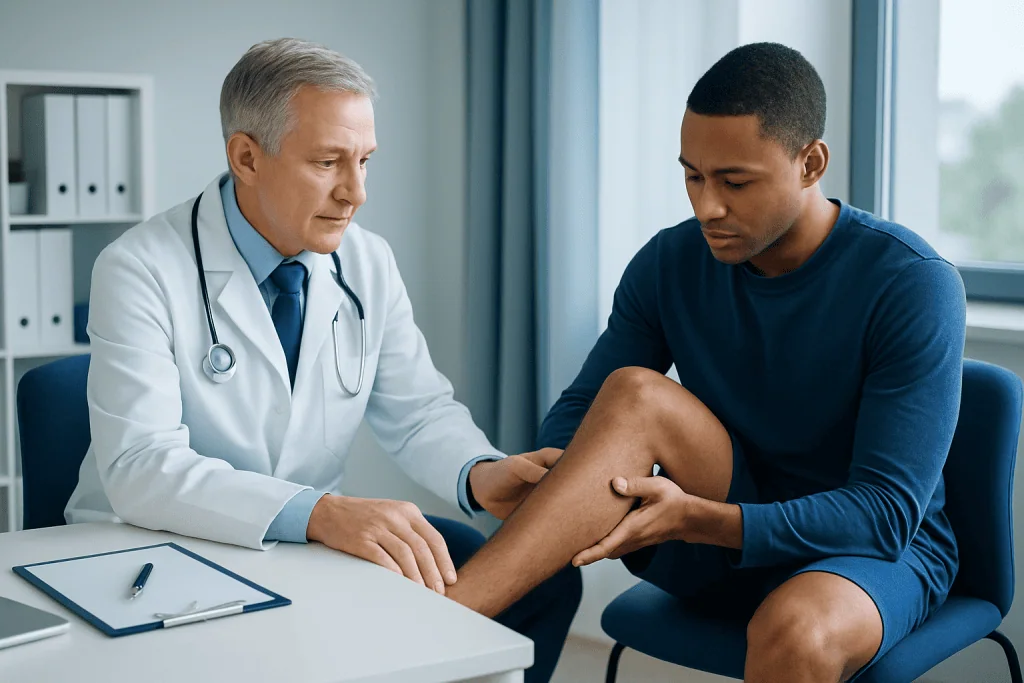
Diagnosis usually begins with a detailed medical history and physical examination. A clinician will ask when the pain started, whether there was a sudden injury, what activities make it better or worse, and whether swelling, weakness, or other warning signs are present. They may check walking pattern, calf tenderness, ankle motion, and strength with resisted foot movement or calf raises.
In many cases, a careful examination is enough to suspect a soleus strain or overuse injury. Doctors also consider other causes of calf pain, especially if symptoms are severe, unexplained, or associated with swelling or redness. The goal is not only to identify the muscle involved, but also to rule out conditions that need different care.
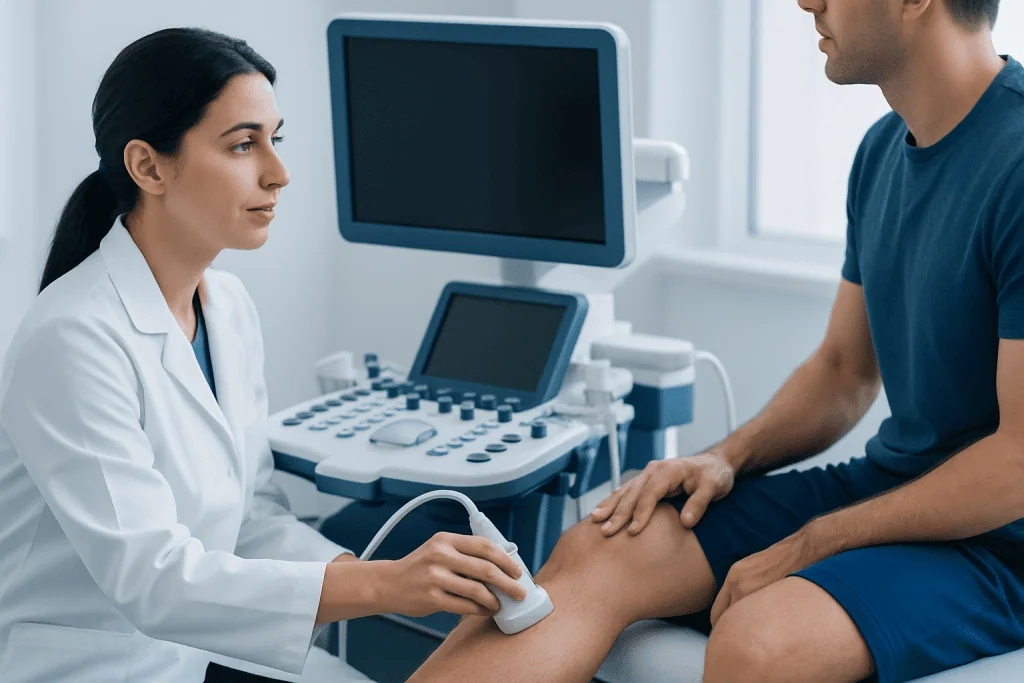
If the diagnosis is uncertain, or if a more significant injury is suspected, imaging may help. Ultrasound can assess soft tissues dynamically, and MRI scan may show the location and extent of a muscle injury in more detail. When circulation concerns are present, Doppler ultrasonography may be used to assess blood flow and exclude a clot-related problem.
Treatment and recovery
Treatment depends on the cause and severity of symptoms. For a mild soleus strain or overuse problem, the first steps are usually reducing aggravating activity, allowing relative rest, and avoiding movements that sharply increase pain. In the early phase, gentle movement and symptom-guided activity are often preferred over complete immobilization, unless a doctor advises otherwise.
As pain settles, rehabilitation focuses on gradually restoring calf flexibility, ankle mobility, and muscle strength. This may include stretching, controlled calf raises, balance exercises, and progressive return to walking or sport. A rehabilitation plan should move at a pace the tissues can tolerate, because returning too quickly can prolong recovery or lead to reinjury.
For persistent or recurrent symptoms, a clinician or physical therapist may look for contributing factors such as training errors, poor biomechanics, footwear issues, or weakness elsewhere in the leg. In some cases, formal physical therapy and rehabilitation is helpful to guide recovery. If a different diagnosis is found, treatment may be directed toward the tendon, nerve, blood vessel, or another structure rather than the muscle alone.
Recovery time varies. Mild irritation may improve over days to a few weeks, while more substantial muscle strains can take longer. Ongoing pain, repeated calf injuries, or inability to return to normal walking should prompt reassessment by a qualified doctor.
Prevention and self-care
Preventing soleus muscle problems usually centers on gradual loading and good lower-leg conditioning. In practical terms, this means increasing activity step by step rather than making sudden jumps in distance, speed, or intensity. A consistent warm-up before exercise and regular recovery between harder sessions can also reduce strain on the calf complex.
Strengthening the calf in more than one position may be useful, especially because the soleus works strongly when the knee is bent. Flexibility and ankle mobility exercises can help some people, particularly those who feel chronic calf tightness. Supportive footwear, attention to training surfaces, and correcting worn shoes may also lower unnecessary stress.
Self-care should stay within reasonable limits. Short-term rest, gentle stretching if comfortable, and gradual return to movement are often appropriate, but persistent pain should not simply be pushed through. People with diabetes, circulation problems, or repeated leg symptoms should seek personalized advice rather than rely only on general exercise guidance.
Near the end of recovery, sport-specific progression matters. Walking before jogging, jogging before sprinting, and flat surfaces before hills are common examples of a sensible return. Acibadem International’s multidisciplinary specialists in JCI-accredited hospitals diagnose and treat calf, tendon, and lower-limb conditions for international patients when further assessment is needed.
When to seek medical care
Medical care is appropriate if calf pain is severe, follows a distinct injury, causes limping, or does not improve with a short period of rest and activity modification. Evaluation is also important when symptoms repeatedly return, interfere with work or exercise, or are associated with notable weakness.
Urgent assessment is recommended for calf pain with swelling, redness, warmth, chest symptoms, sudden shortness of breath, numbness, or a cold or pale foot. These features may point to a problem other than a simple soleus strain and should not be ignored. A doctor can decide whether the issue is muscular or whether further testing is needed.
Parents should seek medical advice for children with unexplained calf pain, and older adults should be assessed if symptoms affect balance or walking. When there is uncertainty, it is safer to have persistent lower-leg pain evaluated than to assume it is only a pulled muscle.
Frequently asked questions
What is the soleus muscle?
The soleus muscle is a deep muscle in the calf, underneath the gastrocnemius. It helps point the foot downward, stabilize the ankle, support standing, and assist the return of blood from the legs toward the heart.
Where is soleus muscle pain usually felt?
Soleus pain is usually felt deep in the lower or middle calf rather than near the skin surface. It may feel like aching, tightness, or heaviness, especially during walking, running, stair climbing, or standing on tiptoe.
How is a soleus strain different from a regular calf strain?
A soleus strain is one type of calf strain, but it affects the deeper calf muscle rather than the more superficial gastrocnemius. It often causes a deeper, less obvious pain pattern and may be more noticeable during endurance activities than during explosive movement.
Can walking make a soleus injury worse?
It can, especially in the early phase if the muscle is irritated or strained. Gentle walking may be tolerated in mild cases, but limping, increasing pain, or symptoms that worsen after activity suggest the leg needs medical review and a more structured recovery plan.
How long does a soleus muscle injury take to heal?
Recovery depends on the severity of the problem. Mild overuse symptoms may improve within days to a few weeks, while more significant strains can take several weeks or longer and usually recover best with progressive rehabilitation.
When should calf pain be checked by a doctor?
A doctor should assess calf pain if it is severe, follows an injury, causes weakness or limping, or does not improve with rest and activity changes. Urgent care is needed for swelling, redness, warmth, chest symptoms, breathing difficulty, numbness, or major changes in skin color or temperature.
References
- American Academy of Orthopaedic Surgeons
- National Health Service
- MedlinePlus
- Cleveland Clinic
- American College of Sports Medicine
This article is for general information only and is not a substitute for professional medical advice. Please consult a qualified doctor about your individual situation.
Explore treatments in Turkey — costs, top hospitals & a free quote
JCI-accredited · board-certified surgeons · reply within 24h
Add us as a Preferred Source to see more of our trusted health content across Google Search, AI Overviews and Discover.

More from the Health Library

Inverted Nipple — Explained by Medical Evidence, Not Myths

Tyrosine: What Patients Need to Know

Vyvgart Hytrulo: What Patients Need to Know

Bent Over Rows: What Patients Need to Know
Yellow Semen: What Patients Need to Know

Baby Hives — Explained by Medical Evidence, Not Myths
Orthopedic Surgery & Traumatology Specialists at Acibadem
Dr. Berhan Bayram
Orthopedic Surgery & Traumatology
Assoc. Prof. Dr. Berkin Toker
Orthopedic Surgery & Traumatology
Assoc. Prof. Dr. Bertan Cengiz
Orthopedic Surgery & Traumatology
Dr. Betül Toygar
Physical Medicine & Rehabilitation