Ulnar Nerve: A Complete Medical Overview

The ulnar nerve runs from the neck to the hand and is especially vulnerable at the elbow and wrist. Compression of the ulnar nerve often causes numbness or tingling in the ring and little fingers.
Key Takeaways
- The ulnar nerve runs from the neck to the hand and is especially vulnerable at the elbow and wrist.
- Compression of the ulnar nerve often causes numbness or tingling in the ring and little fingers.
- Symptoms may worsen with repeated elbow bending, leaning on the elbow, or prolonged pressure.
- Diagnosis usually combines a physical exam with nerve tests and, when needed, imaging.
- Treatment ranges from activity changes and splinting to therapy, medication, and sometimes surgery.
- Early evaluation can help prevent long-term weakness or muscle wasting in the hand.
The ulnar nerve is a major nerve that helps control feeling and movement in part of the hand and forearm. When it becomes irritated or compressed, it can cause numbness, tingling, pain, or weakness, most often around the elbow or wrist.
Overview of the ulnar nerve
The ulnar nerve is one of the main nerves of the upper limb. It begins in the network of nerves near the neck and shoulder, travels down the arm, passes behind the inner side of the elbow, and continues into the hand. It provides sensation to the little finger and part of the ring finger, and it helps control several small muscles that support fine finger movements and grip.
Many people recognize the ulnar nerve as the structure involved when they hit the “funny bone.” That brief electric or tingling feeling happens because the nerve lies close to the surface behind the elbow. Although this sensation is usually temporary, ongoing pressure or irritation in this area can lead to a more persistent problem called ulnar neuropathy.
The ulnar nerve can be affected anywhere along its path, but the two most common sites are the elbow and the wrist. Compression at the elbow is often called cubital tunnel syndrome. Compression at the wrist may occur in a region known as Guyon’s canal. Understanding where the nerve is affected helps guide diagnosis and treatment.
What symptoms can ulnar nerve problems cause?
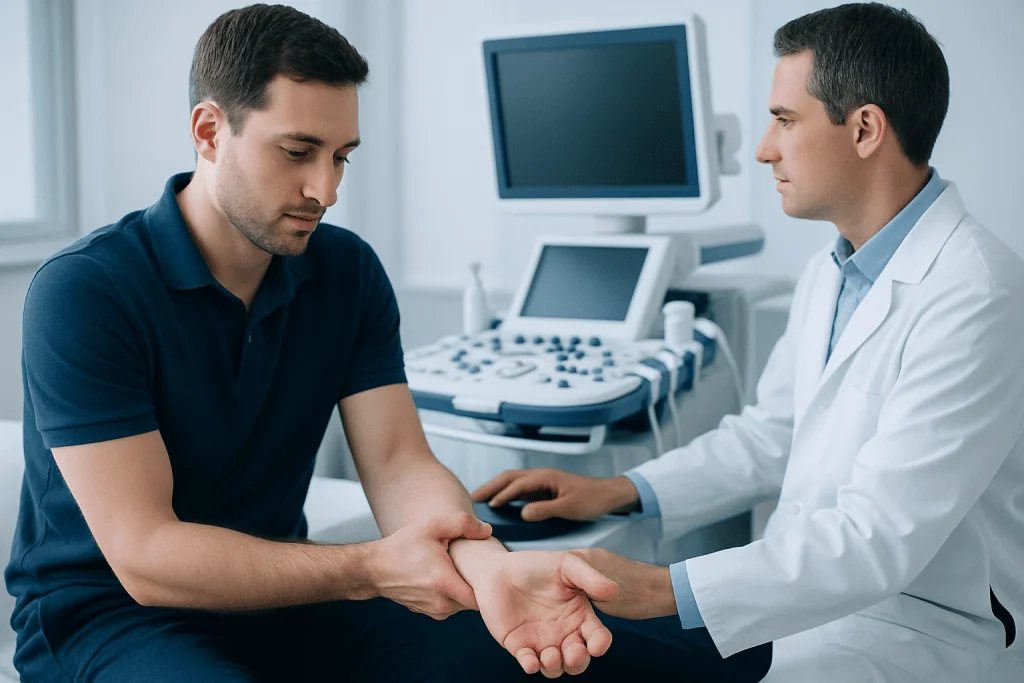
Symptoms often begin gradually. A person may notice numbness or tingling in the little finger and the side of the ring finger, especially when the elbow stays bent for a long time, such as during sleep, phone use, or driving. Some people describe a pins-and-needles feeling that comes and goes at first but becomes more frequent over time.
As irritation continues, symptoms may include aching pain at the inner side of the elbow, forearm discomfort, or weakness in the hand. Everyday tasks such as opening jars, typing, buttoning clothes, or holding small objects may become more difficult. Grip may feel less secure, and objects may be dropped more often than usual.
More advanced compression can affect the small muscles of the hand. This may lead to reduced finger coordination, visible thinning of the muscles between the thumb and index finger or along the little finger side of the hand, and difficulty spreading the fingers apart. Because symptoms can overlap with other nerve conditions, proper assessment is important.
- Numbness or tingling in the little finger and ring finger
- Symptoms worse when the elbow is bent
- Inner elbow pain or tenderness
- Weak grip or hand clumsiness
- Muscle wasting in long-standing cases
Why the ulnar nerve becomes irritated

The most common reason for ulnar nerve symptoms is compression, meaning the nerve is squeezed or stretched repeatedly. At the elbow, this may happen when a person leans on the elbow often, sleeps with the elbow tightly bent, performs repetitive bending motions, or has anatomical narrowing around the nerve. In some cases, the nerve can shift out of place over the elbow during movement, which may increase irritation.
At the wrist, pressure may come from repetitive hand use, prolonged cycling, direct trauma, or swelling in the tissues around the nerve. Less commonly, cysts, arthritis-related changes, previous fractures, or scar tissue can narrow the space around the nerve. These structural causes may need closer evaluation if symptoms are severe or one-sided.
Some health conditions can increase nerve vulnerability. Diabetes, thyroid disorders, inflammatory conditions, and generalized peripheral nerve disease may make symptoms more likely or more noticeable. Cervical spine problems and other nerve conditions can also mimic ulnar nerve compression, which is one reason the full clinical picture matters.
How doctors diagnose ulnar nerve disorders
Diagnosis usually starts with a detailed medical history and physical examination. A clinician asks where symptoms are felt, what movements trigger them, whether they occur at night, and whether weakness is present. During the exam, the doctor may check sensation in the fingers, hand strength, elbow flexibility, and whether tapping over the nerve reproduces tingling.
Nerve conduction studies and electromyography are commonly used when the diagnosis is uncertain, symptoms are persistent, or weakness is developing. These tests help show how well the nerve is transmitting signals and whether there is muscle involvement. They can also help distinguish ulnar nerve compression from problems affecting the neck, brachial plexus, or other nerves in the arm.
Imaging may be helpful in selected cases. Ultrasound can show swelling, instability, or compression of the nerve, while MRI may be considered if a mass, joint problem, or complex injury is suspected. If symptoms suggest a broader nerve disorder, the clinician may also investigate conditions such as peripheral neuropathy or other causes of hand numbness.
Treatment options for ulnar nerve symptoms
Treatment depends on the cause, location, and severity of the problem. Mild or early cases often improve with simple measures that reduce pressure on the nerve. These may include avoiding prolonged elbow bending, using a headset instead of holding a phone, changing desk or sleeping positions, and using padding or a night splint to keep the elbow in a more relaxed position.
Doctors may also recommend hand or physical therapy to improve nerve mobility, posture, and movement patterns. In some situations, anti-inflammatory medication may be used for symptom relief, although medication does not correct mechanical compression. If there is a workplace or sports-related trigger, ergonomic changes can be an important part of treatment.
When symptoms continue despite conservative care, or when there is clear weakness, muscle wasting, or significant nerve compression, surgery may be considered. The goal is to relieve pressure on the nerve and, in some cases, move it to a less vulnerable position. Depending on the site and cause, this may involve ulnar nerve decompression or related peripheral nerve surgery. A specialist will explain whether surgery is appropriate and what recovery may involve.
Self-care and prevention in daily life
Daily habits can make a meaningful difference, especially in mild cases. Avoiding pressure on the inner elbow is one of the most helpful steps. People who work at desks may benefit from adjusting chair height, arm support, and keyboard position so the elbows are not held in a bent or compressed posture for long periods.
Sleeping position is another common factor. Some people naturally curl the arms tightly during sleep, which can increase symptoms overnight. A soft towel wrap or splint that prevents excessive bending may reduce night-time tingling. During the day, taking movement breaks and changing repetitive patterns can help lower strain on the nerve.
General nerve health also matters. Managing diabetes or thyroid disease, avoiding smoking, staying physically active, and treating inflammatory joint conditions may support recovery. If symptoms are linked to another issue, such as neck-related nerve irritation or severe carpal symptoms, broader neurological or orthopedic evaluation may be needed. In selected situations, doctors may also assess whether EMG testing would help clarify the diagnosis.
When to seek medical care
It is a good idea to seek medical care if numbness, tingling, or hand weakness lasts more than a few days, keeps returning, or interferes with work, sleep, or daily activities. Symptoms that spread, become more intense, or affect hand coordination deserve professional assessment, especially if simple posture changes do not help.
Urgent evaluation is important if weakness appears suddenly, if there is rapid loss of hand function, or if symptoms follow a major injury. Visible muscle wasting in the hand is another sign that the nerve may be under more significant stress. Early treatment can improve comfort and help protect long-term hand function.
For people traveling for specialist care, multidisciplinary teams can assess nerve problems using clinical examination, electrodiagnostic testing, and imaging when needed. Acibadem International’s specialists in JCI-accredited hospitals diagnose and treat upper-limb nerve conditions for international patients as part of coordinated neurological and orthopedic care.
Frequently asked questions
What does the ulnar nerve do?
The ulnar nerve helps provide feeling to the little finger and part of the ring finger. It also controls several hand muscles that are important for grip, coordination, and fine finger movements.
Where is ulnar nerve pain usually felt?
Pain or discomfort is often felt at the inner side of the elbow, where the nerve is close to the surface. Symptoms can also extend into the forearm, little finger, ring finger, or hand depending on where the nerve is irritated.
Can ulnar nerve symptoms go away on their own?
Mild symptoms sometimes improve with rest, posture changes, and avoiding pressure on the elbow or wrist. However, recurring or persistent symptoms should be evaluated, because longer-lasting compression can lead to weakness or muscle loss.
How is ulnar nerve entrapment different from carpal tunnel syndrome?
Ulnar nerve entrapment usually affects the little finger and part of the ring finger, while carpal tunnel syndrome more often affects the thumb, index, middle, and part of the ring finger. The site of compression is also different: the ulnar nerve is commonly compressed at the elbow, whereas carpal tunnel syndrome involves the median nerve at the wrist.
Is surgery always needed for ulnar nerve compression?
No. Many people improve with conservative treatment such as activity changes, splinting, ergonomic adjustments, and therapy. Surgery is more often considered when symptoms are severe, do not improve, or are causing weakness or muscle wasting.
What kind of doctor treats ulnar nerve problems?
Depending on the situation, care may involve a neurologist, orthopedic specialist, hand surgeon, neurosurgeon, or rehabilitation specialist. The best choice often depends on whether the problem is mainly diagnostic, related to nerve testing, or likely to need a procedure.
This article is for general information only and is not a substitute for professional medical advice. Please consult a qualified doctor about your individual situation.
Explore treatments in Turkey — costs, top hospitals & a free quote
JCI-accredited · board-certified surgeons · reply within 24h
Add us as a Preferred Source to see more of our trusted health content across Google Search, AI Overviews and Discover.

More from the Health Library

Varicella Zoster — Explained by Medical Evidence, Not Myths

Monophobia: A Complete Medical Overview
Abdominal Binder: A Complete Medical Overview

Breaking Out in Hives — Explained by Medical Evidence, Not Myths

Poison Ivy — Explained by Medical Evidence, Not Myths