Intercostal Muscles: What Patients Need to Know
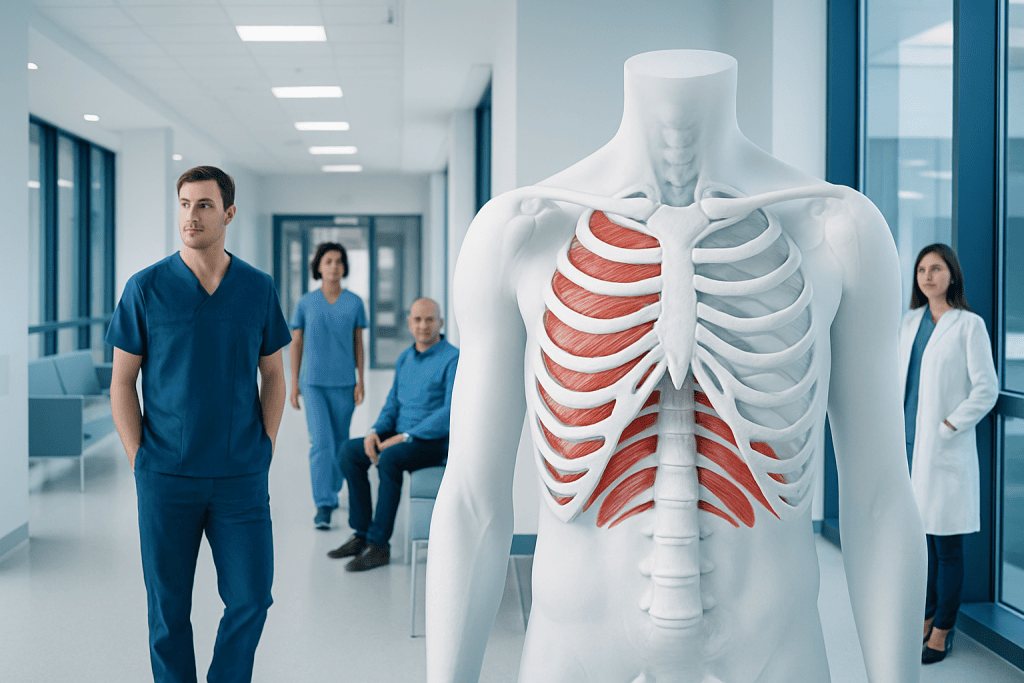
Intercostal muscles sit between the ribs and help expand and stabilize the chest during breathing. A strain can cause pain between the ribs, tenderness, muscle tightness, and discomfort with movement or deep breathing.
Key Takeaways
- Intercostal muscles sit between the ribs and help expand and stabilize the chest during breathing.
- A strain can cause pain between the ribs, tenderness, muscle tightness, and discomfort with movement or deep breathing.
- Chest pain is not always muscular, so new, severe, or unexplained symptoms should be assessed by a doctor.
- Diagnosis usually depends on symptoms, a physical exam, and tests when another cause of chest pain must be ruled out.
- Treatment often includes rest, activity changes, pain relief, and gradual return to normal movement.
Intercostal muscles are the small muscles between the ribs that support breathing, posture, and chest movement. When they become strained, irritated, or injured, they can cause sharp or aching pain that often worsens with coughing, twisting, or deep breaths.
Overview: what intercostal muscles do
Intercostal muscles are the layers of muscle that lie between the ribs. Their main job is to help the chest wall move during breathing. They also support the rib cage, assist with posture, and help the upper body handle twisting, reaching, coughing, and other everyday movements.
There are several layers of intercostal muscles, and each contributes slightly differently to chest expansion and stability. During inhalation, the rib cage lifts and widens to let the lungs fill. During exhalation, especially forceful breathing, coughing, or exercise, these muscles help control the chest wall as air moves out.
Patients most often hear about intercostal muscles when they become strained or sore. An intercostal muscle strain is an overstretching or small tear in these muscles. Although this can be painful, it is often treatable with conservative care. Still, chest pain has many possible causes, so muscular pain should not be assumed without proper medical evaluation when symptoms are new, strong, or unusual.
How intercostal muscle problems feel
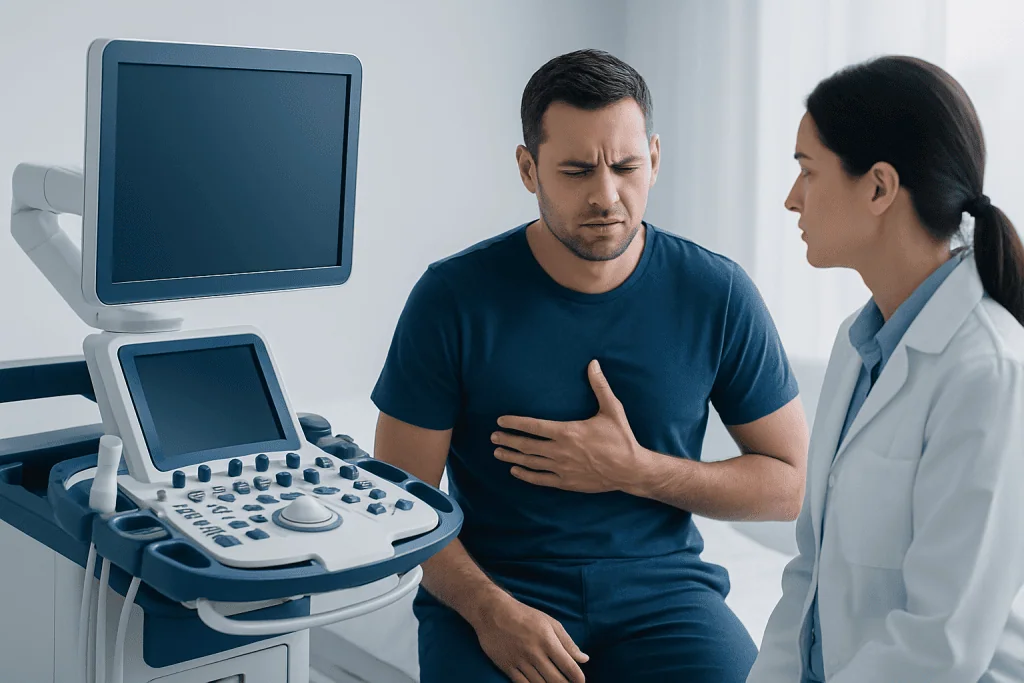
When an intercostal muscle is irritated or strained, the pain is usually felt along the ribs or in the spaces between them. Some people describe it as sharp, stabbing, pulling, aching, or tight. The discomfort may stay in one small area or spread around part of the chest wall or upper back.
The pain often becomes more noticeable with movements that use the chest wall. Deep breathing, coughing, sneezing, laughing, reaching overhead, twisting the torso, and certain sports movements can all make symptoms worse. Pressing on the sore area may reproduce the pain, which can help suggest a muscular source.
Other symptoms can include muscle spasm, tenderness, stiffness, and a feeling that the chest is “guarding” itself. If breathing feels painful, people sometimes take shallower breaths, which can create additional tension. However, shortness of breath, pressure-like chest pain, dizziness, or pain spreading to the arm or jaw should not be assumed to come from the intercostal muscles alone.
- Localized pain between or along the ribs
- Pain that worsens with coughing, sneezing, or deep breaths
- Tenderness when the area is touched
- Discomfort with twisting, lifting, or stretching
- Muscle tightness or spasm in the chest wall
Common causes and risk factors
Intercostal muscle strain can happen after sudden or repetitive movements. Common triggers include heavy lifting, forceful coughing, intense exercise, rowing, golf, tennis, swimming, throwing sports, or abrupt twisting. In some cases, a blow to the chest or a rib injury can also affect the surrounding intercostal muscles.
Persistent coughing from respiratory infections, allergies, asthma, or chronic lung disease can place repeated stress on the chest wall. This is one reason muscular chest pain may develop after a cold or flu-like illness. In other situations, poor posture, deconditioning, or returning too quickly to exercise can make these muscles more vulnerable to strain.
Doctors also consider other explanations for pain in the same area. Rib fractures, costochondritis, nerve irritation, pleurisy, and conditions affecting the lungs or heart can all mimic intercostal muscle pain. For example, chest symptoms may need to be distinguished from costochondritis or, depending on the symptom pattern, from other causes of chest discomfort that are not muscular.
Risk may be higher in people who play rotational sports, do frequent overhead activity, have ongoing cough, or work in jobs with repetitive lifting. Age-related muscle weakness, prior chest wall injury, and lack of warm-up before exercise may also contribute.
How doctors diagnose intercostal muscle pain
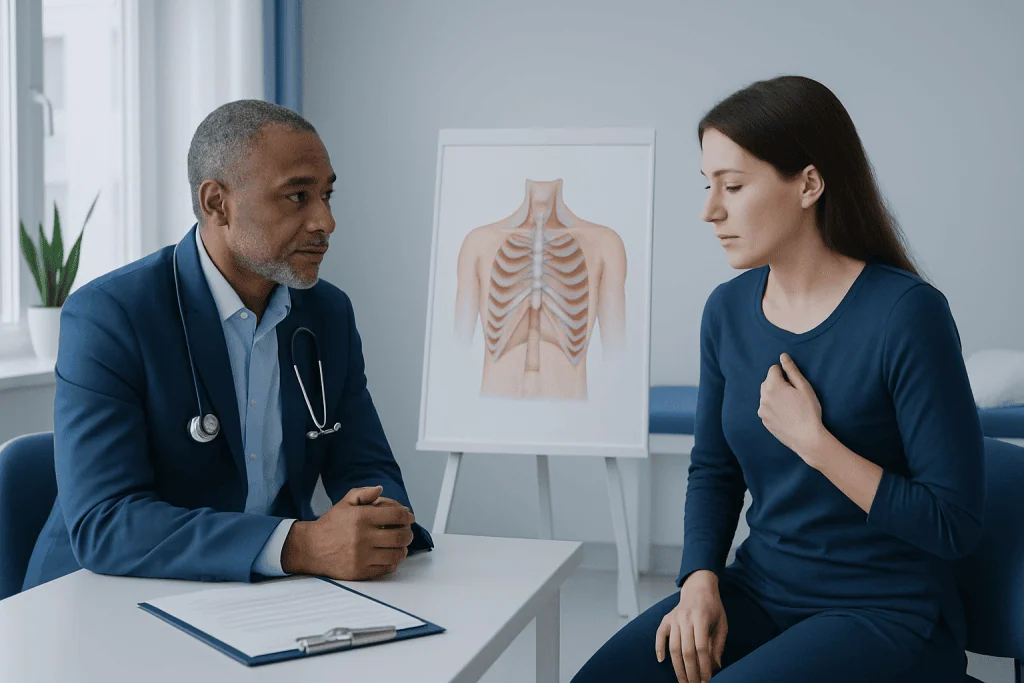
Diagnosis begins with a careful history. A doctor will ask when the pain started, what makes it better or worse, whether there was an injury or cough, and whether there are warning symptoms such as fever, breathing difficulty, or pressure-like chest pain. The pattern of pain often provides important clues.
During the physical exam, the doctor may press on the chest wall, check for tenderness between the ribs, and ask the patient to breathe deeply or move the torso in certain directions. Pain that is reproducible with touch or movement can support a musculoskeletal cause, but this finding alone does not rule out other conditions.
If the symptoms suggest a more serious problem, further testing may be needed. Depending on the situation, this may include blood tests, an electrocardiogram, chest X-ray, or other imaging. If there is concern for a lung problem, a doctor may consider evaluation related to pneumonia or another respiratory condition. Imaging can also be useful when a rib fracture, significant soft tissue injury, or another structural issue is suspected, including with MRI scan or X-ray when clinically appropriate.
The goal is not only to identify an intercostal muscle problem, but also to make sure another cause of chest pain is not being missed. This is especially important in older adults and in people with heart, lung, or clotting risk factors.
Treatment and recovery
Most intercostal muscle strains improve with conservative treatment. Early care usually focuses on reducing pain and allowing the muscle fibers to recover. This often includes resting from the activity that caused the problem, avoiding movements that sharply worsen symptoms, and using simple pain relief measures recommended by a doctor.
Cold packs may be helpful in the first day or two after a sudden strain, while some people later find gentle warmth soothing for muscle tightness. Doctors may suggest over-the-counter pain relievers if they are safe for the patient to use. Because chest pain can have other causes, it is best to seek medical advice before self-treating significant or persistent symptoms.
As pain begins to settle, gradual return to movement is important. Gentle stretching, posture correction, breathing exercises, and strengthening can help reduce stiffness and support recovery. Some patients benefit from physical therapy and rehabilitation to improve mobility, breathing mechanics, and safe return to exercise or work tasks.
Recovery time varies depending on how mild or severe the strain is and whether the area keeps getting irritated. Pushing through pain too early can delay healing. Severe tears, major trauma, or suspected complications may need additional assessment and, in uncommon cases, more advanced treatment. If chest symptoms are linked to ongoing breathing problems, evaluation through pulmonology may also be appropriate.
Self-care and prevention
Prevention focuses on reducing strain on the chest wall and supporting overall muscle function. Warming up before sports, increasing exercise intensity gradually, and using proper technique during lifting or rotational activity can all help protect the intercostal muscles. Good posture may also reduce unnecessary tension across the ribs and upper back.
Managing cough is another practical step. Treating respiratory infections, allergies, or asthma as advised by a doctor may lessen repeated stress on the rib muscles. People with chronic cough should ask about the cause rather than assuming it is minor, especially if it has been ongoing for weeks.
At home, recovery is usually supported by relative rest rather than complete inactivity. Gentle daily movement, avoiding heavy lifting for a period, and returning to exercise step by step are usually more helpful than staying still for too long. Helpful habits may include:
- Warming up before exercise and cooling down afterward
- Using correct lifting mechanics
- Improving posture at work and during screen use
- Building core and upper back strength gradually
- Seeking care for persistent cough or repeated chest wall pain
For international patients who need coordinated evaluation, Acibadem International’s multidisciplinary specialists in JCI-accredited hospitals diagnose and treat chest wall, respiratory, and musculoskeletal conditions with an individualized approach.
When to seek medical care
Medical care is important if chest pain is severe, unexplained, or does not clearly follow a muscle strain. Urgent assessment is needed for chest pressure, fainting, marked shortness of breath, blue lips, new confusion, sweating with chest pain, or pain spreading to the arm, shoulder, back, or jaw. These symptoms can point to conditions that are not muscular.
A doctor should also evaluate pain after a fall, sports collision, or other direct chest injury, especially if there is bruising, deformity, or difficulty taking a full breath. Ongoing symptoms lasting more than a few days, repeated strains, or pain that interferes with sleep, work, or daily activity also deserve attention.
If cough, fever, wheezing, or recent infection are part of the picture, the chest pain may be related to the lungs or airways rather than only the intercostal muscles. Children, older adults, pregnant patients, and people with heart or lung disease should be especially cautious about self-diagnosing chest pain.
Frequently asked questions
What are the intercostal muscles?
Intercostal muscles are the muscles located between the ribs. They help move and stabilize the chest wall during breathing and also support twisting, reaching, and other upper-body movements.
How can a person tell if pain is from the intercostal muscles?
Intercostal muscle pain is often localized between the ribs and gets worse with deep breathing, coughing, twisting, or pressing on the area. Even so, chest pain can have many causes, so a doctor may be needed to confirm that it is muscular.
How long does an intercostal muscle strain take to heal?
Mild strains may improve within days to a few weeks, while more significant injuries can take longer. Healing depends on the severity of the strain, the person’s activity level, and whether the muscle gets irritated again during recovery.
Should a person exercise with an intercostal muscle strain?
Strenuous exercise is usually best avoided until pain improves. Gentle movement may be helpful, but activities that cause sharp pain, heavy breathing, twisting, or lifting should be limited until a doctor or therapist advises a safe return.
Can coughing cause an intercostal muscle strain?
Yes. Repeated or forceful coughing can place enough stress on the muscles between the ribs to cause irritation or a strain, especially during a respiratory illness or when coughing lasts for many days.
When is chest pain unlikely to be just a muscle strain?
Chest pain should not be assumed to be muscular if it feels like pressure, comes with shortness of breath, dizziness, nausea, sweating, or spreads to the jaw or arm. Pain after major trauma or pain with fever and breathing difficulty also needs prompt medical evaluation.
References
- American Academy of Orthopaedic Surgeons
- Cleveland Clinic
- Mayo Clinic
- National Heart, Lung, and Blood Institute
- MedlinePlus
This article is for general information only and is not a substitute for professional medical advice. Please consult a qualified doctor about your individual situation.
Joint and spine care in Turkey — expert assessment & treatment
JCI-accredited · board-certified surgeons · reply within 24h
Add us as a Preferred Source to see more of our trusted health content across Google Search, AI Overviews and Discover.

More from the Health Library



Related Specialists

Prof. Dr. H. Armağan Arıcan
Radiation Oncology
Dt. Anıl Yavuzyılmaz
Oral & Dental Health
Fzt. Melek Ateş
Physical Medicine & Rehabilitation
Dr. Halil Algan
Treatment of Pain Algology