Arachnophobia: What Patients Need to Know

Arachnophobia is more than discomfort around spiders; it is a specific phobia that can interfere with daily life. Symptoms may include rapid heartbeat, sweating, panic, freezing, and avoiding places where spiders may be present.
Key Takeaways
- Arachnophobia is more than discomfort around spiders; it is a specific phobia that can interfere with daily life.
- Symptoms may include rapid heartbeat, sweating, panic, freezing, and avoiding places where spiders may be present.
- Diagnosis is based on symptoms, triggers, and how much the fear affects work, school, sleep, or relationships.
- Treatment often includes cognitive behavioral therapy and gradual, guided exposure to the feared trigger.
- Self-care strategies can help, but professional support is important when fear feels overwhelming or limiting.
Arachnophobia is an intense, persistent fear of spiders that goes beyond ordinary dislike and can trigger significant distress or avoidance. Patients should know that this fear is a recognized type of specific phobia and that effective treatment is available.
What arachnophobia is
Arachnophobia is an intense fear of spiders. Many people dislike spiders, but arachnophobia is different because the fear is strong, persistent, and out of proportion to the actual danger in most everyday situations. It can cause immediate anxiety, a strong urge to escape, and avoidance that affects daily routines.
In mental health terms, arachnophobia is a type of specific phobia. A specific phobia is a marked fear of a particular object or situation. The reaction is real and distressing, even when the person understands that the fear may be excessive.
This condition can affect children, teenagers, and adults. Some people fear only large or moving spiders, while others react to pictures, webs, certain rooms, or even thoughts about spiders. The experience varies, but the common feature is fear that feels difficult to control.
How arachnophobia may affect daily life

Arachnophobia can shape behavior in ways that are not always obvious at first. A person may avoid basements, garages, gardens, attics, storage areas, camping trips, or travel to places where they believe spiders are common. They may repeatedly check corners, ceilings, shoes, bedding, or clothing for reassurance.
For some patients, the fear causes embarrassment or frustration because others may see it as a simple dislike. However, phobias are not a matter of willpower. The body can react automatically with a strong fear response, which can interfere with concentration, sleep, family life, work, or school.
Over time, avoidance can reinforce the phobia. Each avoided situation may bring short-term relief, but it can make the fear more deeply rooted. This is one reason early recognition and treatment can be helpful.
Symptoms and common triggers
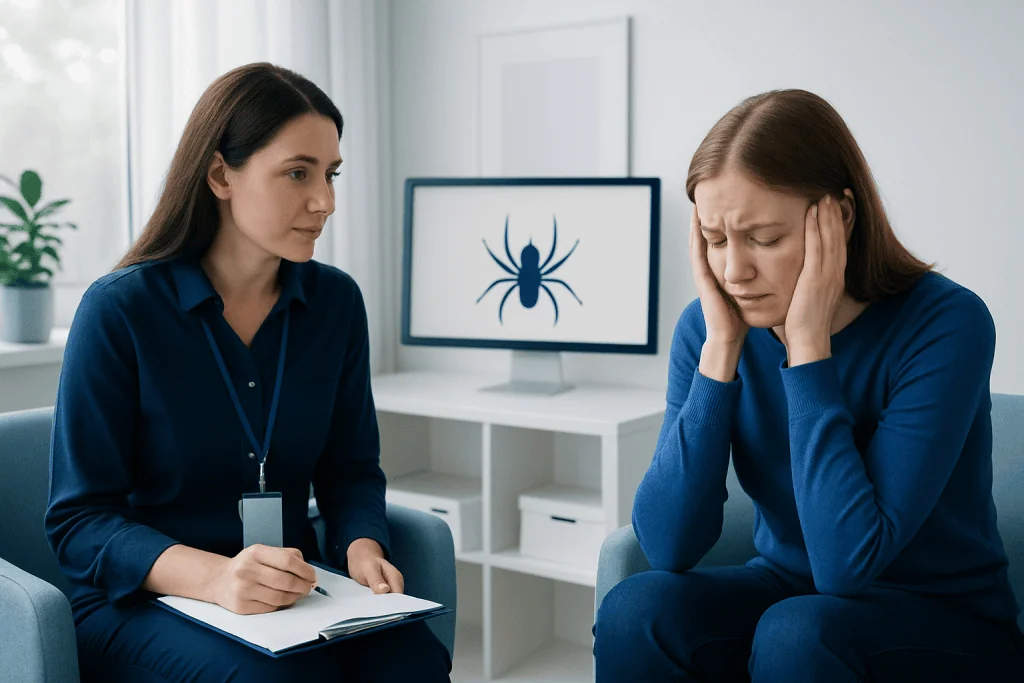
Arachnophobia symptoms can be emotional, physical, and behavioral. Symptoms may appear when a person sees a spider, expects to see one, or enters a place linked with spiders. In some cases, even a realistic image or video can trigger fear.
Common symptoms include:
- Intense fear or dread
- Rapid heartbeat or palpitations
- Sweating or trembling
- Shortness of breath or a tight chest
- Nausea, dizziness, or feeling faint
- Crying, freezing, or feeling out of control
- A strong urge to flee or ask for reassurance
- Avoiding certain places or activities
Some people have panic-like symptoms during exposure. Others mainly live with constant vigilance, scanning for signs of spiders. If a person also experiences wider anxiety symptoms, clinicians may consider whether another condition such as an anxiety disorder is present alongside the phobia.
Why it happens: causes and risk factors
There is no single cause of arachnophobia. In many cases, it develops through a combination of learned experience, temperament, and biology. A distressing event involving a spider, such as a sudden encounter in childhood, may contribute. Fear can also be learned indirectly by observing a parent or sibling react strongly to spiders.
Some people are naturally more sensitive to anxiety or to perceived threats. This does not mean anything is wrong with them; it simply means their nervous system may respond more strongly in certain situations. Family history of phobias, anxiety, or panic can also play a role.
Cultural messages and media can reinforce fear by portraying spiders as dangerous in all settings. Although some spiders can be harmful, most everyday encounters are not medically dangerous. The phobia is driven less by actual risk and more by the brain’s overactive alarm response.
Arachnophobia may exist on its own or alongside other mental health concerns. If symptoms extend beyond one trigger and involve persistent worry, sleep problems, or panic in many settings, a fuller assessment may be useful to look for conditions such as panic attacks or broader anxiety patterns.
How doctors diagnose arachnophobia
Diagnosis is usually based on a clinical conversation rather than a laboratory test or scan. A doctor, psychologist, or psychiatrist will ask what triggers the fear, how strong the reaction is, how long it has been present, and whether the fear leads to avoidance or disrupts daily life.
Clinicians look for a pattern typical of specific phobia: immediate fear, disproportionate distress, and ongoing avoidance or impairment. They may also ask whether symptoms happen only around spiders or in other situations as well. This helps distinguish arachnophobia from general anxiety, obsessive checking, trauma-related reactions, or other conditions.
In some cases, patients first seek help because they feel their symptoms are physical, such as chest tightness, dizziness, or shaking. If there are concerns about the body’s stress response or panic symptoms, a doctor may recommend further assessment and, when appropriate, a cardiology check-up to rule out other causes of palpitations or similar complaints.
Treatment options that can help
Arachnophobia is treatable, and many patients improve with structured psychological care. The most widely used approach is cognitive behavioral therapy, which helps a person understand the fear cycle and gradually change the thoughts and behaviors that maintain it. A key part of treatment is often exposure therapy, done in a careful, planned, and supported way.
Exposure therapy does not mean forcing a person into a frightening situation. It usually begins with lower-intensity steps, such as talking about spiders, looking at drawings, then photos, and only later approaching more realistic images or situations. The goal is to help the brain learn that the trigger can be tolerated without danger.
Other tools may include relaxation training, breathing techniques, and practical coping skills for moments of sudden fear. In some cases, a doctor may consider medication for short-term use or for related conditions, but medication is generally not the main long-term treatment for a specific phobia.
If symptoms are severe or linked to broader emotional distress, patients may benefit from evaluation in psychiatry or support through psychology services. Treatment is individualized, and progress often happens step by step rather than all at once.
Prevention, coping, and self-care
There is no guaranteed way to prevent arachnophobia, but early support can reduce its impact. Avoiding every reminder of spiders may seem helpful in the moment, yet it often keeps the fear active. Gentle, structured coping strategies are usually more effective than repeated avoidance.
Helpful self-care measures may include:
- Learning how phobias work and recognizing that the fear response is real but treatable
- Practicing slow breathing or grounding exercises when anxiety rises
- Reducing reassurance-seeking and repetitive checking over time
- Approaching feared situations gradually, ideally with professional guidance
- Maintaining good sleep, regular activity, and general stress management
It is best not to attempt intense self-exposure alone if fear is severe or causes panic. A trained professional can help pace the process safely and realistically. Support from family members can also be useful when it encourages calm practice rather than criticism or pressure.
Near the end of evaluation and care planning, some international patients may choose centers with multidisciplinary mental health support. Acibadem International’s multidisciplinary specialists and JCI-accredited hospitals diagnose and treat this condition for international patients when specialist assessment is needed.
When to seek medical care
A person should consider seeking medical care if fear of spiders causes significant distress, leads to repeated avoidance, or interferes with work, school, travel, sleep, or relationships. Help is also appropriate when symptoms feel overwhelming, panic-like, or hard to control.
Medical advice is especially important if there are chest symptoms, fainting, severe dizziness, or if it is unclear whether the reaction is due to anxiety or another health issue. Children should be evaluated when fear causes persistent upset, limits participation in normal activities, or grows worse over time.
Professional care does not mean the problem is severe or permanent. It simply means the fear is causing enough burden to deserve attention. Early support can make treatment easier and help prevent the cycle of avoidance from becoming more entrenched.
Frequently asked questions
Is arachnophobia a real medical condition?
Yes. Arachnophobia is a recognized type of specific phobia, which is a mental health condition involving intense fear of a particular object or situation. It is more than simply not liking spiders because it can cause significant distress and avoidance.
How is arachnophobia different from a normal fear of spiders?
A normal fear or dislike usually does not strongly disrupt daily life. Arachnophobia involves a much stronger reaction, often with physical symptoms and behavior changes such as avoiding rooms, travel, or activities because of the possibility of spiders.
Can arachnophobia cause panic attacks?
It can trigger panic-like symptoms in some people, especially during a sudden encounter or even when thinking about spiders. Symptoms may include a racing heart, shortness of breath, shaking, dizziness, and a strong urge to escape.
What is the best treatment for arachnophobia?
For many patients, cognitive behavioral therapy with gradual exposure is the most effective treatment. It helps reduce fear over time by changing unhelpful patterns of thinking and avoidance in a structured, supportive way.
Can children have arachnophobia?
Yes. Children can develop intense spider fear, and it may show up as crying, freezing, refusing certain places, or needing repeated reassurance. Early support can help prevent the fear from becoming more limiting over time.
Will arachnophobia go away on its own?
In some people, the fear becomes less intense over time, but in others it can persist or worsen through avoidance. If it is interfering with daily life, professional support is often the most reliable way to improve symptoms.
This article is for general information only and is not a substitute for professional medical advice. Please consult a qualified doctor about your individual situation.
Explore treatments in Turkey — costs, top hospitals & a free quote
JCI-accredited · board-certified surgeons · reply within 24h
Add us as a Preferred Source to see more of our trusted health content across Google Search, AI Overviews and Discover.

More from the Health Library

Exophthalmos — Explained by Medical Evidence, Not Myths

Benign benign: Symptoms, Causes, and Treatment — Complete Patient Guide

Wrinkled Fingertips: What Patients Need to Know

Hu Dark Chocolate: A Complete Medical Overview

Smoked Ham Hock: A Complete Medical Overview