Exophthalmos — Explained by Medical Evidence, Not Myths

Exophthalmos refers to abnormal forward bulging of one or both eyes. Thyroid eye disease is a common cause, but inflammation, infection, tumors, and injury can also lead to it.
Key Takeaways
- Exophthalmos refers to abnormal forward bulging of one or both eyes.
- Thyroid eye disease is a common cause, but inflammation, infection, tumors, and injury can also lead to it.
- New or worsening eye bulging should be assessed by a doctor, especially if there is pain, double vision, redness, or vision change.
- Treatment depends on the underlying cause and may include lubricating care, medicines, management of thyroid disease, or surgery.
- Early diagnosis can help reduce discomfort and lower the risk of eye-surface damage or vision problems.
Exophthalmos means one or both eyes protrude farther forward than usual. It is a sign rather than a disease itself, and medical evaluation helps identify the cause, relieve symptoms, and protect eye health and vision.
What exophthalmos means
Exophthalmos is the medical term for an eye that bulges or protrudes forward more than expected. Some people use the words exophthalmos and proptosis interchangeably. In practice, both describe the outward displacement of the eye, but the most important point for patients is that this finding is a sign of an underlying problem rather than a diagnosis on its own.
The bulging may affect one eye or both eyes. It can develop gradually, as often happens with thyroid-related eye disease, or it can appear more suddenly, which may suggest inflammation, infection, bleeding, or another urgent cause. A mild change may first be noticed in photos or by family members before the person feels symptoms.
Exophthalmos matters because the eye may become more exposed to the air and less protected by the eyelids. This can lead to dryness, irritation, difficulty closing the eyes fully, and in some cases pressure on the eye muscles or optic nerve. For that reason, the goal is not only to improve appearance but also to understand why the eye is bulging and whether vision is at risk.
Common symptoms and how it may feel
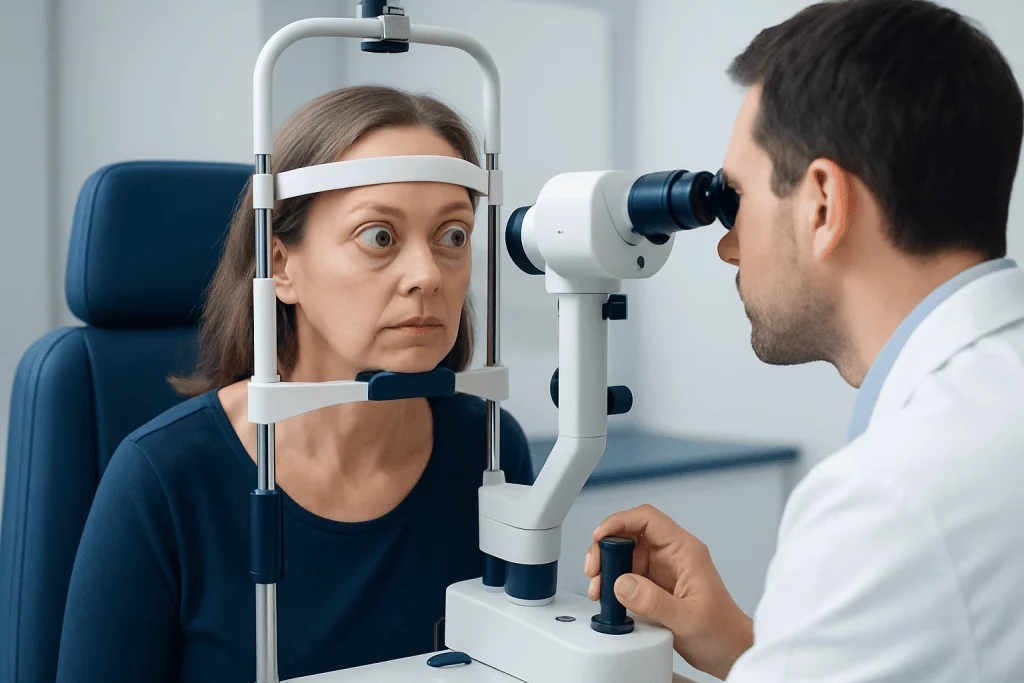
The most visible sign is a staring or prominent appearance of one or both eyes. However, exophthalmos often causes more than a cosmetic change. People may feel dryness, grittiness, tearing, light sensitivity, or a sense that the eyes are tired or strained.
If the eyelids cannot close normally, the front surface of the eye may become irritated. This can cause redness, burning, or a foreign-body sensation. Some people also notice puffiness around the eyes, eyelid retraction, or swelling of the tissues around the orbit.
When the muscles that move the eyes are affected, double vision can occur, especially when looking in certain directions. In more severe cases, there may be reduced color vision, blurred vision, or pain with eye movement. These symptoms deserve prompt evaluation because they can indicate pressure within the orbit.
- Visible bulging of one or both eyes
- Dry, irritated, or watery eyes
- Redness and light sensitivity
- Difficulty fully closing the eyelids
- Double vision or eye movement problems
- Blurred vision or reduced color perception
Causes and risk factors

The most common adult cause of exophthalmos is thyroid eye disease, an autoimmune condition often associated with Graves’ disease. In this disorder, tissues and muscles behind the eye become inflamed and enlarged, pushing the eye forward. The eye changes can appear before, during, or after thyroid hormone problems are diagnosed. Readers looking for the broader thyroid-related condition may also want to understand Graves’ disease.
Not all exophthalmos is related to the thyroid. Other causes include orbital infection, inflammation not related to infection, bleeding behind the eye after trauma, benign or malignant tumors, blood vessel abnormalities, and rarely congenital differences in the shape of the orbit. In children, causes differ somewhat and need pediatric assessment.
Several factors can raise the likelihood or severity of exophthalmos, especially in thyroid eye disease. Smoking is a major modifiable risk factor and is linked to more active and more severe disease. Poorly controlled thyroid function, autoimmune conditions, prior eye trauma, and certain orbital disorders may also play a role. Because the range of causes is broad, self-diagnosis is not reliable.
How doctors diagnose exophthalmos
Diagnosis begins with a medical history and an eye examination. The doctor asks when the bulging started, whether one or both eyes are involved, and whether there are related symptoms such as pain, double vision, headache, redness, fever, or changes in vision. Thyroid history, smoking status, recent injury, and general medical conditions are also important clues.
During the examination, the doctor assesses eye position, eyelid closure, eye movements, vision, color vision, and the health of the cornea and optic nerve. In many cases, the amount of eye protrusion is measured with a specialized instrument. Blood tests may be ordered to check thyroid hormone levels and antibodies when thyroid eye disease is suspected.
Imaging helps clarify the cause when needed. Orbital ultrasound may be useful in selected settings, but computed tomography and magnetic resonance imaging are often more informative because they show the eye muscles, fat, sinuses, bones, and surrounding tissues. Depending on the situation, a person may be referred for a detailed MRI scan or CT scan to look for inflammation, masses, fractures, bleeding, or sinus-related disease.
Sometimes exophthalmos is part of a wider eye condition that requires specialist care. If the examination suggests an orbital disorder or a structural problem behind the eye, an ophthalmologist or neuro-ophthalmology team may guide further testing and treatment planning.
Treatment options based on the cause
Treatment is directed at the underlying condition and the severity of symptoms. Mild cases may mainly need eye-surface protection, while more serious cases require medical therapy or surgery. Because exophthalmos is a sign, there is no single treatment that fits every patient.
For thyroid eye disease, treatment may include careful control of thyroid function, smoking cessation, lubricating eye drops or ointment, and in some cases anti-inflammatory medication or other immune-targeted treatment prescribed by a specialist. If double vision develops, prisms or other supportive measures may help. More advanced cases may need procedures to protect vision or improve comfort and eye position.
When infection is the cause, urgent antibiotics and close monitoring are important. If imaging shows a mass, vascular abnormality, or bleeding, treatment may involve a different specialist team. Some patients may require eye surgery or orbital surgery to relieve pressure, correct eyelid problems, or improve alignment and function after the active phase of disease has settled.
Supportive care is also valuable. Preservative-free lubricating drops, ointment at night, sleeping with the head slightly elevated, and protecting the eyes from wind and dust can reduce discomfort. In selected cases where sinus disease contributes to pressure or inflammation around the orbit, treatment may overlap with endoscopic sinus surgery if recommended by an ENT specialist.
Self-care and ways to reduce complications
Self-care does not replace medical assessment, but it can help protect the eyes and improve comfort. The first priority is to keep the surface of the eye moist. Regular use of lubricating drops during the day and ointment at night may reduce dryness and irritation, especially when the lids do not close completely.
Avoiding smoking is one of the most important steps, particularly for people with thyroid eye disease. Smoking is associated with worse symptoms and poorer response to treatment. Managing general health, taking prescribed thyroid medication as directed, and attending follow-up visits can also make a difference.
Simple environmental measures may help. Sunglasses can protect from wind and bright light. A humidified room may ease dryness. Some people feel better sleeping with the head raised on an extra pillow to reduce eyelid swelling. Contact lenses may be uncomfortable during active eye irritation, so a clinician may advise temporary changes.
- Use lubricating eye drops or ointment as advised
- Do not smoke and avoid secondhand smoke when possible
- Wear sunglasses outdoors
- Keep thyroid disease well managed with regular medical follow-up
- Seek review promptly if vision, color perception, or double vision worsens
When to seek medical care
Any new or progressive eye bulging should be assessed by a doctor, even if it is painless. A gradual change may still reflect thyroid eye disease or another orbital problem that benefits from early treatment. One-sided bulging especially deserves evaluation because the list of possible causes is broader.
Urgent medical care is needed if exophthalmos appears suddenly or is accompanied by severe pain, fever, redness, vision loss, reduced color vision, double vision, headache, or trouble moving the eye. These features may suggest infection, bleeding, optic nerve compression, or another condition that should not wait.
Patients may be assessed by a primary care doctor, endocrinologist, ophthalmologist, or emergency team depending on the situation. Near the end of the care pathway, multidisciplinary assessment is often helpful because the condition can involve the eyes, thyroid, immune system, and sometimes the sinuses or nervous system. Acibadem International’s multidisciplinary specialists in JCI-accredited hospitals diagnose and treat exophthalmos and related conditions for international patients.
Frequently asked questions
Is exophthalmos the same as Graves’ eye disease?
Not exactly. Exophthalmos describes the visible bulging of the eye, while Graves’ eye disease, also called thyroid eye disease, is one of the common causes of that bulging. In other words, exophthalmos is a sign, and Graves’ eye disease is a possible diagnosis behind it.
Can exophthalmos affect only one eye?
Yes, it can involve one eye or both eyes. One-sided exophthalmos may be caused by thyroid eye disease, but doctors also consider inflammation, infection, tumors, bleeding, or structural problems. Because the causes vary, one-sided bulging should always be evaluated.
Can exophthalmos go away on its own?
It depends on the cause. Mild swelling or irritation may improve, but true exophthalmos usually needs medical assessment because it reflects a condition behind the eye. Early treatment may help control symptoms and reduce the risk of complications.
Does exophthalmos always mean a thyroid problem?
No. Thyroid eye disease is a common cause, but it is not the only one. Infections, inflammation, trauma, tumors, and blood vessel problems can also push the eye forward.
What tests are used to check exophthalmos?
Doctors usually begin with an eye examination and a review of symptoms and medical history. Blood tests may be used to assess thyroid function, and imaging such as CT or MRI may be recommended to look at the tissues behind the eye. The exact tests depend on whether the bulging is new, painful, one-sided, or associated with vision changes.
Is exophthalmos dangerous?
Sometimes it is mainly a visible change with irritation and dryness, but in some cases it can threaten eye health or vision. Problems such as corneal exposure, severe inflammation, infection, or pressure on the optic nerve need prompt care. That is why sudden onset, pain, or vision change should never be ignored.
References
- American Academy of Ophthalmology
- National Eye Institute
- National Institute of Diabetes and Digestive and Kidney Diseases
- Mayo Clinic
- Merck Manual Professional Edition
This article is for general information only and is not a substitute for professional medical advice. Please consult a qualified doctor about your individual situation.
Explore treatments in Turkey — costs, top hospitals & a free quote
JCI-accredited · board-certified surgeons · reply within 24h
Add us as a Preferred Source to see more of our trusted health content across Google Search, AI Overviews and Discover.