Supination: An Evidence-Based Guide for Patients

Supination refers to an outward rolling or turning movement, most commonly discussed in the foot during walking or running. Mild supination can be normal, but excessive supination may increase stress on the ankle, outer foot, shin, knee, or hip.
Key Takeaways
- Supination refers to an outward rolling or turning movement, most commonly discussed in the foot during walking or running.
- Mild supination can be normal, but excessive supination may increase stress on the ankle, outer foot, shin, knee, or hip.
- Common clues include uneven shoe wear, repeated ankle sprains, foot pain, and discomfort during exercise.
- Diagnosis usually relies on history, physical examination, gait assessment, and sometimes imaging when injury or structural problems are suspected.
- Treatment often includes supportive footwear, exercises, physical therapy, activity changes, and management of any underlying injury or nerve problem.
Supination is a normal body movement, but when it is excessive or poorly controlled it can change how weight is distributed through the foot, ankle, leg, or arm. In some people, this contributes to pain, recurrent sprains, or overuse injuries, and a medical assessment can help identify the cause and the best treatment.
What Supination Means
Supination is a movement in which a body part turns outward. In everyday health discussions, the term most often refers to the foot and ankle: during walking or running, the foot rolls slightly outward so more weight passes along the outer edge of the foot. This is not automatically a problem. A small amount of supination is part of normal movement.
Supination can also describe motion in the forearm. When the palm turns upward or faces forward, the forearm is supinated. In this article, however, the main focus is foot supination because that is the meaning most patients are looking for when they ask about supination, underpronation, or outward foot rolling.
The key clinical issue is not whether supination exists, but whether it is excessive, stiff, painful, or linked to injury. When the foot does not absorb impact efficiently, forces may shift toward the outer foot and ankle. Over time, this can contribute to discomfort, instability, or repetitive strain in nearby joints and soft tissues.
How Excessive Supination Affects the Body
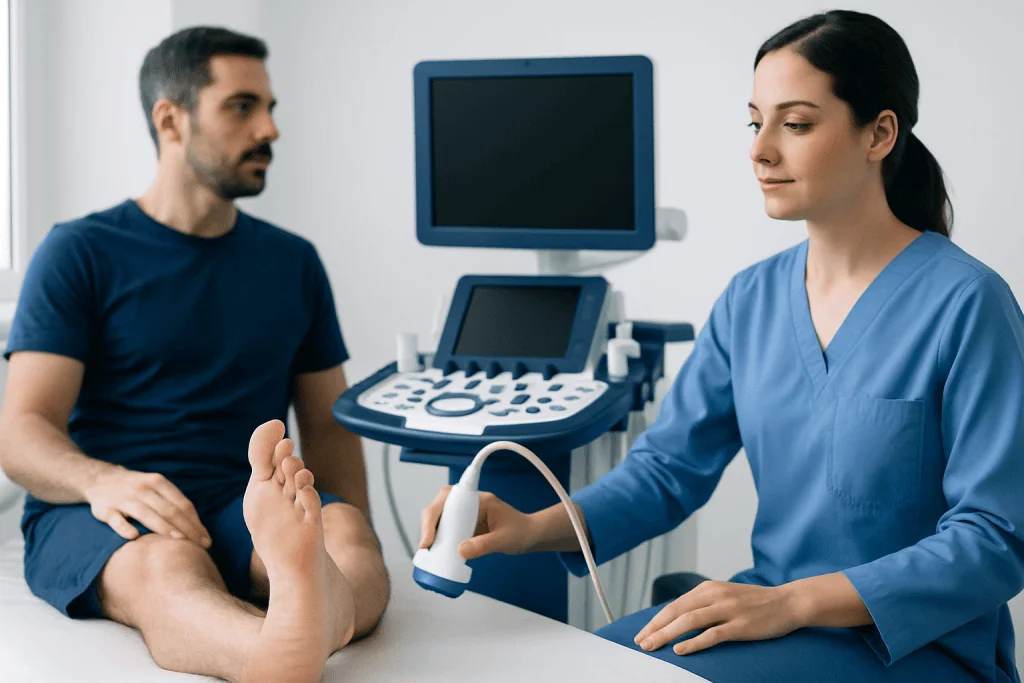
During a step, the foot normally helps absorb shock and adapt to the ground. If the foot remains too rigid or rolls outward more than expected, this process may become less efficient. The result can be higher mechanical stress through the ankle, lower leg, knee, hip, and sometimes the lower back.
Not everyone with excessive supination has symptoms. Some people notice only subtle signs, such as wearing down the outer edge of their shoes more quickly. Others develop repeated ankle sprains, pain on the outer side of the foot, or fatigue during walking and sports.
In runners and active adults, excessive supination may be associated with overuse problems because impact loads are not distributed as evenly. It may also coexist with a high arch, reduced ankle mobility, weak stabilizing muscles, or balance difficulties. Understanding the movement pattern helps guide treatment rather than treating pain alone.
- More pressure along the outer foot
- Reduced shock absorption during impact
- Higher risk of ankle instability in some people
- Possible strain on muscles, tendons, and ligaments up the leg
Symptoms and Common Signs
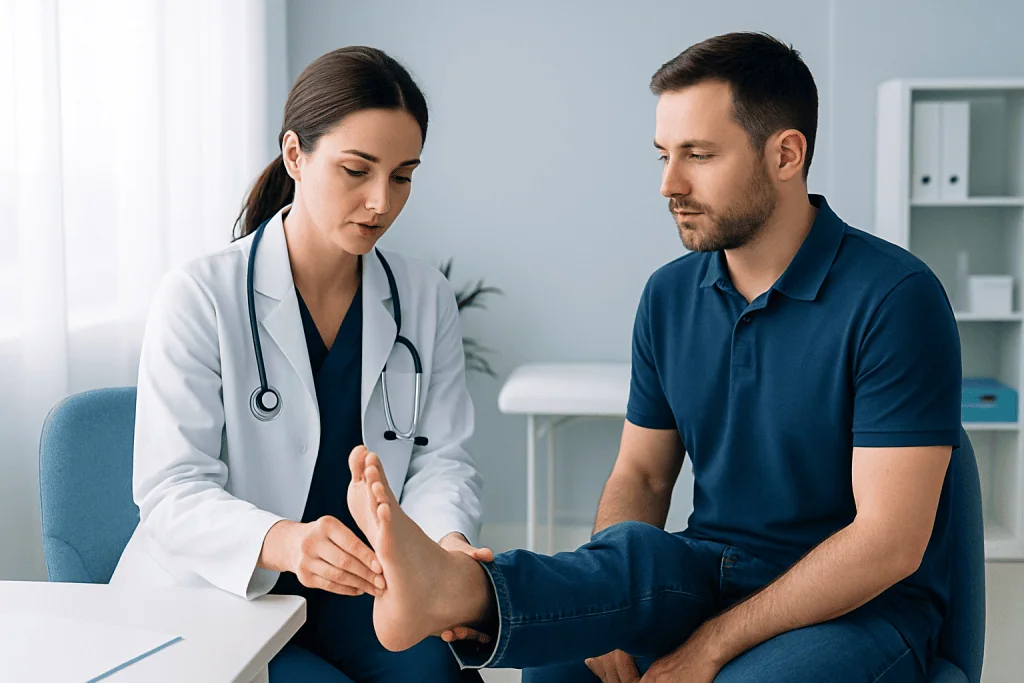
Symptoms vary from person to person. Some have no pain at all, while others notice discomfort only during exercise. The location of pain can offer clues about which tissues are under stress, but a proper examination is usually needed to confirm the cause.
Common symptoms include pain on the outer side of the foot or ankle, repeated ankle sprains, heel pain, shin discomfort, calf tightness, or aching in the knees and hips after activity. A person may feel less stable on uneven ground or notice that one foot turns outward more than the other while walking.
Visible or practical signs can also be helpful. Shoes may show heavier wear on the outer sole. The arch may appear high, or the foot may seem less flexible when weight is placed on it. Athletes sometimes report reduced comfort when running longer distances or difficulty finding shoes that feel supportive.
- Outer foot or ankle pain
- Frequent ankle rolling or sprains
- High arches or a stiff foot pattern
- Uneven shoe wear on the outside edge
- Pain that worsens with running, jumping, or long walks
Causes and Risk Factors
Excessive supination usually has more than one contributing factor. Foot shape is important: people with high arches often place more load on the outer edge of the foot. Muscle weakness, poor balance, tight calf muscles, limited ankle motion, and previous injuries can also change movement patterns and make supination more noticeable.
Past ankle sprains are a common factor. After a sprain, the muscles and ligaments that help stabilize the ankle may not fully recover strength or coordination. This can make the ankle more likely to roll outward again, creating a cycle of instability. In some cases, foot pain or tendon problems develop alongside this pattern, such as ankle sprain-related instability or overuse of the peroneal tendons.
Less commonly, nerve or neurologic conditions can affect muscle control and foot posture. Certain inherited connective tissue or structural differences may also influence gait. Footwear matters too: shoes that are worn out, too rigid, or not suited to a person’s activity can make symptoms worse, even if they are not the original cause.
Activity level is another factor. Running, court sports, hiking on uneven surfaces, and jobs that involve long hours on the feet can increase symptoms when abnormal loading is already present. Sometimes excessive supination is part of a broader issue involving posture, strength, or alignment rather than a foot problem alone.
How Doctors Diagnose Supination Problems
Diagnosis begins with a detailed history. A doctor or physical therapist may ask when symptoms started, whether there have been previous ankle injuries, what kinds of shoes are used, and which activities make symptoms better or worse. They may also ask the patient to bring frequently worn shoes, since wear patterns can provide useful information.
The physical examination often includes looking at the feet while standing, assessing arch height, checking ankle range of motion, testing muscle strength, and observing balance. Gait analysis is especially helpful. By watching a person walk or run, the clinician can assess how the heel lands, how the foot loads through the step, and whether the ankle tends to roll outward.
Imaging is not always necessary, but it may be recommended if there is persistent pain, suspected fracture, tendon injury, severe instability, or concern about arthritis or structural abnormalities. Depending on the situation, this may include X-rays, ultrasound, or MRI scanning. In selected cases, referral to orthopedics, sports medicine, neurology, or rehabilitation may be appropriate.
Treatment Options
Treatment depends on symptoms, activity level, and the underlying cause. For many patients, the first step is conservative care: changing footwear, modifying activities for a short period, and starting targeted exercises. Shoes with good cushioning and appropriate support can help reduce stress on the outer foot. Some people benefit from insoles or custom orthotics, especially when a high arch or recurrent instability is present.
Exercise therapy is often central to recovery. A clinician may recommend stretching tight calf muscles, improving ankle mobility, strengthening the muscles that support the foot and ankle, and practicing balance drills. These measures can improve shock absorption and reduce the tendency to roll outward. Structured physical therapy and rehabilitation can be particularly useful after repeated sprains or long-standing gait problems.
If an injury is present, treatment may need to address that specific condition. For example, tendon irritation, stress injury, or ligament damage may require temporary activity restriction, bracing, or other targeted care. Ongoing outer ankle pain can overlap with peroneal tendonitis or instability after earlier trauma. In cases involving significant structural damage, persistent instability, or failure of conservative treatment, specialist evaluation by orthopedics and traumatology may be recommended.
Medication may help relieve pain or inflammation in some situations, but it does not correct the movement pattern itself. Surgery is not commonly needed for supination alone; when it is considered, it is usually because of a clear underlying structural problem or repeated injuries that have not improved with nonsurgical care.
Self-care and Prevention
Self-care aims to reduce stress on the affected areas and support healthier movement. Choosing activity-appropriate footwear is one of the most practical steps. Shoes should fit well, feel stable, and be replaced when the sole is worn down, especially along the outside edge. People who run may benefit from having their gait and footwear reviewed by a qualified professional.
Regular strengthening and flexibility work can help prevent symptoms from returning. Balance exercises, calf stretching, and foot and ankle strengthening are commonly advised. Building hip and core strength may also improve lower-limb alignment during walking and sports, which can reduce excess load through the foot and ankle.
Training habits matter. Sudden increases in mileage, intensity, or time spent on hard or uneven surfaces can trigger symptoms, even in people with only mild supination. A gradual training plan, rest days, and attention to pain signals are important. If symptoms recur despite good self-care, professional reassessment is a sensible next step.
When to Seek Medical Care
Medical care is advisable when supination is associated with pain, repeated ankle rolling, swelling, weakness, or reduced ability to walk, work, or exercise. Evaluation is also important if symptoms persist despite changing shoes and reducing activity, or if one side is clearly different from the other.
Urgent assessment is warranted after a significant injury, inability to bear weight, obvious deformity, numbness, sudden weakness, or severe swelling. These features can suggest a fracture, major ligament injury, or a neurologic problem that needs prompt attention.
For ongoing symptoms, a multidisciplinary assessment may help clarify whether the main issue is foot structure, old ligament injury, tendon strain, or a broader biomechanics problem. Acibadem International’s multidisciplinary specialists in JCI-accredited hospitals diagnose and treat musculoskeletal and gait-related conditions for international patients, including cases that may benefit from advanced imaging, rehabilitation, or orthopedic review.
Frequently asked questions
Is supination always a problem?
No. Supination is a normal movement, especially in the foot and forearm. It becomes a concern mainly when it is excessive, causes pain, leads to repeated ankle sprains, or contributes to overuse injuries.
What is the difference between supination and pronation?
Pronation and supination are opposite movement patterns. In the foot, pronation refers to a more inward rolling movement that helps absorb shock, while supination refers to a more outward rolling movement. Both are normal in small amounts, but either can cause symptoms if excessive or poorly controlled.
Can high arches cause supination?
High arches are commonly associated with excessive supination, although not everyone with high arches has symptoms. A high-arched foot may be less flexible and may place more pressure on the outer edge of the foot during walking or running.
Do shoe inserts help with supination?
They can help some people, especially when symptoms are related to foot structure or uneven loading. Inserts or orthotics may improve comfort and support, but the best option depends on the individual's foot shape, symptoms, and activity level. A clinician can advise whether over-the-counter or custom support is more appropriate.
Can excessive supination cause knee or hip pain?
Yes, in some people it can contribute to pain higher up the leg. When the foot does not distribute forces efficiently, the ankle, shin, knee, and hip may compensate. This does not mean supination is the only cause, so persistent joint pain should be assessed properly.
Will exercises fix supination?
Exercises can often improve symptoms and function, especially when weakness, stiffness, or poor balance are contributing factors. However, exercises may not completely change a person's natural foot shape. The goal is usually better control, less pain, and lower injury risk rather than perfect alignment.
References
- American Academy of Orthopaedic Surgeons
- National Institute of Arthritis and Musculoskeletal and Skin Diseases
- American Orthopaedic Foot & Ankle Society
- MedlinePlus
- National Health Service
This article is for general information only and is not a substitute for professional medical advice. Please consult a qualified doctor about your individual situation.
Explore treatments in Turkey — costs, top hospitals & a free quote
JCI-accredited · board-certified surgeons · reply within 24h
Add us as a Preferred Source to see more of our trusted health content across Google Search, AI Overviews and Discover.

More from the Health Library


Related Specialists

Dr. Cevdet Hekimoğlu
Gynecology & Obstetrics
Dr. Selim Çepel
Hand Surgery
Prof. Dr. Yurtkuran Sadıkoğlu
Radiology
Prof. Dr. Şükrü Yazar
Aesthetic Plastic & Reconstructive Surgery