Ventral Hernia — Explained by Medical Evidence, Not Myths

A ventral hernia happens when tissue pushes through a weak spot in the abdominal wall. It may appear as a bulge that becomes more noticeable with coughing, straining, or standing.
Key Takeaways
- A ventral hernia happens when tissue pushes through a weak spot in the abdominal wall.
- It may appear as a bulge that becomes more noticeable with coughing, straining, or standing.
- Small or symptom-free hernias may be monitored, but many ventral hernias eventually need repair.
- Sudden severe pain, vomiting, redness, or a bulge that cannot be pushed back in can signal an emergency.
- Treatment depends on symptoms, hernia size, overall health, and the risk of complications.
A ventral hernia is a bulge through a weak area of the abdominal wall, often developing at or near a previous surgical incision but sometimes occurring elsewhere. Some ventral hernias cause few symptoms, while others lead to pain, enlargement, or complications that need prompt medical care.
What a ventral hernia is
A ventral hernia is a type of abdominal wall hernia. It develops when part of the intestine, fatty tissue, or other abdominal contents pushes through a weak area in the muscles or connective tissue of the belly. The result is often a visible or felt bulge under the skin.
The term “ventral” refers to the front of the body. In practice, this means the hernia occurs somewhere along the front abdominal wall. Some ventral hernias arise spontaneously, while others happen at the site of a prior abdominal operation. A hernia that forms through an old surgical scar is often called an incisional hernia, which is a common subtype of ventral hernia.
Ventral hernias vary widely. A small hernia may cause only mild discomfort or no symptoms at all. A larger hernia can gradually enlarge over time, affect daily activities, and increase the chance of bowel becoming trapped. For this reason, diagnosis and follow-up matter even when symptoms seem minor.
How it may feel and look
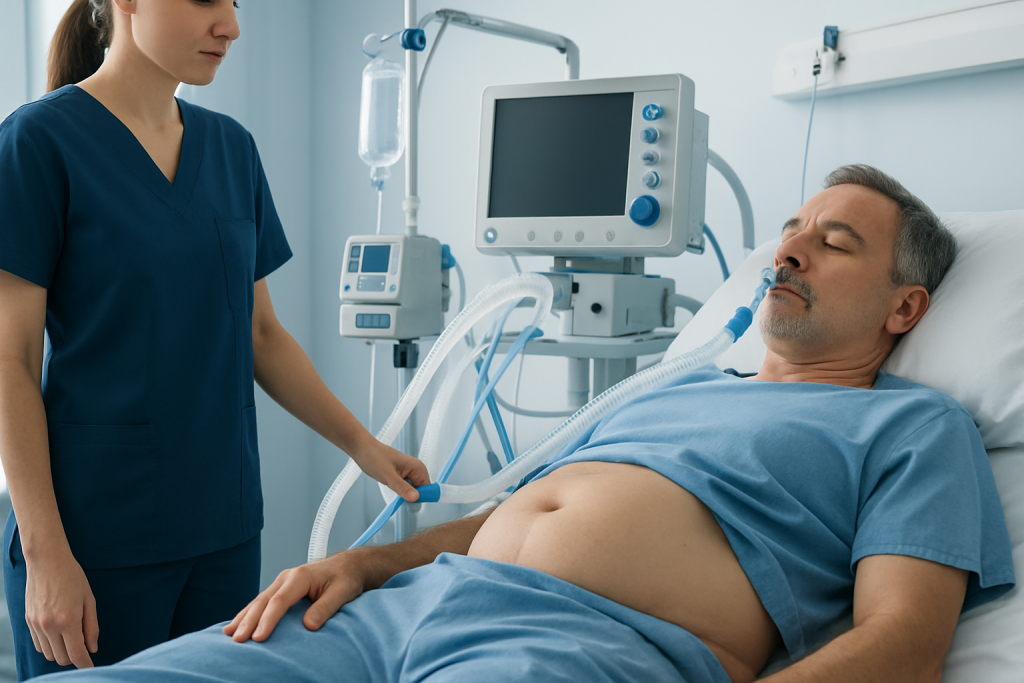
The most common sign of a ventral hernia is a bulge in the abdomen. It may be easier to notice when standing, coughing, lifting, or straining, and it may flatten or become less obvious when lying down. Some people describe a sense of pressure, pulling, or heaviness rather than sharp pain.
Symptoms can range from subtle to bothersome. Discomfort may increase after meals, prolonged standing, exercise, or lifting. In some cases, the hernia can be gently pushed back inside, which is called a reducible hernia. This does not mean it should be ignored, but it may help a doctor understand the hernia’s behavior.
Possible symptoms include:
- A soft or firm bulge in the abdominal wall
- Pressure, aching, or tenderness at the site
- Discomfort with coughing, bending, or lifting
- A bulge that slowly gets larger over time
- A feeling of weakness in the abdominal wall
Not every abdominal bulge is a hernia. Other causes can include scar tissue, lipomas, fluid collections, or muscle separation. A medical assessment helps confirm the cause and guide next steps.
Why ventral hernias happen
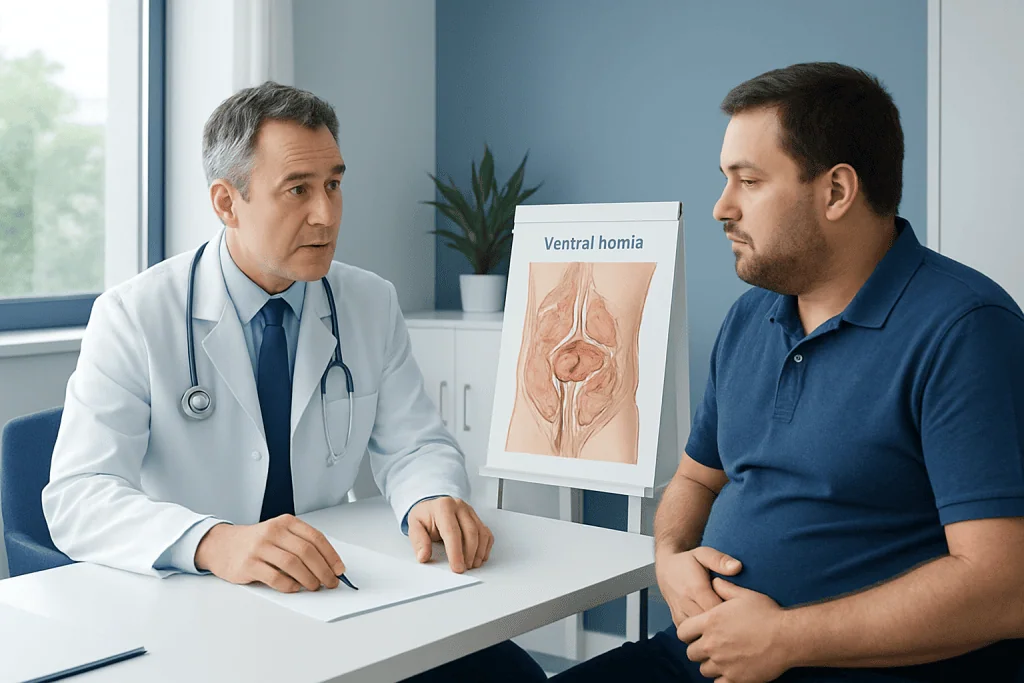
A ventral hernia forms when there is both a weak point in the abdominal wall and pressure from inside the abdomen pushing outward. Surgery is one of the most important risk factors because healing at an incision site may leave an area less strong than the surrounding tissue. However, ventral hernias can also occur without previous surgery.
Several factors can increase abdominal pressure or make tissues heal less effectively. These include obesity, chronic coughing, constipation with straining, heavy lifting, pregnancy, aging, and activities that repeatedly stress the abdominal wall. Smoking, diabetes, poor nutrition, and wound infection after surgery can also raise the risk by impairing tissue strength and healing.
Doctors usually think about both the original weakness and the ongoing stress on the abdominal wall. This is one reason treatment planning often includes not only repairing the hernia itself but also addressing contributing factors such as weight management, smoking cessation, or chronic cough control.
Related abdominal wall conditions may sometimes be discussed during evaluation, especially if the symptoms overlap with other hernia types or if imaging is needed to clarify the diagnosis.
How doctors diagnose a ventral hernia
Diagnosis usually begins with a medical history and physical examination. A doctor will ask when the bulge first appeared, whether it changes size, what activities trigger symptoms, and whether there are warning signs such as nausea, vomiting, or a bulge that no longer reduces. The examination often includes checking the abdomen while the person is standing and while coughing or straining gently.
In many cases, an experienced clinician can diagnose a ventral hernia from examination alone. Imaging may be helpful when the hernia is small, difficult to feel, recurrent, or in a person with significant abdominal wall changes after prior surgery. Ultrasound and computed tomography are commonly used to define the hernia’s size, location, and contents.
Imaging can also help surgeons plan repair by showing how much of the abdominal wall is involved and whether there are multiple defects. This is particularly useful for complex or recurrent hernias. If symptoms suggest bowel obstruction or compromised blood flow, evaluation becomes more urgent.
Treatment options and when surgery is considered
Treatment depends on the size of the hernia, the person’s symptoms, general health, and the likelihood of complications. A small ventral hernia that causes no symptoms may sometimes be monitored, especially if the risks of surgery currently outweigh the benefits. Even then, regular follow-up is important because hernias do not heal on their own.
When a ventral hernia causes pain, enlarges, interferes with activity, or becomes difficult to reduce, repair is often recommended. The goal is to return protruding tissue to the abdomen and strengthen the abdominal wall. Repair may be done with stitches alone in selected cases, but mesh reinforcement is commonly used because it can reduce the chance of recurrence in many patients.
Surgery can be performed using different approaches, depending on the hernia. These may include open repair or minimally invasive techniques such as laparoscopic surgery in appropriate cases. More complex abdominal wall reconstruction may be needed for larger defects, recurrent hernias, or hernias after previous operations.
The most suitable approach is individualized. A surgeon considers the hernia’s size and location, prior surgeries, body weight, smoking status, wound history, and whether there are signs of infection or bowel involvement. In specialized centers, hernia surgery planning may involve a multidisciplinary team, especially for large or complex ventral hernias.
Self-care, prevention, and recovery habits
Self-care cannot close a ventral hernia, but it can help reduce strain on the abdominal wall and support overall health. People are often advised to avoid heavy lifting when possible and to use proper body mechanics. Managing constipation, treating chronic cough, and maintaining a healthy weight may also reduce pressure on the hernia site.
If surgery is planned, preparing for the procedure can improve recovery. Stopping smoking, optimizing blood sugar, improving nutrition, and discussing medications with the care team may lower the risk of wound problems. For some patients, prehabilitation measures such as gentle exercise and breathing work are also encouraged.
After repair, following postoperative instructions is an important part of healing. Patients may be advised to walk regularly, protect the incision, avoid strenuous lifting for a period, and watch for signs of infection or recurrence. Any concern about swelling, fever, severe pain, or drainage should be reported to the surgical team.
For patients traveling for care, Acibadem International’s multidisciplinary specialists in JCI-accredited hospitals diagnose and treat ventral hernia, including selected cases that may benefit from robotic surgery or other advanced surgical planning.
When to seek medical care
Medical review is appropriate for any new or persistent abdominal bulge, especially if it enlarges, becomes painful, or affects daily activities. Even if symptoms are mild, a clinician can confirm whether it is truly a hernia and discuss whether monitoring or repair is the safer option.
Urgent medical care is needed if the bulge becomes suddenly very painful, cannot be pushed back in, or is accompanied by nausea, vomiting, abdominal swelling, fever, or redness over the area. These features can suggest incarceration or strangulation, meaning tissue may be trapped and its blood supply threatened. That situation requires prompt evaluation.
It is also important to seek advice after abdominal surgery if a new bulge develops near the incision. Early assessment can help identify an incisional hernia, rule out other causes, and support timely treatment before the defect becomes larger or more complicated.
Frequently asked questions
Is a ventral hernia the same as an incisional hernia?
Not exactly. Ventral hernia is a broader term for hernias that occur in the front abdominal wall, while an incisional hernia is a ventral hernia that develops through a previous surgical scar. In other words, all incisional hernias are ventral hernias, but not all ventral hernias are incisional.
Can a ventral hernia go away without treatment?
No, a true ventral hernia does not heal on its own. Some hernias stay stable for a period, but many enlarge gradually over time. A doctor can advise whether watchful waiting is reasonable or whether repair is recommended.
Does every ventral hernia need surgery?
Not always. Some small hernias with minimal symptoms may be observed, especially if surgery carries higher risks for that person. However, many ventral hernias eventually need repair because of pain, growth, or the risk of tissue becoming trapped.
What are the warning signs of an emergency ventral hernia?
Warning signs include sudden severe pain, a bulge that becomes firm or cannot be pushed back in, nausea, vomiting, abdominal swelling, or redness over the area. These symptoms can suggest incarceration or strangulation. Prompt medical evaluation is important.
How is a ventral hernia diagnosed?
Doctors usually diagnose it with a medical history and physical examination. Imaging tests such as ultrasound or CT may be used if the hernia is small, recurrent, difficult to examine, or if surgery is being planned. These tests help define the location and size of the defect.
Can exercise make a ventral hernia worse?
Activities that sharply increase abdominal pressure, such as heavy lifting or straining, may worsen symptoms or make the bulge more noticeable. Gentle movement is often still possible, but exercise should be discussed with a doctor, especially if pain is present. A tailored plan is safest.
References
- National Institute of Diabetes and Digestive and Kidney Diseases
- American College of Surgeons
- Society of American Gastrointestinal and Endoscopic Surgeons
- European Hernia Society
- MedlinePlus
This article is for general information only and is not a substitute for professional medical advice. Please consult a qualified doctor about your individual situation.
Persistent digestive symptoms? Get evaluated in Turkey
JCI-accredited · board-certified surgeons · reply within 24h
Add us as a Preferred Source to see more of our trusted health content across Google Search, AI Overviews and Discover.