Drug Test: An Evidence-Based Guide for Patients
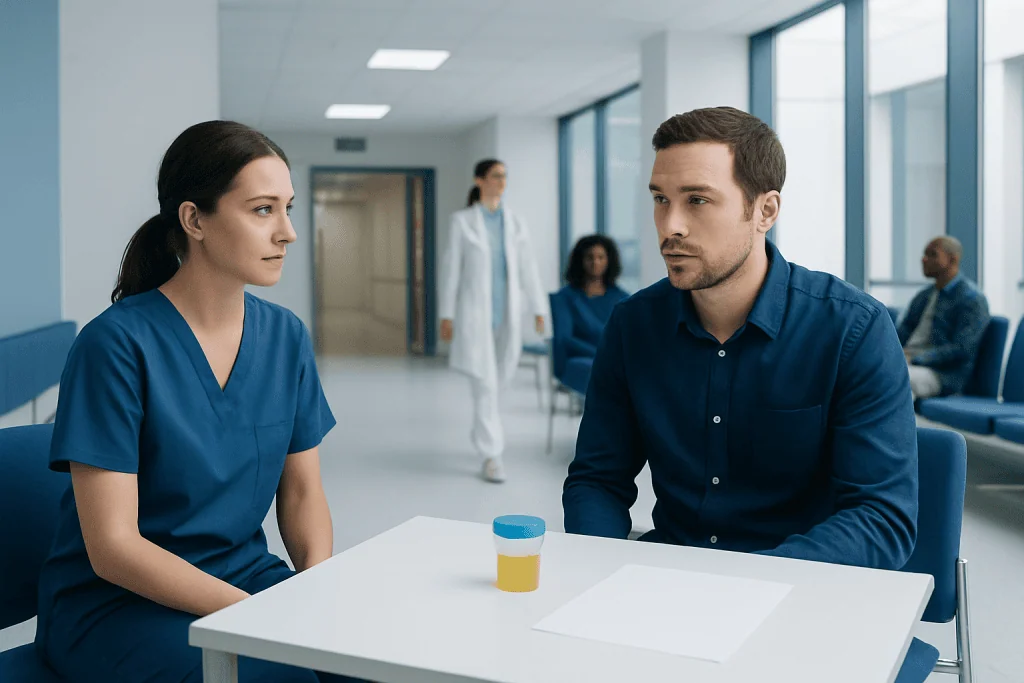
A drug test may use urine, blood, saliva, hair, or sweat, depending on the reason for testing. Screening tests can give preliminary results, but confirmatory testing is often needed before important decisions are made.
Key Takeaways
- A drug test may use urine, blood, saliva, hair, or sweat, depending on the reason for testing.
- Screening tests can give preliminary results, but confirmatory testing is often needed before important decisions are made.
- A positive result does not always mean misuse; prescription medicines, over-the-counter products, and lab factors can affect results.
- Detection windows vary widely by substance, dose, frequency of use, body chemistry, and test type.
- Patients should share all medicines and supplements honestly to help interpret results accurately.
A drug test checks for the presence of specific drugs or their breakdown products in the body. For patients, the most important points are which sample is used, what the test can and cannot show, and how results are confirmed when accuracy matters.
Overview: what a drug test is and what it can show
A drug test is a laboratory or point-of-care test that looks for one or more drugs, or for metabolites that the body makes after a drug is used. In everyday practice, these tests are used for medical care, emergency assessment, workplace screening, sports programs, legal settings, and monitoring during treatment. The result helps answer a focused question: whether a particular substance is likely to be present in a sample taken at a certain time.
Different tests answer different questions. Some are designed to quickly screen for common drug groups, while others identify a specific substance with greater precision. A test may show recent exposure, but it usually cannot determine exact timing, dose, level of impairment, or whether a person has a substance use disorder on its own.
For patients, context matters. A clinician may order a drug test to guide safe treatment, explain unexplained symptoms, or monitor prescribed medicines. In some settings, a broader health assessment may also look at related concerns such as substance use disorder or withdrawal, but the drug test itself is only one part of the overall evaluation.
Common types of drug tests
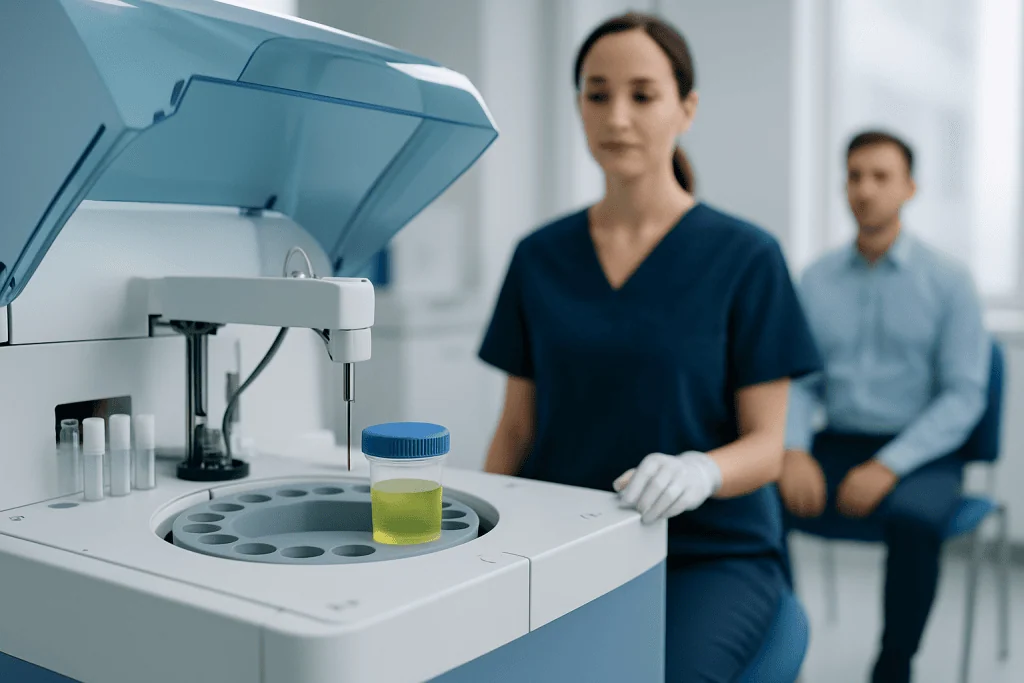
The most common drug test is a urine test. Urine testing is widely used because it is practical, relatively inexpensive, and can detect many drugs and metabolites for a useful period after use. It is often the first choice for screening in clinics, hospitals, workplaces, and treatment programs.
Blood tests are used less often for routine screening but can be important when doctors need information about more recent exposure or when a person appears acutely unwell. Saliva tests can detect recent use and are sometimes chosen for roadside, workplace, or short-notice testing. Hair testing may show patterns of exposure over a longer period, while sweat testing is used in more specialized monitoring situations.
Each sample type has limits. Urine may remain positive after impairment has passed. Blood can reflect more recent exposure but usually has a shorter detection window. Hair testing does not usually show very recent use. Because of these differences, the best test depends on the purpose of testing rather than on one method being universally better.
- Urine: common, practical, often used for screening
- Blood: more useful for recent exposure in acute care
- Saliva: useful for recent use, easy sample collection
- Hair: longer-term exposure patterns
- Sweat: specialized monitoring over time
How drug testing is done and what affects the result

The testing process usually starts with a sample collection under standard procedures designed to reduce contamination or mix-ups. The sample is labeled, handled according to protocol, and then tested either at the point of care or in a laboratory. Some settings use a rapid screening test first and send positive or unclear results for a more specific confirmatory test.
Many factors influence what a result means. These include the type of drug, how much was taken, how often it was used, the time since last use, hydration, metabolism, body composition, liver and kidney function, and the sensitivity of the test. Two people who used the same substance may not have identical results.
Patients should tell the healthcare team about all prescription medicines, nonprescription products, herbal remedies, and supplements. This is especially important when the result could affect treatment, surgery, employment, or legal decisions. In some cases, additional lab evaluation may be needed through check-up and diagnostic services to interpret a result in the wider medical picture.
Understanding positive, negative, and inconclusive results
A negative drug test generally means that the substances checked were not detected above the test’s reporting threshold. It does not always prove that no substance was used. A sample taken too early or too late, a low amount of drug, or a test that does not include a specific substance can all lead to a negative result even when exposure occurred.
A positive result means the test found evidence of a targeted substance or its metabolite. However, a positive screening result is not always the same as a final diagnosis or proof of misuse. When the result matters clinically or legally, confirmatory methods are used to identify the substance more specifically and reduce the chance of error.
Sometimes results are reported as invalid, inconclusive, or needing repeat collection. This can happen because of sample quality problems, interfering substances, timing issues, or technical reasons. If a result does not match the clinical situation, doctors may review medications, repeat the test, or use a more precise method before drawing conclusions.
False positives, false negatives, and detection windows
One of the most important patient concerns is whether a drug test can be wrong. The answer is yes, especially with preliminary screening tests. Some prescription medicines, over-the-counter products, and even certain supplements can occasionally trigger false positive results, depending on the testing method used.
False negatives can also occur. The substance may not be included in the testing panel, the concentration may be below the reporting cutoff, or too much time may have passed since use. Dilute urine samples and collection or handling issues can also affect detection.
Detection windows vary by substance and test type. A saliva or blood test may be better for very recent use, while urine often detects substances for longer, and hair may reflect past exposure over weeks to months. Because there is no single timetable that fits every person or every drug, patients should be cautious about generalized charts found online and rely on medical advice when interpretation matters.
Why doctors order a drug test in medical care
In healthcare, a drug test is often used to support diagnosis and safe treatment decisions. For example, in emergency care, it may help clarify why a person has sudden confusion, unusual behavior, chest symptoms, or reduced consciousness. In outpatient care, it may be used to monitor some prescribed medications or to support treatment plans when substance-related concerns are present.
Testing can also help distinguish between conditions with similar symptoms. A person with anxiety, palpitations, sleep problems, tremor, or mood changes may need a broader evaluation so that symptoms are not attributed too quickly to a drug alone. This is one reason drug testing is interpreted alongside history, examination, and sometimes laboratory tests and diagnostics.
When substance use is affecting physical or mental health, care may involve more than testing. Depending on the situation, doctors may assess for intoxication, withdrawal, coexisting illness, or complications such as depression and other mental health concerns. The goal is to provide accurate, respectful, medically appropriate care rather than rely on the test result in isolation.
What patients can do before and after a drug test
The most helpful step before a drug test is to provide complete, honest information. Patients should bring or list prescription medicines, over-the-counter products, vitamins, supplements, and recent medical treatments. This helps the healthcare team choose the right test and interpret the result fairly.
It is also wise to ask practical questions: what substances the panel includes, what sample will be used, whether the test is a screen or a confirmatory test, and how results will be reported. Patients should not attempt to alter a sample, overhydrate, or use unverified products that claim to “cleanse” the body, as these may invalidate the test and create further confusion.
After testing, patients should discuss the result in context. If a finding seems unexpected, they can ask whether confirmation, repeat testing, or review by a medical toxicology or laboratory specialist is appropriate. Near the end of a care pathway, some international patients may also seek coordinated assessment at centers such as Acibadem International, where multidisciplinary specialists in JCI-accredited hospitals evaluate complex diagnostic questions and related treatment needs.
When to seek medical care
A drug test is not a substitute for urgent medical assessment. A person should seek prompt medical care if there are signs of overdose, severe sleepiness, difficulty breathing, chest pain, seizures, extreme agitation, hallucinations, fainting, or confusion. These symptoms can be medical emergencies regardless of what a test may later show.
Medical review is also important when a result is unexpected, when a prescribed medicine may be causing side effects, or when substance use may be affecting work, relationships, mood, or daily function. Early support can reduce complications and help a person understand the next steps clearly.
If there are repeated concerns, doctors may recommend a broader evaluation that includes physical health, mental health, and possible treatment planning. Depending on need, this may involve psychiatry or other specialist services, especially when symptoms suggest dependence, withdrawal, or coexisting emotional distress.
Frequently asked questions
How long does a drug test stay positive?
There is no single answer because the detection window depends on the substance, the type of test, how often it was used, and individual metabolism. In general, blood and saliva tend to reflect more recent exposure, urine often detects substances for longer, and hair can show longer-term patterns.
Can a drug test tell if someone is currently impaired?
Not reliably in most cases. A drug test mainly shows whether a substance or its metabolites are present, not whether a person is impaired at the exact time of testing. Clinical examination and circumstances are also important.
Can prescription medicines cause a positive drug test?
Yes, some prescription and over-the-counter medicines can affect screening results. That is why patients should always disclose all medicines and supplements before testing, especially if the result could have important consequences.
What is the difference between a screening test and a confirmatory test?
A screening test is designed to quickly flag possible positives, often using broader methods. A confirmatory test uses more specific laboratory techniques to identify the substance more accurately and is often used when a result must be verified.
Is urine testing better than blood testing?
Neither is universally better; each serves a different purpose. Urine is common and practical for screening, while blood may be more useful when doctors need information about very recent exposure in acute medical situations.
What should a patient do if the result seems wrong?
The patient should discuss the result with the healthcare professional who ordered the test. Review of medications, repeat collection, or confirmatory testing may be appropriate if the result does not fit the medical history or clinical picture.
This article is for general information only and is not a substitute for professional medical advice. Please consult a qualified doctor about your individual situation.
Explore treatments in Turkey — costs, top hospitals & a free quote
JCI-accredited · board-certified surgeons · reply within 24h
Add us as a Preferred Source to see more of our trusted health content across Google Search, AI Overviews and Discover.

More from the Health Library
Human Anatomy: What Patients Need to Know

Boil treatment: Symptoms, Causes, and Treatment — Complete Patient Guide

Why Is Your Dog Licking Its Lips?

Athazagoraphobia — Explained by Medical Evidence, Not Myths

Redness on Bottom: An Evidence-Based Guide for Patients