Otosclerosis: Diagnosis, Outlook, and Modern Treatment Approaches

Otosclerosis commonly causes gradual hearing loss, often in one ear first and later in both. Some people also notice tinnitus, difficulty hearing low-pitched sounds, or problems understanding speech in noise.
Key Takeaways
- Otosclerosis commonly causes gradual hearing loss, often in one ear first and later in both.
- Some people also notice tinnitus, difficulty hearing low-pitched sounds, or problems understanding speech in noise.
- Diagnosis usually relies on hearing tests, ear examination, and sometimes imaging to rule out other causes.
- Treatment may include observation, hearing aids, or surgery such as stapes surgery, depending on symptoms and test results.
- Early specialist assessment can help clarify the cause of hearing changes and support timely treatment decisions.
Otosclerosis is a condition in which abnormal bone remodeling around the stapes bone in the middle ear reduces sound transmission and may lead to gradual hearing loss. It is often manageable with hearing aids, monitoring, or surgery, and diagnosis usually involves a hearing test and specialist ear evaluation.
Overview: what otosclerosis is and what it means
Otosclerosis is a disorder of bone remodeling in the ear. In most cases, it affects the area around the stapes, a tiny middle-ear bone that needs to move freely to transmit sound to the inner ear. When abnormal bone forms around this bone, movement becomes limited and hearing gradually declines.
This condition most often causes conductive hearing loss, meaning sound has difficulty passing through the middle ear. In some people, the inner ear is also affected, which can lead to a mixed hearing loss that includes a sensorineural component. Symptoms usually develop slowly, so many people first notice trouble hearing conversations, telephone calls, or speech in busy places.
Otosclerosis is not an infection and it is not caused by poor ear hygiene. It is also different from common causes of temporary hearing reduction such as earwax buildup or middle-ear fluid. Because several ear problems can produce similar symptoms, an accurate diagnosis by an ear, nose, and throat specialist is important.
Symptoms and how hearing changes over time
The most common symptom of otosclerosis is gradual hearing loss. It may begin in one ear, although both ears can become affected over time. Many people describe the change as subtle at first, with increasing difficulty hearing soft voices, low-frequency sounds, or speech when there is background noise.
Tinnitus, often experienced as ringing, buzzing, or humming in the ear, can occur alongside hearing loss. Some people also report a sense that they hear their own voice loudly. Less commonly, mild balance symptoms may occur, although marked dizziness is not usually the main feature.
The pattern and speed of progression vary. Some people notice only mild limitations for years, while others experience more steady change. Because hearing loss can have many causes, symptoms that seem minor at first still deserve evaluation if they persist.
- Gradual hearing loss, often starting in early to middle adulthood
- Tinnitus or other internal ear sounds
- Difficulty understanding speech in crowded environments
- Possible involvement of both ears over time
- Occasionally mild balance disturbance
Causes and risk factors

The exact cause of otosclerosis is not fully understood, but it is linked to abnormal bone turnover in the ear. A family history is common, which suggests a genetic contribution. Not everyone with a family history develops the condition, but inherited tendency appears to play a role in many cases.
Hormonal influences may also be relevant. Symptoms sometimes become more noticeable during periods of hormonal change, such as pregnancy, although the relationship is not the same for every person. Researchers have also examined possible viral and immune-related influences, but these do not explain all cases.
Otosclerosis should not be confused with other reasons for hearing loss, including chronic ear infections, noise exposure, age-related hearing loss, or structural problems of the eardrum and middle ear. In specialist care, the condition is assessed within the broader context of hearing loss and other ear disorders so the underlying cause can be identified correctly.
How otosclerosis is diagnosed
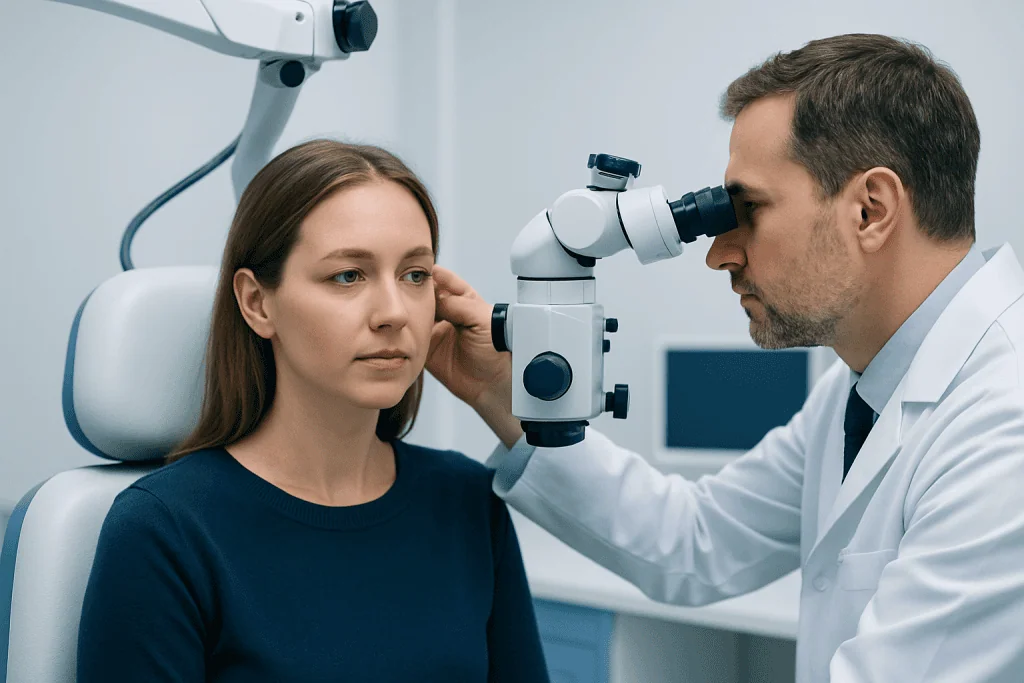
Diagnosis begins with a medical history and ear examination. The clinician asks about the timing of hearing changes, whether one or both ears are affected, the presence of tinnitus, family history, and any balance symptoms. The ear canal and eardrum are examined to exclude more common and easily treatable causes such as wax impaction or visible middle-ear problems.
Hearing tests are central to diagnosis. Pure-tone audiometry helps show the type and degree of hearing loss, while speech testing may show how hearing problems affect communication. Tympanometry and acoustic reflex testing can add useful information about middle-ear function. These tests together often point strongly toward otosclerosis.
Imaging is not always required, but a CT scan of the temporal bone may be recommended in selected cases, especially when the diagnosis is uncertain or surgery is being considered. Imaging can help assess the bony structures of the ear and rule out other conditions. If hearing loss has a strong inner-ear component, specialists may also consider other causes such as vertigo-related inner-ear disorders or unrelated sensorineural hearing problems.
Modern treatment approaches
Treatment depends on the degree of hearing loss, how much symptoms affect daily life, and the findings on testing. In mild or stable cases, monitoring with repeat hearing assessments may be appropriate. When hearing difficulties begin to interfere with communication, work, or quality of life, active treatment is usually considered.
Hearing aids are a common non-surgical option and can be very effective, especially when surgery is not preferred or not suitable. They do not treat the underlying bone change, but they can improve hearing by amplifying sound in a tailored way. Many people benefit from professional fitting and regular adjustment as hearing needs change over time. In a broader hearing rehabilitation plan, specialists may recommend hearing aids along with communication strategies.
Surgery is another established option for selected patients. The most common procedure is stapes surgery, often called stapedotomy or stapedectomy, in which the fixed stapes is bypassed or partly replaced with a small prosthesis to improve sound conduction. This operation is generally considered when testing confirms a suitable pattern of conductive hearing loss and the ear anatomy supports surgery. For some patients, referral for ear surgery provides the best chance of improving hearing without external amplification.
No single treatment is right for everyone. Decisions are individualized after discussing expected benefits, limits, and possible risks, including incomplete hearing improvement, dizziness, taste disturbance, tinnitus change, or, rarely, worsening hearing. In selected situations, comprehensive cochlear implant evaluation may be relevant if advanced inner-ear hearing loss develops, though this is not the standard treatment for typical early otosclerosis.
Living with otosclerosis: self-care and follow-up
Although self-care cannot reverse otosclerosis, practical steps can make daily communication easier. Facing the speaker, reducing background noise, asking others to speak clearly rather than loudly, and using phone or media accessibility settings can all help. If hearing aids are prescribed, regular follow-up improves comfort and performance.
Long-term monitoring matters because hearing can change gradually. Repeat audiology tests help show whether the condition is stable, whether the other ear has become involved, and whether the current management plan remains appropriate. Prompt reassessment is especially useful if symptoms change suddenly, because sudden hearing loss is not typical of otosclerosis and may need urgent evaluation.
People with tinnitus may also benefit from supportive strategies such as sound enrichment, sleep hygiene, and discussing coping techniques with an audiologist or ENT specialist. If surgery has been performed, the medical team gives individualized advice about recovery, ear protection, and follow-up hearing tests.
When to seek medical care
Medical assessment is advisable for any persistent hearing change, especially if hearing loss develops gradually in one or both ears, tinnitus becomes troublesome, or speech is harder to understand in everyday situations. Even when symptoms seem mild, evaluation can help distinguish otosclerosis from other treatable ear conditions.
More urgent care is important if hearing loss appears suddenly, if there is severe dizziness, significant ear pain, ear discharge, facial weakness, or new neurologic symptoms. These features are not typical of straightforward otosclerosis and may point to a different problem that needs timely attention.
Specialist assessment can help patients understand whether observation, hearing support, or surgery is the most reasonable next step. Acibadem International’s multidisciplinary specialists in JCI-accredited hospitals diagnose and treat ear conditions, including otosclerosis, for international patients when expert ENT and audiology care is needed.
Frequently asked questions
Is otosclerosis curable?
Otosclerosis can often be managed effectively, but the underlying bone remodeling process is not simply “cured” with medicine alone. Depending on the case, hearing may improve with hearing aids or surgery, and many people achieve good functional results with proper follow-up.
What is the first sign of otosclerosis?
The first sign is usually gradual hearing loss, often noticed as difficulty hearing conversations or understanding speech in noisy places. Some people also notice tinnitus early in the course of the condition.
Does otosclerosis always affect both ears?
Not always. It may begin in one ear and later involve the other, but the degree of hearing loss can differ between ears. Regular hearing tests help track whether both sides are affected over time.
Can hearing aids help otosclerosis?
Yes, hearing aids can be very helpful for many people with otosclerosis. They do not remove the abnormal bone change, but they can improve hearing by amplifying sound based on the person’s hearing test results.
Is surgery for otosclerosis safe?
Stapes surgery is a well-established procedure for carefully selected patients, but like any operation it carries risks. A surgeon will explain potential benefits and possible complications so the decision can be made based on individual hearing tests, anatomy, and goals.
Can otosclerosis cause dizziness?
Mild balance symptoms can occur in some cases, but severe or sudden dizziness is not typical. If dizziness is prominent, a doctor may look for other inner-ear or neurologic causes in addition to evaluating for otosclerosis.
References
- National Institute on Deafness and Other Communication Disorders
- American Academy of Otolaryngology–Head and Neck Surgery
- National Health Service
- Merck Manual Professional Edition
- American Speech-Language-Hearing Association
This article is for general information only and is not a substitute for professional medical advice. Please consult a qualified doctor about your individual situation.
Explore treatments in Turkey — costs, top hospitals & a free quote
JCI-accredited · board-certified surgeons · reply within 24h
Add us as a Preferred Source to see more of our trusted health content across Google Search, AI Overviews and Discover.