Erb’s Palsy: What Patients Need to Know

Erb's palsy affects the upper brachial plexus nerves that control shoulder and arm movement. It is most commonly seen in newborns after stretching of the neck and shoulder during delivery, but trauma can also cause it later in life.
Key Takeaways
- Erb's palsy affects the upper brachial plexus nerves that control shoulder and arm movement.
- It is most commonly seen in newborns after stretching of the neck and shoulder during delivery, but trauma can also cause it later in life.
- Early diagnosis and guided physical therapy are important to protect joint movement and support recovery.
- Some children recover fully within months, while others may need nerve surgery, orthopedic care, or rehabilitation.
- Prompt medical review is important if an infant has one weak arm, limited shoulder movement, or an absent Moro reflex on one side.
Erb's palsy is a type of brachial plexus injury that affects movement and feeling in the shoulder, arm, or hand, most often in newborns after a difficult delivery but sometimes in older children or adults after trauma. Many people improve with time, physical therapy, and careful follow-up, while some need surgery or longer-term rehabilitation.
Overview
Erb’s palsy is a nerve injury involving the upper part of the brachial plexus, a network of nerves that runs from the neck to the shoulder and arm. These nerves help control movement and sensation in the shoulder, elbow, forearm, and hand. When the upper nerves are stretched or torn, the affected arm may seem weak, limp, or harder to move normally.
In infants, erb’s palsy most often happens during birth if the baby’s neck and shoulder are stretched during delivery. In older children and adults, a similar injury can occur after falls, sports injuries, traffic accidents, or other trauma. The degree of injury can range from mild nerve stretching, which may heal on its own, to more severe damage that needs specialized treatment.
For patients and families, the key point is that erb’s palsy is not a muscle problem alone. It starts with the nerves, and recovery depends on how much those nerves were affected. Because the condition changes over time, doctors usually monitor movement, strength, and progress closely before deciding which treatments are most appropriate.
Signs and Symptoms
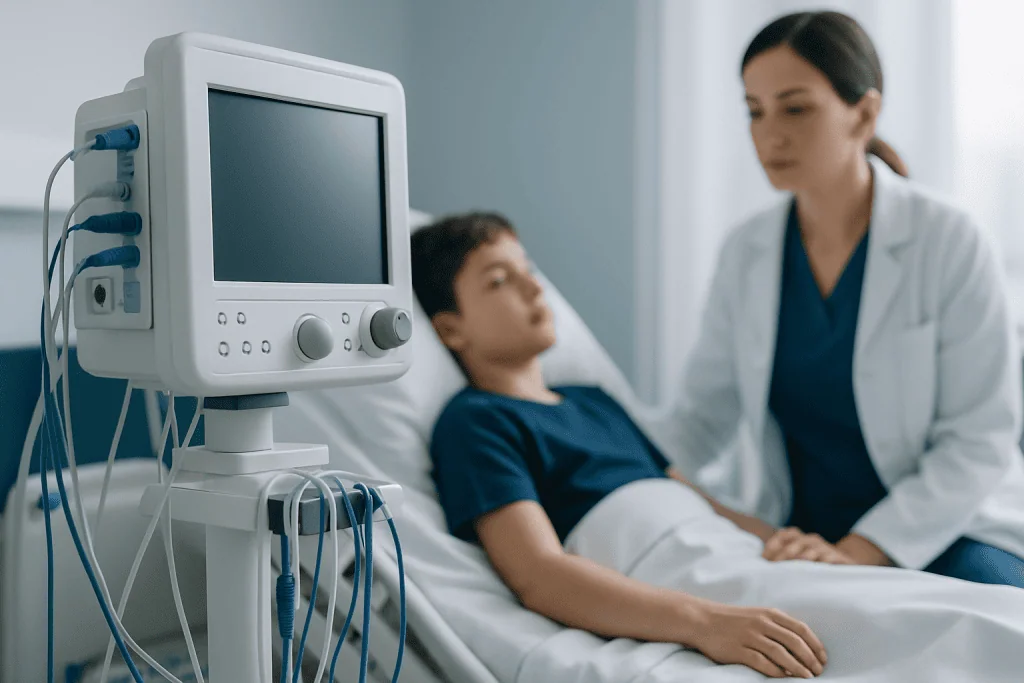
The symptoms of erb’s palsy depend on how many nerves were injured and how severely they were affected. In newborns, the most noticeable sign is often one arm that does not move as much as the other. The arm may rest straight by the side with the shoulder turned inward, the elbow extended, and the forearm rotated inward. Some babies also have a weaker Moro reflex on the affected side.
In older children or adults, symptoms may include shoulder weakness, difficulty bending the elbow, reduced grip strength, numbness, or pain. Some people describe a heavy or lifeless feeling in the arm after an injury. If the injury is mild, function may begin to return within weeks. More severe injuries can cause lasting weakness, limited range of motion, muscle imbalance, or joint stiffness if not treated.
Common signs can include:
- Reduced movement in one arm
- Weak shoulder or elbow motion
- Decreased sensation or altered feeling in the arm
- Arm posture that looks turned inward
- Absent or reduced reflexes on one side in an infant
- Later muscle tightness or joint stiffness if recovery is incomplete
Because symptoms can overlap with other nerve or orthopedic problems, medical assessment is important. Related nerve conditions may be discussed under brachial plexus injury when doctors explain the broader category of these injuries.
Why Erb's Palsy Happens

Erb’s palsy occurs when the upper brachial plexus nerves, usually the C5 and C6 nerve roots, are stretched, compressed, or torn. In newborns, this may happen during a difficult vaginal delivery, especially if the shoulder becomes lodged behind the mother’s pelvic bone, a situation called shoulder dystocia. A large baby, breech presentation, prolonged labor, or the need for assisted delivery can increase the chance of traction on the neck and shoulder.
It is important to remember that risk factors do not always mean the condition will occur, and erb’s palsy can happen even when pregnancy and delivery seemed uncomplicated. In some cases, there may also be associated injuries such as a fractured clavicle or humerus, which is why doctors examine the whole arm and shoulder carefully.
Outside the newborn period, causes are more often traumatic. These include motorcycle or car accidents, contact sports, falls, or direct blows to the neck and shoulder. Less commonly, inflammation, tumors, or surgical complications may injure the brachial plexus. Doctors use the patient’s age and the circumstances of the injury to guide diagnosis and treatment planning.
Nerve damage may be classified from mild stretching to more severe disruption. This matters because mild injuries often recover naturally, while severe tears or avulsions are less likely to heal without intervention. Understanding the type of injury helps set realistic expectations for recovery.
How Doctors Diagnose It
Diagnosis begins with a careful history and physical examination. In a newborn, the doctor looks at arm position, spontaneous movement, reflexes, and whether there may be pain from a fracture. In an older child or adult, the evaluation focuses on strength, sensation, reflexes, pain, and how the injury happened. The pattern of weakness can help identify which part of the brachial plexus is involved.
Many infants with suspected erb’s palsy do not need immediate extensive testing on the first day, especially if the injury appears mild. Instead, doctors may re-examine the baby over the following days and weeks to see whether movement returns. If symptoms are more severe, if there is concern for associated injuries, or if recovery is limited, further testing may be recommended.
Tests that may be used include:
- X-rays to check for fractures of the collarbone or arm
- Ultrasound or MRI to assess soft tissues and nerves in selected cases
- Electromyography and nerve conduction studies to evaluate nerve function, usually later rather than immediately
- Functional assessment by rehabilitation specialists
Diagnosis also includes tracking progress over time. This is especially important in infants, because early return of elbow bending is often a positive sign. A team approach involving pediatrics, neurology, orthopedics, and rehabilitation can help build the clearest picture of recovery potential.
Treatment Options and Recovery
Treatment depends on the age of the patient, the severity of the nerve injury, and how much recovery occurs over time. Many infants with mild erb’s palsy improve significantly within the first few months of life. Early treatment often focuses on protecting joint flexibility, preventing stiffness, and encouraging gentle movement through guided exercises taught to parents by a physiotherapist or rehabilitation specialist.
Conservative care may include regular follow-up visits, range-of-motion exercises, positioning advice, and monitoring of muscle balance as the child grows. In older children and adults, treatment may also involve pain management, splinting in selected cases, and targeted rehabilitation to improve strength and function. Structured physical therapy and rehabilitation is often a central part of care.
If recovery is incomplete or if the injury appears severe, surgery may be considered. Depending on the situation, specialists may discuss nerve exploration, nerve grafting, or nerve transfer procedures. Some patients later need orthopedic procedures to improve shoulder alignment or arm function if muscle imbalance has developed. In selected complex cases, evaluation by teams experienced in neurosurgery and peripheral nerve care may be appropriate.
Recovery varies. Some children regain near-normal function, while others continue to have weakness, limited shoulder rotation, or differences in arm growth and coordination. The goal of treatment is not only nerve recovery, but also preserving function, supporting development, and helping the patient use the arm as effectively as possible in daily life.
Daily Care, Prevention, and Long-Term Support
There is no guaranteed way to prevent all cases of erb’s palsy, especially in birth-related injuries, but good prenatal care and careful delivery planning can help reduce risk in some situations. Obstetric teams assess factors such as baby size, fetal position, and labor progress to guide safe delivery decisions. For trauma-related injuries later in life, prevention centers on seat belt use, sports safety, and reducing fall risk.
At home, families play an important role in recovery. Parents may be taught gentle stretching and positioning routines for an infant’s shoulder, elbow, wrist, and hand. These exercises should always follow professional guidance, because overly forceful movement can be harmful. Consistency is often more important than intensity.
Long-term follow-up matters because nerve injuries can affect growth, coordination, and posture over time. Even after early improvement, a child may need reassessment if shoulder stiffness, weakness, or delayed motor skills become more noticeable. Rehabilitation plans may evolve as the child grows and starts reaching, crawling, dressing, writing, or playing sports.
In broader cases of neurological recovery, supportive care may also involve pediatric rehabilitation services to help children build function in age-appropriate ways. The aim is to support independence, comfort, and participation in everyday life rather than focusing only on the nerve injury itself.
When to Seek Medical Care
Medical evaluation is important promptly if a newborn is not moving one arm normally, cries with shoulder movement, or has a noticeably different reflex on one side. Parents should also seek care if the arm seems limp, the hand is weak, or movement does not begin to improve over the first days and weeks. Early assessment helps distinguish nerve injury from fractures or other problems and guides timely follow-up.
Older children and adults should seek medical care after any neck, shoulder, or arm injury followed by weakness, numbness, severe pain, or loss of movement. Urgent evaluation is especially important if symptoms follow a traffic accident, major fall, or sports collision, or if there are signs of spinal injury. New or worsening symptoms should never be ignored.
Specialist review may be needed when recovery is delayed, function plateaus, or joint stiffness develops. In some cases, doctors may recommend coordinated assessment involving neurology, orthopedics, imaging, and rehabilitation. Acibadem International’s multidisciplinary specialists and JCI-accredited hospitals diagnose and treat erb’s palsy and related nerve conditions for international patients, including more complex peripheral nerve injuries when advanced evaluation is needed.
Frequently asked questions
Is erb's palsy permanent?
Not always. Many infants with mild nerve stretching improve substantially over weeks to months, while more severe injuries may leave lasting weakness or limited movement. The long-term outlook depends on the type of nerve injury and how well recovery progresses early on.
How is erb's palsy different from a general brachial plexus injury?
Erb's palsy refers specifically to injury of the upper brachial plexus nerves, most commonly C5 and C6. Brachial plexus injury is the broader term and can include more extensive or different patterns of nerve damage affecting other parts of the arm.
Can adults get erb's palsy?
Yes. Although the condition is best known as a birth-related injury, a similar upper brachial plexus injury can happen in adults after trauma such as falls, sports injuries, or vehicle accidents. Symptoms often include shoulder and elbow weakness, pain, or numbness.
What treatments are usually tried first?
For many patients, especially infants with mild injury, the first steps are observation, gentle range-of-motion exercises, and regular follow-up. Rehabilitation specialists help protect joint mobility and support return of function. Surgery is considered if recovery is limited or the injury appears severe.
When do doctors think about surgery for erb's palsy?
Doctors usually consider surgery when there is little meaningful recovery over time or when tests suggest a severe nerve injury. The timing depends on the patient's age, the pattern of weakness, and whether key movements such as elbow bending are returning. A peripheral nerve specialist can explain whether nerve repair or transfer may help.
Can erb's palsy be diagnosed right after birth?
It can often be suspected right away based on the baby's arm position and movement. However, doctors may need repeated examinations over days or weeks to understand how severe it is and whether the arm begins to recover. Imaging or nerve studies are used selectively rather than in every case.
This article is for general information only and is not a substitute for professional medical advice. Please consult a qualified doctor about your individual situation.
Joint and spine care in Turkey — expert assessment & treatment
JCI-accredited · board-certified surgeons · reply within 24h
Add us as a Preferred Source to see more of our trusted health content across Google Search, AI Overviews and Discover.

More from the Health Library

Grasp Reflex: A Complete Medical Overview

Calquence: A Complete Medical Overview

Cefazolin: What Patients Need to Know

Occipital Bone — Explained by Medical Evidence, Not Myths

Foot Bath — Explained by Medical Evidence, Not Myths