

Grasp Reflex: A Complete Medical Overview

The palmar grasp reflex is normal in newborns and young infants. It occurs when pressure or touch in the palm causes the fingers to flex and close.
Key Takeaways
- The palmar grasp reflex is normal in newborns and young infants.
- It occurs when pressure or touch in the palm causes the fingers to flex and close.
- The reflex commonly becomes less noticeable by about 4 to 6 months of age as voluntary hand control develops.
- A persistent, asymmetric, absent, or newly returning grasp reflex can provide useful information during a neurological examination.
- The reflex itself is not a diagnosis; clinicians interpret it alongside development, strength, sensation, movement, and other findings.
The grasp reflex is an involuntary response in which a baby closes their fingers around an object placed in the palm. It is a normal early-life reflex that supports neurological assessment, while an unusual pattern in an older child or adult may warrant clinical evaluation.
What Is the Grasp Reflex?
The grasp reflex is an automatic movement triggered by touching or applying gentle pressure to the palm of the hand. In a newborn, the fingers typically curl around the examiner’s finger or another object. Because it happens without deliberate control, it is known as a primitive reflex.
Most healthy babies show a palmar grasp reflex from birth. It is one of several early reflexes that clinicians check during newborn and infant examinations. The response reflects activity in developing parts of the nervous system and can help clinicians understand whether early neurological function appears appropriate.
The term may also be used for a plantar grasp reflex in the foot. With this response, pressure beneath the toes leads the toes to curl downward. Although related, the hand and foot responses have different expected timelines during childhood.
How the Reflex Changes With Development
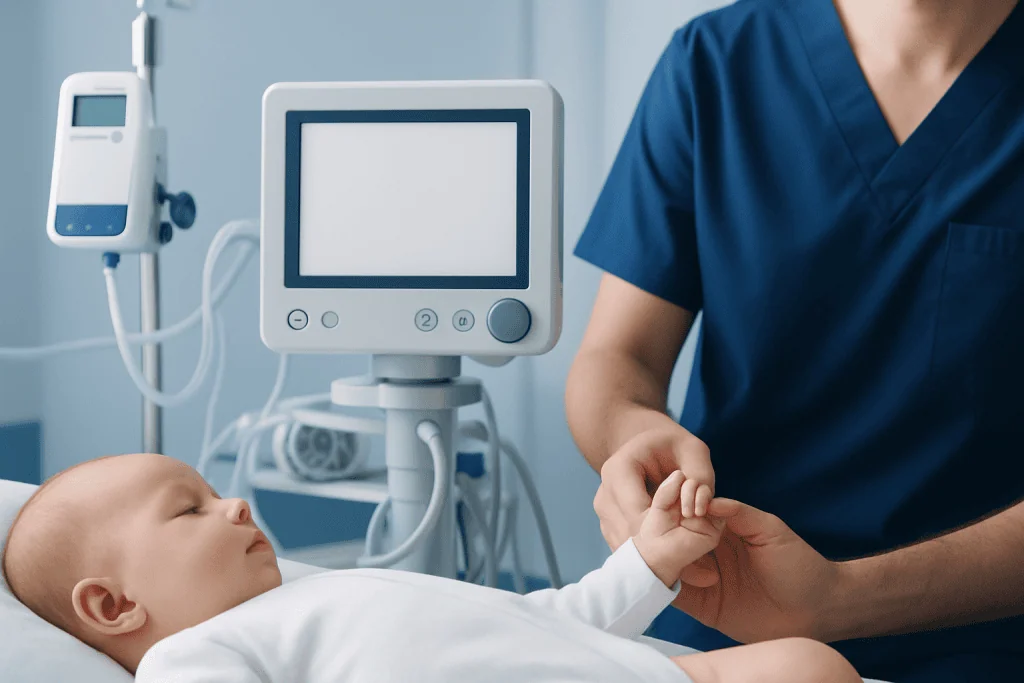
In early infancy, grasping is mainly reflexive. A baby may hold tightly onto a finger but cannot yet reliably decide when to reach, hold, release, or transfer an item between hands. As the brain, muscles, vision, and coordination mature, voluntary hand movements gradually become more prominent.
The palmar grasp reflex generally fades by around 4 to 6 months of age. Its fading is important because it makes room for purposeful skills, such as opening the hand, reaching for a toy, bringing objects to the mouth, and later using a pincer grasp between the thumb and index finger.
The plantar grasp reflex often lasts longer, commonly into the latter part of the first year of life. Timelines vary between children, so a clinician considers the child’s overall development rather than interpreting one response in isolation.
Parents do not need to repeatedly test a baby’s reflexes at home. Regular well-child visits provide a safer, more useful opportunity to review motor milestones and discuss any concerns about movement, feeding, alertness, or development.
Why Clinicians Check the Grasp Reflex
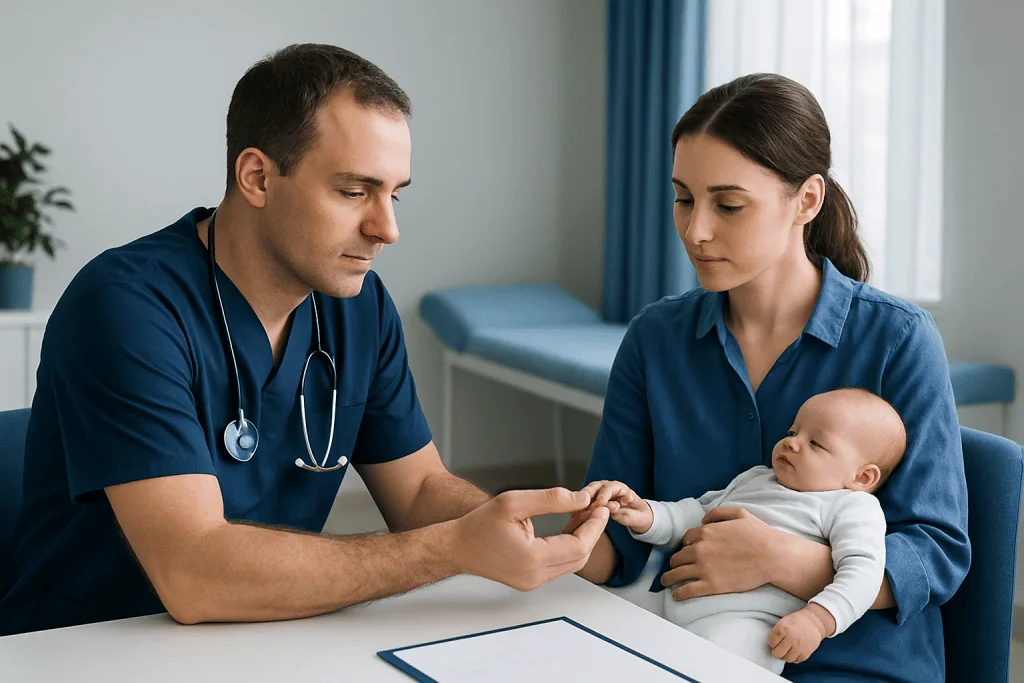
During a newborn or infant examination, a clinician may gently place a finger across the baby’s palm and observe whether the hand closes. They look at the strength, timing, and symmetry of the response. A similar response on both sides is generally reassuring when the rest of the examination is normal.
Primitive reflexes are not tested simply to confirm that a baby can grip. They are part of a broader assessment that may include posture, muscle tone, spontaneous movement, feeding ability, head control, vision and hearing responses, and developmental progress over time.
An absent or weaker response on one side can occasionally be associated with a local issue involving the hand, arm, shoulder, or nerves. It may also occur when a baby is very sleepy, unwell, premature, or difficult to examine. For this reason, clinicians may repeat the examination and consider the full clinical context before drawing conclusions.
In older children and adults, the appearance of a grasp response after it had disappeared can be called a frontal release sign. It may occur when the frontal lobes or related brain networks are affected, but it is not specific to one condition and must be interpreted by a qualified clinician.
What Can Cause an Unusual Grasp Reflex?
An unusual grasp reflex may mean that it is absent when expected, unusually strong, different between the two hands, persistent beyond the expected stage of infant development, or present again later in life. In many cases, especially when a baby is otherwise developing well, an isolated observation does not indicate a serious problem.
In infants, clinicians may explore factors such as prematurity, birth-related injury, brachial plexus or peripheral nerve injury, muscle weakness, differences in tone, or conditions affecting brain development. Concerns are greater when the change occurs alongside reduced movement of one arm, persistent clenched fists, feeding difficulty, delayed milestones, seizures, or an unusual level of sleepiness or irritability.
In adults, a new involuntary grasping response can sometimes be associated with disorders affecting the frontal parts of the brain. Possible causes may include stroke, traumatic brain injury, brain tumors, neurodegenerative conditions, or other neurological illnesses. A clinician will assess symptoms such as new weakness, speech changes, memory or behavior changes, walking difficulty, and loss of hand control. Stroke is one condition that requires urgent assessment when sudden neurological symptoms occur.
Medical evaluation focuses on the cause rather than trying to suppress the reflex itself. The appropriate next steps depend on age, examination findings, the speed of symptom onset, and any associated symptoms.
How It Is Assessed and Diagnosed
The grasp reflex is assessed through a physical and neurological examination. For an infant, the clinician observes natural movements and then applies gentle touch to the palm. They compare the right and left sides and review whether the response fits the child’s age and developmental stage.
A detailed history is equally important. Parents may be asked about pregnancy and birth history, prematurity, feeding, sleep, limb movement, developmental milestones, illnesses, injuries, and any changes noticed at home. A video of concerning movements may sometimes help a clinician understand what caregivers are seeing.
If an abnormality is suspected, further assessment may involve pediatric, neurological, developmental, orthopedic, or rehabilitation specialists. Testing is not automatically needed for every unusual reflex. Depending on the findings, a clinician may recommend developmental monitoring, hearing or vision assessment, imaging, laboratory tests, or nerve and muscle studies.
For adults with a newly detected grasp response, evaluation may include a focused neurological examination and, when appropriate, brain imaging or other tests to identify a possible underlying condition. Sudden symptoms are assessed more urgently than symptoms that have developed gradually.
Treatment, Support and Follow-Up
There is no treatment aimed specifically at a normal newborn grasp reflex. It naturally integrates as voluntary hand control develops. Routine health visits, age-appropriate play, and opportunities for safe supervised movement support development without needing special exercises for the reflex itself.
When an abnormal pattern is related to an underlying issue, care is tailored to that cause. For example, a baby with weakness or limited arm movement may benefit from assessment by pediatric specialists and may be referred for physiotherapy or occupational therapy. Early support can help encourage comfortable movement, functional hand use, and family confidence.
For adults, treatment may involve addressing the neurological condition responsible for the finding. This can include urgent treatment for acute illness, medication when indicated, rehabilitation, and supportive therapies focused on mobility, hand function, communication, or daily activities. Physical therapy and rehabilitation may be part of a broader plan when weakness, coordination problems, or loss of function is present.
Acibadem International’s multidisciplinary specialists and JCI-accredited hospitals evaluate neurological and developmental concerns for international patients. The most appropriate pathway begins with a clinical assessment rather than assumptions based on a single reflex.
When to Seek Medical Care
Parents should arrange a routine medical review if a baby consistently moves one arm less than the other, seems unable to open one hand, has a clearly unequal grasp, misses developmental milestones, or if the grasp reflex remains prominent after voluntary hand use should be developing. These observations are not necessarily signs of a serious condition, but they are worth discussing with a pediatric clinician.
Urgent medical care is needed if a newborn or child has sudden weakness, becomes unusually difficult to wake, has trouble breathing or feeding, has seizures, develops a new loss of movement, or has a concerning injury. Caregivers should seek emergency help rather than waiting for a scheduled appointment if symptoms are sudden or severe.
Adults should seek emergency care for a new grasping response or other neurological symptoms that begin suddenly, especially facial drooping, arm weakness, numbness, trouble speaking, severe headache, loss of balance, confusion, or vision changes. These may be signs of a time-sensitive neurological emergency.
For gradual changes in hand control, memory, behavior, walking, or coordination, an appointment with a doctor or neurologist is appropriate. A careful examination can clarify whether the grasp response is clinically meaningful and whether further testing is needed.
Frequently asked questions
Is the grasp reflex normal in newborns?
Yes. A palmar grasp reflex is expected in most healthy newborns and young infants. When the palm is touched, the baby may automatically close their fingers around a finger or object.
At what age does the grasp reflex disappear?
The palmar grasp reflex usually becomes less noticeable and fades by about 4 to 6 months of age. This allows more intentional reaching, holding, and releasing of objects to develop.
What is the difference between reflexive and voluntary grasping?
Reflexive grasping happens automatically when the palm is stimulated. Voluntary grasping is purposeful: the child chooses to reach for, hold, and release an object. Voluntary control gradually replaces the early reflex.
Should parents test a baby’s grasp reflex at home?
Occasionally noticing a baby hold a finger is normal, but repeated home testing is not necessary. Parents should focus on overall movement and developmental progress and discuss concerns during routine pediatric visits.
What does an unequal grasp reflex mean in a baby?
A weaker or absent response on one side can occur for several reasons, including a temporary examination issue or a problem affecting the arm, shoulder, muscles, or nerves. It should be assessed by a pediatric clinician, particularly if the baby also moves one arm less than the other.
Can adults have a grasp reflex?
Adults do not normally show a primitive palmar grasp response. If it appears newly in adulthood, it can be a neurological finding that requires medical assessment, especially when accompanied by weakness, speech difficulty, confusion, or changes in walking or behavior.
References
- American Academy of Pediatrics
- Centers for Disease Control and Prevention
- National Institute of Neurological Disorders and Stroke
- Merck Manual Professional Edition
- MedlinePlus
This article is for general information only and is not a substitute for professional medical advice. Please consult a qualified doctor about your individual situation.
Explore treatments in Turkey — costs, top hospitals & a free quote
JCI-accredited · board-certified surgeons · reply within 24h
Add us as a Preferred Source to see more of our trusted health content across Google Search, AI Overviews and Discover.

More from the Health Library


Related Specialists

Prof. Dr. Aykut Soyder
General Surgery
Prof. Dr. Deniz Tuna Edizer
Otorhinolaryngology
Fzt. Cüneyt Karoğlu
Physical Medicine & Rehabilitation
Dr. İlyas Kavak
Cardiology