How Long Should You Sit in a Sauna? A Doctor-Reviewed Answer

Most healthy adults should limit a typical sauna session to about 15–20 minutes. Beginners, older adults and people returning after a break may prefer 5–10 minute sessions.
Key Takeaways
- Most healthy adults should limit a typical sauna session to about 15–20 minutes.
- Beginners, older adults and people returning after a break may prefer 5–10 minute sessions.
- Dizziness, nausea, weakness, headache, confusion or chest discomfort are reasons to leave immediately and cool down.
- Alcohol, dehydration and some medicines can increase the risk of overheating or fainting.
- People with heart disease, uncontrolled blood pressure, pregnancy concerns or chronic illness should ask a clinician for individual advice.
For most healthy adults, a sauna session of 15–20 minutes is generally enough, while beginners should start with 5–10 minutes and leave sooner if they feel unwell. Heat tolerance varies, so comfort, hydration, medications and medical conditions are as important as the clock.
How long should you sit in a sauna?
For most healthy adults, a sauna session lasting about 15–20 minutes is generally considered a reasonable upper limit. Someone new to sauna bathing should begin more cautiously, often with 5–10 minutes, and build up only if they remain comfortable. There is no health benefit to staying until the body feels strained.
Saunas are commonly well tolerated when used sensibly. The safest approach is to treat the time limit as a guide rather than a challenge: leave promptly if dizziness, nausea, headache, unusual weakness, palpitations, shortness of breath or discomfort develops. A person does not need to wait for symptoms to become severe before stepping out.
Heat, humidity, ventilation, recent exercise, alcohol intake, hydration and individual health all affect how long a person can safely remain inside. A traditional dry sauna and a steam room may feel very different, but the same principle applies: short, comfortable exposure followed by gradual cooling is preferable to prolonged heat exposure.
Why sauna time varies from person to person
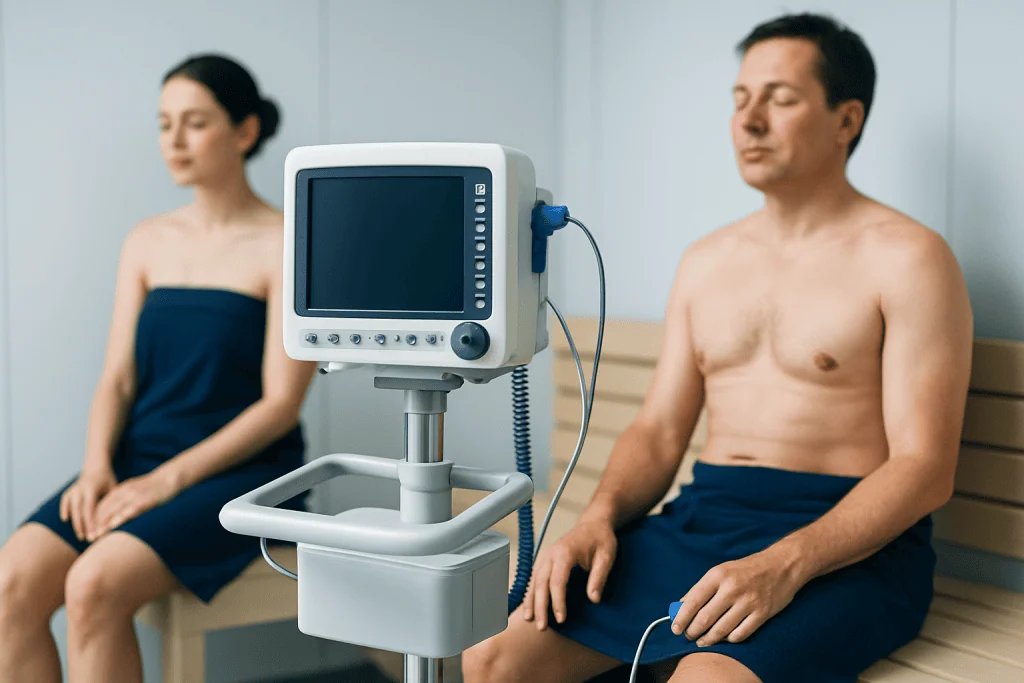
A sauna raises skin temperature and makes the body work to release heat. Blood vessels near the skin widen, sweating increases and heart rate may rise. These normal responses help explain why a person may feel relaxed after a short session, but they also mean that prolonged heat can lead to dehydration, a drop in blood pressure or overheating.
People often tolerate heat differently from one day to another. A session that felt comfortable previously may feel intense after poor sleep, a demanding workout, an illness with fever, diarrhea, vomiting or reduced fluid intake. It is sensible to shorten or skip sauna use when the body is already under physical stress.
Age and fitness do not fully determine safety. An active person can still become dehydrated or light-headed, while an older adult who is accustomed to sauna bathing may tolerate brief sessions well. Paying attention to symptoms is more reliable than trying to match another person’s sauna routine.
- Start with a lower bench, where temperatures may be less intense.
- Choose shorter sessions on the first visits or after time away.
- Take breaks between rounds rather than extending one long exposure.
- Cool down gradually and rest before driving, exercising or entering another hot environment.
A practical guide to safer sauna use

Before entering, drink water according to thirst and avoid beginning a session when dehydrated. It is also wise to remove heavy clothing and jewelry that may retain heat. A person should not use a sauna after drinking alcohol or using recreational drugs, as these can impair judgment and increase the risk of dehydration, overheating and fainting.
During the session, sitting or reclining can reduce the chance of falling if light-headedness occurs. Standing up slowly is important because heat can lower blood pressure. If a person feels faint, they should leave carefully, sit or lie down in a cooler place and seek help from someone nearby if symptoms do not settle quickly.
Afterward, cooling should be gradual. Lukewarm or cool air and water are usually more comfortable than abruptly exposing the body to extreme cold. Rehydrate, avoid alcohol, and allow the heart rate and temperature to return toward normal before another session. Multiple short sessions may be appropriate for some healthy adults, but total exposure should remain moderate and symptom-guided.
Children should not use a sauna without specific guidance and close adult supervision. Their bodies regulate heat differently from adults, and they may not recognize or communicate early signs of overheating. People who are pregnant should ask their obstetric clinician about sauna use, because advice may depend on pregnancy stage, the sauna temperature and individual medical factors.
Who should speak with a doctor before using a sauna?
Many people with stable medical conditions can use a sauna safely with individualized precautions, but medical advice is important when there is a condition that affects the heart, blood pressure, fluid balance or ability to sense heat. This includes known heart disease, previous fainting, poorly controlled high or low blood pressure, significant valve disease, heart rhythm problems, kidney disease and some neurologic conditions.
Heat can interact with medicines as well. Diuretics may contribute to dehydration, while blood pressure medicines, sedatives and some medications that affect sweating or alertness can change heat tolerance. A clinician or pharmacist can review whether a person’s medicines create a particular concern; prescribed medicines should not be stopped without professional advice.
People with diabetes should be particularly attentive to hydration, blood sugar management and reduced sensation in the feet or skin. Those with active infection, fever, vomiting, diarrhea, recent heat illness or an unstable chronic condition should postpone sauna use until they have recovered or received medical guidance.
Individuals with cardiovascular symptoms or a diagnosed heart condition may benefit from a tailored discussion with a cardiologist, including evaluation and cardiology care when needed. The aim is not necessarily to prohibit sauna bathing, but to identify safe limits and situations in which heat exposure should be avoided.
When to seek medical care
Most mild heat-related symptoms improve after leaving the sauna, resting in a cool environment and drinking fluids if the person is fully alert and able to swallow. However, medical review is important if someone repeatedly becomes dizzy, faints, develops marked palpitations, has unusual breathlessness or experiences symptoms at much shorter sauna exposures than expected.
Urgent medical care is needed for chest pain or pressure, severe shortness of breath, fainting, confusion, a seizure, persistent vomiting, severe weakness, or symptoms of heat illness that do not improve promptly after cooling down. These symptoms can have causes beyond sauna exposure and should not be dismissed as simply being “too hot.”
A doctor may ask about the sauna environment, session duration, fluid intake, alcohol or substance use, medicines, exercise and prior health conditions. Depending on the symptoms, assessment may include vital signs, a physical examination, blood tests, an electrocardiogram or review of heart and blood pressure management. Recurrent episodes of fainting or palpitations may require further evaluation for heart rhythm disorders.
Can sauna use support health?
Some observational research has linked regular sauna bathing with certain health benefits, particularly in cardiovascular health. However, these studies cannot prove that sauna use alone causes the benefits seen. People who use saunas regularly may also have other lifestyle habits, access to wellness facilities or health characteristics that influence outcomes.
A sauna should not replace exercise, balanced nutrition, sleep, prescribed treatment or follow-up for medical conditions. It may be a pleasant relaxation practice for many people, but it is not a detoxification method and does not produce meaningful long-term fat loss through sweating. Weight lost during a session is mainly fluid and returns with rehydration.
For muscle stiffness or relaxation after exercise, brief, comfortable heat exposure may help some people feel better. Anyone recovering from injury, surgery or a medical procedure should first ask their treating team when heat exposure is appropriate. This is especially important if there are wounds, swelling, infection concerns or restrictions on blood pressure and activity.
A sensible sauna routine
A simple routine is usually safest: enter well hydrated, begin with 5–10 minutes if new to sauna use, and generally stop by 15–20 minutes. Leave earlier for any discomfort, cool down gradually, drink fluids and avoid alcohol. If having another short round, rest fully between sessions and reassess how the body feels.
It can help to use the sauna with another person nearby, especially for someone who is older, has medical conditions or is trying it for the first time. Avoid using a sauna alone when feeling unwell, after intense exertion, or when there is a history of fainting. A timer is useful, but it should never override symptoms.
For people seeking individualized advice, Acibadem International’s multidisciplinary specialists in JCI-accredited hospitals can assess relevant heart, blood pressure and other health considerations for international patients. The most appropriate plan depends on the person’s medical history, current symptoms and medication use.
Frequently asked questions
How long should a beginner sit in a sauna?
A beginner can usually start with 5–10 minutes and leave sooner if the heat feels uncomfortable. Over several visits, some healthy adults may gradually work up to 15–20 minutes, but longer is not necessarily better.
Is 30 minutes in a sauna too long?
For many people, 30 minutes may be longer than advisable, particularly in a hot sauna or when hydration is limited. It can increase the likelihood of dizziness, dehydration and overheating. A shorter session is generally the safer choice.
How often can someone use a sauna?
Frequency depends on individual tolerance, health conditions and the type of sauna. Some healthy adults use a sauna several times a week, but each session should remain moderate and should not cause symptoms. A clinician can give personalized advice for people with medical conditions or regular medications.
Should someone drink water before and after a sauna?
Yes. Drinking water according to thirst before and after sauna use helps replace fluid lost through sweating. Alcohol should be avoided before and after sauna bathing because it can worsen dehydration and impair judgment.
Can a sauna lower blood pressure?
Heat may temporarily lower blood pressure by widening blood vessels, which can cause light-headedness when standing. People with blood pressure disorders or those taking blood pressure medicines should discuss sauna use with a clinician, especially if they have dizziness or fainting.
Is it safe to use a sauna after exercise?
It may be safe for some healthy people after exercise if they have cooled down, replaced fluids and feel well. After prolonged or intense activity, dehydration and heat strain may already be present, so a shorter session or skipping the sauna may be safer. Anyone with symptoms such as weakness, nausea or dizziness should rest and rehydrate instead.
References
- American Heart Association
- Mayo Clinic
- Cleveland Clinic
- National Institute on Aging
- World Health Organization
This article is for general information only and is not a substitute for professional medical advice. Please consult a qualified doctor about your individual situation.
Explore treatments in Turkey — costs, top hospitals & a free quote
JCI-accredited · board-certified surgeons · reply within 24h
Add us as a Preferred Source to see more of our trusted health content across Google Search, AI Overviews and Discover.
Check your numbers in seconds
BMI, calories, due date, blood pressure and 30+ more clinical calculators — free, instant, doctor-reviewed ranges.