Anterolisthesis: An Evidence-Based Guide for Patients

Anterolisthesis is a forward slip of one spinal bone over another, most often in the lower back. Symptoms may include low back pain, stiffness, leg pain, numbness, or weakness, but some people have no symptoms.
Key Takeaways
- Anterolisthesis is a forward slip of one spinal bone over another, most often in the lower back.
- Symptoms may include low back pain, stiffness, leg pain, numbness, or weakness, but some people have no symptoms.
- Diagnosis usually combines a physical examination with imaging such as X-rays and sometimes MRI or CT.
- Many cases can be managed with activity changes, physical therapy, pain control, and guided exercise.
- Urgent medical assessment is important if there is severe weakness, loss of bladder or bowel control, or rapidly worsening symptoms.
Anterolisthesis means one vertebra has slipped forward over the one below it. It can range from a mild imaging finding to a cause of back pain, leg symptoms, or walking difficulty, and treatment depends on the degree of slippage, symptoms, and nerve involvement.
Overview: what anterolisthesis means
Anterolisthesis is a spinal alignment problem in which one vertebra slips forward in relation to the vertebra beneath it. It most often affects the lumbar spine, especially the lower back, although it can occur in other parts of the spine as well. The amount of slippage can be small or more pronounced, and this helps doctors describe its severity.
The term is closely related to spondylolisthesis. In everyday clinical use, anterolisthesis often refers specifically to the forward direction of the slip, while spondylolisthesis is the broader term for vertebral slippage. Some people learn they have anterolisthesis after an X-ray done for back pain, while others may not know it is present until nerve-related symptoms develop.
Not every case causes pain or disability. In some people, the forward slip is stable and causes only mild symptoms or none at all. In others, the shifted vertebra can irritate nearby joints, discs, or spinal nerves, leading to discomfort and reduced function. A careful medical assessment helps determine whether the finding is likely to explain a person’s symptoms.
Because treatment depends on the underlying cause, doctors do not look at the X-ray alone. They consider age, activity level, neurologic symptoms, daily limitations, and whether the slippage appears stable. This individualized approach helps many patients improve without surgery, while identifying the smaller group who may benefit from specialist procedures.
Symptoms and how they may feel
Anterolisthesis can cause no symptoms at all, especially when the slippage is mild. When symptoms do occur, the most common complaint is low back pain. This pain may feel dull and aching or may worsen with standing, walking, twisting, or extending the spine backward.
If the slipped vertebra affects nearby nerves, symptoms may spread into the buttocks or legs. A person may notice pain that travels down one or both legs, numbness, tingling, or a feeling of weakness. Some people describe tight hamstrings, reduced walking tolerance, or a sense that the back feels unstable.
In more advanced cases, nerve compression can contribute to spinal stenosis symptoms. These may include leg heaviness, cramping, or increased discomfort after standing or walking that improves when sitting or bending forward. This pattern can overlap with spinal stenosis, which doctors often assess at the same time.
Symptoms vary widely, and the amount of slippage seen on imaging does not always match the level of pain. A mild slip may cause significant discomfort in one person, while a more noticeable slip may be relatively quiet in another. That is why treatment decisions are based on symptoms and examination findings, not imaging alone.
Causes and risk factors
Anterolisthesis can develop for several reasons. In younger people, it may be related to a stress injury or defect in a part of the vertebra called the pars interarticularis. This is sometimes associated with repeated spine extension in sports such as gymnastics, diving, or football. In adults, age-related wear of the discs and facet joints is a very common cause.
Degenerative changes can gradually reduce the spine’s stability over time. As discs lose height and joints become arthritic, one vertebra may begin to shift forward. This form is more common later in life and is often seen along with osteoarthritis or other changes of the aging spine. In some patients, there may also be a coexisting herniated disc or narrowing around the nerves.
Less commonly, anterolisthesis can result from trauma, congenital differences in spinal structure, prior spinal surgery, or conditions that weaken bone. Risk factors include repetitive spinal strain, obesity, poor core muscle support, physically demanding work, and advancing age. A family history of certain spinal alignment patterns may also play a role in some people.
Understanding the cause matters because it shapes treatment and outlook. A stable, degenerative slip may be managed very differently from a traumatic injury or a slip causing clear nerve compromise. This is one reason why expert evaluation is important when symptoms persist or worsen.
How doctors diagnose anterolisthesis
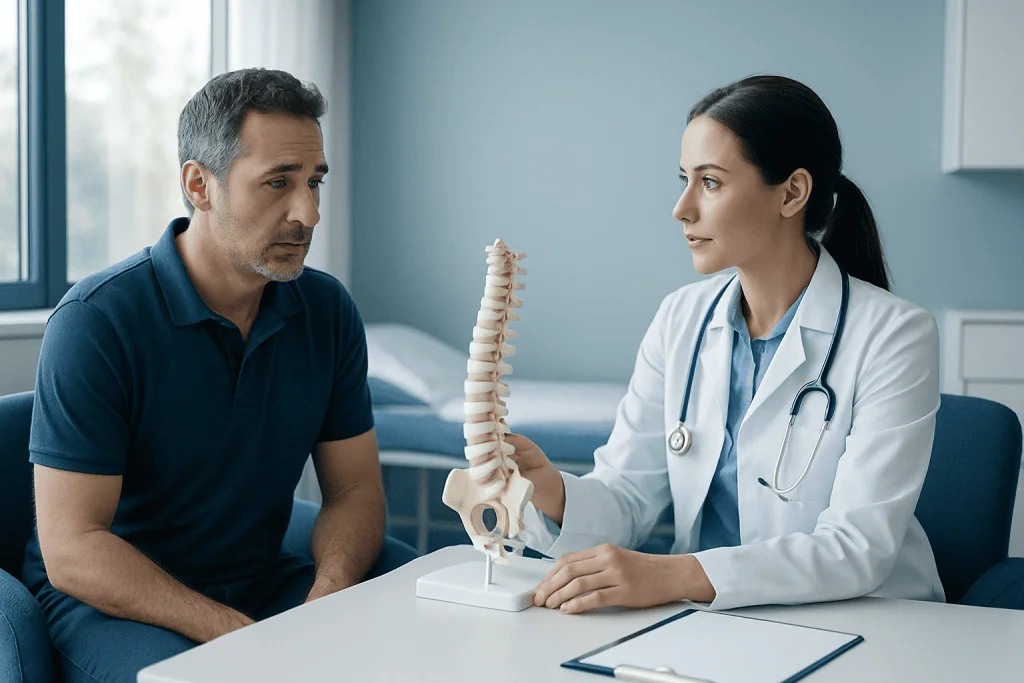
Diagnosis begins with a medical history and physical examination. The doctor asks about the location of pain, activities that make it better or worse, and whether there are nerve-related symptoms such as numbness, weakness, or changes in walking. The examination may include checking posture, spinal movement, leg strength, sensation, reflexes, and signs of nerve irritation.
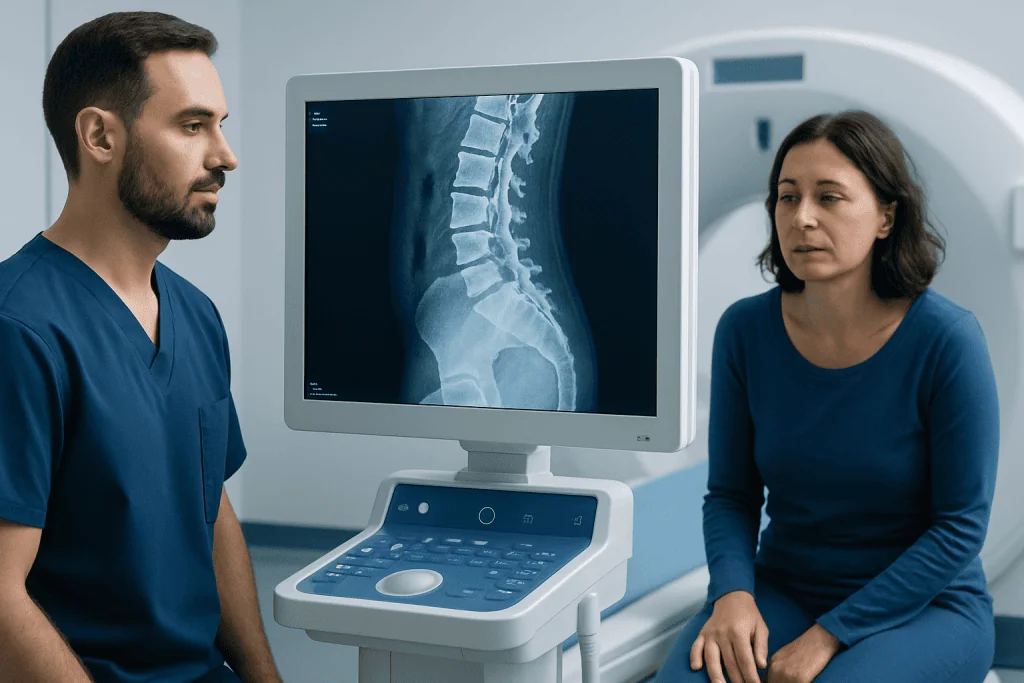
Plain X-rays are often the first imaging test. They can show whether a vertebra has slipped forward and may help estimate the grade of slippage. Sometimes flexion and extension X-rays are used to see whether the segment appears stable or moves excessively with motion.
If there is concern about nerve compression, disc problems, or spinal canal narrowing, MRI may be recommended. MRI can show soft tissues, nerves, discs, and associated changes in greater detail. CT scans may be used in selected cases to look more closely at bone anatomy, especially if a pars defect or complex structural issue is suspected.
Doctors also rule out other causes of back and leg pain. Depending on symptoms, they may consider muscle strain, sacroiliac joint pain, hip disorders, nerve entrapment, or other degenerative spine conditions. This broader assessment helps ensure the treatment plan addresses the true source of symptoms rather than an imaging finding alone.
Treatment options: from conservative care to surgery
Many people with anterolisthesis improve with conservative treatment. Early care often includes activity modification, short-term pain relief strategies, and a structured physical therapy program. Physical therapy usually focuses on core strengthening, flexibility, posture, and movement patterns that reduce stress on the affected spinal level. In some cases, guided physical therapy and rehabilitation can help restore function and confidence with movement.
Doctors may suggest nonprescription or prescription pain-relief medicines when appropriate, along with heat, ice, and temporary reduction of aggravating activities. Bracing is sometimes used for selected patients, especially when short-term support may help reduce symptoms. A gradual return to normal activity is usually preferred over prolonged bed rest, which can weaken muscles and slow recovery.
If pain radiates into the leg or there is evidence of nerve irritation, additional options may be considered. Depending on the overall picture, a specialist may discuss image-guided pain procedures or further evaluation for structural compression. If an associated disc problem is suspected, assessment may include options used for herniated disc treatment or related spine care pathways.
Surgery is generally reserved for patients with persistent pain despite well-guided nonoperative treatment, progressive neurologic symptoms, significant instability, or severe nerve compression. Procedures vary, but they may include decompression of the nerves and stabilization of the spine with fusion. In carefully selected cases, doctors may discuss spinal fusion as part of long-term stabilization when symptoms and imaging findings clearly support it.
Self-care, daily habits, and prevention
Self-care does not correct the vertebral slip itself, but it can reduce symptoms and support spinal function. Regular, low-impact exercise is often helpful. Walking, swimming, and supervised strengthening may improve endurance and support the muscles that protect the lower back. Activities should be adjusted if they repeatedly trigger pain, especially forceful back extension or heavy lifting without proper technique.
Good posture and body mechanics matter in daily life. Bending at the hips and knees, avoiding sudden twisting with load, and keeping frequently used items within easy reach can reduce stress on the spine. For people who sit for long periods, changing position regularly and using appropriate back support may ease discomfort.
Weight management can also help by lowering the mechanical load on the spine. Sleep quality, stress reduction, and gradual conditioning are important because chronic pain often affects the whole body, not just the back. For many people, the most sustainable plan combines home exercise, pacing of activities, and periodic follow-up with a clinician or therapist.
Prevention is not always possible, particularly when age-related degeneration is the main cause. Still, maintaining core strength, staying active, using safe lifting techniques, and seeking evaluation for persistent back pain may reduce the risk of progression or long-term disability. People returning to sports or physical work should do so gradually and with guidance when symptoms have been significant.
When to seek medical care
Medical advice is appropriate if back pain lasts more than a few weeks, keeps returning, or starts to interfere with work, sleep, exercise, or normal daily activities. A doctor should also assess pain that travels into the leg, numbness, tingling, or any feeling of weakness. These symptoms may suggest nerve involvement and can help guide the need for imaging or specialist care.
Urgent evaluation is important if there is new or worsening leg weakness, trouble walking, loss of balance related to the legs, or severe pain after a fall or injury. Emergency care is needed for loss of bladder or bowel control, numbness around the groin or saddle area, or rapidly progressive neurologic symptoms, because these can indicate serious nerve compression.
Follow-up also matters when symptoms do not improve with home care or when a person has repeated episodes of disabling back pain. Early guidance may help prevent unnecessary strain and support a more effective recovery plan. Patients with ongoing symptoms may benefit from a multidisciplinary spine assessment.
For international patients who need specialist evaluation, Acibadem International’s multidisciplinary teams in JCI-accredited hospitals diagnose and treat spine conditions with coordinated imaging, rehabilitation, pain management, and surgical expertise when needed.
Frequently asked questions
Is anterolisthesis the same as spondylolisthesis?
Anterolisthesis describes a forward slip of one vertebra over another. Spondylolisthesis is the broader term for vertebral slippage, and anterolisthesis is one type of it. In practice, the terms are sometimes used closely together.
Can anterolisthesis heal on its own?
The bony alignment usually does not simply move back into normal position on its own. However, symptoms often improve significantly with conservative care such as physical therapy, activity changes, and pain management. Many people live well with a stable slip once the surrounding muscles and movement patterns are addressed.
Is walking good for anterolisthesis?
For many patients, walking is a helpful low-impact activity that supports circulation, conditioning, and spinal health. It should be started at a comfortable level and increased gradually. If walking clearly worsens leg pain, numbness, or weakness, a doctor should review the exercise plan.
When is surgery needed for anterolisthesis?
Surgery is usually considered when symptoms remain significant despite appropriate nonsurgical treatment or when there is progressive nerve-related weakness, instability, or severe compression. The decision depends on symptoms, examination findings, and imaging results. A spine specialist can explain whether decompression, fusion, or another approach is appropriate.
Can anterolisthesis cause leg pain or sciatica?
Yes. If the slipped vertebra narrows the space around a spinal nerve, pain may travel into the buttock or leg and may be accompanied by tingling, numbness, or weakness. This pattern can resemble sciatica and should be medically assessed if persistent or worsening.
What should someone avoid with anterolisthesis?
Activities that repeatedly worsen symptoms should be limited, especially heavy lifting with poor technique, sudden twisting under load, or forceful backward bending of the spine. Avoiding complete inactivity is also important because prolonged rest can weaken supportive muscles. A physical therapist can help identify safe modifications rather than broad restrictions.
References
- National Institute of Arthritis and Musculoskeletal and Skin Diseases
- American Academy of Orthopaedic Surgeons
- National Institute of Neurological Disorders and Stroke
- North American Spine Society
- MedlinePlus
This article is for general information only and is not a substitute for professional medical advice. Please consult a qualified doctor about your individual situation.
Joint and spine care in Turkey — expert assessment & treatment
JCI-accredited · board-certified surgeons · reply within 24h
Add us as a Preferred Source to see more of our trusted health content across Google Search, AI Overviews and Discover.

More from the Health Library

Cherophobia: An Evidence-Based Guide for Patients

Glycopyrrolate: An Evidence-Based Guide for Patients

Pimple Under Skin: What Patients Need to Know

Electrocautery: An Evidence-Based Guide for Patients

Spasm of the Neck: What Patients Need to Know