Disney Rash: Possible Causes and When to Seek Care

Disney rash usually refers to exercise-induced vasculitis, a temporary rash that often affects the lower legs after prolonged walking in heat. It commonly causes red, purple, or blotchy spots with burning, itching, or swelling, while the skin under socks is often spared.
Key Takeaways
- Disney rash usually refers to exercise-induced vasculitis, a temporary rash that often affects the lower legs after prolonged walking in heat.
- It commonly causes red, purple, or blotchy spots with burning, itching, or swelling, while the skin under socks is often spared.
- Most cases improve with rest, leg elevation, hydration, and avoiding heat, but diagnosis may be needed if the rash is severe or recurrent.
- Medical care is important if there is fever, significant pain, spreading redness, open sores, or signs of infection.
- Not every leg rash after walking is Disney rash; allergy, heat rash, eczema, cellulitis, and vascular problems can look similar.
Disney rash is a common nickname for a red or purple rash that appears on the lower legs after long periods of walking in warm weather. It is often linked to exercise-induced vasculitis and usually improves with rest and cooling, but some rashes need medical evaluation to rule out infection, allergy, or circulation problems.
Overview: what Disney rash means
Disney rash is a popular term for a rash that can develop on the lower legs after many hours of walking in hot weather, such as during a theme park visit, sightseeing trip, or long outdoor event. In many cases, the medical explanation is exercise-induced vasculitis, a temporary inflammation of small blood vessels triggered by prolonged activity and heat.
This rash is often harmless and tends to improve on its own within days to a couple of weeks. Even so, the name can be misleading because it is not caused by Disney itself, and not every rash after walking is the same condition. The key question is whether the rash fits the usual pattern of exercise-induced vasculitis or whether it could be due to another skin, allergic, infectious, or circulation-related problem.
People often notice the rash on the calves, ankles, or shins after being active for hours. It may look red, purple, or speckled and can feel warm, itchy, or slightly swollen. A classic clue is that skin covered by tight socks or stockings may be less affected, creating a visible “sock line.”
What it looks and feels like

Disney rash most often appears on both lower legs, especially around the calves and ankles. The skin may show red patches, purplish spots, small raised areas, or a blotchy pattern. Some people describe a peppered or spotted look, while others notice larger flat patches. Mild swelling is also common after a long day of walking.
The sensation can vary. It may itch, sting, burn, or simply feel warm and tight. Some people have no discomfort at all and are concerned mainly because of the appearance. Unlike many other rashes, it often shows up after activity rather than immediately after using a new soap, sunscreen, or food.
Symptoms that fit a typical pattern include:
- Rash mainly on the lower legs
- Appearing after prolonged walking, hiking, or standing
- Warm weather or sun exposure as a trigger
- Relative sparing of skin under socks
- Mild swelling, itching, or burning without serious illness symptoms
If the rash includes blisters, severe pain, pus, rapidly spreading redness, or involvement of other parts of the body, another cause becomes more likely and a doctor should assess it.
Possible causes and risk factors
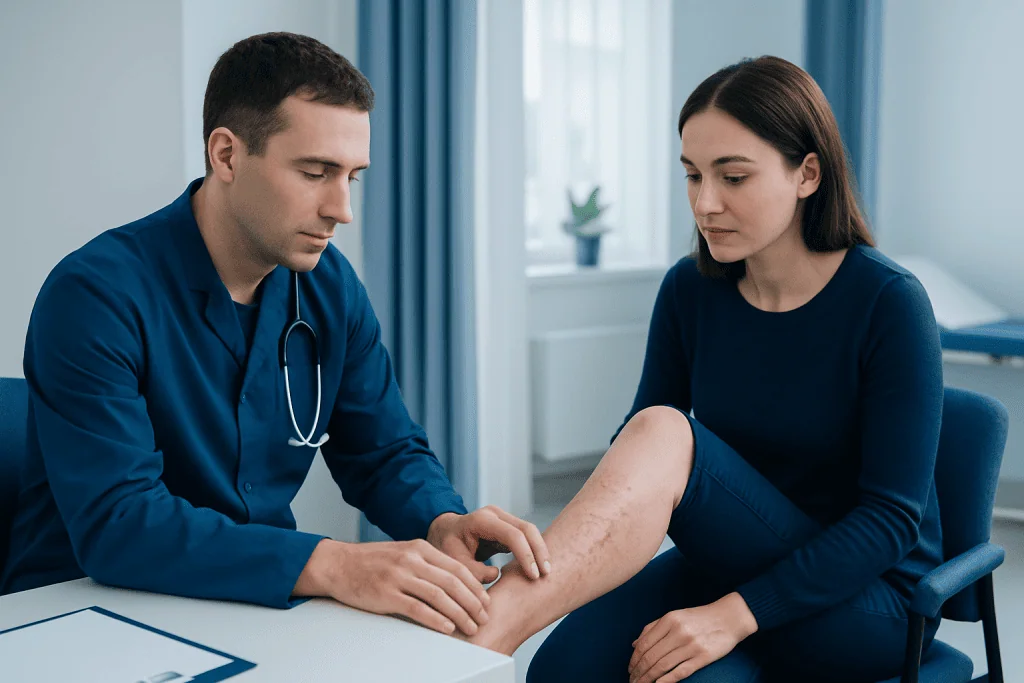
The most likely cause of disney rash is exercise-induced vasculitis. This happens when prolonged exercise in warm conditions affects the small blood vessels in the skin. The exact mechanism is not always fully predictable, but heat, increased blood flow, gravity, and temporary changes in circulation and inflammation are thought to contribute. The result is leakage from small vessels, leading to visible rash and swelling.
It tends to occur more often after long walks, hikes, runs, or standing for many hours, especially in hot or humid weather. It can affect otherwise healthy adults and is not necessarily a sign of a serious disease. Some people notice it only during travel because they are walking much more than usual in a warmer environment.
Several factors may increase the chance of developing it:
- Long periods of walking or standing
- Hot or humid weather
- Sun exposure
- Previous episodes of exercise-induced vasculitis
- Tight clothing combined with prolonged activity
- Dehydration or insufficient rest breaks
However, not all post-walking rashes are vasculitis. Other possibilities include heat rash, contact dermatitis from clothing or products, hives, eczema, insect bites, or skin infection. In some cases, doctors may also consider circulation problems such as varicose veins or, less commonly, inflammatory conditions that need further testing.
How doctors tell it apart from other rashes
Diagnosis usually begins with the pattern of symptoms. A doctor will ask when the rash started, whether it followed exercise or heat exposure, what it looks like, how long it lasts, and whether it has happened before. Travel history, new medications, insect exposure, and use of sunscreens or skin products can also help narrow the cause.
The physical examination focuses on the legs, the distribution of the rash, and whether there is tenderness, swelling, warmth, or skin breakdown. If the person feels well otherwise and the rash clearly follows prolonged walking in the heat, the diagnosis may be made clinically. If the appearance is unusual, persistent, or associated with systemic symptoms, further workup may be needed.
Conditions that may be considered include eczema, allergic contact dermatitis, heat rash, urticaria, cellulitis, and forms of true vasculitis that affect more than the skin. If there is significant leg swelling, pain, or a circulation concern, a clinician may look for venous disease or recommend Doppler ultrasound to assess blood flow. In selected cases, blood tests or a skin biopsy may be used to rule out other inflammatory or autoimmune causes.
Treatment and symptom relief
Most cases of disney rash improve with simple supportive care. The first steps are stopping the triggering activity, moving to a cooler environment, and resting with the legs elevated. Cool compresses may ease burning or itching, and hydration can help overall recovery after prolonged heat exposure and exercise.
If symptoms are bothersome, a doctor or pharmacist may suggest measures such as gentle moisturizers, anti-itch creams, or an oral antihistamine for itching. Compression socks may help some people prevent swelling during future walks, though they should fit properly and not feel excessively tight. Persistent or recurrent symptoms should be discussed with a clinician before trying repeated self-treatment.
Treatment depends on the cause. If the rash turns out to be skin inflammation unrelated to exercise-induced vasculitis, a dermatologist may recommend dermatology evaluation and condition-specific care. When symptoms point to a more general vascular issue rather than a simple heat-and-walking rash, referral for vascular assessment and treatment may be appropriate. Antibiotics, steroids, or other prescription medicines are not routine for typical disney rash unless another diagnosis is confirmed.
Prevention and self-care during travel or long walks
Because disney rash is often triggered by heat plus prolonged activity, prevention focuses on reducing those stresses on the legs. People who have had it before may benefit from planning more frequent breaks, staying cool, and building up walking time gradually before a long trip. Choosing light, breathable clothing and comfortable footwear may also reduce irritation and swelling.
Simple self-care habits can make a difference during a busy day outdoors. Resting in shaded or air-conditioned spaces, drinking enough fluids, and elevating the legs when possible may help circulation recover. Some people find that compression socks, if recommended by a clinician, reduce lower-leg swelling during long periods of walking or standing.
Helpful prevention steps include:
- Take regular sitting breaks during long outings
- Stay hydrated, especially in hot weather
- Avoid the hottest part of the day when possible
- Use breathable socks and clothing
- Cool the legs after prolonged activity
- Discuss recurrent episodes with a doctor
If episodes happen repeatedly or start occurring with shorter, less intense activity, a medical review is worthwhile to make sure the rash is not being mistaken for another condition.
When to seek medical care
Although disney rash is often mild and self-limited, it is important to seek medical care if the rash is severe, unusual, or not improving. Warning signs include significant pain, rapid spreading, open sores, blisters, fever, pus, or a feeling of being generally unwell. These features can point to infection, more significant inflammation, or another medical problem that needs treatment.
Medical assessment is also advised if the rash affects only one leg, is accompanied by marked swelling, or occurs with shortness of breath, chest symptoms, or severe calf pain. Those symptoms do not fit the usual pattern of exercise-induced vasculitis and should not be ignored. People with chronic medical conditions, immune suppression, or recurrent unexplained rashes should also be evaluated.
If needed, specialists in dermatology, internal medicine, and vascular care can help clarify the diagnosis. Acibadem International’s multidisciplinary specialists and JCI-accredited hospitals evaluate skin and vascular conditions for international patients when further assessment is needed.
Frequently asked questions
Is disney rash dangerous?
Disney rash is usually not dangerous when it follows the typical pattern of exercise-induced vasculitis after long walks in hot weather. It often settles with rest and cooling. However, a doctor should assess it if there is severe pain, fever, one-sided swelling, skin breakdown, or spreading redness.
How long does disney rash last?
Many cases improve within a few days, though some can take up to one or two weeks to fully fade. The color may linger longer than the itching or swelling. If the rash persists, keeps returning, or worsens, medical evaluation is a good idea.
Can disney rash happen outside a theme park?
Yes. The name is informal and refers to a pattern seen after prolonged walking or standing in warm weather, not to a specific place. It can happen during travel, hiking, outdoor events, sightseeing, or any long day on the feet.
What is the difference between disney rash and heat rash?
Heat rash is usually caused by blocked sweat ducts and often appears as small prickly bumps in areas where sweat gets trapped. Disney rash more often affects the lower legs after prolonged exercise and may look red, purple, or blotchy rather than finely bumpy. The timing, location, and appearance help doctors tell them apart.
Should a person keep walking if disney rash appears?
It is generally best to stop and rest once the rash appears, especially if there is burning, swelling, or discomfort. Cooling down and elevating the legs may help symptoms settle. If the rash is mild and the person otherwise feels well, urgent care is not always needed, but continued overexertion in heat may make it worse.
Can disney rash be prevented?
Prevention is not always possible, but risk may be lowered by taking breaks, avoiding excessive heat, staying hydrated, and resting the legs during long outings. Some people benefit from gradual conditioning before a trip and from discussing compression socks with a clinician. Recurrent episodes deserve medical review.
References
- American Academy of Dermatology
- National Health Service
- Cleveland Clinic
- Mayo Clinic
- Merck Manual Consumer Version
This article is for general information only and is not a substitute for professional medical advice. Please consult a qualified doctor about your individual situation.
Explore treatments in Turkey — costs, top hospitals & a free quote
JCI-accredited · board-certified surgeons · reply within 24h
Add us as a Preferred Source to see more of our trusted health content across Google Search, AI Overviews and Discover.