Understanding Plantar Fibroma: A Complete Patient Guide

Plantar fibroma is a noncancerous nodule that forms in the plantar fascia on the bottom of the foot. Some people have no symptoms, while others notice arch pain, pressure discomfort, or a firm lump.
Key Takeaways
- Plantar fibroma is a noncancerous nodule that forms in the plantar fascia on the bottom of the foot.
- Some people have no symptoms, while others notice arch pain, pressure discomfort, or a firm lump.
- Diagnosis is usually based on physical examination and may be supported by ultrasound or MRI if needed.
- Treatment often starts with footwear changes, padding, orthotics, and physical therapy before considering surgery.
- Medical review is important if the lump grows, becomes painful, or interferes with walking.
Plantar fibroma is a benign growth in the plantar fascia, the thick band of tissue along the sole of the foot. It often feels like a firm lump in the arch and may or may not be painful, especially when standing, walking, or wearing certain shoes.
What plantar fibroma is
Plantar fibroma is a small, usually slow-growing, noncancerous lump that develops within the plantar fascia. The plantar fascia is the strong band of connective tissue that runs from the heel toward the toes and helps support the arch of the foot. A plantar fibroma often appears in the middle part of the arch rather than near the heel.
Many people first notice plantar fibroma as a firm nodule under the skin when barefoot, stretching the foot, or pressing on the arch. In some cases it causes no pain at all. In others, discomfort appears because body weight presses the lump against the ground or against the inside of a shoe.
Plantar fibroma is related to a condition called plantar fibromatosis, in which one or more nodules form in the plantar fascia. This is different from plantar fasciitis, which is typically an overuse-related irritation near the heel rather than a distinct lump in the arch. Understanding that difference helps guide evaluation and treatment.
Symptoms and how it may feel
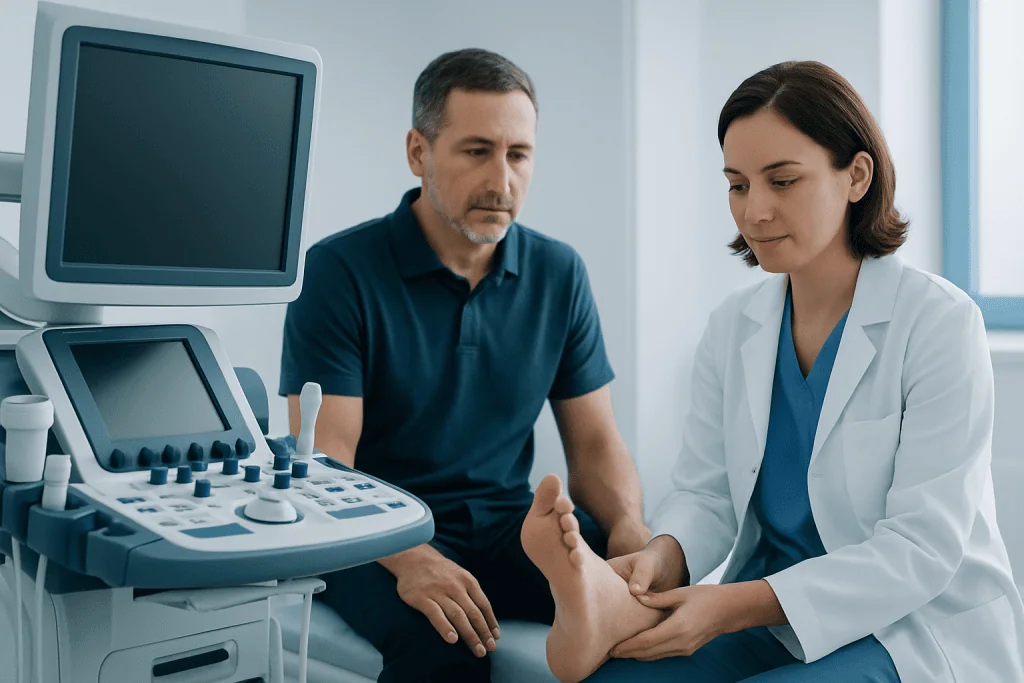
The most common sign of plantar fibroma is a firm, localized lump in the arch of the foot. It may feel round or slightly elongated and can be easier to detect when the toes are lifted upward, which tightens the plantar fascia. The size varies, and some nodules remain small for years.
Symptoms can range from none to bothersome pressure pain. People may describe tenderness when walking barefoot, discomfort in tight or flat shoes, or a sensation of stepping on a pebble. Pain is not always caused by the fibroma itself; it may result from friction, pressure, or altered walking patterns that strain nearby tissues.
Some patients develop more than one nodule in the same foot, and occasionally both feet are affected. If the growth becomes larger, it may interfere with standing for long periods, exercise, or daily activities. A person may also unconsciously shift weight away from the painful area, which can lead to secondary soreness in the heel, ankle, or other parts of the foot.
Causes and risk factors
The exact cause of plantar fibroma is not always clear. It develops from an overgrowth of fibrous tissue within the plantar fascia. This growth is benign, meaning it is not cancer, but it can still be uncomfortable because of its location on a weight-bearing surface.
Several factors may increase the likelihood of plantar fibroma or plantar fibromatosis. These can include family tendency, repeated mechanical stress on the sole, and certain connective tissue patterns in the body. Similar fibrous conditions can occur in other areas, such as the hand, where they are known as Dupuytren-related nodules or contracture.
Risk may be higher in adults, particularly middle-aged or older individuals, although younger people can also be affected. Some studies and clinical observations suggest links with diabetes, alcohol misuse, certain seizure medicines, and liver disease, but these associations are not present in everyone. In many patients, no single trigger is identified.
- Family history of fibrous tissue disorders
- Repeated foot strain or pressure
- Presence of multiple nodules
- Associated fibromatosis in the hands or other areas
- Certain chronic health conditions in some patients
How plantar fibroma is diagnosed
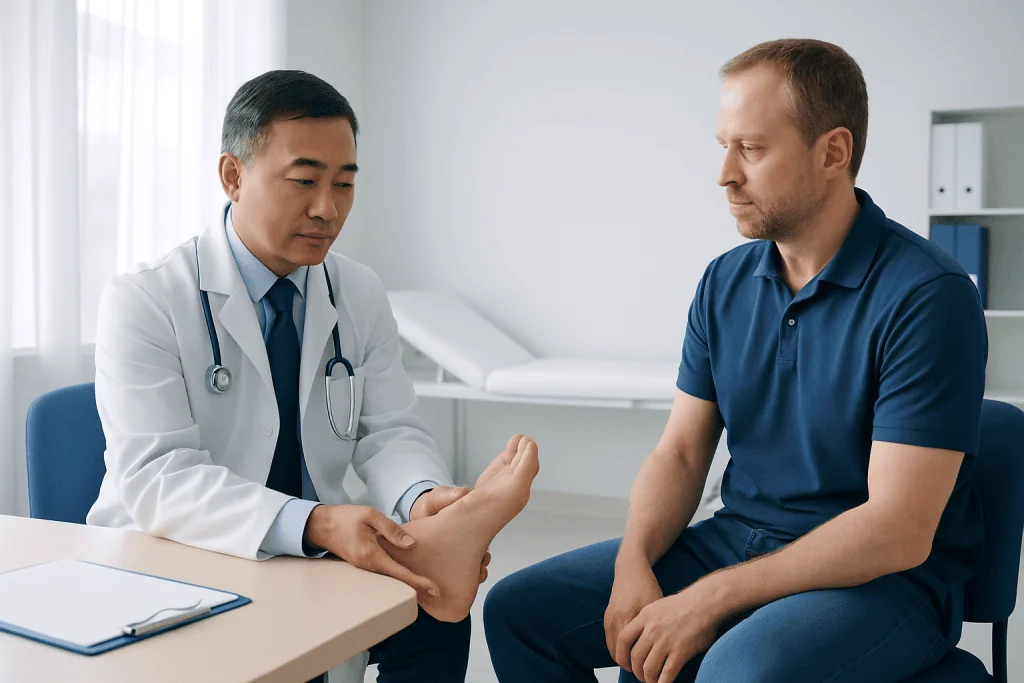
Diagnosis usually begins with a medical history and foot examination. A doctor will ask when the lump was first noticed, whether it has changed in size, and what kinds of activities or footwear make symptoms worse. During the exam, the clinician will feel the nodule, assess tenderness, and check the motion and alignment of the foot.
In many cases, a physical examination is enough to strongly suggest plantar fibroma. However, imaging may be recommended if the diagnosis is uncertain, if the lump is growing quickly, or if another soft-tissue problem needs to be ruled out. Ultrasound can show the size and location of the nodule, while MRI gives a more detailed view of the plantar fascia and nearby structures.
The doctor may also consider other possible causes of a lump or pain under the foot. These can include cysts, scar tissue, lipoma, nerve-related problems, or less commonly other soft-tissue masses. If symptoms overlap with heel or arch pain conditions, the clinician may also evaluate for issues such as Achilles tendonitis or other biomechanical causes of foot discomfort.
Treatment options
Treatment for plantar fibroma depends on the size of the nodule, the level of pain, and how much it affects walking and quality of life. If the lump is small and not causing symptoms, careful observation may be enough. Not every plantar fibroma requires active treatment.
When symptoms are present, conservative care is usually the first step. This may include cushioned shoes, soft insoles, arch supports, custom orthotics, and pads designed to reduce direct pressure on the lump. Stretching, activity modification, and physical therapy and rehabilitation may help relieve strain on the plantar fascia and improve walking mechanics.
Some patients may benefit from anti-inflammatory strategies to ease discomfort around the area, although these do not remove the fibroma itself. In selected cases, a doctor may discuss injections or other localized treatments, but these are considered individually because responses vary and recurrence can occur.
Surgery may be considered if pain remains significant despite non-surgical measures or if the mass substantially limits footwear and mobility. Surgical treatment aims to remove the fibroma, but it is approached carefully because recovery can take time and there is a possibility of recurrence, scar discomfort, or arch stiffness. Evaluation by a foot and ankle or orthopedic surgery specialist helps determine whether surgery is appropriate.
Daily care, footwear, and prevention of irritation
Because plantar fibroma forms within the fascia, there is no proven way to fully prevent it. Still, simple self-care measures can reduce irritation and help many people stay comfortable. The main goal is to minimize repeated pressure on the nodule and support the foot during daily movement.
Shoes with good cushioning, a roomy toe box, and soft arch contact are often more comfortable than flat or rigid shoes. Some people do better with an insole or custom orthotic that redistributes weight away from the painful area. Avoiding barefoot walking on hard floors may also reduce soreness.
Gentle stretching and strengthening can improve overall foot function, especially if tight calf muscles or altered gait are adding strain. Managing body weight within a healthy range may lower pressure on the feet. If symptoms persist, clinicians may also look for related biomechanical problems and discuss supportive options such as foot and ankle care when needed.
- Choose cushioned, supportive footwear
- Use padding or orthotics to offload pressure
- Limit activities that sharply increase foot pain
- Stretch the calf and plantar tissues as advised by a clinician
- Seek review if the lump changes in size or symptoms worsen
When to seek medical care
A person should arrange medical assessment if a lump in the arch is new, painful, enlarging, or making walking difficult. Any persistent foot mass deserves professional evaluation, even when it seems minor, because several conditions can look similar at first. Early review can help confirm the diagnosis and avoid unnecessary discomfort.
Prompt medical attention is especially important if the foot pain is severe, the skin over the area changes, numbness develops, or the person can no longer wear usual shoes comfortably. A doctor should also evaluate symptoms that do not improve with simple measures such as shoe changes and padding.
For international patients needing assessment or treatment, Acibadem International’s multidisciplinary specialists in JCI-accredited hospitals diagnose and treat foot conditions, including plantar fibroma, with individualized care plans. The aim is to confirm the cause of symptoms and choose the least invasive effective option whenever possible.
Frequently asked questions
Is plantar fibroma cancer?
No. Plantar fibroma is a benign, or noncancerous, growth of fibrous tissue in the plantar fascia. Even though it is not cancer, it can still cause discomfort because it sits on a weight-bearing part of the foot.
Can plantar fibroma go away on its own?
A plantar fibroma does not always disappear on its own. Some remain stable for a long time and cause little trouble, while others slowly enlarge or become more bothersome. Treatment is often focused on symptom relief and reducing pressure rather than making the lump vanish.
What is the difference between plantar fibroma and plantar fasciitis?
Plantar fibroma is a distinct lump within the plantar fascia, usually in the arch. Plantar fasciitis is inflammation or degeneration of the fascia, most often causing pain near the heel without a defined nodule. Both affect the bottom of the foot, but they are different conditions.
Do all plantar fibromas need surgery?
No. Many plantar fibromas are managed without surgery, especially if symptoms are mild. Doctors usually begin with supportive shoes, padding, orthotics, and other conservative measures before considering an operation.
Can I still exercise if I have plantar fibroma?
Often yes, but activities may need to be adjusted if they increase pain. Lower-impact options, supportive footwear, and pressure-relieving inserts can help. A clinician or physical therapist can suggest safer ways to stay active.
How is plantar fibroma confirmed?
It is commonly diagnosed through a physical examination and discussion of symptoms. If the lump is unusual, painful, or changing, imaging such as ultrasound or MRI may be used to confirm its location and rule out other causes.
References
- American Academy of Orthopaedic Surgeons
- American Orthopaedic Foot & Ankle Society
- National Institute of Arthritis and Musculoskeletal and Skin Diseases
- MedlinePlus
- Mayo Clinic
This article is for general information only and is not a substitute for professional medical advice. Please consult a qualified doctor about your individual situation.
Explore treatments in Turkey — costs, top hospitals & a free quote
JCI-accredited · board-certified surgeons · reply within 24h
Add us as a Preferred Source to see more of our trusted health content across Google Search, AI Overviews and Discover.