Hyperdontia — Explained by Medical Evidence, Not Myths

Hyperdontia means having one or more extra teeth beyond the normal number. Some people have no symptoms, while others develop crowding, delayed eruption, bite problems, or retained baby teeth.
Key Takeaways
- Hyperdontia means having one or more extra teeth beyond the normal number.
- Some people have no symptoms, while others develop crowding, delayed eruption, bite problems, or retained baby teeth.
- Dental examination and imaging, often including X-rays, help confirm the diagnosis and guide treatment.
- Treatment is individualized and may include monitoring, extraction, or orthodontic care depending on the tooth position and symptoms.
- Hyperdontia can occur on its own or alongside certain genetic or developmental conditions.
Hyperdontia is a condition in which a person develops more teeth than usual. These extra teeth, called supernumerary teeth, may cause no problems or may affect eruption, alignment, bite, and oral hygiene, so evaluation by a dental professional is important.
Overview: what hyperdontia means
Hyperdontia is the medical term for having extra teeth in addition to the usual set of primary or permanent teeth. These extra teeth are called supernumerary teeth. They may appear anywhere in the mouth, but they are more often found in the upper jaw and around the front teeth or molars.
Some supernumerary teeth erupt normally and become visible in the mouth. Others stay hidden in the gums or bone and are found only during a dental exam or imaging. A person may have a single extra tooth or several, and the shape can vary from tooth-like to small and irregular.
Hyperdontia is not simply a cosmetic issue. In some people, it can interfere with normal tooth eruption, contribute to crowding, change the bite, or make oral hygiene more difficult. In others, it causes no symptoms and is discovered by chance, which is why evaluation is based on the individual situation rather than myths or assumptions.
How hyperdontia can affect the mouth
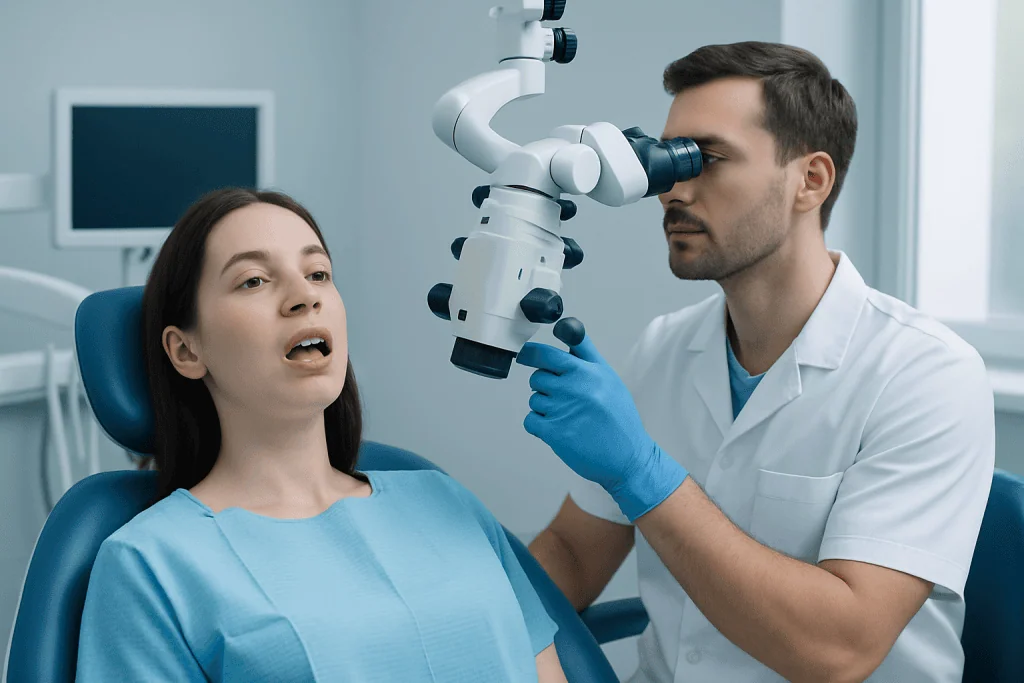
The main concern with hyperdontia is how the extra tooth interacts with neighboring teeth and jaw development. If the extra tooth blocks the path of a permanent tooth, eruption may be delayed or prevented. This can leave a baby tooth in place longer than expected or create an apparent gap where an adult tooth should have appeared.
Extra teeth may also push nearby teeth out of position. This can lead to crowding, rotation, spacing changes, or a mismatch in the bite. In some cases, the pressure from an unerupted supernumerary tooth contributes to root changes in adjacent teeth or makes orthodontic treatment more complex.
When the extra tooth is partly erupted or located in a hard-to-clean area, plaque can collect more easily. That may increase the risk of tooth decay, gum irritation, or bad breath. If crowding or impaction is part of the picture, a dentist may also assess for related concerns such as impacted teeth.
Symptoms and signs to notice

Hyperdontia does not always cause symptoms. Many people learn about it only when a dentist notices a retained baby tooth, delayed eruption of a permanent tooth, or an unusual shape on an X-ray. Even without pain, the condition may still need follow-up if it affects tooth development.
When symptoms are present, they can include visible extra teeth, crowding, teeth that seem crooked despite otherwise normal jaw growth, gaps caused by blocked eruption, or a bite that feels uneven. Children may be brought for assessment when one permanent front tooth appears but the matching tooth does not erupt on time.
Possible signs include:
- An extra tooth visible in the mouth
- Delayed eruption of a permanent tooth
- A baby tooth that does not fall out as expected
- Crowding, rotation, or shifting of nearby teeth
- Difficulty cleaning between teeth
- Occasional discomfort, pressure, or gum swelling in the area
Because these signs can overlap with other dental conditions, a professional examination is the most reliable way to understand the cause.
Causes and risk factors
The exact cause of hyperdontia is not fully understood, but it is thought to relate to changes in the way tooth buds develop. Teeth begin forming early, and small differences in this process may result in extra tooth formation. Researchers consider both genetic and environmental influences, although inherited factors appear important in many cases.
Hyperdontia can occur in people with no other health problems, and many cases are isolated. It can also be associated with certain syndromes or developmental conditions. For that reason, when a child has multiple supernumerary teeth or other unusual findings, the dental team may consider whether further medical or genetic evaluation is appropriate.
Risk may be higher when there is a family history of extra teeth. Hyperdontia may also appear alongside conditions that affect craniofacial or skeletal development. The presence of hyperdontia does not automatically mean a person has an underlying syndrome, but multiple extra teeth are more likely to prompt a broader assessment.
How dentists diagnose hyperdontia
Diagnosis starts with a clinical dental examination. The dentist reviews symptoms, eruption timing, bite, and whether any baby teeth have been retained longer than expected. In children, the timing of tooth development is especially important, because delayed eruption may be the first clue.
Imaging is usually needed to confirm the diagnosis and show the exact location of the extra tooth. Standard dental X-rays often provide enough information, including whether the tooth is erupted, unerupted, angled, or affecting nearby roots. In more complex cases, advanced imaging may be used to clarify the relationship to adjacent teeth and bone.
The dental team also assesses whether the extra tooth is causing current problems or is likely to do so later. This includes checking for crowding, blocked eruption, gum health, and bite changes. If alignment has already been affected, referral for orthodontic treatment may be part of the care plan.
Treatment options and when treatment is needed
Treatment for hyperdontia depends on the number of extra teeth, their position, the age of the patient, and whether symptoms are present. Not every supernumerary tooth needs to be removed immediately. If an extra tooth is not affecting eruption, alignment, or oral health, careful monitoring may be reasonable.
Removal is often recommended when the extra tooth blocks a permanent tooth, causes crowding, affects the bite, irritates nearby tissues, or creates hygiene problems. Extraction planning is based on imaging and the stage of dental development. In some cases, timing matters: removing the tooth too early or too late may influence how well a blocked permanent tooth can erupt afterward.
Some patients also need treatment after removal to guide the affected teeth into better positions. This may include replacement of a missing tooth if one is absent for another reason in adults, or other restorative care when anatomy is more complex. If the extra tooth is deeply embedded or close to important structures, the dentist or oral surgeon will explain the safest approach and likely recovery.
People with complicated cases may benefit from coordinated care among pediatric dentists, orthodontists, oral surgeons, and restorative dentists. Near the end of a longer care pathway, centers such as Acibadem International can support diagnosis and treatment through multidisciplinary specialists and JCI-accredited hospitals for international patients.
Self-care, monitoring, and oral health after diagnosis
Daily oral hygiene remains important whether hyperdontia is treated right away or observed over time. Crowded or hard-to-reach areas can collect plaque more easily, so careful brushing and flossing are useful. A dentist may suggest tailored cleaning techniques or more frequent follow-up when access is limited.
For children, keeping scheduled dental visits is especially helpful because tooth eruption changes over time. Monitoring allows the dentist to see whether a permanent tooth begins to erupt normally after observation or after removal of a supernumerary tooth. Follow-up imaging may be used when needed, but only when the expected benefit outweighs unnecessary exposure.
After extraction, self-care usually includes following the dental team’s advice about eating, cleaning, and activity while the area heals. If orthodontic treatment is planned, regular visits help guide the movement of teeth safely and predictably. When crowding is significant, some people may also have questions related to tooth crowding and its long-term management.
When to seek medical care
A dental evaluation is advisable if a child’s permanent tooth seems delayed, a baby tooth does not loosen when expected, or an extra tooth becomes visible. Assessment is also appropriate if teeth look increasingly crowded, if the bite feels different, or if brushing is difficult because of tooth position.
Prompt care is especially important when there is pain, swelling, repeated gum irritation, signs of infection, or concern that an adult tooth is trapped beneath the gums. These symptoms do not always mean a serious problem, but they do mean the mouth should be examined rather than watched indefinitely at home.
Adults can also have hidden supernumerary teeth discovered later in life, particularly during imaging for alignment or restorative treatment. Anyone with unexplained spacing changes, persistent retained teeth, or eruption problems should discuss them with a qualified dentist or oral and maxillofacial specialist. Early assessment often makes planning simpler and more conservative.
Frequently asked questions
Is hyperdontia rare?
Hyperdontia is considered an uncommon dental condition, but it is well recognized in dental practice. It may involve a single extra tooth or several, and some cases are found only on routine imaging.
Can hyperdontia go away on its own?
No, an extra tooth does not usually disappear on its own. However, not every case requires immediate treatment, and some teeth can be safely monitored if they are not causing problems.
Does hyperdontia always need surgery?
Not always. Treatment depends on whether the extra tooth is blocking eruption, causing crowding, affecting the bite, or increasing the risk of decay or gum problems. Some people only need observation and periodic dental follow-up.
At what age is hyperdontia usually found?
It is often discovered in childhood, especially when a permanent tooth does not erupt on time or a baby tooth remains in place. That said, some cases are diagnosed in teenagers or adults during dental X-rays for other reasons.
Can hyperdontia be inherited?
Yes, genetics may play a role, and some people have a family history of extra teeth. Hyperdontia can also occur without a known family pattern, so family history is only one part of the assessment.
What kind of doctor treats hyperdontia?
Hyperdontia is usually assessed by a dentist, pediatric dentist, orthodontist, or oral and maxillofacial surgeon, depending on the case. Complex cases may involve a team approach, especially when eruption, bite, and surgery all need attention.
This article is for general information only and is not a substitute for professional medical advice. Please consult a qualified doctor about your individual situation.
Explore treatments in Turkey — costs, top hospitals & a free quote
JCI-accredited · board-certified surgeons · reply within 24h
Add us as a Preferred Source to see more of our trusted health content across Google Search, AI Overviews and Discover.

More from the Health Library

Op Hartmann: A Complete Medical Overview

Ovary Removal: An Evidence-Based Guide for Patients

Quervain’s: What Patients Need to Know

Anti Diarrheal: What Patients Need to Know

Hypo and Hyperglycemic: An Evidence-Based Guide for Patients