What Does a Miscarriage Look Like? Here Is What the Evidence Says

A miscarriage may look like light spotting, a period-like bleed, or heavier bleeding with clots and tissue. Cramping, lower back pain, and a sudden decrease in pregnancy symptoms can occur, but they do not confirm miscarriage on their own.
Key Takeaways
- A miscarriage may look like light spotting, a period-like bleed, or heavier bleeding with clots and tissue.
- Cramping, lower back pain, and a sudden decrease in pregnancy symptoms can occur, but they do not confirm miscarriage on their own.
- Early pregnancy bleeding is common and can have causes other than miscarriage.
- Doctors usually confirm miscarriage with an exam, ultrasound, and blood tests rather than symptoms alone.
- Urgent medical care is needed for very heavy bleeding, severe pain, fainting, fever, or signs of infection.
What does a miscarriage look like? In many cases, it looks like vaginal bleeding and cramping in early pregnancy, sometimes with clots or gray-pink tissue, but symptoms can vary and not all bleeding means pregnancy loss. Because appearance alone cannot confirm a miscarriage, medical evaluation is important when bleeding is heavy, pain is significant, or pregnancy symptoms change suddenly.
Overview: what a miscarriage may look like
What does a miscarriage look like? Most often, it looks like vaginal bleeding in early pregnancy, sometimes with cramping and the passage of blood clots or tissue. The bleeding may begin as brown spotting or light pink bleeding and can become heavier, similar to or stronger than a menstrual period. Some people also notice gray, white, or pink tissue mixed with the blood.
It is important to know that bleeding in early pregnancy is fairly common and does not always mean a miscarriage. Some pregnancies continue normally after spotting or light bleeding. That is why the appearance of blood, clots, or tissue can suggest a problem, but it cannot reliably confirm pregnancy loss without medical assessment.
Miscarriage is the medical term for a pregnancy loss that happens before 20 weeks. It can happen in different ways, including a complete miscarriage, where all pregnancy tissue passes naturally, or an incomplete miscarriage, where some tissue remains in the uterus. In other cases, there may be no obvious tissue passage at all, especially if the loss is very early.
How bleeding, clots, and tissue can appear
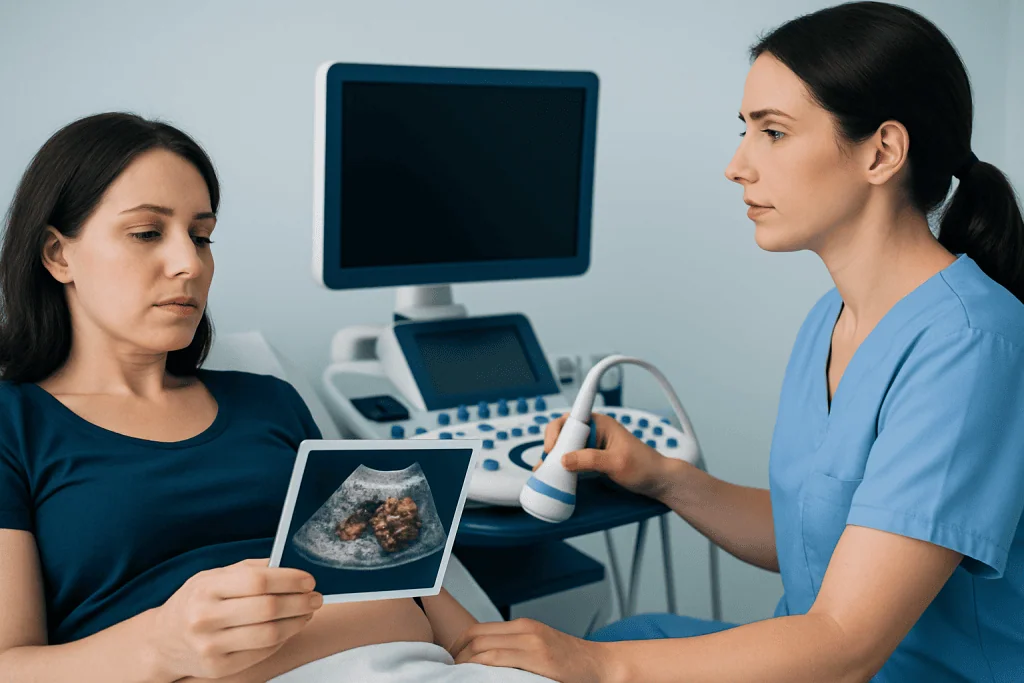
The visual appearance of a miscarriage varies depending on how far the pregnancy has progressed. In a very early miscarriage, the blood may look like a heavy period, sometimes with small clots. In later first-trimester losses, the bleeding may be heavier and tissue may be easier to recognize.
Blood clots are usually dark red or bright red and can be small or larger than a coin. Pregnancy tissue may look different from a typical clot. Some people describe it as grayish, pale pink, white, or fleshy tissue. It may appear stringy, jelly-like, or as a small sac-like structure. In a later loss, tissue may be more distinct.
Because blood clots and uterine lining can also look unusual, it is often hard to tell what is being passed. If a person passes tissue during pregnancy, a doctor may recommend saving it in a clean container if possible, as this can sometimes help with evaluation. However, even when tissue is visible, a clinician usually confirms the diagnosis with ultrasound and lab tests rather than appearance alone.
Other symptoms that may happen with miscarriage

Bleeding is often accompanied by cramping in the lower abdomen or pelvis. These cramps may feel like menstrual cramps or stronger, wave-like pains as the uterus contracts. Some people also notice lower back pain, pelvic pressure, or the feeling that bleeding is suddenly becoming heavier.
A reduction in pregnancy symptoms can also occur. For example, breast tenderness, nausea, or fatigue may lessen. Still, this change is not specific. Pregnancy symptoms can naturally vary from day to day, so a sudden shift should be discussed with a doctor but should not be used by itself to diagnose a miscarriage.
Not every miscarriage causes dramatic symptoms. A missed miscarriage may produce very little bleeding or cramping at first and may only be found on ultrasound. In contrast, heavy bleeding with severe pain can sometimes point to other urgent conditions, including ectopic pregnancy, which requires prompt medical care.
What else early pregnancy bleeding can mean
There are several reasons why bleeding can happen in early pregnancy without a miscarriage. Light spotting may occur around the time of implantation, after intercourse, or because of changes in the cervix. A small collection of blood around the pregnancy, sometimes called a subchorionic bleed, can also cause spotting or bleeding.
Doctors also consider conditions such as ectopic pregnancy, molar pregnancy, infection, or problems affecting the cervix or uterus. Because the symptoms can overlap, it is safest not to assume the cause based only on what the bleeding looks like. This is especially true if there is one-sided pain, shoulder pain, dizziness, or fainting.
For some patients, bleeding can be part of a pregnancy that remains ongoing but requires close observation. If bleeding happens after fertility treatment or in a pregnancy known to be high risk, clinicians may monitor more closely. Related concerns may also arise in patients being evaluated for high-risk pregnancy care.
How doctors diagnose a miscarriage
Doctors usually diagnose miscarriage by combining symptoms with a medical history, pelvic examination, ultrasound, and blood tests. The main goal is to confirm whether the pregnancy is continuing, whether tissue remains in the uterus, and whether there are signs of another condition that needs urgent treatment.
An ultrasound helps show whether a pregnancy sac or embryo is present, whether there is a heartbeat when expected, and whether tissue is still inside the uterus. Blood tests, especially serial beta hCG measurements, can show whether pregnancy hormone levels are rising, falling, or plateauing in a way that supports the diagnosis.
If tissue remains in the uterus or the diagnosis is unclear, follow-up testing may be needed. Depending on the findings, a doctor may discuss observation, medication, or a procedure to remove remaining tissue. In some cases, care may include dilation and curettage or imaging through ultrasound evaluation as part of diagnosis and management.
Treatment and what to expect afterward
Treatment depends on the type of miscarriage, the amount of bleeding, the stage of pregnancy, and patient preference where appropriate. In a complete miscarriage, no further treatment may be needed other than follow-up. In other cases, doctors may recommend expectant management, allowing the body to pass tissue naturally over time.
Medication may be used to help the uterus empty if tissue remains. If bleeding is heavy, symptoms are prolonged, infection is suspected, or tissue does not pass completely, a procedure may be advised. Surgical treatment may be the safest option in some situations and can quickly control bleeding and remove retained tissue.
After a miscarriage, bleeding often continues for several days and may taper to spotting. Mild cramping can persist briefly. A doctor may recommend follow-up to make sure the uterus is empty and to discuss physical recovery, emotional support, and plans for future pregnancy if desired. Some patients may later need support from fertility specialists if losses are recurrent or conception is difficult.
When to seek medical care
Any bleeding in pregnancy should be discussed with a healthcare professional, especially if it is more than light spotting. Prompt medical review is important if bleeding becomes heavy, if there are strong cramps, or if tissue is passed. Even when symptoms improve, follow-up is helpful because some miscarriages are incomplete and can need treatment.
Urgent care is needed for warning signs such as soaking through pads rapidly, severe abdominal or shoulder pain, fever, chills, fainting, dizziness, or foul-smelling discharge. These symptoms can suggest heavy blood loss, infection, or an ectopic pregnancy. People who know their blood type is Rh-negative should also ask whether they need preventive treatment after bleeding in pregnancy.
For international patients, Acibadem International’s multidisciplinary specialists and JCI-accredited hospitals diagnose and treat pregnancy complications, including miscarriage, with coordinated gynecology, imaging, and follow-up care.
- Call a doctor for any new bleeding in pregnancy.
- Seek urgent help for heavy bleeding, severe pain, fainting, or fever.
- Do not insert tampons or have intercourse until a clinician advises it is safe.
- Follow the care plan and attend any recommended repeat ultrasound or blood tests.
Frequently asked questions
Can a miscarriage look just like a period?
Yes, an early miscarriage can look very similar to a heavy menstrual period. There may be more cramping than usual, and some people pass clots or tissue, but the difference is not always obvious without medical evaluation.
Is passing a blood clot always a sign of miscarriage?
No. Blood clots can happen with heavy bleeding for several reasons, including bleeding that does not lead to pregnancy loss. Because clots alone cannot confirm miscarriage, a doctor may use ultrasound and blood tests to find the cause.
What color is miscarriage tissue?
Miscarriage tissue may appear gray, white, pale pink, or fleshy, but it can also be mixed with red blood and dark clots. Its appearance varies with gestational age and can be difficult to distinguish from normal uterine lining.
Can someone miscarry without seeing tissue?
Yes. In a very early miscarriage, tissue may be too small to recognize, or it may pass mixed with blood. In a missed miscarriage, there may be little or no visible bleeding or tissue at first.
How do doctors confirm whether bleeding is a miscarriage?
Doctors usually combine symptoms with a pelvic exam, ultrasound, and blood tests such as serial hCG levels. This helps confirm whether the pregnancy is continuing, whether tissue remains in the uterus, and whether another condition could be causing the bleeding.
When should someone go to the emergency department for bleeding in pregnancy?
Emergency care is appropriate for very heavy bleeding, severe abdominal pain, fainting, dizziness, shoulder pain, fever, or foul-smelling discharge. These symptoms may signal significant blood loss, infection, or an ectopic pregnancy and should not be ignored.
References
- American College of Obstetricians and Gynecologists
- National Health Service
- Mayo Clinic
- Royal College of Obstetricians and Gynaecologists
- National Institute for Health and Care Excellence
This article is for general information only and is not a substitute for professional medical advice. Please consult a qualified doctor about your individual situation.
Explore treatments in Turkey — costs, top hospitals & a free quote
JCI-accredited · board-certified surgeons · reply within 24h
Add us as a Preferred Source to see more of our trusted health content across Google Search, AI Overviews and Discover.

More from the Health Library



Related Specialists

Prof. Dr. Mehmet Cihat Ünlü
Gynecology & Obstetrics
Prof. Dr. Süleyman Çetinkünar
General Surgery
Prof. Dr. Sabahattin Kaymakoğlu
Gastroenterology
Dr. Özkan Uysal
Internal Medicine