Tendonitis Foot: Early Signs, Risk Factors, and How It Is Treated

Tendonitis foot usually causes pain, tenderness, and stiffness that worsen with activity. Common triggers include overuse, sudden increases in exercise, poor footwear, and foot alignment problems.
Key Takeaways
- Tendonitis foot usually causes pain, tenderness, and stiffness that worsen with activity.
- Common triggers include overuse, sudden increases in exercise, poor footwear, and foot alignment problems.
- Diagnosis is often based on symptoms and examination, with imaging used when the diagnosis is unclear or a tear is suspected.
- Treatment may include rest, ice, supportive shoes, physical therapy, and gradual return to activity.
- Medical evaluation is important if pain is severe, persistent, or associated with major swelling, weakness, or inability to bear weight.
Tendonitis foot refers to irritation or inflammation of one or more foot tendons, often causing pain with walking, exercise, or pushing off the foot. It is commonly linked to overuse, footwear issues, or changes in activity, and most people improve with rest, activity adjustment, and medical guidance when needed.
Overview: what tendonitis foot means
Tendonitis foot means inflammation or irritation of a tendon in the foot. Tendons are strong bands of tissue that connect muscles to bones and help the foot move, stabilize, and absorb force during walking, running, and standing. When a tendon is overloaded or strained, it can become painful and less able to work smoothly.
Several tendons in the foot can be affected. These include the posterior tibial tendon along the inner ankle, the peroneal tendons on the outer side of the foot and ankle, the extensor tendons on the top of the foot, and the flexor tendons that help curl the toes. The exact location of pain often gives useful clues about which tendon is involved.
Although the term “tendonitis” is widely used, some long-lasting cases involve tendon degeneration rather than active inflammation. This is one reason early attention matters. Prompt care can reduce strain on the tendon, support healing, and lower the risk of persistent pain or tendon damage.
Early signs and symptoms to notice
The most common early sign of tendonitis foot is pain that develops with movement and eases with rest. Many people first notice discomfort during walking, climbing stairs, running, or after spending a long time on their feet. The pain may feel dull at first and become sharper when the tendon is stressed.
Tenderness along the course of a tendon is also common. There may be mild swelling, warmth, or a sense of tightness in the affected area. Morning stiffness or stiffness after sitting can happen because the tendon becomes less flexible when it has not been moving.
Symptoms vary by tendon location. Pain on the top of the foot may point to extensor tendon irritation, while pain along the inner arch or inner ankle can suggest posterior tibial tendon problems. Outer foot or ankle pain may involve the peroneal tendons. In some cases, people notice weakness, a reduced ability to push off, or discomfort when wearing certain shoes.
- Pain that worsens with activity
- Tenderness when touching the tendon
- Mild swelling or puffiness
- Stiffness, especially after rest
- Discomfort with pushing off, tiptoe standing, or ankle movement
Why foot tendonitis happens: causes and risk factors

The most frequent cause of tendonitis foot is overuse. Repetitive stress from running, brisk walking, dancing, jumping sports, or long hours standing can overload a tendon faster than it can recover. A sudden increase in training distance, intensity, or frequency is a classic trigger.
Footwear can also play a major role. Shoes that are worn out, poorly fitted, or unsupportive may change how force travels through the foot. Uneven surfaces, repeated hill work, and returning to exercise too quickly after a break can further increase strain.
Some people are more likely to develop tendon problems because of foot structure or underlying health factors. Flat feet, high arches, tight calf muscles, and abnormal gait mechanics can all alter tendon loading. Age-related wear, obesity, inflammatory arthritis, diabetes, and previous ankle or foot injuries may also increase risk. In a smaller number of cases, symptoms may overlap with other foot conditions such as plantar fasciitis or with tendon tears that need separate evaluation.
How doctors diagnose tendonitis foot
Diagnosis usually begins with a detailed history and physical examination. A doctor asks where the pain is located, when it began, what activities make it worse, and whether there has been a recent change in exercise, footwear, or routine. The examination often includes checking for swelling, tenderness, range of motion, strength, and the way the person walks.
In many cases, the pattern of symptoms and exam findings is enough to make the diagnosis. The doctor may ask the patient to stand on tiptoe, resist foot movement, or walk a short distance to identify which tendon is affected. These simple tests help separate tendon pain from joint, bone, nerve, or ligament problems.
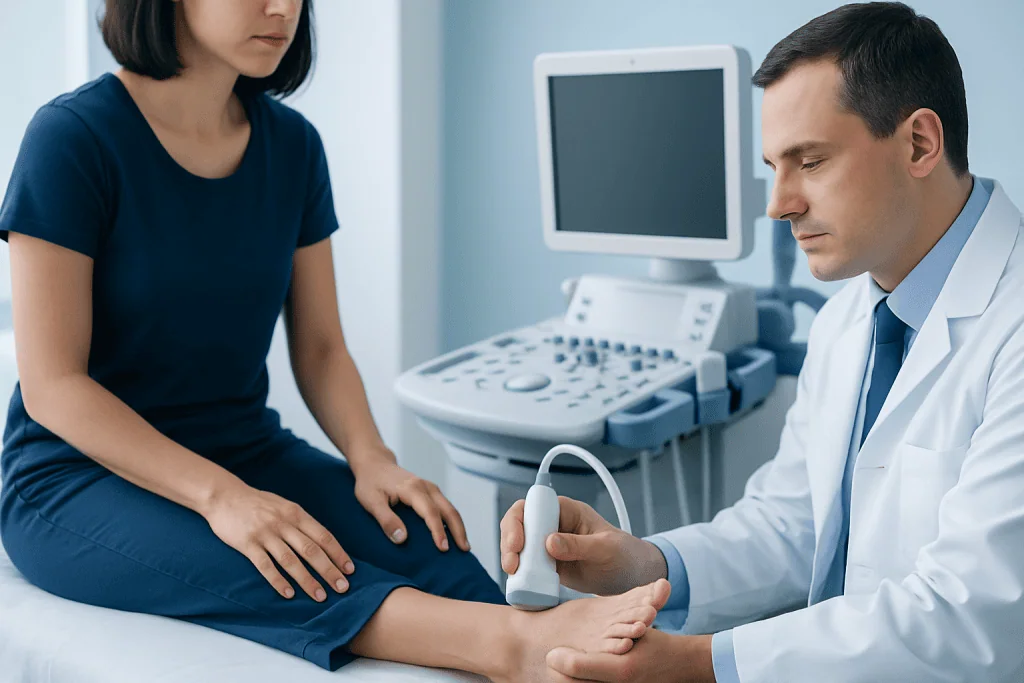
Imaging is not always necessary, but it may be useful if symptoms are severe, long-lasting, or unclear. Ultrasound can show tendon thickening, fluid, or tears. MRI may be recommended when a partial tear, significant degeneration, or another structural problem is suspected. X-rays do not show tendons directly, but they may help rule out a fracture or arthritis if symptoms suggest a different cause.
Treatment options and what recovery usually involves
Treatment for tendonitis foot aims to reduce stress on the tendon, relieve symptoms, and gradually restore strength and movement. Early care often includes resting from aggravating activities, applying ice for short periods, and temporarily reducing high-impact exercise. Supportive footwear or inserts may help by improving alignment and reducing tendon strain.
Doctors may recommend pain-relieving medicines when appropriate, but medication is usually only one part of care. Physical therapy is often very helpful. A tailored program may include gentle stretching, calf and foot strengthening, balance work, and a gradual return-to-activity plan. For some patients, physical therapy and rehabilitation is central to recovery because it addresses the movement patterns that contributed to the problem.
If the tendon is under significant mechanical stress, short-term bracing, taping, or an orthotic device may be used to support healing. Persistent or complex cases may need specialist review, particularly if there is substantial weakness, a suspected tear, or recurrent symptoms. In selected situations, advanced evaluation by orthopedics can help guide further treatment, and MRI may clarify whether the tendon is inflamed, degenerated, or torn.
Recovery time varies. Mild cases may improve over a few weeks with reduced strain and rehabilitation, while longer-standing cases often take more time. Returning to sport too soon can lead to relapse, so activity is usually reintroduced in stages based on pain, strength, and function rather than a fixed timeline.
Prevention and self-care strategies
Preventing tendonitis foot often depends on reducing sudden overload. A gradual increase in training, regular rest days, and attention to technique can all help. Warm-up and cool-down routines may improve flexibility and prepare the foot and ankle for activity, especially in people who run or play court sports.
Supportive shoes are important. Footwear should match the person’s activity and foot shape, and shoes should be replaced when cushioning or stability wears down. People with flat feet, high arches, or repeated tendon problems may benefit from medical advice about inserts or custom support.
Simple self-care also matters. Keeping calf muscles and foot muscles strong, maintaining a healthy body weight, and managing long-term conditions such as diabetes or inflammatory arthritis can reduce stress on tendons. If pain begins, it is wise to scale back activity early rather than push through it. Persistent symptoms should not be ignored because untreated tendon problems may become chronic or progress to more significant injury.
When to seek medical care
Medical care is advisable if tendon pain in the foot lasts more than a few days despite rest, or if it repeatedly returns when activity resumes. Assessment is also important when swelling is increasing, walking becomes difficult, or the person cannot do normal daily activities without pain.
Urgent evaluation may be needed if there is sudden severe pain, a popping sensation, marked weakness, inability to bear weight, major bruising, or visible deformity. These features can suggest a tendon tear, fracture, or another injury that needs prompt attention. Redness, fever, or spreading warmth should also be checked, as these are not typical features of simple overuse tendonitis.
For international patients who need specialist assessment, Acibadem International’s multidisciplinary specialists and JCI-accredited hospitals diagnose and treat foot and ankle conditions with individualized care plans. This may be relevant when symptoms overlap with other causes of heel or arch pain, including Achilles tendonitis, or when rehabilitation has not brought enough improvement.
Frequently asked questions
What does tendonitis foot feel like?
Tendonitis foot often feels like aching or sharp pain along a tendon that gets worse with walking, running, or pushing off the foot. The area may also feel tender, stiff, or slightly swollen, especially after activity or first thing in the morning.
Can foot tendonitis go away on its own?
Mild cases can improve with rest, reduced activity, and supportive footwear. However, if the tendon keeps being overloaded, symptoms may continue or return, so medical advice is helpful when pain persists.
How long does foot tendonitis take to heal?
Recovery time depends on which tendon is affected, how long symptoms have been present, and whether a person can reduce strain on the area. Some mild cases improve within a few weeks, while more stubborn cases may take several weeks to months.
Is it okay to walk with tendonitis in the foot?
Gentle walking may be possible in some mild cases, but walking that increases pain can delay recovery. It is usually best to reduce activities that worsen symptoms and follow a gradual return plan advised by a healthcare professional.
What is the difference between foot tendonitis and a tendon tear?
Tendonitis usually involves irritation, inflammation, or wear-related tendon damage without complete rupture. A tear may cause more sudden pain, weakness, difficulty bearing weight, or a popping sensation, and it often needs closer medical assessment.
Do I need imaging for tendonitis foot?
Not always. Many cases are diagnosed from symptoms and examination, but ultrasound or MRI may be used if the diagnosis is uncertain, symptoms are severe, or a tendon tear is suspected.
References
- American Academy of Orthopaedic Surgeons
- American Orthopaedic Foot & Ankle Society
- National Institute of Arthritis and Musculoskeletal and Skin Diseases
- Mayo Clinic
- MedlinePlus
This article is for general information only and is not a substitute for professional medical advice. Please consult a qualified doctor about your individual situation.
Joint and spine care in Turkey — expert assessment & treatment
JCI-accredited · board-certified surgeons · reply within 24h
Add us as a Preferred Source to see more of our trusted health content across Google Search, AI Overviews and Discover.