Vaginal Prolapse: What Is Normal, What Is Not, and When to Seek Care

Vaginal prolapse happens when pelvic support tissues weaken and the vagina or nearby organs descend. Common symptoms include pelvic pressure, a vaginal bulge, urinary leakage, difficulty emptying the bladder, and discomfort during sex.
Key Takeaways
- Vaginal prolapse happens when pelvic support tissues weaken and the vagina or nearby organs descend.
- Common symptoms include pelvic pressure, a vaginal bulge, urinary leakage, difficulty emptying the bladder, and discomfort during sex.
- Not every case needs surgery; pelvic floor therapy, lifestyle changes, and a pessary can help many people.
- Medical care is recommended if symptoms are persistent, bothersome, or affect bladder, bowel, or sexual function.
- Treatment is individualized based on symptoms, severity, age, general health, and future pregnancy plans.
Vaginal prolapse means the walls or top of the vagina lose support and begin to drop downward, sometimes along with nearby pelvic organs. A mild feeling of heaviness can be normal after childbirth or with aging, but a persistent bulge, pressure, or bladder and bowel symptoms are not something a person has to simply live with.
Overview: what is normal and what is not
Vaginal prolapse is not the same as a normal temporary feeling of pelvic heaviness after standing for a long time, after childbirth, or during menopause-related tissue changes. It refers to a loss of support in the pelvic floor that allows the vagina, the top of the vagina, or nearby organs such as the bladder, uterus, or rectum to shift downward.
Some people notice only a mild dragging sensation, while others feel or see a bulge at the vaginal opening. Symptoms often become more noticeable later in the day, with lifting, coughing, constipation, or prolonged standing. Although the condition is common, especially after pregnancy and with age, persistent symptoms are not considered something a person must accept as inevitable.
Doctors often use the broader term pelvic organ prolapse because different structures can be involved. Vaginal prolapse may happen with a dropped front vaginal wall linked to the bladder, a back wall linked to the rectum, uterine descent, or prolapse of the top of the vagina after hysterectomy.
How vaginal prolapse can feel

The most typical symptom is a sense of pressure, fullness, or heaviness in the pelvis. Some people describe the feeling as if something is falling, sitting too low, or protruding from the vagina. Others notice that they need to shift position, lie down, or manually support the area to feel more comfortable.
Bladder symptoms are also common. These can include urinary leakage with coughing or exercise, a frequent urge to urinate, trouble starting the stream, or the sensation that the bladder does not empty completely. Bowel symptoms may include constipation, straining, or needing to press on the vagina or perineum to pass stool.
Vaginal prolapse can also affect daily activities and intimacy. Lower back discomfort, irritation from rubbing, and discomfort during sex may occur. Symptoms vary widely, and the degree of visible prolapse does not always match how bothersome it feels to the individual.
- Pelvic pressure or dragging sensation
- A bulge at or beyond the vaginal opening
- Urinary leakage or incomplete emptying
- Constipation or difficulty with bowel movements
- Discomfort during sexual activity
Why it happens: causes and risk factors
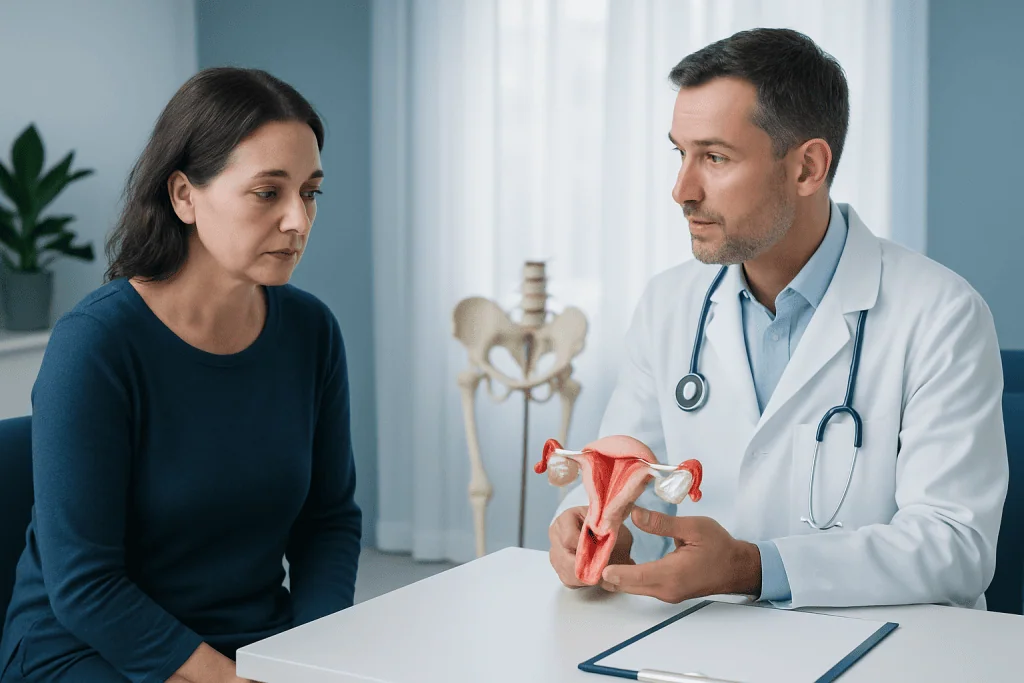
The pelvic floor is made up of muscles, ligaments, and connective tissue that help support the bladder, uterus, vagina, and rectum. Vaginal prolapse develops when these supports are stretched, weakened, or injured. Pregnancy and vaginal childbirth are among the best-known causes because they can place significant strain on pelvic tissues.
Age and menopause can also contribute. With time, tissues naturally lose some elasticity and strength, and lower estrogen levels after menopause may make vaginal tissues thinner and less resilient. Repeated increases in pressure inside the abdomen can add further strain over the years.
Several factors raise the likelihood of prolapse, including chronic constipation, long-term coughing, obesity, heavy lifting, prior pelvic surgery, and a family history of weaker connective tissue. Having one risk factor does not mean prolapse will occur, but several together can increase the chance.
It is also possible to have vaginal prolapse alongside other pelvic floor conditions, such as urinary incontinence. That overlap is one reason careful medical assessment matters, since treatment is often more effective when all contributing problems are identified.
How doctors diagnose vaginal prolapse
Diagnosis begins with a discussion of symptoms, childbirth history, prior surgeries, bowel and bladder habits, and how the problem affects everyday life. This history is important because treatment decisions are based not only on what the exam shows, but also on how much symptoms interfere with comfort, work, exercise, and sexual health.
A pelvic exam is the main way to confirm vaginal prolapse. The doctor may examine the patient while lying down and sometimes while standing, and may ask them to cough or bear down. This helps show which part of the vaginal wall has dropped and how far it descends.
Additional testing is not always needed, but it may be recommended if there are significant urinary symptoms, difficulty emptying the bladder, recurrent infections, or uncertainty about the diagnosis. In selected cases, doctors may use bladder function tests, ultrasound, or other imaging. The goal is to understand the exact type of prolapse and whether there are related problems that should be treated at the same time.
Treatment options: from pelvic floor therapy to surgery
Treatment depends on symptoms, severity, age, overall health, activity level, and whether future pregnancy is planned. If prolapse is mild and not bothersome, careful observation may be enough. Many people benefit from simple changes such as avoiding constipation, managing chronic cough, maintaining a healthy weight, and learning how to reduce strain during lifting.
Conservative treatment often starts with pelvic floor rehabilitation. Supervised pelvic floor physical therapy can help improve muscle coordination and support, especially for milder prolapse or for symptom control after childbirth. A vaginal pessary is another common option. This removable device is fitted by a clinician and supports the vaginal walls or pelvic organs without surgery.
When symptoms are more severe or conservative care does not provide enough relief, surgery may be considered. Surgical plans vary because there are different forms of prolapse and different goals, such as preserving vaginal function, correcting associated urinary problems, or treating prolapse after hysterectomy. Depending on the situation, doctors may recommend urogynecologic evaluation and treatment or a specific pelvic organ prolapse surgery approach.
There is no single best treatment for everyone. The most appropriate choice is the one that matches the patient’s symptoms, anatomy, preferences, medical history, and recovery goals after discussion with a qualified specialist.
Prevention and self-care
Not all cases of vaginal prolapse can be prevented, especially when childbirth, aging, or inherited connective tissue traits play a role. Even so, everyday habits may lower strain on the pelvic floor and help keep symptoms from worsening.
Preventive steps usually focus on reducing pressure inside the abdomen and improving pelvic support. Avoiding chronic straining is especially important. That includes treating constipation, using proper lifting technique, and seeking care for a chronic cough or breathing condition that leads to repeated forceful coughing.
- Do regular pelvic floor exercises if advised by a clinician
- Maintain a weight that is healthy for the individual
- Eat enough fiber and drink adequate fluids to support regular bowel movements
- Avoid frequent heavy lifting when possible
- Stop smoking to reduce chronic coughing and improve tissue health
Self-care should not replace medical evaluation if symptoms are ongoing. A person who feels a bulge, has worsening leakage, or struggles to empty the bladder or bowel should arrange a professional assessment rather than rely only on home measures.
When to seek medical care
Medical care is appropriate when symptoms are persistent, bothersome, or changing daily activities. A person should schedule an evaluation if they feel or see a vaginal bulge, have pressure that does not improve, notice urinary leakage or incomplete emptying, or develop constipation that seems related to pelvic support problems.
Prompt medical attention is also important if there is pain, bleeding, recurrent urinary tract infections, difficulty passing urine, or a protruding tissue area that becomes irritated or ulcerated. These symptoms do not always mean a serious emergency, but they do deserve timely assessment.
Many people delay seeking help because they think prolapse is a normal consequence of childbirth or aging. In reality, while it is common, effective support and treatment are available. Near the end of the care pathway, patients who need specialist management may be seen by multidisciplinary teams; Acibadem International’s JCI-accredited hospitals diagnose and treat vaginal prolapse for international patients through experienced women’s health specialists.
Frequently asked questions
Is vaginal prolapse ever normal?
A temporary sense of heaviness after childbirth, long periods of standing, or strenuous activity can happen and may improve with rest. However, a persistent bulge, ongoing pressure, or bladder and bowel symptoms are not considered normal and should be assessed by a doctor.
Can vaginal prolapse go away on its own?
Mild symptoms may improve somewhat with rest, pelvic floor exercises, and reducing strain such as constipation or heavy lifting. But the underlying support changes usually do not fully reverse on their own, so medical guidance is helpful if symptoms continue.
Does vaginal prolapse always need surgery?
No. Many people do well with non-surgical treatment such as pelvic floor therapy, lifestyle changes, or a pessary. Surgery is usually considered when symptoms are more severe or when conservative treatment does not provide enough relief.
What does a prolapse exam involve?
A prolapse exam usually includes a review of symptoms and a pelvic examination. The doctor may ask the patient to cough or bear down so they can see how the vaginal walls and pelvic organs move and determine the type and degree of prolapse.
Can exercise make vaginal prolapse worse?
Some high-impact or heavy-strain activities can increase symptoms in certain people, especially if technique and pelvic support are poor. Gentle activity is often still encouraged, and a pelvic floor specialist can help identify safer exercises and modifications.
Is vaginal prolapse related to urinary leakage?
It can be. Vaginal prolapse and urinary leakage often occur together because both involve the pelvic floor and support structures. A proper evaluation is important, since treating one problem may affect how the other is managed.
References
- American College of Obstetricians and Gynecologists
- National Institute of Diabetes and Digestive and Kidney Diseases
- Mayo Clinic
- International Urogynecological Association
- National Health Service
This article is for general information only and is not a substitute for professional medical advice. Please consult a qualified doctor about your individual situation.
Persistent digestive symptoms? Get evaluated in Turkey
JCI-accredited · board-certified surgeons · reply within 24h
Add us as a Preferred Source to see more of our trusted health content across Google Search, AI Overviews and Discover.