Acne Face Map — Explained by Medical Evidence, Not Myths

The acne face map concept is not strongly supported by medical evidence. Breakout location may still help identify practical triggers such as cosmetics, helmets, masks, shaving, or hair products.
Key Takeaways
- The acne face map concept is not strongly supported by medical evidence.
- Breakout location may still help identify practical triggers such as cosmetics, helmets, masks, shaving, or hair products.
- Hormonal acne often affects the jawline and chin, but location alone cannot confirm the cause.
- Persistent, painful, or scarring acne should be assessed by a dermatologist or qualified doctor.
- Effective acne care usually combines gentle skin care with targeted medical treatments when needed.
An acne face map is not a medically proven diagnostic tool. While the location of breakouts can sometimes hint at triggers such as hormones, hair products, friction, or shaving, acne is usually explained by clogged pores, oil production, inflammation, and bacteria rather than by specific internal organs.
What an acne face map can and cannot tell a person
An acne face map is a popular idea that suggests different parts of the face reflect different internal problems. Medical evidence does not support using face mapping as a reliable way to diagnose liver disease, digestive problems, or other organ conditions from pimple location alone. In practice, acne is better understood as a skin condition involving clogged pores, increased oil production, inflammation, and the activity of normal skin bacteria.
That said, where breakouts appear can still be useful. Location may point to everyday triggers such as tight headwear on the forehead, oily hair products near the temples, makeup that blocks pores, or hormonal fluctuations that often affect the lower face. So the most evidence-based use of an acne face map is not to predict hidden disease, but to notice patterns and possible exposures.
Acne can appear as whiteheads, blackheads, inflamed red bumps, pus-filled spots, or deeper painful nodules. It may affect teenagers and adults, and it can range from mild to severe. People with more widespread or persistent symptoms may be dealing with acne as a medical condition rather than occasional isolated pimples.
Why acne happens: the medical explanation
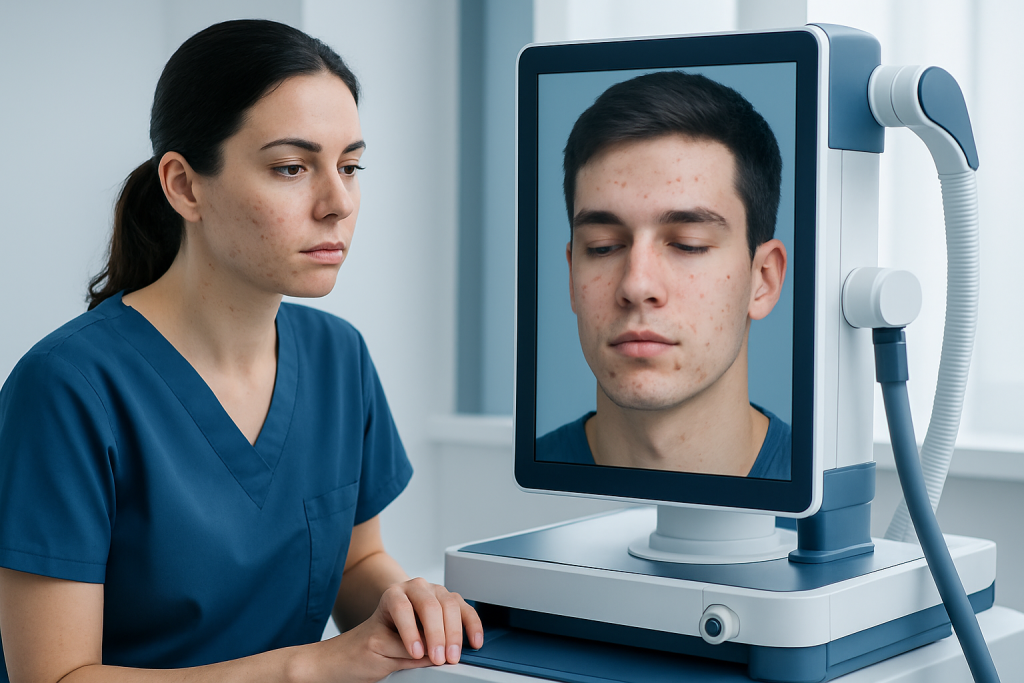
Acne develops when hair follicles become blocked by oil and dead skin cells. The skin then becomes inflamed, and bacteria that normally live on the skin can contribute to redness and swelling. This process is influenced by hormones, genetics, stress, some medications, and skin-care or grooming products.
Androgens, a group of hormones present in all sexes, can increase oil production. This is one reason acne becomes common during puberty and can flare before menstrual periods or during times of hormonal change. Family history also matters, as some people naturally have oilier skin or are more prone to inflammation.
Not all bumps on the face are acne. Rosacea, folliculitis, perioral dermatitis, and irritation from skin products can look similar. If spots are unusually persistent, itchy, centered around the mouth, or not responding to standard acne care, a doctor may consider other diagnoses such as rosacea.
What breakout location may suggest in real life
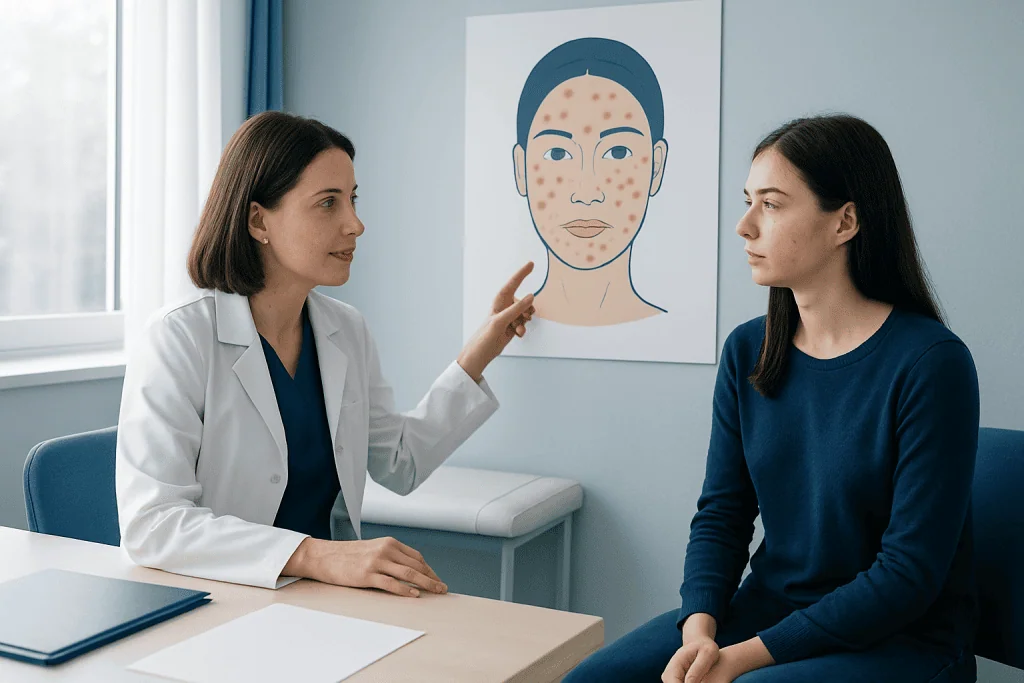
Forehead acne is often linked with practical external triggers. Sweat, hats, helmets, bangs, and hair products can all increase occlusion and irritation in this area. People who exercise regularly or wear head coverings for work may notice clusters of small bumps along the hairline and forehead.
Cheek acne may be related to makeup brushes, mobile phones, pillowcases, touching the face, or friction. In some cases, repeated rubbing or pressure can worsen inflammation. Masks can also contribute to breakouts on the cheeks and around the mouth, especially when worn for long periods in warm or humid conditions.
Jawline and chin acne are commonly associated with hormonal influence, especially in adults. These breakouts may flare around menstrual cycles or during periods of stress. However, location alone does not prove a hormonal disorder, and many people with chin acne have no underlying endocrine condition.
Nose acne can occur because this area has many oil glands, while temple breakouts may be related to pomades, oils, and styling products. The main message is that an acne face map can guide observation of patterns, but it should not replace a proper medical evaluation.
Common triggers and risk factors behind facial acne
Several everyday factors can worsen acne, even though they are not the root cause. Heavy or comedogenic cosmetics, greasy sunscreens, fragranced products, and harsh scrubs may irritate the skin or block pores. Repeated picking or squeezing can worsen inflammation and increase the risk of marks and scarring.
Friction is another overlooked trigger. Helmets, mask straps, chin guards, tight collars, and frequent shaving can all aggravate acne in specific areas. This pattern is sometimes called acne mechanica. For some people, switching products, reducing rubbing, and cleansing the skin after sweating can make a noticeable difference.
Hormonal changes, family history, and certain medications can raise the likelihood of acne. Stress does not directly create acne, but it can worsen existing breakouts through inflammatory pathways and changes in routine. Diet is more complex: some people notice flares with high-glycemic foods or certain dairy products, but food is not the sole cause, and restrictive diets should be approached carefully.
- Hormonal fluctuations during puberty, menstruation, pregnancy, or menopause
- Family history of acne-prone skin
- Oil-based or pore-clogging skin and hair products
- Friction from masks, sports gear, or frequent touching
- Stress, poor sleep, and inconsistent skin-care routines
How doctors assess acne and when mapping is not enough
Doctors diagnose acne mainly by examining the skin. They look at the type of lesions present, where they occur, and whether there are signs of scarring, pigmentation changes, or infection. They also ask about skin-care products, menstrual patterns, medications, shaving habits, and family history.
Testing is not always necessary. However, if acne is severe, sudden, treatment-resistant, or paired with symptoms such as irregular periods, increased facial hair, or hair thinning, a doctor may look for hormonal causes. In adults, especially women, this may include an assessment for conditions such as polycystic ovary syndrome when the overall history suggests it.
Face mapping alone is not enough when symptoms are deep, painful, widespread, or leaving scars. In those situations, professional treatment is important because early control can reduce long-term marks and improve quality of life.
Evidence-based treatment options for facial acne
Treatment depends on the type and severity of acne. Mild comedonal acne may improve with nonprescription products that help unclog pores, while inflammatory acne may need prescription creams, gels, or oral medicines. Common medical approaches include topical retinoids, benzoyl peroxide, azelaic acid, topical antibiotics, oral antibiotics for selected cases, and hormonal treatment for some adults.
For moderate to severe acne, a dermatologist may recommend a more structured plan. This can involve combinations of topical medicines, oral therapy, and monitoring for side effects. Some patients with persistent or scarring acne benefit from specialist dermatology care to tailor treatment and review possible aggravating factors.
When acne leaves marks or scars, treatment may extend beyond active breakout control. Options to improve texture or discoloration can include procedures chosen by a skin specialist, such as laser treatment in carefully selected cases. If acne is strongly linked to hormonal patterns, a doctor may also coordinate care with endocrinology specialists when appropriate.
Treatment takes time. Most evidence-based acne therapies need several weeks before clear improvement is visible, and stopping too soon is a common reason for disappointment. A doctor can help adjust the plan gradually and safely.
Self-care steps that can help reduce breakouts
A gentle routine is usually more effective than aggressive scrubbing. Washing the face twice daily with a mild cleanser and after heavy sweating can help remove oil and debris without damaging the skin barrier. Non-comedogenic moisturizers and sunscreens are often useful, even for oily skin.
People who notice breakouts in certain areas can review potential contact triggers. Hair products should be kept away from the forehead and temples, makeup should be removed before sleep, and pillowcases, phone screens, and makeup brushes should be cleaned regularly. Those who shave may benefit from using non-irritating products and avoiding repeated friction over inflamed skin.
It is also wise to avoid squeezing spots. Picking increases inflammation and raises the chance of post-inflammatory dark marks and scarring. A consistent, simple routine usually works better than changing products frequently or layering many active ingredients at once.
- Choose products labeled non-comedogenic or oil-free
- Remove makeup before bed
- Clean headgear, masks, and phone screens regularly
- Keep hair oils and styling products away from the face
- Seek advice before mixing multiple acne treatments
When to seek medical care
Medical care is a good idea when acne is painful, widespread, leaving scars, or affecting confidence and daily life. It is also important if over-the-counter care has not helped after several weeks, or if the rash may not truly be acne. New adult-onset acne with irregular periods, excessive hair growth, or sudden worsening deserves a professional review.
Urgent evaluation may be needed if there are signs of severe swelling, significant infection, or a reaction to a skin product or medication. A qualified doctor can confirm the diagnosis and recommend evidence-based treatment rather than relying on myths about facial zones.
For people seeking coordinated care, Acibadem International’s multidisciplinary specialists and JCI-accredited hospitals diagnose and treat skin conditions for international patients. The goal is a personalized plan based on symptoms, skin examination, and medical history.
Frequently asked questions
Is the acne face map medically accurate?
Not as a diagnostic tool for internal organs or hidden disease. Medical evidence does not support claims that a pimple in one facial zone reliably points to a specific organ problem. Breakout location can still be useful for noticing triggers such as friction, cosmetics, or hormonal patterns.
Why do I keep getting acne on my chin and jawline?
Chin and jawline acne often has a hormonal pattern, especially in adults. It may flare around menstrual cycles or periods of stress. However, location alone cannot confirm a hormone disorder, so persistent or severe symptoms should be reviewed by a doctor.
Does forehead acne mean I have a digestive problem?
Usually no. Forehead acne is more commonly linked to oil production, sweat, hats, helmets, bangs, or hair products that contact the skin. Digestive issues are not routinely diagnosed from acne location.
Can face washing clear acne by itself?
Gentle cleansing helps, but it is rarely enough for ongoing acne on its own. Acne often needs targeted treatment to reduce clogged pores and inflammation. Over-washing or scrubbing can actually irritate the skin and make breakouts worse.
How long does acne treatment usually take to work?
Most treatments need several weeks before visible improvement appears. It is common for doctors to reassess after about 6 to 12 weeks, depending on the treatment plan. Consistency is important, and stopping too early can limit results.
When should someone see a dermatologist for acne?
A dermatologist should be considered if acne is painful, scarring, widespread, or not improving with nonprescription care. Professional help is also useful when acne affects emotional well-being or when the diagnosis is uncertain. Early treatment may reduce long-term marks and scarring.
This article is for general information only and is not a substitute for professional medical advice. Please consult a qualified doctor about your individual situation.
Acne in Turkey — costs, top hospitals & a free quote
JCI-accredited · board-certified surgeons · reply within 24h
Add us as a Preferred Source to see more of our trusted health content across Google Search, AI Overviews and Discover.

More from the Health Library

Split of the Tongue: What Patients Need to Know

Exfoliating Gloves: An Evidence-Based Guide for Patients

Roos Test: An Evidence-Based Guide for Patients

Menquadfi: What Patients Need to Know

Pressure Points: What Patients Need to Know