How to Dissolve a Cyst Naturally? A Doctor-Reviewed Answer

There is no single natural remedy proven to dissolve all cysts. Warm compresses may help some small skin cysts feel better, but squeezing or puncturing a cyst can worsen irritation or infection.
Key Takeaways
- There is no single natural remedy proven to dissolve all cysts.
- Warm compresses may help some small skin cysts feel better, but squeezing or puncturing a cyst can worsen irritation or infection.
- A doctor may recommend simple monitoring, imaging, medication, drainage, or removal depending on the cyst type and location.
- Red flags include rapid growth, severe pain, redness, fever, drainage with odor, or a lump near the breast, ovary, or internal organs.
- Diagnosis usually begins with a medical history and examination, and sometimes ultrasound or other imaging.
Most cysts are harmless and many do not need urgent treatment, but there is no proven natural method that safely dissolves every cyst. Home care such as warm compresses may help discomfort or encourage drainage in some superficial skin cysts, while painful, growing, or recurrent lumps should be checked by a doctor.
Overview: Can a cyst be dissolved naturally?
Many cysts are benign, meaning they are not cancerous, and some stay stable or even go away on their own. For that reason, finding a cyst is often less serious than people fear. Still, the safest answer to how to dissolve a cyst naturally is that there is no reliable natural remedy that can dissolve every type of cyst.
What helps depends on what the lump actually is. A small superficial skin cyst may settle with time and gentle self-care, while a cyst in the breast, ovary, wrist, kidney, or another internal area has different causes and needs a different approach. Some lumps that people call a “cyst” may actually be an abscess, swollen gland, lipoma, or another condition.
Before trying home remedies, it is important to note the warning signs that deserve medical review: increasing pain, redness, warmth, drainage, fever, rapid growth, repeated return, or a lump in a sensitive area such as the breast or pelvis. After that, a doctor’s evaluation usually starts with questions about symptoms, a physical examination, and if needed, ultrasound or other tests to confirm whether the lump is truly a cyst.
What a cyst is and why types matter
A cyst is a sac-like structure that can contain fluid, semi-solid material, air, or debris. Cysts can form in the skin, joints, glands, ovaries, breasts, kidneys, and many other tissues. Because cysts vary so widely, the safest treatment cannot be based on appearance alone.
Common examples include epidermoid or sebaceous-type skin cysts, ganglion cysts near joints, ovarian cysts, and breast cysts. Some are linked to blocked ducts or follicles, some to normal hormonal changes, and some to irritation or tissue degeneration. Others are part of broader conditions, such as polycystic ovary syndrome or endometriosis, which can also cause pelvic symptoms.
This is why “natural” care should be approached carefully. A warm compress may be reasonable for a small skin cyst, but it will not dissolve a ganglion cyst in a predictable way and is not an appropriate substitute for assessment of an ovarian or breast cyst. Correct identification is the key first step.
Natural and home approaches: what may help and what to avoid

For a small, uncomplicated skin cyst, supportive home care can sometimes relieve discomfort. A clean warm compress applied for short periods may improve comfort and may help a superficial cyst drain on its own. Keeping the area clean, avoiding friction, and leaving the cyst alone are usually the most helpful steps.
What should generally be avoided is just as important. Squeezing, puncturing, scraping, or trying to “pop” a cyst at home can push material deeper into the tissue, increase inflammation, cause infection, and lead to scarring. Applying harsh chemicals, toothpaste, essential oils, or unproven internet remedies can also irritate the skin without treating the underlying sac.
Internal cysts are different. There is no evidence-based home remedy that safely dissolves an ovarian, kidney, breast, or ganglion cyst. General healthy habits such as hydration, balanced nutrition, exercise, and stress management support overall health, but they should not be presented as cures for a specific cyst.
- Reasonable self-care for some skin cysts: warm compresses, gentle cleansing, loose clothing.
- Avoid: squeezing, needles, cutting, strong topical irritants, and delaying care if symptoms worsen.
- If the lump is not clearly superficial skin-related, medical assessment is the safer choice.
Symptoms and red flags to watch for
Some cysts cause no symptoms at all and are only noticed by touch or seen on imaging. Others cause a visible lump, pressure, tenderness, a pulling sensation, or discomfort with movement if they are near a joint. Skin cysts may have a central pore, while internal cysts may be found after bloating, pelvic pain, breast tenderness, or urinary symptoms prompt evaluation.
Red flags are signs that the lump may be infected, inflamed, growing, or not a simple cyst. These include sudden enlargement, increasing pain, redness, warmth, pus-like drainage, bad odor, fever, skin color changes, or pain that interferes with daily life. A lump that feels hard, fixed, or irregular should also be examined.
Location matters too. A breast lump should always be properly assessed rather than self-diagnosed. Ovarian cysts can sometimes cause pelvic pain, bloating, or sudden severe pain if complications occur. A doctor may use imaging such as ultrasound to clarify what the lump is and whether treatment is needed.
How doctors diagnose a cyst
Medical assessment usually begins with a history and examination. A doctor may ask how long the lump has been present, whether it changes size, whether it is painful, and whether there has been redness, fever, trauma, hormonal symptoms, or similar lumps in the past. On examination, the size, texture, mobility, and tenderness of the lump help guide the next step.
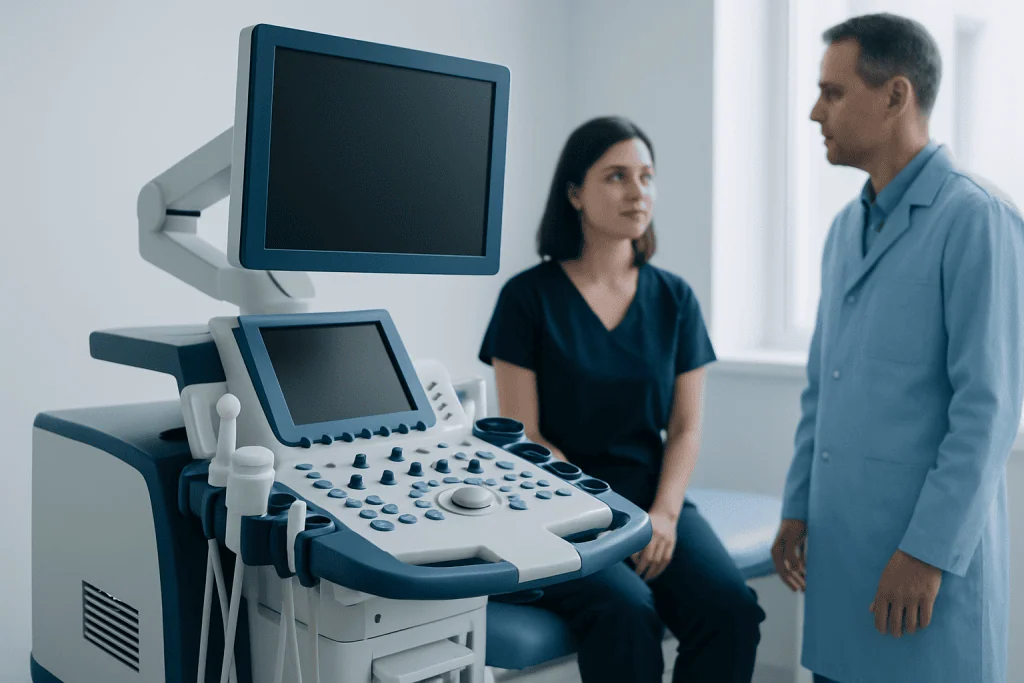
When the diagnosis is uncertain or the cyst is not in the skin, imaging is often useful. Ultrasound is commonly used because it can show whether a lump is fluid-filled or solid and whether the surrounding tissue looks inflamed. Depending on the location, other tests may be considered, including mammography for certain breast symptoms, blood tests, or advanced scans.
These steps matter because treatment should match the cause. For example, a painful breast lump may need dedicated breast ultrasound, while ongoing pelvic pain may prompt gynecologic evaluation. The goal is not simply to label a lump as a cyst, but to confirm what it is and whether observation or treatment is the best choice.
Treatment options if a cyst does not go away
If a cyst is not resolving, keeps returning, causes pain, or becomes infected, medical treatment may be recommended. The best option depends on the type of cyst. Some can simply be monitored, while others may need medication, needle drainage, or a minor procedure to remove the cyst wall and reduce the chance of recurrence.
For inflamed or infected skin cysts, a doctor may advise drainage or other treatment rather than home attempts. For some internal cysts, treatment focuses on the underlying condition or on monitoring the cyst over time with repeat imaging. In selected cases, surgery is considered, especially if symptoms persist, the diagnosis is unclear, or the cyst affects nearby structures.
Examples vary by location. A recurrent ganglion cyst may sometimes be treated with aspiration or surgery, while gynecologic cysts may need specialist care and, in some cases, laparoscopy to diagnose or manage the problem. If evaluation suggests a related gynecologic condition, doctors may also discuss causes such as ovarian cysts.
When to seek medical care
Medical care is advisable if a cyst is new and the diagnosis is uncertain, if it is getting bigger, or if it has lasted more than a few weeks without improvement. People should also seek care if the cyst is painful, repeatedly returns, affects movement, or appears in the breast, genital area, or deep tissues where self-assessment is difficult.
Urgent review is important for signs of infection or complication. These include fever, spreading redness, severe tenderness, foul-smelling drainage, sudden severe pelvic pain, vomiting, or a rapidly enlarging lump. These symptoms do not always mean something serious, but they should not be managed with home remedies alone.
Near the end of the care pathway, some people benefit from multidisciplinary evaluation, especially when the cyst is recurrent or located internally. Acibadem International’s multidisciplinary specialists and JCI-accredited hospitals evaluate and treat cyst-related conditions for international patients using appropriate imaging, medical care, and procedures when needed.
Frequently asked questions
Can a cyst go away on its own?
Yes, some cysts can shrink or settle without treatment, especially certain small skin cysts or functional ovarian cysts. However, not every cyst resolves on its own, and persistent or recurrent lumps should be assessed by a doctor.
Do warm compresses dissolve a cyst?
Warm compresses do not truly dissolve the cyst wall, but they may help ease discomfort and encourage drainage in some superficial skin cysts. They are not a proven treatment for deeper or internal cysts.
Is it safe to pop or drain a cyst at home?
No, this is generally not recommended. Popping or puncturing a cyst at home can increase inflammation, introduce infection, and cause scarring or recurrence.
How can someone tell if a lump is a cyst or something else?
It is often not possible to know for sure by touch alone. A clinician uses the history, physical examination, and sometimes ultrasound or other imaging to determine whether a lump is a cyst, an abscess, a lipoma, or another condition.
When is a cyst considered urgent?
A cyst needs prompt medical attention if there is severe pain, fever, spreading redness, pus-like drainage, rapid growth, or sudden pelvic pain. A breast lump or a deep lump with unclear cause should also be assessed without delay.
Are natural remedies effective for ovarian or breast cysts?
There is no proven natural remedy that safely dissolves ovarian or breast cysts. Because these cysts can have several causes, medical evaluation is important to confirm the diagnosis and decide whether monitoring or treatment is appropriate.
This article is for general information only and is not a substitute for professional medical advice. Please consult a qualified doctor about your individual situation.
Explore treatments in Turkey — costs, top hospitals & a free quote
JCI-accredited · board-certified surgeons · reply within 24h
Add us as a Preferred Source to see more of our trusted health content across Google Search, AI Overviews and Discover.

More from the Health Library

Heartburn Symptoms: Possible Causes and When to Seek Care

Pain in Thumb: Possible Causes and When to Seek Care

How Many Calories Should I Burn a Day? Here Is What the Evidence Says

Drool Rash Explained: Common Triggers and Red Flags

How Much Magnesium Is Too Much? A Doctor-Reviewed Answer