Functional Neurological Disorder: Diagnosis, Outlook, and Modern Treatment Approaches

Functional neurological disorder causes genuine symptoms even though routine scans may not show structural damage. Doctors diagnose FND using a neurological examination and positive clinical features, sometimes supported by tests to exclude other conditions.
Key Takeaways
- Functional neurological disorder causes genuine symptoms even though routine scans may not show structural damage.
- Doctors diagnose FND using a neurological examination and positive clinical features, sometimes supported by tests to exclude other conditions.
- Treatment is individualized and may include physiotherapy, psychotherapy, occupational therapy, and management of sleep, pain, anxiety, or depression.
- Many people improve when they receive a clear explanation of the diagnosis and access to coordinated care.
- Urgent assessment is needed for new severe neurological symptoms, especially sudden weakness, confusion, or loss of consciousness.
Functional neurological disorder is a condition in which the brain has difficulty sending and receiving signals correctly, causing real symptoms such as weakness, tremor, seizures, sensory changes, or speech problems. Diagnosis is based on positive clinical signs rather than “ruling everything out,” and modern treatment often combines education, physical rehabilitation, psychological support, and symptom-specific care.
Overview: what functional neurological disorder means
Functional neurological disorder is a problem with how the nervous system functions, not a sign that symptoms are imagined or “all in the head.” In this condition, the brain and body are structurally present but communication between them does not work normally, which can lead to weakness, movement symptoms, non-epileptic seizures, numbness, speech changes, or difficulties with walking.
This diagnosis has become better understood in recent years. Specialists now describe FND as a disorder of brain network functioning and symptom processing rather than a mystery diagnosis given only when tests are normal. That shift matters because it supports a more direct, respectful explanation and opens the way to targeted treatment.
FND can affect adults and children, and symptoms may appear suddenly or build gradually. Some people have one main symptom, while others have a combination of motor, sensory, cognitive, fatigue-related, or seizure-like episodes. The impact can range from mild and occasional to more persistent symptoms that interfere with daily activities, work, or school.
Although FND can be challenging, it is treatable. A clear explanation of the diagnosis, combined with a personalized rehabilitation plan, often helps people regain confidence and function over time.
Symptoms and how FND can appear
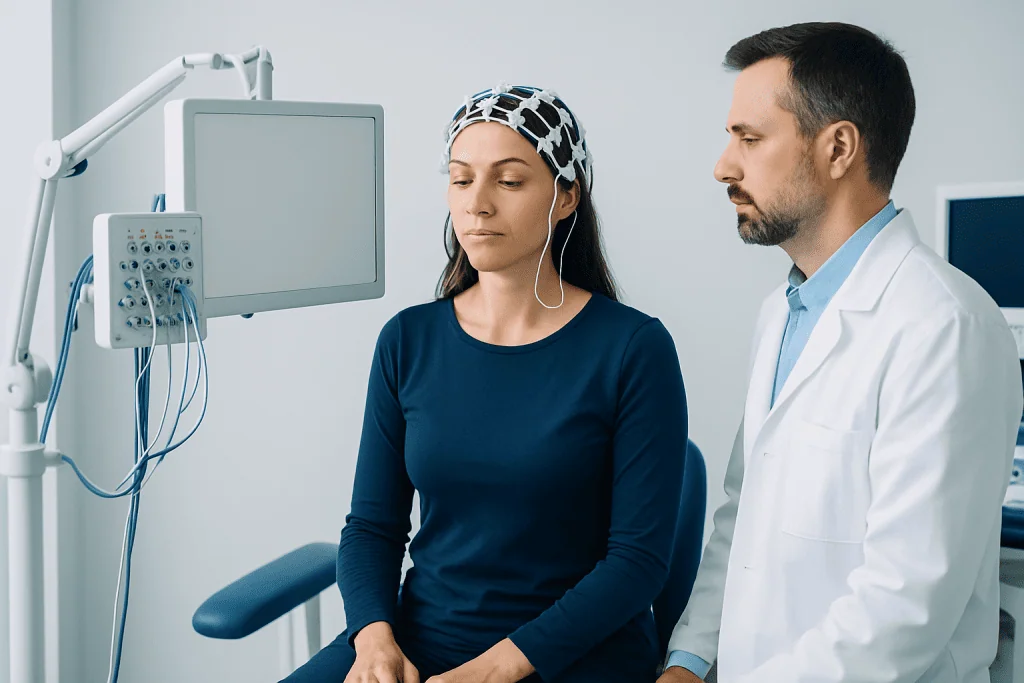
The symptoms of functional neurological disorder vary widely because the condition can affect movement, sensation, awareness, speech, and thinking. Symptoms are real and can be disabling, even when standard imaging or blood tests do not show a structural neurological disease.
Common symptoms include limb weakness, tremor, jerking movements, gait problems, balance difficulty, numbness, altered sensation, episodes that resemble epileptic seizures, speech or voice changes, and trouble concentrating. Some people also report fatigue, pain, dizziness, headaches, or “brain fog.” Symptoms may fluctuate, becoming worse with stress, fatigue, overstimulation, pain, or illness.
- Functional weakness, often affecting an arm or leg
- Abnormal movements such as tremor, spasms, or dystonia-like postures
- Functional seizures, also called dissociative or non-epileptic seizures
- Walking difficulties, imbalance, or sudden falls
- Sensory symptoms such as numbness, tingling, or altered vision
- Speech symptoms including slurred speech, whispering, or difficulty getting words out
FND symptoms can overlap with other neurological conditions, which is one reason specialist assessment is important. Doctors may also consider whether symptoms resemble Parkinson’s disease, epilepsy, stroke, migraine, multiple sclerosis, or inner ear disorders before confirming the diagnosis.
What causes FND and who may be at risk

There is no single cause of functional neurological disorder. Current understanding suggests that several factors may interact, including biological vulnerability, attention and expectation within brain networks, the body’s stress response, pain, fatigue, and previous health experiences. In some people, symptoms begin after an injury, infection, panic episode, migraine, fainting spell, or another medical event. In others, no clear trigger is found.
Psychological stress can play a role for some patients, but it is not present in every case and is not required for diagnosis. Older terms such as “conversion disorder” are still used in some settings, yet many specialists prefer the term functional neurological disorder because it better reflects the modern neurological understanding of the condition.
Risk may be higher in people with chronic pain, fatigue, sleep problems, anxiety, depression, trauma exposure, or another neurological illness, but these associations do not mean symptoms are voluntary. FND is best understood as a disorder of nervous system functioning shaped by multiple influences rather than by a single emotional cause.
Because symptoms can be complex, a person may benefit from assessment in a center familiar with both neurological and psychological aspects of care. This helps avoid unnecessary tests while still ensuring that other important conditions are recognized and treated appropriately.
How functional neurological disorder is diagnosed
Diagnosis is made by identifying positive clinical signs that are typical of FND, not simply by saying all tests are normal. During the neurological examination, a specialist looks for patterns such as weakness that improves with distraction, tremor that changes with rhythm tasks, or seizure-like events that differ from epileptic seizures in specific observable ways. These findings help support a confident diagnosis.
Tests may still be useful, especially when symptoms are new, severe, or could be caused by another disorder. Depending on the situation, a doctor may order blood tests, MRI, CT, EEG, or other studies to rule out conditions such as stroke, epilepsy, inflammatory disease, or nerve and muscle disorders. If seizure-like episodes are prominent, video EEG monitoring may be recommended and can be part of the work-up connected with epilepsy evaluation and treatment planning when needed to distinguish event types.
A good diagnostic discussion usually includes a clear explanation of why the diagnosis fits. Many patients find it helpful when the clinician demonstrates the examination signs and explains that FND is common, real, and potentially reversible. Understanding the diagnosis is often the first step in treatment.
Sometimes FND exists alongside another neurological condition rather than instead of it. For that reason, ongoing follow-up matters if symptoms change, new red flags appear, or treatment is not helping as expected.
Modern treatment approaches and outlook
Treatment for functional neurological disorder is individualized and usually works best when it addresses the person’s dominant symptoms, triggers, and daily goals. The most effective plans are often multidisciplinary, combining education, rehabilitation, and support for related symptoms such as pain, poor sleep, low mood, or anxiety.
Physiotherapy is especially important for motor symptoms such as weakness, tremor, gait problems, or balance difficulties. Functional neurological physiotherapy focuses on retraining normal movement patterns, reducing unhelpful attention to symptoms, and building automatic movement again. Occupational therapy may help with pacing, energy conservation, self-care tasks, and return to work or school.
Psychological therapy can also be valuable, particularly when symptoms are linked with stress, trauma, dissociation, anxiety, or depression. This does not mean the condition is imagined; rather, it recognizes that brain-body symptoms are influenced by thoughts, emotions, and nervous system arousal. Approaches such as cognitive behavioral therapy may help some people, especially those with functional seizures. If there is concern about coexisting structural problems or severe movement symptoms, a neurologist may also consider broader rehabilitation or targeted interventions, including assessment through services related to movement disorder treatment in carefully selected cases where another diagnosis is in the picture.
The outlook varies. Some people improve substantially, especially when diagnosis is made early and treatment begins promptly. Others have a more prolonged course and need ongoing support. Improvement may not always be linear, but symptom understanding, realistic goal setting, and coordinated care can make a meaningful difference.
Self-care, rehabilitation, and daily living
Self-care does not replace medical treatment, but it can support recovery. Helpful strategies often include keeping regular sleep and wake times, pacing activities to avoid boom-and-bust cycles, staying physically active within safe limits, and reducing prolonged focus on symptoms. Building routines can help the nervous system regain more stable patterns.
Patients often benefit from tracking triggers such as sleep loss, stress, pain flares, sensory overload, or missed meals. Recognizing patterns may help them and their care team shape better coping strategies. Relaxation techniques, breathing exercises, mindfulness-based skills, and gradual return to valued activities can also support symptom control.
Family understanding matters as well. Loved ones can help by encouraging independence, supporting rehabilitation goals, and responding calmly to episodes rather than reinforcing fear. For functional seizures, clinicians may give specific guidance on how others should respond during an event and when emergency help is necessary.
If another neurological condition is being considered or monitored, doctors may arrange imaging or specialist follow-up. In some cases this may involve evaluation pathways related to MRI scanning or consultation for overlapping neurological symptoms such as those seen in epilepsy.
When to seek medical care
Anyone with new neurological symptoms should seek medical evaluation, especially if symptoms appear suddenly or are severe. Functional neurological disorder can mimic other illnesses, and urgent conditions such as stroke, infection, or epileptic seizures may need immediate treatment.
Emergency care is important for sudden one-sided weakness, facial drooping, difficulty speaking, chest pain, severe shortness of breath, a first seizure, prolonged loss of consciousness, severe confusion, or a sudden “worst headache.” These symptoms should not be assumed to be FND, even in someone who already has the diagnosis.
Non-urgent medical review is also appropriate if symptoms are recurring, daily function is getting worse, mood symptoms are increasing, or treatment is not helping. Ongoing coordination between neurology, rehabilitation, and mental health professionals can be useful when symptoms are persistent or complex.
Near the end of the care journey, some patients seek comprehensive international evaluation. Acibadem International’s multidisciplinary specialists and JCI-accredited hospitals assess neurological conditions and rehabilitation needs for international patients, including cases where FND overlaps with other neurological symptoms.
Frequently asked questions
Is functional neurological disorder a real neurological condition?
Yes. Functional neurological disorder is a genuine condition that affects how the brain and nervous system function. The symptoms are not intentionally produced, and they can be as disruptive as symptoms caused by structural neurological disease.
Can FND show up on MRI or other scans?
Routine MRI or CT scans are often normal in FND because the problem is usually not caused by visible structural damage. Diagnosis is mainly based on the clinical history and neurological examination, although tests may still be used to rule out other disorders.
Is functional neurological disorder the same as epilepsy?
No. Some people with FND have functional seizures, which can look similar to epileptic seizures but are caused by different mechanisms. In some cases, a person can have both epilepsy and FND, which is why specialist assessment is important.
What doctor treats functional neurological disorder?
FND is often diagnosed by a neurologist, but treatment may involve several professionals. Depending on symptoms, care can include physiotherapists, psychiatrists, psychologists, occupational therapists, speech therapists, and rehabilitation specialists.
Can people recover from functional neurological disorder?
Many people improve, especially when they receive an early explanation of the diagnosis and symptom-specific treatment. Recovery can be partial or substantial, and it often happens gradually rather than all at once.
Does stress always cause FND?
No. Stress can be a trigger or contributing factor for some patients, but it is not present in everyone with FND. The condition is considered multifactorial, with biological, psychological, and social influences often interacting.
References
- National Institute of Neurological Disorders and Stroke
- National Health Service
- American Academy of Neurology
- Functional Neurological Disorder Society
- Mayo Clinic
This article is for general information only and is not a substitute for professional medical advice. Please consult a qualified doctor about your individual situation.
Explore treatments in Turkey — costs, top hospitals & a free quote
JCI-accredited · board-certified surgeons · reply within 24h
Add us as a Preferred Source to see more of our trusted health content across Google Search, AI Overviews and Discover.