Foam Roller: A Complete Medical Overview

A foam roller applies pressure to muscles and connective tissue to help relieve temporary tightness and improve mobility. Foam rolling is generally used before or after activity, but technique, pressure, and timing matter.
Key Takeaways
- A foam roller applies pressure to muscles and connective tissue to help relieve temporary tightness and improve mobility.
- Foam rolling is generally used before or after activity, but technique, pressure, and timing matter.
- It should not be used directly over acute injuries, broken skin, suspected blood clots, or areas with severe pain.
- Persistent pain, weakness, numbness, or swelling needs medical assessment rather than repeated self-treatment.
- Foam rolling works best as one part of a balanced recovery plan that may include stretching, exercise modification, and rehabilitation.
A foam roller is a self-massage tool that can help reduce muscle tightness, improve short-term flexibility, and support exercise recovery when used properly. It is not a cure for injury, but it can be a useful part of a broader plan that includes movement, strength, rest, and medical evaluation when symptoms persist.
Overview: What a Foam Roller Does
A foam roller is a firm cylindrical tool used for self-myofascial release, a form of self-applied pressure to muscles and surrounding soft tissues. In practical terms, many people use a foam roller to ease a feeling of tightness, improve comfort during movement, and support recovery after exercise. It can be helpful, but it is not a replacement for medical care when pain is significant or ongoing.
Research suggests that foam rolling may improve short-term flexibility and range of motion, and it may reduce the sensation of post-exercise muscle soreness for some people. The effects are usually temporary and tend to work best when foam rolling is combined with an overall plan that includes regular activity, strengthening, sleep, hydration, and appropriate training loads.
A foam roller does not “break up” scar tissue in a dramatic way, and it does not correct every cause of pain. Some symptoms that feel like tight muscles may actually come from tendon irritation, joint problems, nerve compression, or referred pain. That is why a medical view is important when symptoms do not improve or when they interfere with normal daily life.
Potential Benefits and Realistic Expectations

The main reason people use a foam roller is to reduce the sensation of muscle stiffness or tenderness. Common target areas include the calves, quadriceps, hamstrings, upper back, and outer hip region. When used gently and consistently, foam rolling may make movement feel easier before exercise and may help some people feel less sore afterward.
Another potential benefit is a temporary improvement in mobility without the drop in performance that can sometimes happen with prolonged static stretching immediately before intense activity. For this reason, some athletes and active adults use a foam roller as part of a warm-up. Others use it after activity to relax tight areas and improve comfort.
Still, expectations should remain realistic. A foam roller cannot reliably diagnose the source of pain, repair a torn tissue, or treat conditions such as advanced arthritis or a herniated disc on its own. If tightness keeps returning in the same area, a clinician may look for the underlying cause, such as training overload, poor movement mechanics, weakness, or an unrecognized condition like lower back pain.
How to Use a Foam Roller Safely
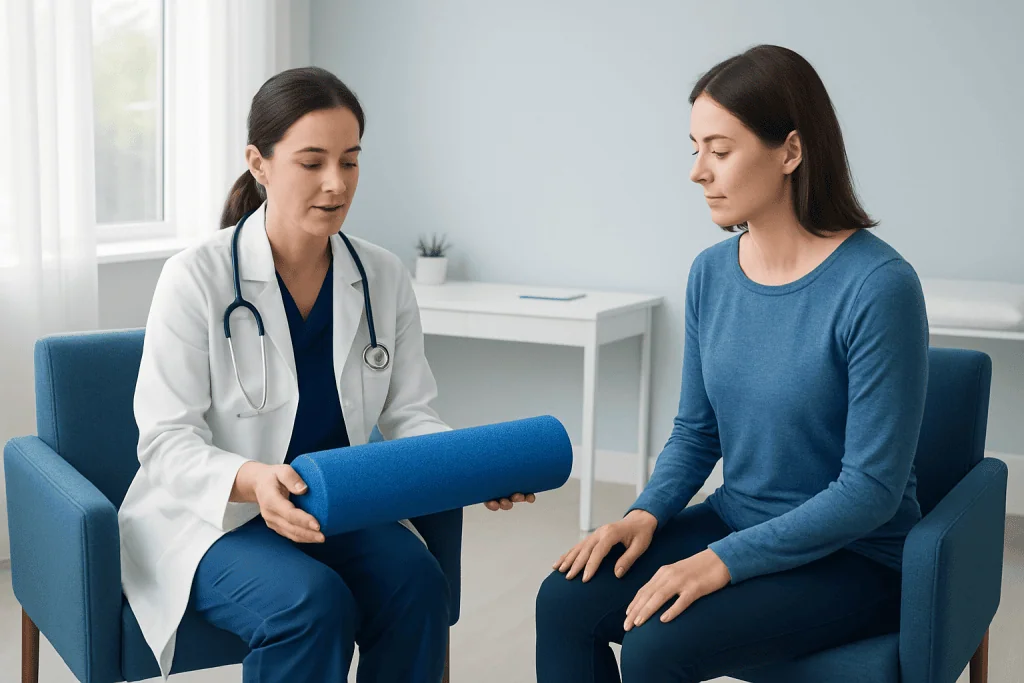
Good foam rolling is usually slow, controlled, and moderate in pressure. The goal is not to tolerate as much pain as possible. Rolling too aggressively can make muscles tighten protectively, increase soreness, or irritate sensitive tissues. Most people do best by spending a short period on one muscle group, breathing steadily, and avoiding direct pressure on bones and joints.
A simple approach is to position the roller under the muscle, support body weight with the arms or opposite leg, and move gradually over the length of the muscle. If a particularly tender point is found, it may help to pause briefly and let the area relax rather than repeatedly grinding over it. Mild discomfort can be normal, but sharp, burning, electric, or worsening pain is a signal to stop.
It is often safest to focus on larger muscle groups rather than delicate structures. Areas commonly tolerated well include the front of the thighs, calves, gluteal muscles, and upper back. Caution is especially important around the neck, the front of the hips, the side of the knee, and the lower back. If movement is limited by injury or ongoing pain, a supervised physical therapy and rehabilitation plan may be more appropriate than self-treatment alone.
Who May Benefit Most
Foam roller use may be useful for healthy adults who experience temporary tightness from exercise, prolonged sitting, repetitive movement, or mild postural strain. Runners, cyclists, gym users, and office workers often use it to support comfort in the legs, hips, and upper back. It can also be introduced as part of a structured home routine during recovery from minor overuse symptoms.
People returning to activity after a break may also find foam rolling helpful when paired with gradual conditioning. In these cases, it should complement progressive strengthening, mobility work, and sensible activity pacing. It is generally most effective when the source of stiffness is muscular rather than structural.
Foam rolling may also be added to rehabilitation programs for selected musculoskeletal complaints when a clinician believes it is suitable. For example, a person with movement-related discomfort around the hip or thigh might benefit from a broader evaluation for sciatica or other causes of referred pain before deciding which areas to roll and which to avoid.
Risks, Limitations, and When It May Not Be Appropriate
Although foam rolling is widely used, it is not right for every situation. It should not be applied directly over a recent injury with significant bruising or swelling, a suspected fracture, an open wound, a skin infection, or an area that is very inflamed. It is also best avoided if there is concern for a blood clot, severe osteoporosis, or an unstable medical condition unless a doctor has advised otherwise.
People with numbness, nerve pain, major balance problems, reduced sensation, bleeding disorders, or those taking blood-thinning medication should be especially cautious and ask a clinician before using firm pressure tools. Pregnancy, recent surgery, and cancer-related bone involvement may also call for individualized advice. In these situations, what seems like a simple recovery tool may place too much pressure on vulnerable tissues.
It is also important to know the limits of symptom relief. A foam roller may temporarily reduce tension, but repeated use without improvement can delay proper diagnosis. Conditions affecting the joints, nerves, or spine may need medical assessment, diagnostic imaging, or treatment such as orthopedic rehabilitation rather than continued self-management.
Using a Foam Roller in a Balanced Recovery Plan
The most effective use of a foam roller is usually as one part of a broader recovery strategy. Many clinicians suggest pairing it with a short warm-up, mobility exercises, and strengthening of the muscles that support the painful or stiff area. This helps address both the symptom and the possible reason the symptom developed.
For example, someone with tight calves after running may benefit from load management, footwear review, ankle mobility work, and gradual strengthening in addition to foam rolling. Someone with upper back stiffness from desk work may improve more when posture habits, breaks from sitting, and shoulder-blade exercises are added. In other words, the roller can help comfort, but function improves best when the body is trained to move well.
If pain has lasted more than a few weeks, keeps recurring, or limits normal activity, professional assessment is sensible. Depending on the findings, a clinician may recommend rehabilitation, targeted exercise, or evaluation by a specialist in musculoskeletal care. Acibadem International’s multidisciplinary specialists in JCI-accredited hospitals evaluate and treat musculoskeletal complaints for international patients, including care pathways that may involve sports injuries treatment when appropriate.
When to Seek Medical Care
Medical advice is important if pain is severe, follows a clear injury, or is associated with swelling, deformity, fever, redness, or an inability to bear weight or use the affected limb normally. These features suggest that the problem may be more than routine muscle tightness. Repeated foam rolling should not be used to push through symptoms that are getting worse.
A clinician should also assess symptoms such as numbness, tingling, weakness, pain that travels down an arm or leg, or back pain with bladder or bowel changes. These may point to nerve involvement or another condition that needs prompt evaluation. Sudden calf swelling, warmth, and pain require urgent medical attention because a blood clot must be ruled out.
Even without urgent warning signs, it is reasonable to seek care when discomfort lasts more than two to four weeks, frequently returns, or disrupts sleep, work, exercise, or daily tasks. A proper examination can help determine whether the issue is simple muscle overload or a condition needing a more specific plan, such as spine surgery in selected cases after specialist evaluation.
Frequently asked questions
What is a foam roller used for?
A foam roller is mainly used to apply pressure to muscles and soft tissues to reduce the feeling of tightness and improve short-term mobility. Many people use it before or after exercise as part of a warm-up or recovery routine.
Does a foam roller help with muscle soreness?
It may help reduce the sensation of post-exercise soreness for some people, especially when used gently and consistently. However, it does not treat the underlying cause of all pain, and soreness that is severe or persistent should be assessed by a clinician.
How long should someone use a foam roller on one area?
Short sessions are usually enough. Many people spend a brief period on each muscle group and avoid prolonged, forceful rolling over a painful spot. The pressure should feel manageable rather than intense.
Can foam rolling be harmful?
Yes, it can be harmful if used over an acute injury, a suspected fracture, a blood clot, broken skin, or an area with severe inflammation. It can also worsen symptoms if someone uses excessive pressure or rolls directly over sensitive structures and nerves.
Should foam rolling hurt?
Mild discomfort or tenderness can happen, but strong pain is not the goal. Sharp, shooting, burning, or increasing pain suggests the technique or the area may not be appropriate, and the person should stop.
Is a foam roller better before or after exercise?
It can be used either before or after exercise, depending on the goal. Before activity, it may help improve mobility as part of a warm-up. After activity, it may support relaxation and comfort in tight muscles.
When should someone see a doctor instead of using a foam roller?
A doctor should assess symptoms that are severe, recurrent, or lasting more than a few weeks. Medical review is also important for swelling, weakness, numbness, pain after injury, or pain that interferes with walking, sleep, or daily activities.
References
- American College of Sports Medicine
- National Institute of Arthritis and Musculoskeletal and Skin Diseases
- Cleveland Clinic
- Mayo Clinic
- National Health Service
This article is for general information only and is not a substitute for professional medical advice. Please consult a qualified doctor about your individual situation.
Explore treatments in Turkey — costs, top hospitals & a free quote
JCI-accredited · board-certified surgeons · reply within 24h
Add us as a Preferred Source to see more of our trusted health content across Google Search, AI Overviews and Discover.

More from the Health Library

Coconut Rum: An Evidence-Based Guide for Patients

Aromatherapy: An Evidence-Based Guide for Patients

Mio Flavors: What Patients Need to Know

Colic: An Evidence-Based Guide for Patients

Breathalyzer: A Complete Medical Overview