Balloon Sinuplasty: Benefits, Risks, and Recovery — A Complete Guide

Balloon sinuplasty gently widens sinus openings with a small balloon rather than removing large amounts of tissue. It is most often used for people with chronic or recurrent sinus symptoms that have not improved enough with medical treatment.
Key Takeaways
- Balloon sinuplasty gently widens sinus openings with a small balloon rather than removing large amounts of tissue.
- It is most often used for people with chronic or recurrent sinus symptoms that have not improved enough with medical treatment.
- Recovery is usually shorter than with traditional sinus surgery, but proper follow-up and nasal care still matter.
- Benefits may include improved drainage, less pressure, and fewer sinus flare-ups in carefully selected patients.
- Not everyone is a candidate; evaluation by an ENT specialist helps determine the safest and most effective option.
Balloon sinuplasty is a minimally invasive procedure used to widen blocked sinus passages and improve drainage. It can help selected people with ongoing sinus symptoms breathe more comfortably, reduce pressure, and recover faster than with more extensive sinus surgery.
Overview: what balloon sinuplasty is and who it may help
Balloon sinuplasty is a minimally invasive sinus procedure designed to open narrowed sinus drainage pathways. During the procedure, a doctor places a small balloon catheter into the blocked sinus opening and inflates it briefly to widen the passage. This can improve mucus drainage and ventilation without the more extensive tissue removal used in some traditional sinus operations.
It is commonly considered for people with chronic rhinosinusitis or repeated sinus infections whose symptoms continue despite medical treatment. Typical symptoms include facial pressure, nasal blockage, thick nasal discharge, reduced sense of smell, and congestion that keeps returning. In the right patient, balloon sinuplasty can reduce symptom burden and improve quality of life.
Although often described as an alternative to surgery, balloon sinuplasty is still a medical procedure and requires proper evaluation. It is not the best choice for every cause of nasal blockage. For some people, standard medical therapy, allergy management, or other procedures may be more appropriate. When sinus disease is confirmed, an ENT specialist may discuss options such as sinusitis treatment based on symptoms, imaging, and nasal examination.
How it works: the procedure step by step
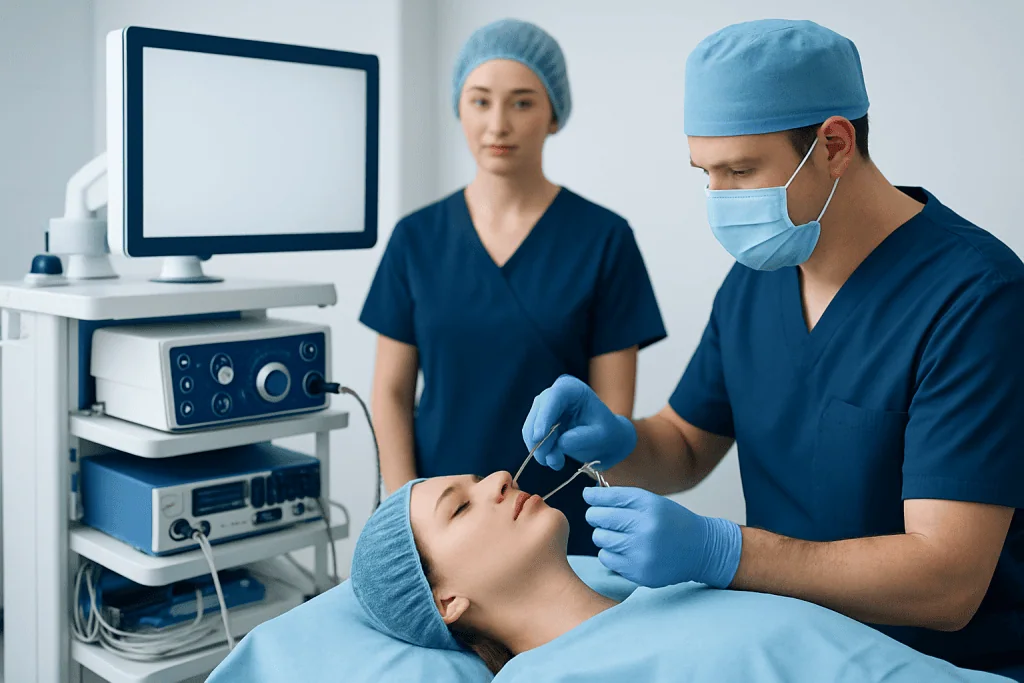
The goal of balloon sinuplasty is to reshape the natural sinus opening so the sinus can drain more normally. Rather than cutting away large areas of tissue, the balloon widens the blocked passage and helps preserve the lining of the sinus. This makes it different from more extensive endoscopic sinus surgery, although the two approaches can sometimes be combined.
Before the procedure, the doctor reviews symptoms, prior treatments, and any CT scan findings. Balloon sinuplasty may be performed in an operating room or, in selected cases, in an office-based setting depending on the patient’s condition, anatomy, and comfort needs. Local anesthesia, sedation, or general anesthesia may be used.
A typical procedure includes the following steps:
- A thin catheter is guided into the targeted sinus opening using endoscopic visualization.
- A small balloon at the tip is positioned in the narrowed area.
- The balloon is gently inflated for a short time to widen the drainage pathway.
- The area may be rinsed with saline to clear mucus or trapped material.
- The balloon is deflated and removed, leaving the sinus opening enlarged.
Depending on the person’s anatomy and symptoms, the procedure may target the frontal, maxillary, or sphenoid sinuses. If there are additional structural problems, such as major nasal polyps or significant septal deviation, balloon sinuplasty alone may not be enough and another technique may be recommended.
Who is a candidate for balloon sinuplasty

Balloon sinuplasty is generally considered for adults and some older children with persistent sinus symptoms linked to obstruction of the sinus drainage pathways. It is usually not the first step in treatment. Most people are evaluated after trying medical therapy such as saline irrigation, nasal steroid sprays, allergy treatment when relevant, and sometimes antibiotics when a bacterial infection is suspected.
Good candidates often have chronic sinus inflammation or recurrent acute sinusitis with CT or endoscopic findings that match their symptoms. The best results tend to occur when there is a clear blockage in specific sinus openings and no extensive disease requiring tissue removal. An ENT specialist may also look for related conditions such as allergies, asthma, or anatomical narrowing that can contribute to symptoms.
Balloon sinuplasty may be less suitable for people with diffuse nasal polyps, certain fungal sinus conditions, severe structural abnormalities, tumors, or disease in areas that need traditional surgery for safe treatment. In some cases, symptoms may be caused more by a problem inside the nose than in the sinuses themselves. For example, treatment plans may differ when chronic symptoms are related to a deviated septum or to broader forms of sinusitis.
Because candidacy depends on symptoms, physical examination, and imaging, a specialist assessment is important. This helps avoid a procedure that is unlikely to help and makes sure any serious or unusual cause of symptoms is not missed.
Benefits and possible risks
The main potential benefit of balloon sinuplasty is improved sinus drainage with less disruption to surrounding tissue. Many patients value that it is minimally invasive and may involve less bleeding, less postoperative discomfort, and a faster return to normal activities than more extensive sinus surgery. For the right patient, it may reduce pressure, congestion, and the frequency of sinus flare-ups.
Another potential advantage is that the normal structure of the sinus is largely preserved. This can be helpful when the main problem is narrowing at the sinus opening rather than widespread disease within the sinus lining. In selected cases, balloon sinuplasty may also be combined with medical management to support longer-term control of chronic symptoms.
Like any procedure, balloon sinuplasty has risks and limitations. Symptoms may not improve enough, may return over time, or may be caused by a different issue that the procedure does not address. Other possible risks include bleeding, infection, swelling, discomfort, scar-related narrowing, and reactions related to anesthesia or sedation.
Rare but important complications can occur because the sinuses are close to the eyes and brain. These are uncommon, especially when the procedure is performed by an experienced specialist after careful planning, but they help explain why a full evaluation matters. Patients should discuss expected benefits, alternatives, and risks in relation to their own anatomy and health history.
Diagnosis and planning before the procedure
Successful treatment starts with confirming that the symptoms are truly coming from the sinuses. A doctor will ask about how long symptoms have lasted, how often they recur, whether there are allergy triggers, and which treatments have already been tried. Because headaches, facial pain, and nasal blockage can have several causes, symptom history alone is not enough to decide on balloon sinuplasty.
An ENT examination often includes nasal endoscopy, which allows the doctor to look inside the nose using a thin, lighted instrument. This can show swelling, drainage, polyps, structural narrowing, or signs of infection. In many cases, a CT scan of the sinuses is also used to confirm which sinus passages are blocked and whether balloon dilation is a reasonable option.
Planning also involves reviewing medications, previous surgeries, smoking status, and any conditions that affect healing or bleeding. If allergies are a major contributor, they may need treatment alongside or before any procedure. Some patients also benefit from evaluating whether nasal obstruction is related to the shape of the nasal passages, in which case options such as septoplasty may be discussed separately or together.
This preparation helps match the procedure to the patient rather than using a one-size-fits-all approach. For many people, that individualized planning is what determines whether balloon sinuplasty is likely to be helpful.
Recovery timeline and self-care after balloon sinuplasty
Recovery after balloon sinuplasty is often smoother than after more extensive sinus surgery, but some temporary symptoms are still normal. Mild congestion, drainage, a feeling of pressure, fatigue, and small amounts of blood-tinged mucus can occur in the first few days. Many people can return to routine non-strenuous activities relatively quickly, though exact timing varies.
Doctors usually recommend saline rinses to keep the nose moist and help clear secretions. Patients may also be advised to avoid heavy lifting, forceful nose blowing, smoke exposure, and other irritants for a short period. Follow-up visits are important so the doctor can check healing and make sure the sinus openings remain clear.
A general recovery pattern may look like this:
- First 24 to 72 hours: mild pressure, congestion, and light drainage are common.
- First week: many people notice gradual improvement in breathing and pressure.
- Several weeks: swelling continues to settle and sinus drainage often improves further.
- Longer term: ongoing medical care, especially for allergies or inflammation, may help maintain results.
Recovery can be influenced by underlying disease, whether other procedures were done at the same time, and how well postoperative instructions are followed. If a person has broader nasal airway issues or combined sinus disease, other ENT treatments such as endoscopic sinus surgery may involve a different aftercare plan.
When to seek medical care
Medical advice should be sought when sinus symptoms are frequent, last more than expected, or keep returning despite home care and prescribed treatment. An evaluation is also sensible when facial pressure, blocked nose, or thick nasal discharge interferes with sleep, work, school, or day-to-day comfort. Persistent symptoms deserve proper assessment because several conditions can resemble sinus disease.
After balloon sinuplasty, patients should contact their doctor if they develop worsening pain, fever, heavy bleeding, significant swelling, or symptoms that do not gradually improve as expected. New vision changes, severe headache, confusion, or increasing redness around the eyes need urgent medical attention.
Prompt review is especially important in people with weakened immunity, significant breathing problems, or severe recurrent infections. A qualified ENT specialist can decide whether symptoms are best managed with medicines, further testing, or a procedure. Near the end of the care pathway, patients seeking international evaluation may also choose centers such as Acibadem International, where multidisciplinary specialists in JCI-accredited hospitals diagnose and treat sinus conditions for international patients.
Frequently asked questions
Is balloon sinuplasty the same as traditional sinus surgery?
No. Balloon sinuplasty uses a small balloon to widen blocked sinus openings, while traditional endoscopic sinus surgery may remove tissue or bone to create better drainage. In some patients, the two approaches are considered separately, and in others they may be combined.
How long does it take to recover from balloon sinuplasty?
Many people recover more quickly than they would after more extensive sinus surgery, and some return to usual light activities within a few days. Mild congestion and drainage can still continue for a short time, and full healing may take several weeks. Recovery depends on overall health, sinus disease severity, and whether other procedures were done.
Who is the best candidate for balloon sinuplasty?
The best candidates are usually people with chronic or recurrent sinus symptoms caused by blocked sinus drainage pathways that have not improved enough with medical treatment. A good match typically requires symptoms, exam findings, and imaging that all point to the same problem. An ENT specialist can determine whether balloon dilation is likely to help.
Does balloon sinuplasty hurt?
Discomfort is usually described as mild to moderate and often less intense than with more extensive sinus surgery. During the procedure, anesthesia or sedation is used to improve comfort. Afterward, temporary pressure, congestion, or tenderness may occur but often improves over several days.
Are the results of balloon sinuplasty permanent?
The widened sinus opening can remain improved, but long-term results vary from person to person. Ongoing inflammation from allergies, smoking, infections, or underlying sinus disease can affect how well symptoms stay controlled. Continued follow-up and medical treatment may still be needed.
What are the risks of balloon sinuplasty?
Possible risks include bleeding, infection, swelling, pain, lack of symptom improvement, or symptoms returning later. More serious complications are uncommon but can happen because the sinuses are close to the eyes and brain. Careful patient selection and treatment by an experienced specialist help reduce risk.
References
- American Academy of Otolaryngology–Head and Neck Surgery
- National Institute on Deafness and Other Communication Disorders
- Centers for Disease Control and Prevention
- Mayo Clinic
- National Health Service
This article is for general information only and is not a substitute for professional medical advice. Please consult a qualified doctor about your individual situation.
Explore treatments in Turkey — costs, top hospitals & a free quote
JCI-accredited · board-certified surgeons · reply within 24h
Add us as a Preferred Source to see more of our trusted health content across Google Search, AI Overviews and Discover.