Swan Ganz Catheter — Explained by Medical Evidence, Not Myths
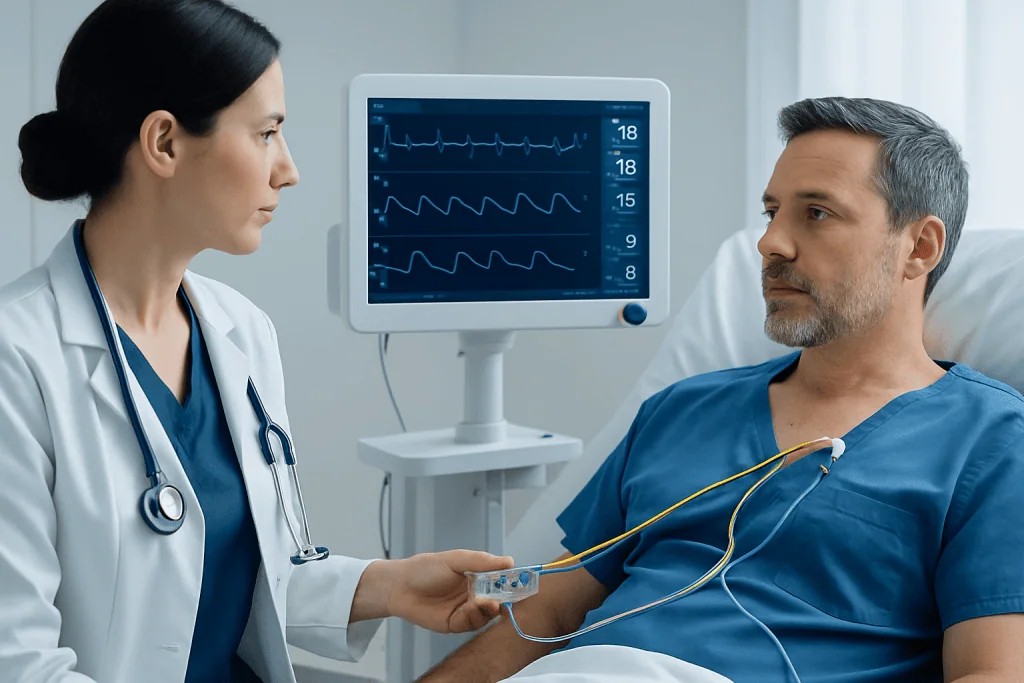
A swan ganz catheter is also called a pulmonary artery catheter. It helps doctors measure heart and lung circulation in real time at the bedside.
Key Takeaways
- A swan ganz catheter is also called a pulmonary artery catheter.
- It helps doctors measure heart and lung circulation in real time at the bedside.
- It is not used routinely for every patient and is reserved for specific clinical situations.
- Placement is done by trained clinicians using sterile technique and close monitoring.
- Like any invasive procedure, it has benefits, limitations, and possible risks.
A swan ganz catheter is a thin tube placed through a large vein into the right side of the heart and pulmonary artery to measure pressures and assess blood flow. It is used selectively, usually in intensive care or complex heart and lung cases, when bedside monitoring needs to be more detailed than standard tests can provide.
Overview: what a swan ganz catheter is and why it is used
A swan ganz catheter is a specialized monitoring tube, also called a pulmonary artery catheter, that travels through a large vein into the right atrium, right ventricle, and then into the pulmonary artery. Its purpose is to give clinicians direct information about pressures inside the heart and lungs, how well the heart is pumping, and how much fluid the body may need or tolerate. In modern practice, it is used selectively rather than routinely.
This device is most often considered when a person is critically ill, has complex heart failure, severe shock, difficult-to-interpret breathing problems, or needs close monitoring around major surgery or advanced cardiac treatment. It can help answer questions that are not fully resolved by physical examination, blood tests, ultrasound, or standard monitors alone.
The catheter is different from an ordinary IV line. An IV is mainly for giving fluids or medicines, while a swan ganz catheter is designed to collect hemodynamic data. It may also allow blood sampling from the pulmonary artery and measurement of mixed venous oxygen saturation, which can help doctors understand whether oxygen delivery and circulation are meeting the body’s needs.
Because it is an invasive tool, clinicians weigh its potential value against its risks and limitations. The goal is not simply to place more monitoring, but to obtain information that can directly guide treatment decisions and improve day-to-day management in carefully selected patients.
What the catheter measures and what the results can mean
The main reason to use a swan ganz catheter is to measure hemodynamics, meaning the movement of blood through the heart and lungs. Common measurements include right atrial pressure, pulmonary artery pressure, and pulmonary capillary wedge pressure, which is an indirect estimate related to left-sided heart filling pressure. It can also help estimate cardiac output, the amount of blood the heart pumps each minute.
These measurements can help doctors tell the difference between several conditions that may look similar at the bedside. For example, shortness of breath might be caused mainly by fluid backing up from the heart, severe infection causing shock, or another lung problem. Detailed pressure data can clarify whether the body needs more fluid, less fluid, medications that support the heart, or a different treatment strategy.
Interpretation is important because the numbers do not stand alone. A reading only becomes useful when it is considered alongside symptoms, oxygen levels, blood pressure, echocardiography, lab tests, and the overall clinical picture. This is one reason why use of a swan ganz catheter has become more targeted over time: the quality of decision-making depends on expert interpretation, not just the presence of a monitor.
In some cases, findings from a pulmonary artery catheter may support further evaluation with cardiac catheterization or help guide care in people with advanced heart failure. It may also be used when severe pulmonary circulation problems are suspected, including forms of pulmonary hypertension.
When doctors may recommend a swan ganz catheter

A swan ganz catheter is usually reserved for situations where precise bedside hemodynamic information may change treatment. This can include complex shock, severe heart failure, unexplained low blood pressure, major fluid balance problems, and certain high-risk surgical or postoperative settings. It may also be considered in selected patients being evaluated for advanced heart therapies or when right-sided heart pressures are especially relevant.
It is not typically needed for stable patients or for common causes of chest pain and shortness of breath that can be assessed with less invasive tests. Advances in echocardiography, blood testing, and other forms of monitoring have reduced the need for routine pulmonary artery catheter use in many hospitals. Today, the choice is more individualized.
Examples of situations where it may be helpful include:
- Severe or mixed forms of shock when the cause is unclear
- Advanced heart failure with difficult fluid or medication management
- Complex heart surgery or recovery after major cardiothoracic procedures
- Assessment of pulmonary artery pressures and right heart function
- Cases where noninvasive tests give incomplete or conflicting information
The decision to place the catheter usually follows a discussion among critical care, cardiology, anesthesia, or surgical teams. The key question is whether the information is likely to guide treatment in a meaningful way, rather than simply adding data.
How the procedure is done
The catheter is placed in a hospital setting, often in an intensive care unit, operating room, or cardiac care area. A doctor inserts it through a large vein, commonly in the neck, collarbone area, or groin. Sterile technique is used to reduce infection risk, and the patient is connected to continuous monitoring during and after placement.
Before insertion, the skin is cleaned carefully and a local anesthetic is usually given to numb the area. Sedation may be used in some patients, depending on the clinical situation. The catheter is then advanced through the vein into the right side of the heart and onward into the pulmonary artery, often with the help of pressure waveforms and sometimes imaging guidance.
Once in place, the catheter can provide real-time pressure readings and other measurements. The medical team may repeat measurements over time to track response to fluids, diuretics, blood pressure medicines, or support for heart function. Placement time varies, but in experienced hands it is generally a brief bedside or procedural intervention.
After the catheter is no longer needed, it is removed. The insertion site is then monitored for bleeding, swelling, or signs of infection. Ongoing observation remains important because the reason for using the catheter is usually a significant illness that still requires close care.
Benefits, limitations, and possible risks
The main benefit of a swan ganz catheter is that it can provide direct and detailed circulatory information that other bedside tools may not show clearly. In carefully selected patients, this can help clinicians tailor fluids, diuretics, vasopressors, inotropes, and ventilator strategies more precisely. It may be especially useful when treatment decisions carry high stakes and the patient’s condition is changing quickly.
At the same time, the catheter has limitations. Its measurements can be affected by technique, patient positioning, breathing support, heart rhythm, and interpretation errors. Also, not every hemodynamic number automatically improves care. Evidence over time has shown that routine use in broad patient groups is not always beneficial, which is why many teams now prefer a targeted approach.
Possible risks include bleeding, bruising, infection, irregular heart rhythm during insertion, blood clots, damage to the blood vessel, and in rare cases injury to the pulmonary artery. There can also be technical complications such as catheter misplacement or inaccurate readings. Because these risks exist, the procedure is done by trained clinicians with close monitoring.
Patients and families often hear myths that the catheter is either always essential or always outdated. Neither is fully correct. The evidence-based view is more balanced: it remains a useful tool for specific, complex situations when the expected information is likely to influence treatment decisions in a meaningful way.
How it compares with other heart and lung tests
A swan ganz catheter is only one way to evaluate circulation. Doctors often begin with less invasive tools such as blood pressure monitoring, pulse oximetry, blood tests, chest imaging, electrocardiography, and echocardiography. In many patients, these are enough to diagnose the problem and guide treatment without entering the pulmonary artery.
Echocardiography is especially valuable because it can show heart structure, pumping function, valve problems, and fluid status without placing a catheter into the heart. In some cases, clinicians may also use arterial lines, central venous catheters, or advanced noninvasive cardiac output monitors. Each tool provides a different kind of information, and none is perfect in every situation.
What makes the swan ganz catheter distinctive is its ability to directly assess right-sided and pulmonary artery pressures at the bedside over time. This can be particularly useful when the diagnosis remains uncertain or when the patient’s response to treatment needs detailed tracking. For some people, doctors may also combine these data with imaging such as echocardiography to build a fuller picture.
If a person has suspected coronary artery disease, valve disease, or another structural issue, the medical team may recommend separate testing pathways. For example, some symptoms may ultimately relate more to coronary artery disease or to findings on electrocardiography than to pulmonary artery catheter measurements alone.
Recovery, self-care, and questions to ask the care team
Most patients who receive a swan ganz catheter are already in the hospital for a serious condition, so recovery depends more on the underlying illness than on the catheter itself. After removal, the insertion site is checked for pain, bleeding, swelling, or redness. Patients may be advised to avoid stressing the area temporarily, depending on the vein used and their overall condition.
Self-care after the procedure is usually simple but important. The patient or caregiver should follow instructions about keeping the site clean and watching for new symptoms. If the person has gone home after hospitalization, any fever, increasing soreness, drainage, sudden shortness of breath, chest discomfort, or fainting should be reported promptly.
Helpful questions for the care team may include:
- Why was the catheter needed in this specific case?
- What did the measurements show?
- How did the results change treatment?
- What complications should be watched for after removal?
- What follow-up testing or specialist review is needed?
Near the end of recovery planning, some patients benefit from multidisciplinary review, especially when heart, lung, and intensive care issues overlap. Acibadem International’s multidisciplinary specialists and JCI-accredited hospitals diagnose and treat complex cardiac and critical care conditions for international patients when advanced evaluation is needed.
When to seek medical care
Immediate medical attention is important if a person with a recent catheter placement develops chest pain, severe shortness of breath, fainting, major bleeding from the insertion site, or sudden weakness. These symptoms may or may not be related to the procedure, but they should be assessed without delay.
Medical review is also needed if there are signs of infection such as fever, increasing redness, warmth, swelling, or drainage at the insertion site. New palpitations, dizziness, or worsening fatigue after hospitalization should also be discussed with a doctor, especially in someone recovering from heart or critical illness.
Even without alarming symptoms, follow-up matters. Patients should attend scheduled appointments so the care team can review the condition that led to catheter use, adjust medications if needed, and decide whether further heart or lung testing is appropriate. Seeking timely advice is the best way to clarify concerns and support safe recovery.
Frequently asked questions
Is a swan ganz catheter the same as a central line?
Not exactly. A swan ganz catheter is inserted through a large vein like some central lines, but it is advanced farther into the heart and pulmonary artery to measure pressures and blood flow. A standard central line is mainly used to give medications, fluids, or nutrition and to obtain blood samples.
Is a swan ganz catheter still used today?
Yes, but it is used more selectively than in the past. Improvements in ultrasound and other monitoring methods mean many patients can be managed without it. It remains useful in certain complex or critically ill patients when detailed hemodynamic data may change treatment.
Does placement hurt?
The insertion site is usually numbed with local anesthetic, so patients often feel pressure more than sharp pain. The overall experience varies depending on how sick the person is and whether sedation is used. The medical team monitors comfort closely during the procedure.
How long does a swan ganz catheter stay in place?
It usually stays in place only as long as the information is needed to guide treatment. In some cases that may be a short period, while in others it may remain for longer monitoring in intensive care. The team removes it as soon as it is no longer necessary.
Can a swan ganz catheter diagnose heart failure?
It does not diagnose heart failure by itself, but it can provide important data that support diagnosis and management. Doctors combine the readings with symptoms, examination, imaging, and lab results. It is especially helpful when the cause of shortness of breath or shock is unclear.
What are the main risks patients should know about?
The main risks include bleeding, infection, abnormal heart rhythms during placement, blood clots, and inaccurate or difficult-to-interpret readings. Rarely, more serious complications can occur, such as injury to a blood vessel or the pulmonary artery. These risks are one reason the catheter is used only when the expected benefit is clear.
This article is for general information only and is not a substitute for professional medical advice. Please consult a qualified doctor about your individual situation.
Explore treatments in Turkey — costs, top hospitals & a free quote
JCI-accredited · board-certified surgeons · reply within 24h
Add us as a Preferred Source to see more of our trusted health content across Google Search, AI Overviews and Discover.
Check your numbers in seconds
BMI, calories, due date, blood pressure and 30+ more clinical calculators — free, instant, doctor-reviewed ranges.

More from the Health Library

When a 2 Weeks No Poop X-Ray May Be Needed

Olfactory Nerve: A Complete Medical Overview

Cola Nut — Explained by Medical Evidence, Not Myths

Potassium Phosphate: A Complete Medical Overview

Lower Back Stretches — Explained by Medical Evidence, Not Myths