Probiotic Food Supplement: What the Clinical Research Actually Says

A probiotic food supplement is not one single product; benefits are strain-specific and cannot be generalized from one product to another. Clinical research supports some uses more strongly than others, especially certain types of diarrhea and some symptoms of irritable bowel syndrome.
Key Takeaways
- A probiotic food supplement is not one single product; benefits are strain-specific and cannot be generalized from one product to another.
- Clinical research supports some uses more strongly than others, especially certain types of diarrhea and some symptoms of irritable bowel syndrome.
- Many marketed claims about probiotics remain unproven, including broad promises about weight loss, detoxification, or overall disease prevention.
- Most healthy people tolerate probiotics well, but side effects can include gas, bloating, and digestive discomfort.
- People with severe illness, major immune suppression, central venous lines, or critical illness should seek medical advice before using probiotics.
- A doctor can help match symptoms to evidence-based treatment rather than relying on supplement marketing.
A probiotic food supplement may help in some clearly defined situations, but clinical research does not support it as a universal solution for gut health or immunity. The best evidence depends on the exact microorganism, the condition being treated or prevented, and the person taking it.
Overview: what a probiotic food supplement is and what research shows
A probiotic food supplement contains live microorganisms, usually bacteria and sometimes yeasts, intended to provide a health benefit when taken in adequate amounts. Common groups include Lactobacillus, Bifidobacterium, Saccharomyces, and other named strains. In practice, however, the phrase “probiotic” covers many different products with different organisms, doses, formulations, and quality standards.
Clinical research does support some probiotic uses, but the evidence is narrower than many advertisements suggest. Benefits are usually linked to a specific strain or strain combination for a specific condition. A probiotic that helps reduce the risk of antibiotic-associated diarrhea, for example, should not automatically be expected to help eczema, fatigue, or weight management.
This distinction is the main point patients often miss: research on probiotics is not interchangeable. Trials may differ in the microorganism used, whether it survives stomach acid, how long it is taken, and who is enrolled. Because of this, a probiotic food supplement should be viewed less like a general wellness product and more like a targeted intervention that may or may not fit a person’s symptoms, medical history, and treatment plan.
What probiotics may help with according to clinical evidence
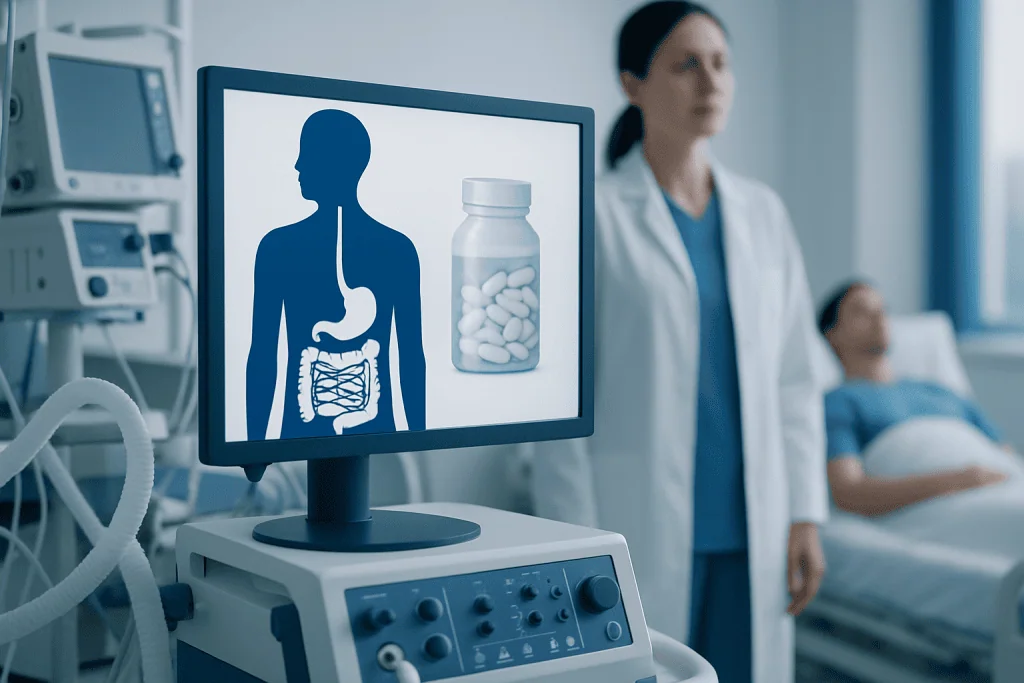
Some of the most consistent evidence relates to diarrhea. Certain probiotics may help lower the risk of antibiotic-associated diarrhea in some adults and children, and some may modestly shorten the duration of acute infectious diarrhea. Evidence quality varies, and not every product works the same way, but this is one of the better-studied areas.
There is also evidence that some probiotics may improve global symptoms in people with irritable bowel syndrome, such as bloating, abdominal discomfort, and irregular bowel habits. The effect is usually modest rather than dramatic, and not every patient benefits. For patients with chronic digestive symptoms, doctors also consider whether another condition is present, such as gastroenteritis during an acute illness or colitis when inflammation is suspected.
In a few settings, probiotics may be used as part of specialist care rather than routine self-treatment. For example, selected products have been studied alongside standard treatment after some gastrointestinal conditions or procedures. This does not replace evaluation by a gastroenterologist, especially when symptoms are persistent, severe, or associated with bleeding, weight loss, fever, or nighttime waking.
- More supported uses: some antibiotic-associated diarrhea, some infectious diarrhea, some IBS symptoms
- Possible but mixed evidence: some constipation symptoms, some ulcerative colitis support strategies, some infant colic preparations
- Not proven as a general rule: “boosting” immunity in healthy people, preventing all infections, weight loss, detox, or treating multiple unrelated diseases
What probiotics do not clearly help with

A large amount of public interest in probiotics goes beyond what current clinical evidence can confirm. Broad claims that any probiotic food supplement can strengthen the immune system, restore gut balance after every dietary lapse, improve mental clarity, clear the skin, or prevent chronic disease are not well supported. Some studies are promising, but many are small, use different products, or do not show clinically meaningful benefit.
Research is especially difficult to interpret when products contain multiple strains and are marketed for many symptoms at once. Even when one trial finds a benefit, another trial using a slightly different formula may not reproduce it. This is one reason guideline panels often give cautious recommendations or conclude that evidence is insufficient for routine use in many conditions.
Patients should also know that “natural” does not mean “necessary.” Many healthy people can maintain normal digestive function without taking probiotic supplements at all. For some, dietary measures, treatment of the underlying disease, medication review, or specialist assessment may be more helpful than adding another supplement.
How probiotics are used in real life: foods, supplements, and consumption context
Probiotics can come from fermented foods or from capsules, powders, liquids, and sachets sold as supplements. Fermented foods such as yogurt, kefir, and some cultured products may contain live microorganisms, but they are not identical to clinically studied supplement formulations. Food products often vary in strain content, live counts, and storage stability.
For that reason, research findings from one probiotic food supplement should not automatically be applied to all probiotic foods or all supplements. A product label may list a genus and species, but the clinically meaningful details often include the strain designation, viable amount through the end of shelf life, and storage requirements. Without these details, it can be difficult to know whether a product matches the research being cited.
Consumption context matters as well. A probiotic may be taken to try to prevent diarrhea during antibiotics, to support a short-term recovery period after a gastrointestinal illness, or as a monitored trial for chronic digestive symptoms. If symptoms persist despite these measures, formal evaluation may be needed, which can include stool studies, endoscopy, or gastroenterology evaluation depending on the clinical picture.
Side effects, interactions, and who should avoid probiotics
For most healthy people, probiotics are generally well tolerated. The most common side effects are mild and digestive, including gas, bloating, abdominal discomfort, and temporary changes in bowel habits. These effects often settle after a short period, but if symptoms clearly worsen after starting a supplement, it is reasonable to stop it and speak with a clinician.
Although uncommon, probiotics are not risk-free. Cases of bloodstream infection or invasive infection have been reported in vulnerable patients, particularly those who are critically ill, severely immunocompromised, premature infants, or people with central venous catheters or major disruption of the intestinal barrier. In these groups, probiotics should only be considered under medical supervision.
Interactions are usually less about direct drug interactions and more about the clinical setting. For example, taking probiotics at the same time as an antibiotic may reduce survival of some bacterial strains, so clinicians sometimes advise separating doses. Patients receiving chemotherapy, transplant-related care, or complex inpatient treatment should not start a probiotic food supplement without asking the treating team first.
- Use caution with immune suppression, critical illness, recent major surgery, or severe pancreatitis
- Ask a doctor before use in infants, frail older adults, or people with central lines
- Stop and seek advice if symptoms become worse, new fever appears, or blood is seen in the stool
How doctors evaluate symptoms before recommending a probiotic
When a patient asks whether a probiotic is worth trying, the starting point is not the supplement itself but the symptom pattern. Bloating, diarrhea, constipation, pain, reflux, or nausea can have many causes, including infection, medication effects, food intolerance, inflammatory bowel disease, and functional disorders. A probiotic may be reasonable in some cases, but it should not delay diagnosis of an underlying problem.
Doctors typically review duration of symptoms, recent travel, antibiotic use, diet, alarm features, and past medical history. Depending on the case, evaluation may include blood tests, stool tests, imaging, or endoscopic assessment such as colonoscopy or endoscopy. This is especially important when symptoms are recurrent, progressive, or associated with anemia, unintended weight loss, persistent vomiting, or rectal bleeding.
In a clinical setting, a time-limited trial may be more useful than indefinite supplement use. If a chosen probiotic has evidence for the person’s problem, a clinician may suggest trying it for a defined period and stopping if there is no clear benefit. This helps avoid long-term use based only on hope, habit, or marketing claims.
Practical self-care and how to choose a product carefully
People considering a probiotic food supplement can take a careful, evidence-based approach. It helps to identify the goal first: prevention of antibiotic-associated diarrhea, support during a short digestive upset, or symptom relief in a diagnosed condition such as IBS. The next step is to look for a product that clearly identifies the strain and matches the studied use as closely as possible.
It is also sensible to review the wider picture. Sleep, hydration, dietary pattern, medication review, and management of underlying digestive disease often matter more than any supplement. Some people benefit from adjusting fiber intake, avoiding triggers, or receiving formal treatment for conditions that mimic “gut imbalance.”
Product quality matters because live microorganisms can lose potency over time. Labels should be clear about storage, expiration, and organism content. Near the end of care planning, some international patients may also seek specialist assessment; Acibadem International’s multidisciplinary specialists and JCI-accredited hospitals evaluate digestive symptoms and related conditions for international patients when a clearer diagnosis or treatment plan is needed.
When to seek medical care
A probiotic should not be used as a substitute for medical attention when warning signs are present. A person should seek medical care if digestive symptoms are severe, if diarrhea leads to dehydration, or if symptoms last longer than expected despite basic self-care. Medical review is also important for children, older adults, pregnant people, and anyone with significant chronic illness.
Urgent assessment is needed for blood in the stool, black stools, persistent vomiting, fever with severe abdominal pain, fainting, significant weakness, or signs of dehydration such as very little urine, confusion, or inability to keep fluids down. These symptoms may point to a condition that requires prompt testing and treatment rather than a supplement trial.
Even without emergency symptoms, a clinician should review symptoms that recur often, disturb sleep, follow antibiotic use repeatedly, or are associated with weight loss or reduced appetite. In these situations, treatment is guided by diagnosis, not by the assumption that all symptoms reflect an imbalance of intestinal bacteria.
Frequently asked questions
Does a probiotic food supplement improve gut health for everyone?
Not necessarily. Research suggests that probiotics may help some people in specific situations, but they do not improve digestive health in a universal or predictable way. The benefit depends on the strain used, the reason for taking it, and the individual’s underlying health.
How long should someone try a probiotic before deciding if it works?
A short, structured trial is often more sensible than indefinite use. Many clinicians suggest reassessing after a limited period, especially if the goal is relief of bloating, diarrhea, or IBS-type symptoms. If there is no clear improvement, continuing the supplement may not be useful.
Are probiotic foods the same as probiotic supplements?
No. Fermented foods can be part of a balanced diet, but they are not automatically equivalent to a studied supplement product. Supplements may contain specific strains tested in clinical trials, while foods often vary in their microbial content and consistency.
Can probiotics be taken with antibiotics?
Sometimes, yes, and this is one of the better-studied uses. However, the timing and the product matter, and bacterial probiotics are often separated from antibiotic doses to improve survival. It is best to ask a clinician or pharmacist for advice, especially if the person has other medical conditions.
Who should avoid taking probiotics without medical advice?
People with severe immune suppression, critical illness, central venous catheters, recent major surgery, or very fragile health should not start probiotics on their own. In these situations, rare but serious infections have been reported. Medical guidance is important before use.
Do probiotics help with bloating and irritable bowel syndrome?
Some probiotics may help certain IBS symptoms, including bloating and abdominal discomfort, but results are mixed. Improvement is usually modest rather than dramatic. A diagnosis is still important because similar symptoms can occur in other digestive conditions.
This article is for general information only and is not a substitute for professional medical advice. Please consult a qualified doctor about your individual situation.
Persistent digestive symptoms? Get evaluated in Turkey
JCI-accredited · board-certified surgeons · reply within 24h
Add us as a Preferred Source to see more of our trusted health content across Google Search, AI Overviews and Discover.

More from the Health Library

Nutrition Research News: How to Tell Useful Findings From Hype

Low Carb High Fiber Foods: Benefits, Risks, and Safe Use

English Muffin Calories: Benefits, Risks, and Safe Use

Whole Milk Nutrition: Benefits, Risks, and Safe Use

Vitamin B7: Evidence-Based Benefits, Risks, and Practical Guidance