Enthesopathy: Early Signs, Risk Factors, and How It Is Treated

Enthesopathy affects the attachment points between soft tissues and bone. Common symptoms include pain, tenderness, stiffness, and discomfort with movement.
Key Takeaways
- Enthesopathy affects the attachment points between soft tissues and bone.
- Common symptoms include pain, tenderness, stiffness, and discomfort with movement.
- Overuse, aging-related wear, biomechanical stress, and inflammatory diseases can all contribute.
- Diagnosis is based on symptoms, physical examination, and sometimes imaging tests such as ultrasound or MRI.
- Treatment may include activity changes, physiotherapy, pain relief, and care for related conditions.
Enthesopathy is a condition affecting the entheses, the points where tendons, ligaments, or joint capsules attach to bone. It can cause localized pain, stiffness, and tenderness, and treatment usually focuses on reducing strain, easing inflammation, and addressing any underlying disease.
What is enthesopathy?
Enthesopathy is a broad term for a problem affecting an enthesis, the place where a tendon, ligament, or joint capsule attaches to bone. When this area becomes irritated, overloaded, or inflamed, it may cause pain with movement, tenderness to touch, and stiffness after rest. Some people hear the word enthesitis as well; this usually refers more specifically to inflammation of the enthesis, while enthesopathy can include both inflammatory and degenerative changes.
This condition can develop in many parts of the body. Common sites include the heel, Achilles tendon insertion, plantar fascia insertion under the foot, kneecap region, hip, elbow, and shoulder. Because these attachment points help transfer force from muscle to bone, they are exposed to repeated mechanical stress during standing, walking, lifting, or sports.
Enthesopathy is not a single disease with one cause. In some people, it happens because of overuse, repetitive strain, tight muscles, poor footwear, or age-related wear. In others, it may be linked to inflammatory joint diseases such as rheumatoid arthritis or conditions in the spondyloarthritis group. Understanding the cause is important because treatment may differ depending on whether the problem is mainly mechanical, inflammatory, or both.
Early signs and common symptoms
The earliest sign of enthesopathy is often localized pain at a specific point where a tendon or ligament meets the bone. Many people describe it as a sore, sharp, or aching spot that becomes more noticeable during activity and may settle somewhat with rest. In the morning or after sitting still, the area can feel stiff before gradually loosening up.
Tenderness is another common clue. Pressing directly over the involved area may reproduce the pain, and certain movements may make symptoms worse. For example, heel enthesopathy may hurt more with the first steps of the day, while elbow or shoulder enthesopathy may be triggered by gripping, reaching, or lifting.
Symptoms vary by location, but may include:
- Pain at a tendon or ligament attachment point
- Stiffness after rest or in the morning
- Tenderness to touch
- Mild swelling or warmth in some cases
- Pain that worsens with repeated movement, exercise, or prolonged standing
- Reduced flexibility or discomfort during daily tasks
If symptoms come on slowly, people may continue their usual activities and overlook the condition until pain becomes more persistent. Paying attention to early warning signs can help prevent ongoing irritation and allow treatment to start before the area becomes more difficult to settle.
Causes and risk factors

One of the most common causes of enthesopathy is repeated mechanical stress. This can happen in runners, people whose jobs involve prolonged standing or lifting, and anyone who performs the same movement many times. Sudden increases in training intensity, poor movement patterns, tight calf or hamstring muscles, and inadequate recovery can all place extra strain on the enthesis.
Age is another factor. Over time, tendons and ligaments may become less flexible, and the bone-soft tissue interface can become more vulnerable to wear-related change. Excess body weight may also increase load at the hips, knees, feet, and ankles. Foot structure, posture, and joint alignment can contribute by altering how force is distributed through the body.
In some cases, enthesopathy is part of an inflammatory condition rather than simple overuse. Doctors may look for this possibility if a person has multiple painful sites, prolonged morning stiffness, back pain, psoriasis, bowel inflammation, or a personal or family history of autoimmune disease. Conditions such as ankylosing spondylitis, psoriatic arthritis, and inflammatory arthritis can involve the entheses.
Other contributing factors may include previous injury, diabetes, crystal-related joint disease, and certain infections or metabolic disorders. Because the causes are varied, persistent symptoms should not be assumed to be only a sports injury or normal aging without medical assessment.
How doctors diagnose enthesopathy
Diagnosis usually begins with a detailed history and physical examination. A doctor asks where the pain is located, when it started, what makes it worse or better, and whether there are signs of a broader inflammatory illness. The examination often focuses on tenderness at the attachment point, pain with resisted movement, flexibility, swelling, gait, and how nearby joints are functioning.
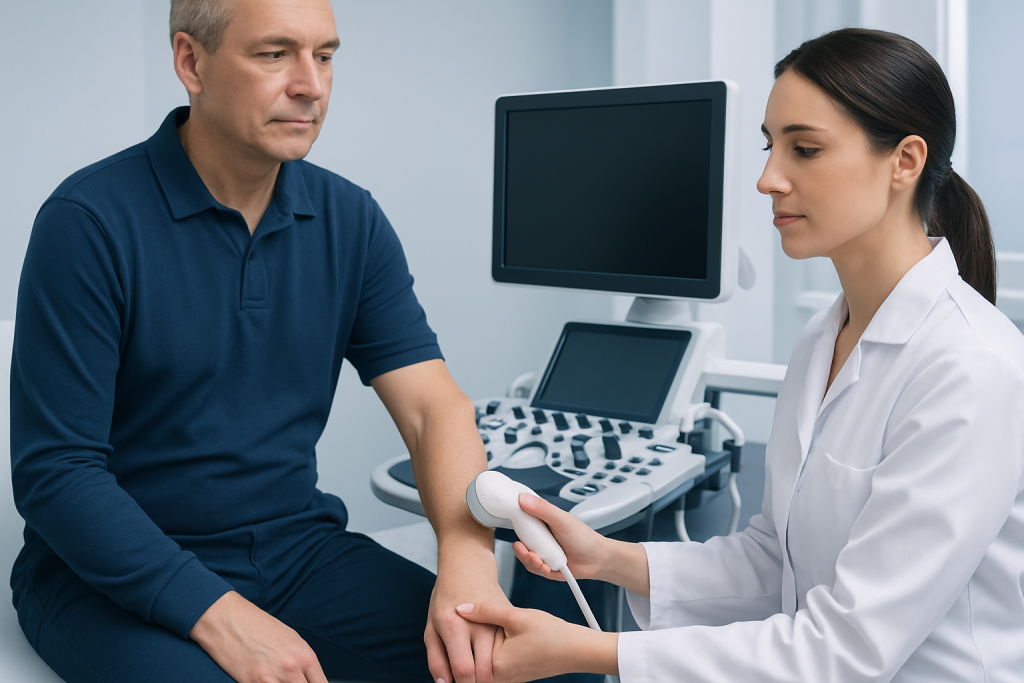
Imaging may be helpful when the diagnosis is uncertain, symptoms are not improving, or another problem needs to be ruled out. Ultrasound can sometimes show thickening, inflammation, small tears, or changes around the tendon insertion. MRI may be used if deeper tissues need evaluation or if there is concern about more complex injury or inflammatory disease. X-rays are less useful for early soft tissue change but can show calcification, bone spurs, or chronic changes at the enthesis.
Blood tests are not needed for everyone, but they may be recommended if an inflammatory or systemic disease is suspected. Depending on the person’s symptoms, a clinician may check markers of inflammation or look for clues suggesting autoimmune disease, infection, or metabolic causes.
Several other conditions can mimic enthesopathy, including tendon tears, bursitis, stress injury, osteoarthritis, nerve-related pain, or referred pain from the spine. In some situations, assessment by orthopedic specialists or rheumatology specialists helps clarify the diagnosis and guide treatment.
Treatment options for enthesopathy
Treatment depends on the site involved, the severity of symptoms, and the underlying cause. For many people, the first steps are reducing aggravating activities, allowing relative rest rather than complete inactivity, and modifying movements that repeatedly overload the area. Ice or heat may help some individuals, and simple pain-relieving or anti-inflammatory medicines may be considered if they are appropriate for the person’s overall health.
Exercise-based rehabilitation is often a central part of treatment. Targeted stretching and strengthening can reduce strain on the attachment point and improve how forces move through the limb. A structured program may address muscle tightness, weakness, balance, gait, and joint mechanics. This is why physical therapy and rehabilitation is commonly recommended, especially when pain has lasted for several weeks or keeps returning.
Supportive devices may also help in selected cases. These can include shoe inserts, supportive footwear, braces, taping, or temporary activity modifications. When enthesopathy affects the heel or foot, improving load distribution can be especially useful. If an inflammatory arthritis is the underlying cause, treatment may also include medicines aimed at controlling the disease itself, rather than only treating the painful attachment site.
A smaller group of patients with severe or persistent symptoms may need more advanced care, such as image-guided injections or evaluation for associated tendon damage. Surgery is not the usual first-line treatment, but it may be considered when symptoms are long-lasting, structural damage is present, and conservative measures have not helped. The best plan is individualized and should be guided by a qualified clinician.
Self-care, activity changes, and prevention
Self-care can play an important role in recovery. The aim is usually not to stop all movement, but to reduce overload while keeping the rest of the body active. A temporary reduction in high-impact exercise, heavy lifting, or repetitive motions may allow symptoms to settle. Reintroducing activity gradually is often safer than returning quickly to the same intensity that triggered the pain.
Simple daily measures may help lower stress on the enthesis:
- Warm up before sports or repetitive tasks
- Increase exercise intensity gradually
- Wear supportive, well-fitting footwear
- Address muscle tightness with a guided stretching plan
- Improve strength and movement technique
- Maintain a healthy body weight where possible
- Allow recovery time between demanding activities
People with recurring symptoms may benefit from checking whether work, exercise routine, or posture is contributing. A clinician or therapist can help identify movement patterns that overload a certain area. For example, weak hip muscles may affect the knee, while calf tightness may increase stress at the heel.
Prevention also includes managing underlying health conditions. If enthesopathy is related to inflammatory arthritis or another systemic disease, long-term control of that condition can reduce repeated flare-ups and help protect function.
When to seek medical care
Medical advice is recommended if pain at a tendon or ligament attachment point lasts more than a few weeks, keeps returning, or starts to interfere with walking, work, sleep, or exercise. A doctor should also assess symptoms that appear without a clear overuse trigger, involve multiple sites, or are associated with swelling, marked morning stiffness, back pain, skin changes, or bowel symptoms.
Urgent assessment may be needed if there is sudden severe pain after an injury, inability to bear weight, visible deformity, rapidly increasing swelling, fever, or signs of infection. These features can suggest a more serious problem than simple overload.
Early evaluation can be especially helpful when symptoms are persistent because prolonged irritation may be harder to treat. It also allows clinicians to look for inflammatory causes that may need specific management. At Acibadem International, multidisciplinary specialists in orthopedics, rheumatology, and rehabilitation at JCI-accredited hospitals diagnose and treat enthesopathy for international patients when a more detailed assessment is needed.
Frequently asked questions
Is enthesopathy the same as tendonitis?
Not exactly. Tendonitis affects the tendon itself, while enthesopathy affects the point where the tendon or ligament attaches to bone. The two can happen together, which is why symptoms may feel similar.
Can enthesopathy go away on its own?
Mild cases may improve with rest, activity changes, and time. However, symptoms that persist or keep coming back should be assessed, because untreated overload or an underlying inflammatory condition may continue to irritate the area.
Where does enthesopathy usually occur?
It often affects areas under repeated strain, such as the heel, Achilles tendon insertion, bottom of the foot, knee, hip, elbow, or shoulder. The exact location depends on daily activities, biomechanics, and whether an inflammatory disease is involved.
How long does recovery take?
Recovery varies widely depending on the cause, the body part involved, and how early treatment begins. Some people improve within weeks, while others need a longer period of rehabilitation, especially if symptoms are longstanding or related to systemic inflammation.
Can exercise help enthesopathy?
Yes, but the right type of exercise matters. Guided stretching and strengthening can improve load distribution and support healing, while continuing painful, high-strain activity may delay recovery. A clinician or physiotherapist can help tailor a safe plan.
Does enthesopathy mean someone has arthritis?
Not always. Many cases are due to overuse, repetitive strain, or mechanical stress without any arthritis. Still, when enthesopathy occurs in several places or comes with prolonged stiffness and other symptoms, doctors may evaluate for inflammatory arthritis.
References
- National Institute of Arthritis and Musculoskeletal and Skin Diseases
- American Academy of Orthopaedic Surgeons
- Arthritis Foundation
- Mayo Clinic
- National Health Service
This article is for general information only and is not a substitute for professional medical advice. Please consult a qualified doctor about your individual situation.
Joint and spine care in Turkey — expert assessment & treatment
JCI-accredited · board-certified surgeons · reply within 24h
Add us as a Preferred Source to see more of our trusted health content across Google Search, AI Overviews and Discover.