Inversion Table — Explained by Medical Evidence, Not Myths
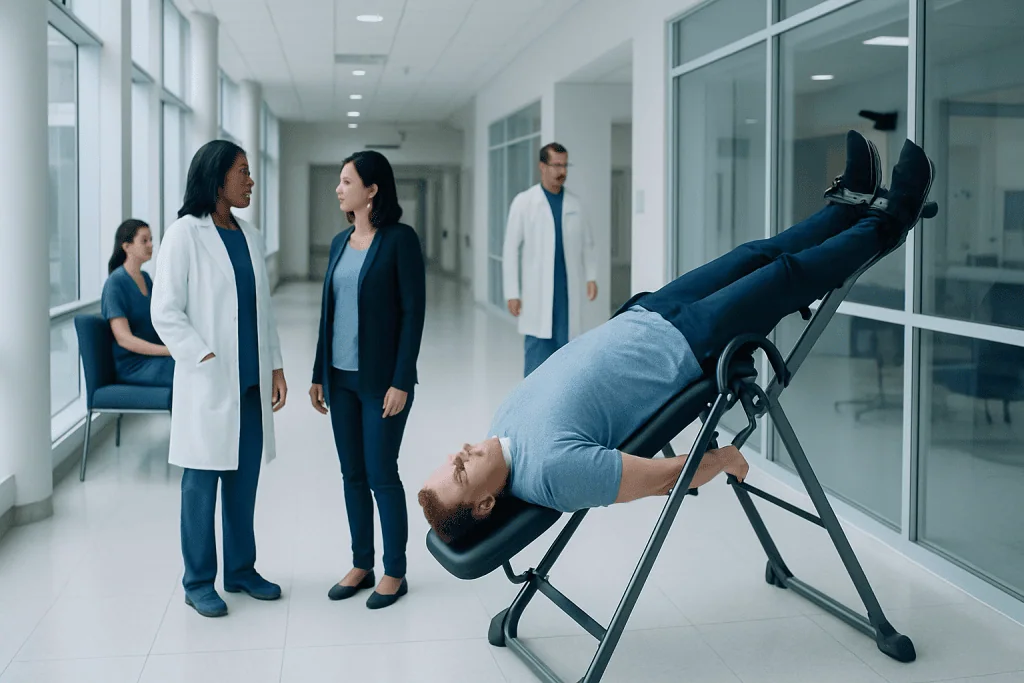
An inversion table may offer short-term relief of back discomfort in selected people, but evidence for lasting benefit is limited. It is not a cure for spinal conditions and should not replace medical evaluation, exercise therapy, or other recommended treatment.
Key Takeaways
- An inversion table may offer short-term relief of back discomfort in selected people, but evidence for lasting benefit is limited.
- It is not a cure for spinal conditions and should not replace medical evaluation, exercise therapy, or other recommended treatment.
- Inversion raises pressure in the eyes, head, and blood vessels, so it can be unsafe for people with glaucoma, high blood pressure, heart disease, or certain neurological conditions.
- Using a mild angle and short sessions is generally safer than steep inversion, especially for first-time users.
- New weakness, numbness, bowel or bladder changes, severe pain, or symptoms after a fall need prompt medical assessment.
An inversion table is a device that tilts the body head-down to reduce pressure on the spine for short periods. Medical evidence suggests it may provide temporary symptom relief for some people with back pain, but it does not treat the underlying cause and is not suitable for everyone.
What an Inversion Table Does — and What It Does Not Do
An inversion table is a hinged device that allows a person to lie on a supported surface and tilt backward so the feet are above the head. The idea behind inversion therapy is that gravity may temporarily reduce compressive load on the spine and surrounding tissues. Some users describe a brief feeling of stretching or decompression in the back.
Medical evidence does not show that an inversion table repairs discs, permanently realigns the spine, or reliably prevents surgery. Research on inversion therapy is limited, and results vary from person to person. For some individuals, especially those with non-specific low back pain, the main effect may be short-lived symptom relief rather than a lasting structural change.
That distinction is important. Back pain can come from muscles, joints, discs, nerves, posture, or more complex conditions. A tool that changes body position for a few minutes may help symptoms, but it usually does not address the underlying diagnosis. For this reason, inversion is best viewed as a possible adjunct to a broader care plan, not a stand-alone solution.
What the Medical Evidence Says
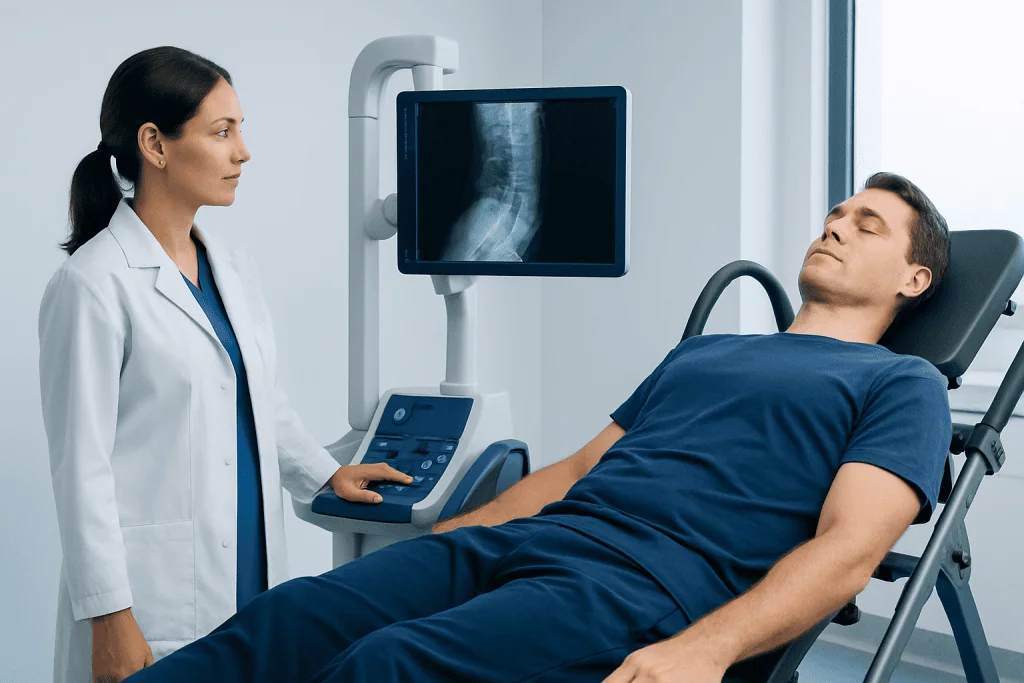
Studies of inversion therapy are generally small and use different methods, which makes strong conclusions difficult. Some research suggests that inversion may reduce pain or improve comfort for certain people with low back symptoms for a short time. There is also limited evidence that selected patients with disc-related pain may experience temporary improvement when inversion is combined with standard care.
However, high-quality evidence showing consistent long-term benefit is lacking. Major back pain guidelines typically emphasize exercise, physical therapy, staying active, weight management where relevant, and targeted treatment based on the cause of symptoms. Inversion therapy is not usually considered a first-line treatment.
In practical terms, the evidence supports a balanced view: an inversion table may help some people feel better temporarily, but it should not be presented as a proven cure. People with ongoing symptoms should still be evaluated for common causes such as muscle strain, herniated disc, spinal stenosis, or nerve irritation.
Possible Benefits and Who Might Notice Them

The most commonly reported benefit is short-term reduction in back tightness or a sense of pressure relief. This may happen because changing body position alters spinal loading and may relax some muscles around the lower back. A few people also report improved comfort after sitting for long periods or after exercise-related stiffness.
People with mild, mechanical low back pain sometimes tolerate inversion better than those with severe pain, significant nerve compression, balance problems, or multiple medical conditions. If inversion is used, it tends to be considered only after basic measures such as movement, posture changes, and supervised exercise have been discussed.
Potential benefits are usually modest and temporary. The most realistic goals are symptom management and comfort, not correction of posture, reversal of disc disease, or guaranteed improvement in mobility. For persistent pain, a clinician may recommend rehabilitation strategies such as physical therapy and rehabilitation to improve strength, flexibility, and movement patterns.
- Temporary stretching sensation in the back
- Short-lived reduction in perceived pressure or stiffness
- Possible symptom relief when used alongside exercise-based care
- Relaxation effect for some users
Risks, Side Effects, and Who Should Avoid It
Inversion is not harmless simply because it is non-surgical. Tilting the body head-down can increase blood pressure in the upper body and raise pressure inside the eyes. It may also trigger dizziness, reflux, headache, or a feeling of facial fullness. Some people find the ankle supports uncomfortable, and getting on or off the table can pose a fall risk.
For these reasons, an inversion table is generally not recommended for people with glaucoma, retinal disease, uncontrolled high blood pressure, significant heart disease, prior stroke, certain brain or blood vessel disorders, severe osteoporosis, balance problems, hiatal hernia, or pregnancy. It may also be unsuitable for people taking blood thinners or those who have had recent surgery unless a doctor specifically approves it.
Inversion should also be avoided when back pain is accompanied by red-flag symptoms, such as progressive weakness, saddle numbness, fever, unexplained weight loss, loss of bladder or bowel control, or severe pain after trauma. In those situations, the priority is medical diagnosis, not self-directed decompression. Depending on the cause, evaluation may involve specialists in spine surgery or other disciplines.
How to Use an Inversion Table More Safely
If a doctor or physiotherapist agrees that inversion is reasonable to try, a cautious approach is important. Most people should begin with a small tilt angle rather than a full upside-down position. Mild inversion is often enough to test comfort and may reduce the risk of dizziness, pressure symptoms, or panic.
Sessions are typically kept short, especially at first. The user should have a stable setup, secure ankle support, and another person nearby when trying the table for the first time. Slow movements onto and off the table are important because sudden position changes can lead to lightheadedness.
Any increase in pain, numbness, headache, eye discomfort, chest symptoms, or shortness of breath is a reason to stop. Regular use should not continue if symptoms worsen or if relief lasts only minutes while overall function declines. A clinician can help decide whether safer alternatives would be more appropriate.
- Start with a shallow angle instead of full inversion
- Keep sessions brief and stop if symptoms appear
- Avoid using it alone the first few times
- Do not use it as a substitute for diagnosis or prescribed treatment
Alternatives With Stronger Evidence
For most people with back pain, treatments with stronger evidence are available. Staying gently active, avoiding long periods of bed rest, and following a structured exercise plan often help more than passive devices alone. Core strengthening, hip mobility work, and guided stretching may improve both symptoms and function over time.
Physical therapy can be particularly helpful because it is tailored to the cause of pain and the person’s movement pattern. Manual therapy, exercise progression, education about posture and lifting, and return-to-activity planning are all commonly used. In some cases, doctors may also recommend medication, imaging, or procedures depending on the diagnosis.
When pain radiates down the leg, causes numbness, or suggests significant nerve irritation, assessment may lead to options such as pain management or other specialist care. A complete plan may also address sleep, body weight, work ergonomics, and stress, all of which can influence how back pain is experienced.
When to Seek Medical Care
Medical advice is important if back pain lasts more than a few weeks, keeps returning, or interferes with walking, sleep, work, or daily tasks. A clinician can assess whether symptoms are related to muscle strain, disc disease, arthritis, nerve compression, or another condition that needs targeted care.
Urgent assessment is needed for weakness in the leg or foot, numbness in the groin area, difficulty controlling the bladder or bowels, fever with back pain, unexplained weight loss, or severe pain after a fall or accident. These symptoms may indicate a condition that should not be managed with home devices.
People who are unsure whether inversion is safe for them should ask a doctor before trying it, especially if they have eye disease, cardiovascular disease, neurological illness, osteoporosis, or are pregnant. Near the end of the care pathway, if specialist evaluation is needed, Acibadem International’s multidisciplinary specialists and JCI-accredited hospitals diagnose and treat spinal and musculoskeletal conditions for international patients.
Frequently asked questions
Does an inversion table really work?
It may help some people feel temporary relief from back tightness or pressure. Current evidence does not show consistent long-term benefit, and it should not be considered a cure for spinal problems.
Can an inversion table fix a herniated disc?
No home device can be said to fix a herniated disc in a reliable, permanent way. Inversion may reduce symptoms briefly in some cases, but a herniated disc still needs proper medical assessment and a treatment plan based on severity and nerve symptoms.
Who should not use an inversion table?
People with glaucoma, retinal problems, uncontrolled high blood pressure, heart disease, prior stroke, severe osteoporosis, balance disorders, pregnancy, or recent surgery generally should avoid it unless a doctor says otherwise. Anyone with severe or worsening neurological symptoms should seek medical advice rather than trying inversion.
How long should a person stay on an inversion table?
There is no single medically correct duration for everyone, and longer is not necessarily better. If a clinician has approved use, beginners usually do better with a gentle angle and very short sessions, stopping immediately if symptoms occur.
Can inversion therapy make back pain worse?
Yes, it can. Some people develop increased pain, muscle spasm, dizziness, headache, reflux, or nerve symptoms, especially if the angle is too steep or if there is an underlying condition that makes inversion unsuitable.
Is an inversion table better than physical therapy?
In general, no. Physical therapy has stronger evidence because it addresses movement, strength, flexibility, and function, whereas inversion mainly offers short-term positional relief for selected people.
This article is for general information only and is not a substitute for professional medical advice. Please consult a qualified doctor about your individual situation.
Joint and spine care in Turkey — expert assessment & treatment
JCI-accredited · board-certified surgeons · reply within 24h
Add us as a Preferred Source to see more of our trusted health content across Google Search, AI Overviews and Discover.
Check your numbers in seconds
BMI, calories, due date, blood pressure and 30+ more clinical calculators — free, instant, doctor-reviewed ranges.

More from the Health Library

Lychee Fruit: What Patients Need to Know

Green Coffee: A Complete Medical Overview

Intramural Fibroid — Explained by Medical Evidence, Not Myths

Distilled Water: A Complete Medical Overview

Catarrhalis Bacteria: An Evidence-Based Guide for Patients