Scabs on Scalp: A Complete Medical Overview

Scabs on the scalp are a sign of skin damage or inflammation, not a condition on their own. Common causes include dandruff, seborrheic dermatitis, psoriasis, eczema, allergic reactions, scratching, and infections.
Key Takeaways
- Scabs on the scalp are a sign of skin damage or inflammation, not a condition on their own.
- Common causes include dandruff, seborrheic dermatitis, psoriasis, eczema, allergic reactions, scratching, and infections.
- Persistent scabs, pain, pus, bleeding, or hair loss should be evaluated by a doctor.
- Treatment may involve medicated shampoos, prescription creams, antifungal therapy, or antibiotics depending on the cause.
- Gentle scalp care and avoiding scratching can help the skin heal and reduce recurrence.
Scabs on scalp are common and usually develop when the skin becomes irritated, inflamed, injured, or infected. They are not a diagnosis by themselves, so effective treatment depends on identifying the cause, such as dandruff, eczema, psoriasis, scratching, or a skin infection.
Overview: what scabs on the scalp usually mean
Scabs on scalp usually form when the skin has been irritated or injured and begins to heal. A scab is part of the body’s normal repair process, but when scabs keep returning, itch intensely, or are accompanied by scaling, redness, or hair shedding, they often point to an underlying scalp condition rather than a simple scratch.
The scalp can react to many different problems in similar ways. Dandruff, seborrheic dermatitis, psoriasis, eczema, allergic reactions to hair products, fungal infections, bacterial infections, and repeated scratching can all lead to crusting or scab formation. Because these causes overlap, appearance alone does not always give a complete answer.
For many people, the question is not only how to remove the scabs, but why they are there in the first place. A careful approach focuses on clues such as itch, flaking, tenderness, oily or dry scale, discharge, and whether there is associated hair loss. This helps guide treatment and lowers the chance that the scalp will become more inflamed.
Common symptoms and how scalp scabs can look
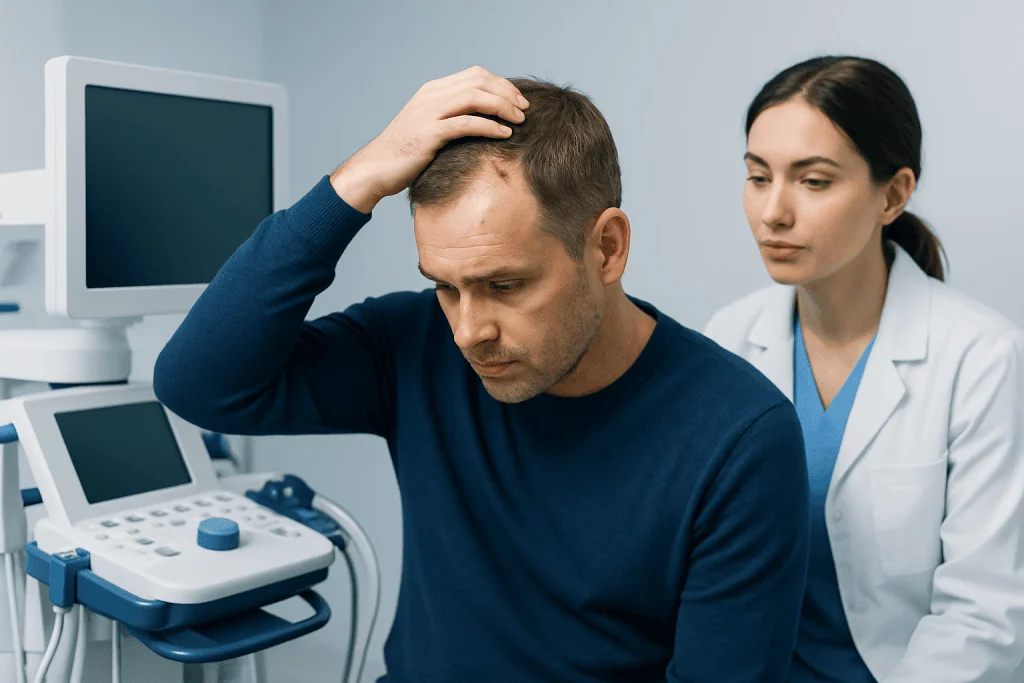
Scalp scabs may be small and scattered or larger, thicker, and more tightly attached to the skin. They can appear yellowish, brown, or reddish, depending on whether there is oil, dried blood, or active inflammation. Some people notice only a few rough spots, while others develop widespread crusting across the scalp.
Symptoms vary with the cause. Itching is very common, especially with dandruff, eczema, and allergic irritation. Burning, soreness, or pain may suggest more active inflammation or infection. Flaking, redness, and areas of thick scale can appear together, and some people notice that the scalp feels tight or sensitive when washing or brushing their hair.
Other features that may occur include:
- Dry or greasy flakes on the scalp and hair
- Scratching marks or pinpoint bleeding
- Patches of hair thinning or broken hairs
- Oozing, crusting, or a bad odor
- Swollen bumps, pustules, or tenderness
Because several scalp disorders can look alike, it is helpful to consider the full pattern of symptoms rather than the scabs alone. For example, thick silvery scale may raise concern for psoriasis, while greasy yellow flakes often fit better with seborrheic dermatitis.
Causes and risk factors

One of the most common reasons for scabs on scalp is repeated scratching caused by itching. The itch itself may come from dandruff, dry skin, eczema, or an irritated reaction to shampoo, hair dye, styling products, or other chemicals. When the skin barrier breaks, minor wounds can crust over and form visible scabs.
Inflammatory skin conditions are another frequent cause. Seborrheic dermatitis often produces greasy flakes and redness, especially around the scalp margins. Eczema may cause dryness, itching, and skin sensitivity. Psoriasis can create thicker plaques with persistent scaling. People with sensitive skin, a personal or family history of eczema or psoriasis, or stress-related flares may be more likely to experience these conditions.
Infections can also lead to scalp scabs. Fungal scalp infection, including ringworm of the scalp, may cause scaling, broken hairs, and patchy hair loss. Bacterial infection can develop if scratching opens the skin and allows germs to enter. Inflamed hair follicles may also crust. In some cases, head lice cause intense itching that leads to scratch marks and secondary scabbing.
Less commonly, scabs may be related to autoimmune blistering diseases, chronic picking, or sun-damaged skin lesions. Risk factors include frequent use of harsh hair treatments, sharing combs or hats, poor control of existing skin disease, and delayed treatment of an itchy or inflamed scalp.
How doctors diagnose the cause
Diagnosis begins with a medical history and a close scalp examination. A doctor will usually ask when the scabs started, whether they itch or hurt, what hair products are used, whether there is flaking elsewhere on the body, and if there has been hair loss, drainage, fever, or recent contact with others who have a scalp infection. These details can help narrow the possibilities quickly.
During the examination, the doctor looks at the pattern of scale, redness, crusting, and hair changes. In some cases, a dermatoscope, which magnifies the skin and hair shafts, may be used to look more closely. This is especially useful when hair breakage, follicle inflammation, or scarring is suspected.
Additional tests are sometimes needed. A skin swab may be taken if bacterial infection is possible, and a fungal test may be done if ringworm is suspected. If the diagnosis remains unclear or the condition does not improve with standard treatment, a dermatologist may recommend a biopsy to check for less common inflammatory or autoimmune causes.
Because hair loss can sometimes accompany scalp disease, evaluation may overlap with the work-up used for hair loss treatment when shedding, thinning, or scalp inflammation are occurring together.
Treatment options for scabs on scalp
The best treatment for scabs on scalp depends on the cause. If dandruff or seborrheic dermatitis is responsible, medicated shampoos containing anti-dandruff or antifungal ingredients are often helpful. Doctors may also recommend short-term anti-inflammatory lotions or solutions to calm redness and itching. For scalp psoriasis or eczema, prescription topical treatments may be needed to reduce scaling and allow the skin to heal.
If an allergic or irritant reaction is suspected, the first step is usually to stop the product that may be causing the problem. Gentle, fragrance-free hair care and avoiding repeated chemical treatments can support healing. When there is significant itching, a doctor may prescribe a topical medication to reduce inflammation and help prevent further scratching.
Scalp infections require targeted treatment. Fungal scalp infection often needs prescription antifungal medication, while bacterial infection may require topical or oral antibiotics depending on severity. Inflamed hair follicles may be managed with medicated cleansers or other dermatologist-guided treatments. If there is thick crusting, a clinician may advise ways to soften and remove scale without damaging the skin.
For persistent or complex cases, referral to a dermatologist may be appropriate. In selected patients, a specialist may discuss options used in broader dermatology treatment plans, especially when scalp symptoms are chronic, recurrent, or linked to inflammatory skin disease.
Self-care and prevention
Gentle scalp care can make a meaningful difference. Washing often enough to control oil and scale, while avoiding harsh scrubbing, helps reduce buildup that can worsen itching. Fingernails can easily damage inflamed skin, so it is important to avoid picking or scratching even when the scalp feels very itchy. Keeping nails short may help limit accidental injury.
Choosing mild shampoos and limiting exposure to fragrances, dyes, and strong styling products may reduce irritation. People who know they react to certain hair products should avoid them completely. Brushes, combs, hats, and pillowcases should be kept clean, and shared personal items should be avoided when infection is a concern.
Managing long-term skin conditions can also lower the chance of recurrent scabs. For example, people with eczema or psoriasis may benefit from regular follow-up, trigger awareness, and early treatment of scalp flares before scratching and crusting develop.
Supportive care is useful, but home remedies should be approached carefully. Applying untested oils, strong essential oils, or abrasive treatments may further irritate the scalp. If symptoms are worsening or not improving, professional evaluation is safer than repeated self-treatment.
When to seek medical care
Scabs on scalp should be assessed by a doctor if they last more than a few weeks, keep coming back, or do not improve with gentle care and over-the-counter dandruff treatment. Medical review is also important if the scalp is very painful, swollen, or producing pus, or if there is significant bleeding or crusting.
Hair loss is another important reason to seek evaluation, especially if there are patchy bald areas, broken hairs, or signs of scarring. Prompt treatment can be particularly important in scalp infections and inflammatory conditions that may affect hair growth if left untreated.
Children with scalp scaling, scabs, and hair loss should be seen promptly because fungal scalp infection is a common possibility and usually needs prescription treatment. Adults should also seek care if symptoms spread beyond the scalp, involve the face or ears, or are associated with fever or swollen lymph nodes.
When specialist care is needed, Acibadem International’s multidisciplinary specialists in JCI-accredited hospitals evaluate scalp and skin conditions for international patients and can guide diagnosis and treatment when symptoms are persistent or complex.
Frequently asked questions
Are scabs on scalp usually serious?
Most scalp scabs are related to common problems such as dandruff, scratching, eczema, or psoriasis rather than a serious illness. However, persistent scabs, infection, pain, or hair loss should be checked by a doctor to identify the cause and protect the scalp.
Can dandruff cause scabs on the scalp?
Yes, dandruff and seborrheic dermatitis can lead to scabs, especially when itching causes scratching and small skin breaks. In these cases, treating the underlying flaking and inflammation is more effective than trying to remove the scabs alone.
Why do I have scabs on my scalp and hair loss at the same time?
Scalp scabs and hair loss can happen together in fungal infections, psoriasis, severe seborrheic dermatitis, folliculitis, or intense scratching. Because some causes may damage hair follicles if left untreated, a medical evaluation is important when both symptoms appear together.
Should scalp scabs be picked off?
No. Picking off scabs can reopen the skin, increase inflammation, delay healing, and raise the risk of infection. It is better to soften scale gently and treat the underlying condition causing the scabs.
What kind of doctor treats scabs on scalp?
A primary care doctor can evaluate many cases and start treatment for common causes. If symptoms are persistent, severe, recurrent, or linked to hair loss, a dermatologist is usually the most appropriate specialist.
Can hair products cause scabs on the scalp?
Yes, shampoos, dyes, bleaches, fragrances, and styling products can irritate the scalp or trigger an allergic reaction. If symptoms begin after using a new product, stopping it and discussing the reaction with a doctor is a sensible next step.
This article is for general information only and is not a substitute for professional medical advice. Please consult a qualified doctor about your individual situation.
Hair transplant in Turkey — costs, graft counts & a free assessment
JCI-accredited · board-certified surgeons · reply within 24h
Add us as a Preferred Source to see more of our trusted health content across Google Search, AI Overviews and Discover.

More from the Health Library

Lung Consolidation: A Complete Medical Overview

Fluocinolone Acetonide Oil: A Complete Medical Overview

Hand Sanitizer and: What Patients Need to Know

Tobramycin: A Complete Medical Overview

Azelaic Acid: A Complete Medical Overview