Varus vs Valgus: Key Differences and How Doctors Tell Them Apart

Varus and valgus are opposite alignment patterns, not diseases by themselves. Varus usually means the distal part of a limb points inward; valgus means it points outward.
Key Takeaways
- Varus and valgus are opposite alignment patterns, not diseases by themselves.
- Varus usually means the distal part of a limb points inward; valgus means it points outward.
- Doctors assess alignment with history, physical examination, gait observation, and sometimes X-rays or advanced imaging.
- Some cases are normal in growing children, while others reflect arthritis, injury, bone shape, or ligament problems.
- Treatment depends on the cause, age, symptoms, and severity, and may range from observation and therapy to braces or surgery.
Varus vs valgus describes two opposite patterns of limb or joint alignment. In varus, the lower part of a limb angles inward toward the body's midline; in valgus, it angles outward, and doctors distinguish them by looking at where the joint sits, how a person stands and walks, and whether imaging is needed.
Varus vs valgus at a glance
Varus vs valgus can be confusing because the terms sound technical, but the basic difference is straightforward. Varus means the part of the limb below a joint angles toward the body’s midline. Valgus means the part below the joint angles away from the midline. These terms are often used for the knees, but they may also describe the hips, elbows, ankles, and big toe.
At the knee, varus alignment is commonly described as a bow-legged appearance, while valgus alignment is commonly described as a knock-kneed appearance. Neither term automatically means something is harmful. In children, some alignment changes can be a normal part of growth. In adults, however, these patterns may be linked to cartilage wear, old injuries, joint instability, or bone shape.
The main practical question is not only which word applies, but also why the alignment is present, whether it is causing pain or instability, and whether it is changing over time. That is why clinicians do more than simply look at the legs. They assess movement, symptoms, age, and imaging findings when needed.
Side-by-side comparison
- Varus: distal limb segment angles inward toward the midline
- Valgus: distal limb segment angles outward away from the midline
- At the knee: varus is bow-legged; valgus is knock-kneed
- Load pattern: varus often increases stress on the inner side of the knee; valgus often increases stress on the outer side and may affect kneecap tracking
- Common associations: growth patterns in childhood, arthritis, prior fracture, ligament injury, congenital differences, and foot or hip mechanics
- How doctors confirm it: physical examination, gait assessment, leg alignment measurements, and X-rays when appropriate
How a clinician tells them apart
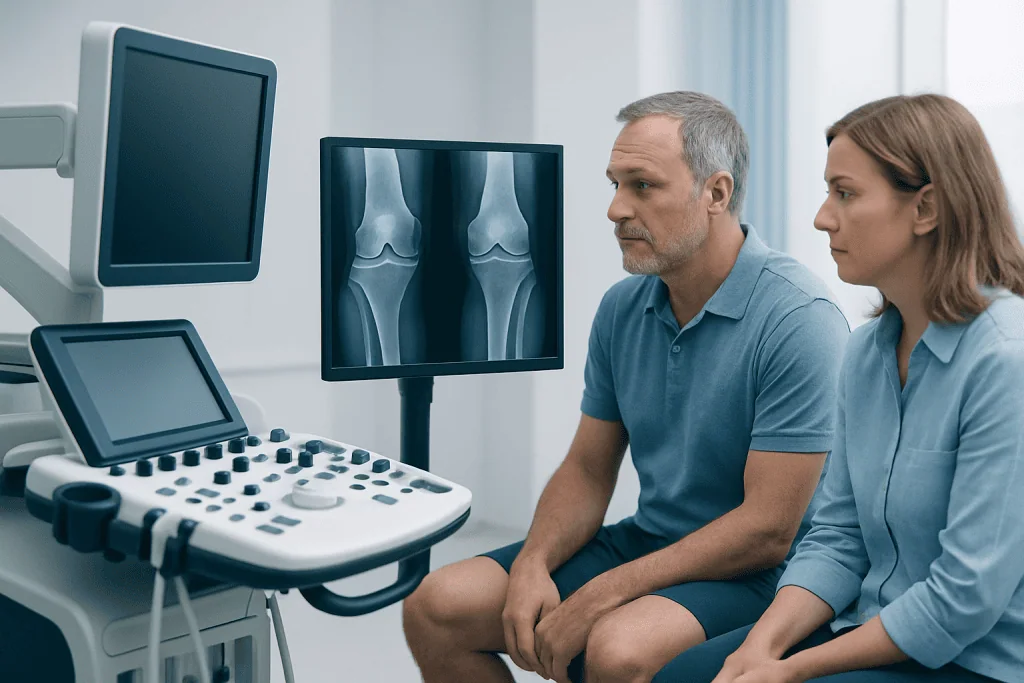
Doctors identify varus and valgus by considering the joint as a geometric relationship, not just by describing appearance. A clinician looks at the person standing from the front and sometimes from behind, noting where the joint center lies compared with the thigh and lower leg. At the knee, for example, the clinician observes whether the lower leg sits more inward or outward relative to the femur.
The physical examination usually includes gait observation, leg-length assessment, joint range of motion, and tenderness or swelling around the joint. The doctor may also look at the feet, hips, and spine because alignment in one area can affect another. Muscle strength matters too. Weakness around the hips or poor control during walking and squatting can create a functional valgus pattern even when the bones themselves are normally aligned.
In many cases, a clinician also checks ligament stability. A knee that collapses inward during movement may suggest dynamic valgus, which can be related to hip muscle weakness, balance deficits, or ligament injury. A fixed bony deformity is different from a movement pattern problem, and telling those apart helps guide treatment.
If the clinical picture is not clear, or if symptoms are significant, imaging may be used. Standing X-rays are especially helpful because they show weight-bearing alignment. In some cases, advanced imaging such as MRI helps evaluate cartilage, menisci, or ligaments. This can be relevant when symptoms overlap with conditions such as knee osteoarthritis or after a sports injury.
Where varus and valgus are most often seen
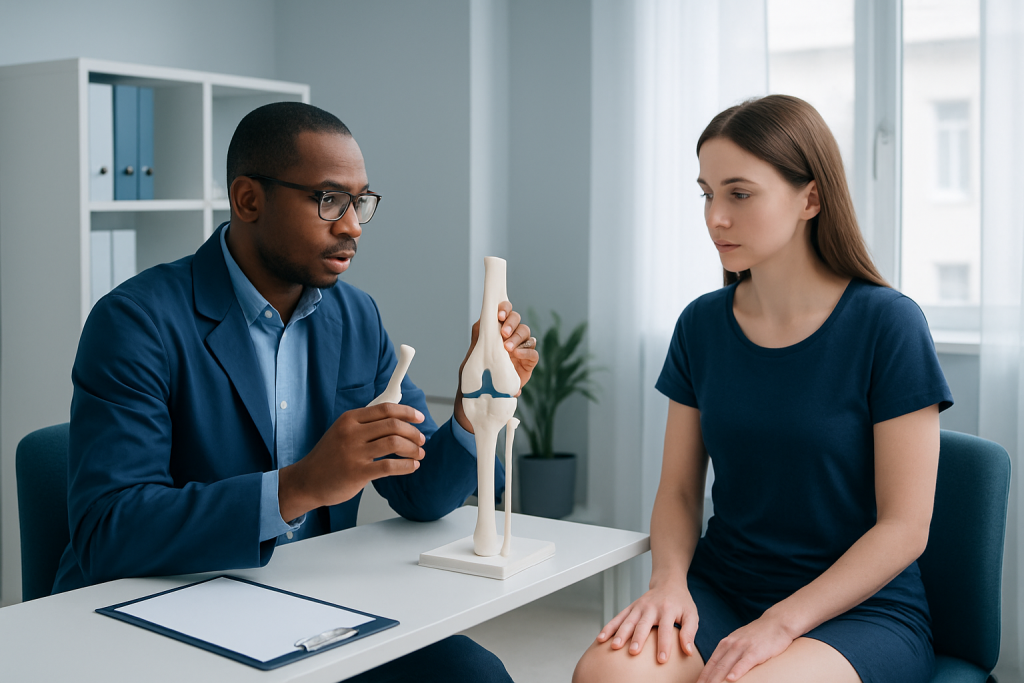
The knee is the best-known example, but varus and valgus can affect several parts of the body. At the knee, varus tends to shift weight to the inner compartment, while valgus tends to shift load more laterally and may alter how the kneecap tracks. Over time, abnormal loading can contribute to pain, stiffness, or uneven joint wear.
At the ankle or heel, a valgus position may make the heel tilt outward, which can be seen in some forms of flatfoot. A varus foot or heel can tilt inward and may change balance and walking mechanics. At the elbow, cubitus valgus or cubitus varus describes the angle of the forearm relative to the upper arm. These may be congenital or develop after fractures heal in a changed position.
The big toe is another familiar area. Hallux valgus is the medical term for a bunion, where the toe angles toward the smaller toes. That shows how the same terminology applies across joints: valgus always refers to the direction of angulation relative to the body’s midline.
Because these patterns can appear in more than one place, the exact meaning depends on the joint being discussed. The same word does not describe the same symptoms in every part of the body, so clinicians always pair the term with the specific joint, such as knee valgus, hindfoot valgus, or elbow varus.
Common causes and risk factors
Varus and valgus alignment can be present from birth, emerge during normal growth, or develop later in life. In children, temporary bowing or knock-knee patterns can occur at certain ages and often improve naturally. Persistent, marked, or one-sided deformity deserves closer evaluation because it may reflect a growth plate issue, bone disorder, or another underlying condition.
In adults, common causes include osteoarthritis, previous fractures, ligament injury, cartilage loss, and long-standing joint instability. For example, wear on one side of the knee may gradually shift the leg into varus or valgus. A poorly healed fracture can also change the mechanical axis of the limb. In athletes, movement-related valgus may be linked to muscle imbalance or reduced neuromuscular control rather than fixed bone shape alone.
Body weight, repetitive high-impact loading, and certain occupations may increase stress across already misaligned joints. Foot posture can also influence alignment up the chain. A pronated foot, for instance, may contribute to a valgus tendency during movement in some people, although this relationship is not identical in every case.
Doctors also consider less common causes, such as inflammatory joint disease, metabolic bone conditions, congenital skeletal differences, and nerve or muscle disorders. The goal is to identify whether the alignment is primarily structural, developmental, or functional, because treatment differs for each.
Tests and imaging used for diagnosis
Diagnosis begins with history-taking. The doctor may ask when the alignment was first noticed, whether it is getting worse, and whether there is pain, swelling, limping, stiffness, locking, giving way, or difficulty with sports or stairs. In children, growth history and whether both sides are affected are especially important.
The physical examination may include measuring the distance between the knees or ankles in a relaxed standing position, checking leg lengths, and assessing rotational alignment of the hips and lower legs. Functional tasks such as squatting, stepping down, or single-leg standing can reveal a dynamic valgus or varus pattern that is not obvious during quiet standing.
Weight-bearing X-rays are often the first imaging study when symptoms are ongoing or the deformity appears significant. They help show the joint space, bone shape, and the overall mechanical axis of the limb. In planning treatment, long-leg standing films may be used to understand how the hip, knee, and ankle line up together.
MRI is not needed for every person with varus or valgus, but it can be useful if there is concern about ligament tears, meniscal injury, cartilage damage, or persistent pain without a clear X-ray explanation. In selected cases, people may also be referred to specialists in orthopedic care or physical therapy and rehabilitation to clarify whether the main issue is structural alignment, joint disease, or movement control.
What to do for each case
Treatment depends on the person’s age, symptoms, and the cause of the alignment. If varus or valgus is mild, painless, and stable, careful observation may be enough. This is often the case for normal developmental patterns in young children, where follow-up is used to confirm that alignment is improving as expected.
When symptoms are present, non-surgical care often comes first. This may include targeted exercise, weight management when appropriate, activity modification, supportive footwear, or bracing in selected cases. Rehabilitation can improve muscle strength, balance, and movement control, especially for dynamic valgus patterns. If knee pain is related to overuse or maltracking of the kneecap, therapy may reduce stress on the joint during walking and sports.
For adults with fixed malalignment and arthritis, treatment may focus on pain relief, preserving mobility, and slowing further joint overload. In some cases, injections may be considered as part of broader care, though they do not correct the underlying alignment. If symptoms become severe and daily function is limited, surgery may be discussed. Depending on the cause, this may include osteotomy to realign the limb or joint replacement for advanced degenerative disease, such as knee replacement.
Children and adolescents with progressive deformity, significant asymmetry, or growth-related problems may need specialist orthopedic assessment. Treatment options can differ from adult care and may include monitoring growth, guided growth procedures, or corrective surgery when indicated. The right plan is individualized rather than based on appearance alone.
Self-care, prevention, and protecting joint health
Not every case of varus or valgus can be prevented, especially when bone shape, growth, or past injury play a major role. Still, joint-friendly habits can reduce strain and support function. These include maintaining a comfortable body weight, building lower-limb strength, improving flexibility, and using proper technique during sports and exercise.
Exercises that strengthen the hips, thighs, and core may improve alignment control during movement. This is particularly relevant for people who show inward knee collapse while running, landing, or squatting. Footwear that fits well and suits the activity can also help distribute forces more evenly, although shoes alone do not correct a true bony deformity.
People with early pain should avoid pushing through persistent symptoms. Repeated activity that causes swelling, limping, or a feeling that the joint is unstable deserves medical attention rather than self-management alone. Prompt care after injuries may reduce the chance of long-term malalignment related to ligament damage or poorly healed fractures.
Near the end of the care pathway, some people benefit from coordinated assessment across orthopedics, imaging, and rehabilitation. Acibadem International’s multidisciplinary specialists and JCI-accredited hospitals diagnose and treat bone and joint alignment problems for international patients, especially when symptoms involve complex causes or advanced joint damage.
When to seek medical care
Medical evaluation is a good idea if varus or valgus appears suddenly, affects only one side, causes pain, or seems to be worsening. A doctor should also assess swelling, stiffness, limping, recurrent ankle or knee sprains, or a sense that the joint gives way. In children, review is important if the alignment is severe, asymmetrical, or persists beyond the age range expected for normal development.
Urgent care is appropriate after trauma if the person cannot bear weight, the joint looks obviously deformed, or there is marked swelling, locking, numbness, or severe pain. These symptoms may suggest fracture, ligament injury, or another problem needing prompt assessment.
Even when symptoms are milder, professional evaluation helps determine whether the issue is a normal variation, a movement-control problem, or a structural condition that could place uneven stress on the joint over time. Early assessment can also help identify related conditions such as meniscus tear or chronic degeneration before they affect daily activity more significantly.
Frequently asked questions
Is varus worse than valgus?
Neither is automatically worse. The clinical importance depends on the joint involved, the amount of angulation, the person's age, symptoms, and whether the alignment is fixed or only occurs during movement. Some people have mild alignment differences with no pain, while others develop joint overload or instability.
How do doctors measure varus or valgus?
Doctors start with visual assessment and physical examination while the person stands, walks, and performs simple movements. If more precision is needed, weight-bearing X-rays can show the mechanical axis of the limb and how the joint surfaces line up. In selected cases, MRI is used to assess soft tissues such as ligaments or cartilage.
Are bow legs always varus and knock knees always valgus?
At the knee, yes, those common terms usually correspond to varus and valgus respectively. However, clinicians still assess the full limb because the apparent shape may be influenced by hip rotation, foot posture, or growth patterns. The exact diagnosis depends on the joint and the underlying cause.
Can exercise fix varus or valgus?
Exercise can help when the problem is mainly functional, such as dynamic knee valgus related to weakness or poor movement control. It can reduce pain and improve stability, but it does not usually change a fixed bony deformity. A clinician or physical therapist can help determine what type of alignment issue is present.
Is varus or valgus normal in children?
Some alignment changes are part of normal growth. Young children may have periods of bowing or knock-knee appearance that improve over time. Persistent, severe, painful, or one-sided deformity should be evaluated by a doctor.
When is surgery considered for varus or valgus?
Surgery is considered when alignment problems cause significant pain, instability, progressive deformity, or joint damage that does not improve with non-surgical care. The procedure depends on the cause and age of the patient and may include growth-guided treatment in children, osteotomy, or joint replacement in adults. A specialist can explain the risks and expected benefits for an individual case.
References
- American Academy of Orthopaedic Surgeons
- National Institute of Arthritis and Musculoskeletal and Skin Diseases
- American College of Radiology
- American Physical Therapy Association
- Pediatric Orthopaedic Society of North America
This article is for general information only and is not a substitute for professional medical advice. Please consult a qualified doctor about your individual situation.
Joint and spine care in Turkey — expert assessment & treatment
JCI-accredited · board-certified surgeons · reply within 24h
Add us as a Preferred Source to see more of our trusted health content across Google Search, AI Overviews and Discover.

More from the Health Library



Related Specialists

Assoc. Prof. Dr. Mustafa Kaplangöray
Cardiology
Prof. Dr. İbrahim Tuncay
Orthopedic Surgery & Traumatology
Dr. Vusal Guliyev
Neurosurgery
Fzt. Sena Durmaz
Physical Medicine & Rehabilitation