Leg Bones Broken — Explained by Medical Evidence, Not Myths
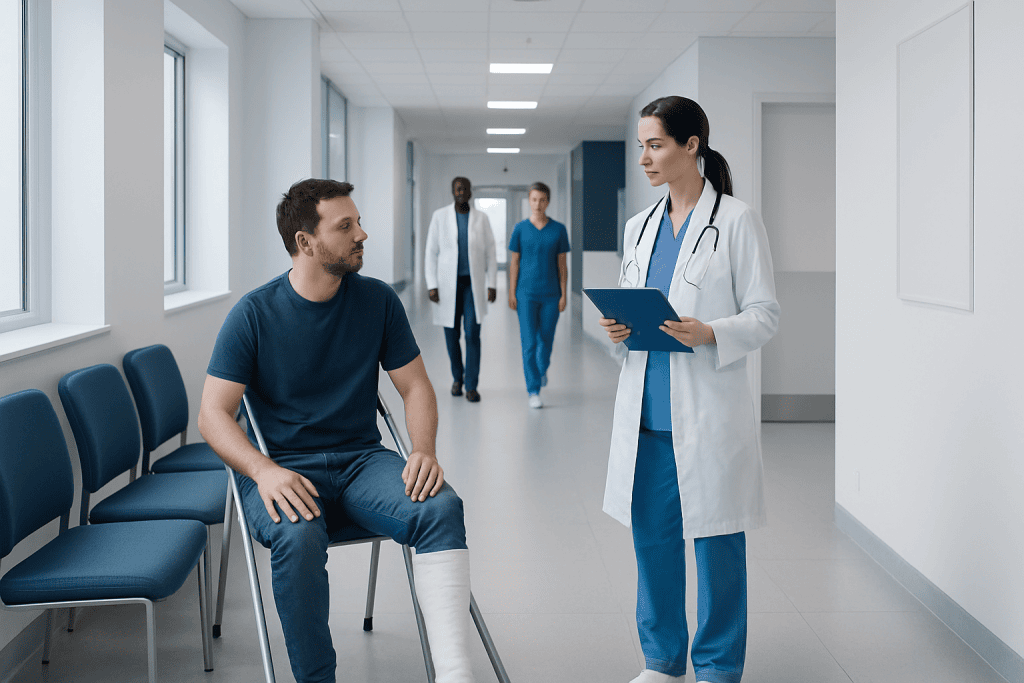
A broken leg can involve the femur, tibia, or fibula, with symptoms such as pain, swelling, bruising, and difficulty bearing weight. Not every fracture looks dramatic; some leg bone breaks are stable or hairline and can still require medical care.
Key Takeaways
- A broken leg can involve the femur, tibia, or fibula, with symptoms such as pain, swelling, bruising, and difficulty bearing weight.
- Not every fracture looks dramatic; some leg bone breaks are stable or hairline and can still require medical care.
- Diagnosis usually involves a physical examination and imaging, most often X-rays, and sometimes CT or MRI scans.
- Treatment depends on which bone is broken, whether the fracture is aligned, and whether surrounding tissues are injured.
- Early immobilization, follow-up care, and rehabilitation help support healing and restore movement and strength.
Leg bones broken usually refers to a fracture in one of the major bones of the leg: the femur, tibia, or fibula. These injuries range from small cracks to severe breaks, and medical evaluation is important to confirm the diagnosis, protect nearby blood vessels and nerves, and choose the safest treatment.
What “leg bones broken” means
When people search for “leg bones broken,” they are usually asking whether pain, swelling, or trouble walking could mean a fracture. In medical terms, a broken leg means a fracture in one of the long bones of the leg: the femur in the thigh, the tibia in the shin, or the fibula, the thinner bone beside the tibia. The break may be a small crack, a clean break, multiple fragments, or a fracture that also affects nearby joints.
Not all broken leg bones look the same. Some fractures happen after a major injury, such as a road traffic collision or a fall from height. Others can occur during sports, after a twisting injury, or even from lower-impact trauma in people with weaker bones. This is why appearance alone does not confirm or rule out a fracture.
The term “broken leg” is sometimes used loosely for any serious leg injury, but medical evaluation matters because the best treatment depends on exactly which bone is affected, whether the pieces are aligned, and whether blood vessels, nerves, skin, or muscles are involved. A broken leg is different from a sprain or a muscle strain, although these injuries can cause similar early symptoms.
Common signs and symptoms
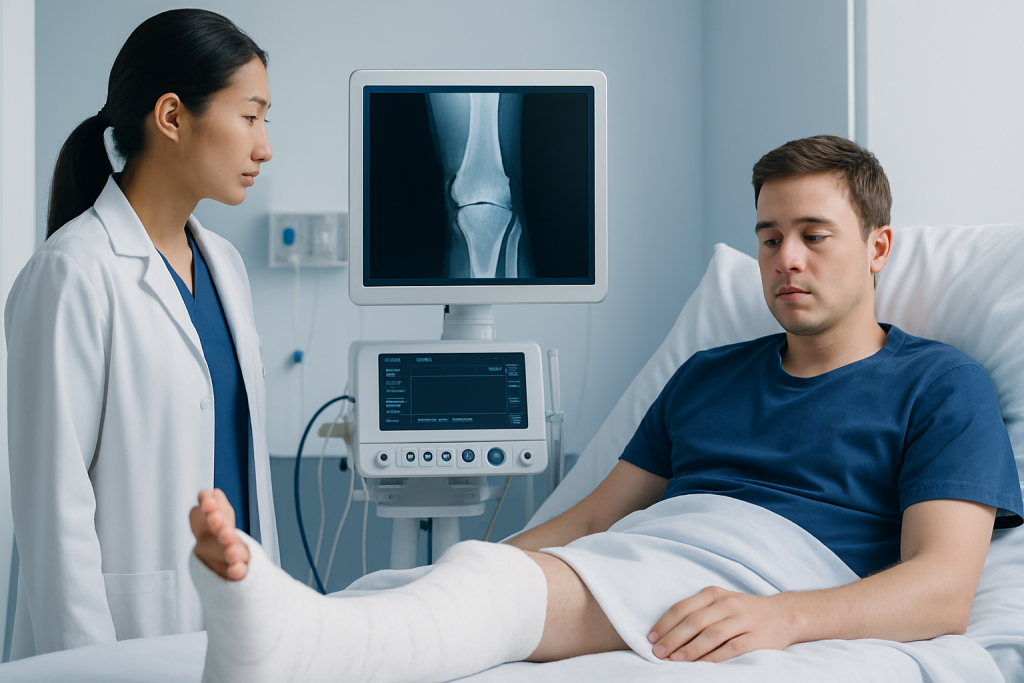
The most common symptoms of a broken leg are sudden pain, swelling, tenderness, and difficulty standing or walking. Bruising may appear over time, and movement can become limited because the body naturally tries to protect the injured area. Pain often gets worse when weight is placed on the leg, but some fractures can still allow limited walking, especially if the break is small or stable.
Some signs make a fracture more likely. These include a popping sensation at the time of injury, obvious deformity, the leg looking shorter or turned in an unusual direction, or pain in a very specific spot along the bone. In more severe injuries, the skin may be broken, which can mean an open fracture and a higher risk of infection.
Symptoms can vary depending on which bone is involved. Femur fractures usually cause severe pain and inability to bear weight. Tibia fractures often cause shin pain, swelling, and trouble walking. Fibula fractures may sometimes be less obvious at first, especially if the tibia is not involved. Fractures near the ankle or knee can also affect joint stability and movement.
- Pain that starts after a fall, twist, blow, or collision
- Swelling or bruising around the thigh, shin, or lower leg
- Difficulty walking or putting weight on the leg
- Visible deformity or an unusual leg position
- Numbness, cool skin, or color change in the foot, which needs urgent attention
How leg fractures happen and who is at risk
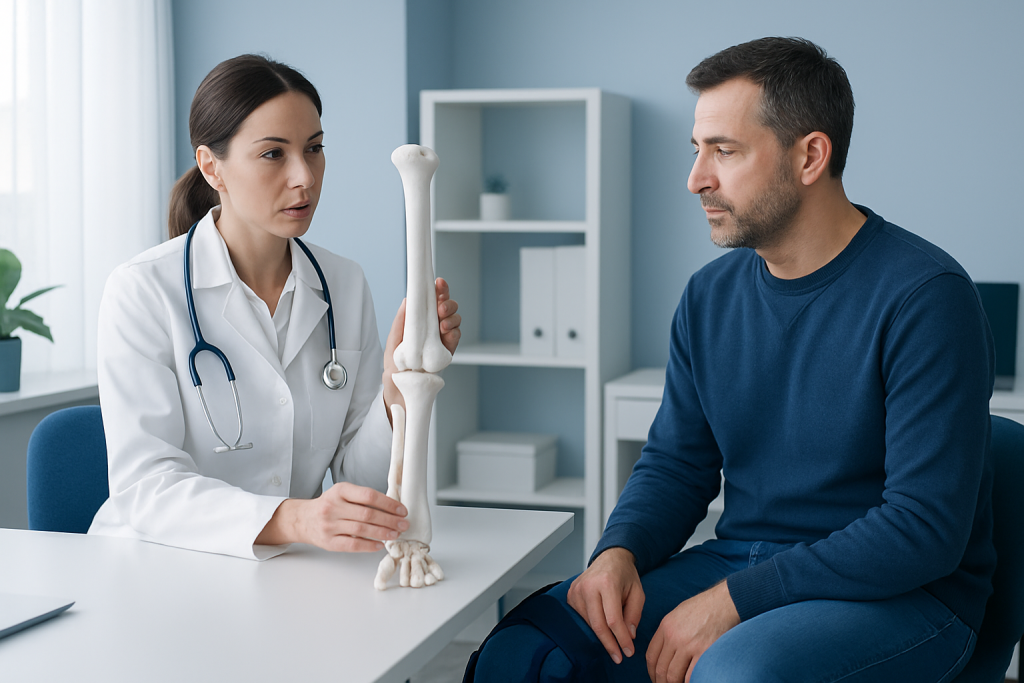
Leg fractures happen when force applied to the bone is stronger than the bone can withstand. High-energy injuries such as traffic accidents, direct blows, sports collisions, and falls are common causes. Twisting injuries can also lead to fractures, especially around the lower leg and ankle. In children, the growth plates require special attention because injuries there can affect future bone development.
Bone health also matters. Older adults and people with osteoporosis may break a leg bone after a lower-impact fall that might not have caused a fracture in stronger bone. Repetitive stress can lead to small cracks known as stress fractures, often seen in runners, military recruits, or people who rapidly increase activity levels. These may overlap with problems such as stress fracture elsewhere in the body.
Other factors that may raise risk include poor balance, certain medications, nutritional deficiencies, previous fractures, and conditions that weaken bone. Athletes who take part in contact sports or activities with sudden changes in direction may also be more likely to sustain fractures. Understanding the cause helps doctors decide whether the injury is straightforward or whether there may be an underlying bone health issue to assess.
How doctors diagnose a broken leg
Diagnosis begins with a history of how the injury happened and a physical examination. A doctor checks where the pain is located, whether the leg is swollen or misshapen, and how well the person can move the hip, knee, ankle, and foot. Just as important, they assess circulation and nerve function by checking pulses, skin temperature, color, and sensation in the foot.
X-rays are the main test used to confirm a broken leg and show where the fracture is located. They can reveal whether the bone pieces remain in good alignment or have shifted apart. However, some small fractures, stress fractures, or injuries involving nearby joints may need additional imaging if symptoms strongly suggest a fracture despite an unclear initial X-ray.
Depending on the injury, doctors may request CT to look more closely at complex fracture patterns or joint involvement, or MRI to evaluate hidden fractures and soft-tissue injuries. In a severe injury, urgent treatment may begin even before full imaging is completed, especially when there is concern about an open fracture, reduced blood flow, or pressure building inside the muscles. If the injury affects the lower back or nerves, doctors may also consider whether symptoms overlap with conditions such as sciatica, though this is very different from a bone break.
Treatment options and what they aim to do
Treatment for leg bones broken depends on the type of fracture, how stable it is, and whether nearby structures are injured. The main goals are to keep the bone in a safe position, support healing, reduce pain, and help the person return to daily activities as smoothly as possible. Initial care often includes immobilization with a splint, avoiding weight-bearing, elevating the leg, and using ice as advised by a clinician.
Some fractures can be treated without surgery if the bone is well aligned and stable. In these cases, a cast or brace may be used, and follow-up X-rays help confirm that healing stays on track. Pain control and gradual return to movement are important, but weight-bearing should only be increased according to medical advice. In some patients, imaging and follow-up with orthopedic traumatology care is helpful to guide management of more complex injuries.
Surgery may be recommended if the fracture is displaced, unstable, open, or extends into a joint, or if several bone pieces need to be repositioned. Procedures may use plates, screws, rods, or external fixation to stabilize the bone while it heals. After the bone is secured, many patients benefit from physical therapy and rehabilitation to improve strength, flexibility, gait, and confidence with movement.
Recovery time varies widely. A small stable fibula fracture may heal differently from a major femur fracture, and soft-tissue injury can lengthen recovery. If a fracture affects the knee or nearby structures, treatment planning may overlap with services used for knee surgery or related orthopedic care. The treating team advises when it is safe to walk, drive, work, or return to sports.
Healing, self-care, and prevention
Bone healing is gradual, and patience matters. During recovery, people are often advised to protect the injured leg, keep follow-up appointments, and use mobility aids exactly as instructed. Rest, elevation, and careful swelling control can improve comfort in the early phase. Smoking cessation is strongly encouraged because smoking can slow healing and increase the risk of complications.
Nutrition supports recovery as well. Adequate protein, calcium, vitamin D, and overall balanced eating are important for bone health, although supplements should be discussed with a doctor if needed. Once healing has progressed enough, targeted exercises help prevent stiffness and muscle loss. These exercises should be introduced at the right stage so the healing bone is not overloaded too early.
Preventing future fractures involves reducing falls, improving strength and balance, using protective equipment in sports, and addressing bone health when appropriate. For older adults or anyone with repeated fractures, a clinician may assess osteoporosis or other causes of weakened bone. In some cases, a broader orthopedic review may also explore whether related conditions such as osteoporosis are contributing to fracture risk.
When to seek medical care
Medical care should be sought promptly for any leg injury with severe pain, swelling, inability to bear weight, or suspicion of a bone break. A person should not try to “walk it off” if the leg looks deformed, movement causes intense pain, or the injury followed a significant fall, collision, or direct blow. Even a less dramatic injury deserves assessment if pain and limping do not improve or if tenderness is sharply localized over a bone.
Urgent care is especially important if the skin is broken, the foot becomes pale or cold, numbness develops, or pain rapidly worsens. These signs can suggest a more serious injury affecting circulation, nerves, or pressure within the leg muscles. Delayed treatment may increase the risk of complications.
Near the end of evaluation or recovery, some patients may need multidisciplinary follow-up, especially if the fracture is complex or healing is slow. Acibadem International’s multidisciplinary specialists and JCI-accredited hospitals diagnose and treat bone and joint injuries for international patients, with coordinated orthopedic assessment when needed.
Frequently asked questions
Can a person still walk if leg bones are broken?
Yes, some people can still walk with certain small or stable fractures, especially in the fibula or with stress fractures. However, being able to walk does not rule out a broken leg, so medical assessment is still important if pain, swelling, or tenderness suggest a fracture.
What bones are involved in a broken leg?
A broken leg usually involves the femur, tibia, or fibula. The femur is the thigh bone, while the tibia and fibula are the two main bones in the lower leg.
How is a broken leg different from a sprain?
A broken leg is a fracture in the bone, while a sprain is an injury to a ligament. Both can cause pain and swelling, but fractures are more likely to cause focal bone tenderness, deformity, or difficulty bearing weight and usually require imaging to confirm.
How long does a broken leg take to heal?
Healing time depends on the bone involved, the type of fracture, the person's age, and overall health. Some fractures heal in weeks, while more severe injuries may take several months and need longer rehabilitation.
Will every broken leg need surgery?
No, not every broken leg needs surgery. Many fractures can heal with a cast, brace, or other immobilization if the bone is stable and well aligned, but displaced or complex fractures may need surgical fixation.
What should someone do right after a suspected broken leg?
The leg should be kept as still as possible, and weight-bearing should be avoided until a doctor has evaluated it. Seeking prompt medical care is important, especially if there is severe pain, deformity, numbness, or an open wound.
References
- American Academy of Orthopaedic Surgeons
- National Institute of Arthritis and Musculoskeletal and Skin Diseases
- MedlinePlus
- National Health Service
- American College of Radiology
This article is for general information only and is not a substitute for professional medical advice. Please consult a qualified doctor about your individual situation.
Joint and spine care in Turkey — expert assessment & treatment
JCI-accredited · board-certified surgeons · reply within 24h
Add us as a Preferred Source to see more of our trusted health content across Google Search, AI Overviews and Discover.

More from the Health Library

Starviness — Explained by Medical Evidence, Not Myths

Nuchal Translucency: An Evidence-Based Guide for Patients

Beetroot Powder: An Evidence-Based Guide for Patients

Scalp Conditions: What Patients Need to Know

Mons Pubis Male: What Patients Need to Know

Wart Freeze Off: An Evidence-Based Guide for Patients
Orthopedic Surgery & Traumatology Specialists at Acibadem

Dr. Berhan Bayram
Orthopedic Surgery & Traumatology
Assoc. Prof. Dr. Berkin Toker
Orthopedic Surgery & Traumatology
Assoc. Prof. Dr. Bertan Cengiz
Orthopedic Surgery & Traumatology
Dr. Betül Toygar
Physical Medicine & Rehabilitation