Epiploic Appendagitis: Symptoms, Causes, and Treatment Options

Epiploic appendagitis is a self-limited inflammation or twisting of small fatty appendages along the colon. Its main symptom is sudden, localized abdominal pain, often without severe fever, vomiting, or major bowel changes.
Key Takeaways
- Epiploic appendagitis is a self-limited inflammation or twisting of small fatty appendages along the colon.
- Its main symptom is sudden, localized abdominal pain, often without severe fever, vomiting, or major bowel changes.
- CT imaging is usually the key test because the condition can resemble appendicitis or diverticulitis.
- Treatment is typically rest, anti-inflammatory pain relief, and follow-up rather than surgery.
- Medical review is important to rule out urgent causes of abdominal pain and confirm the diagnosis.
Epiploic appendagitis is an uncommon, benign inflammation of small fat-filled pouches attached to the colon. It often causes sudden, localized abdominal pain that can mimic more familiar problems such as appendicitis or diverticulitis, but it usually improves with conservative care.
Overview: what epiploic appendagitis is
Epiploic appendagitis is inflammation of an epiploic appendage, a small pouch of fat that hangs from the outer surface of the colon. These structures are normal parts of the body, but they can become painful if their blood supply is reduced, usually because the appendage twists or a small vein becomes blocked.
The condition is benign and often short-lived, but it matters because it can closely imitate other causes of acute abdominal pain. Many people worry about appendicitis, diverticulitis, or other urgent problems when the pain starts suddenly. Imaging, especially CT scanning, helps distinguish epiploic appendagitis from these conditions so treatment can stay appropriately conservative.
In most cases, symptoms settle over days to a couple of weeks with rest and pain control. Unlike many other abdominal conditions, epiploic appendagitis usually does not require antibiotics or surgery unless another diagnosis is found or symptoms do not follow the expected course.
Symptoms and how the pain typically feels
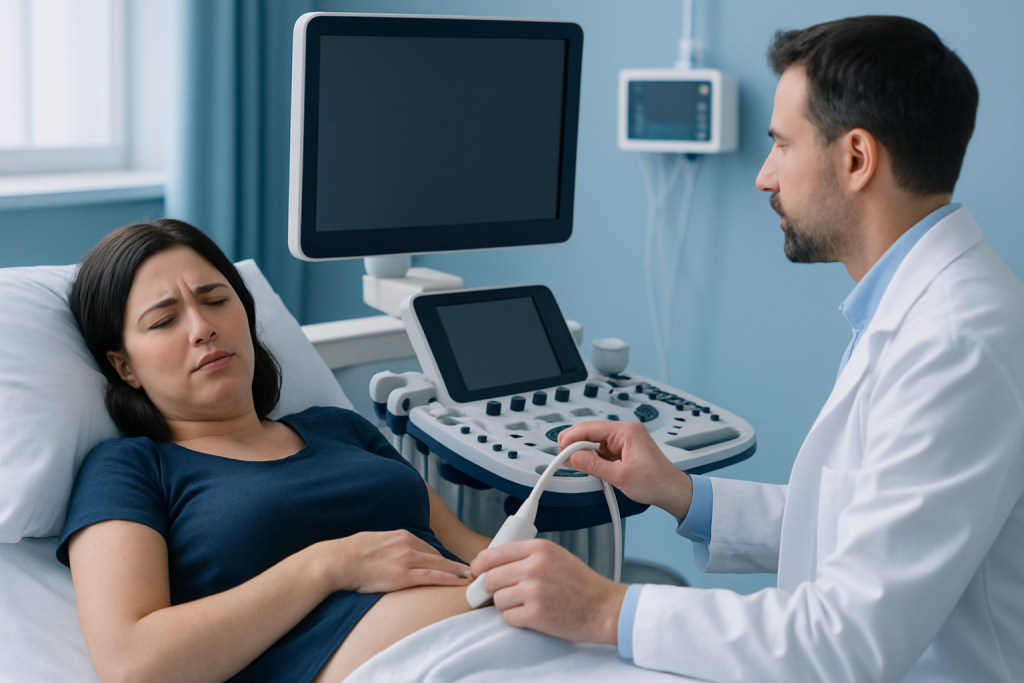
The hallmark symptom of epiploic appendagitis is sudden, well-localized abdominal pain. People can often point to one specific spot rather than describing a vague cramping discomfort. The pain most commonly occurs in the lower abdomen, especially on the left side, but it can also occur on the right depending on which appendage is affected.
The discomfort may feel sharp, stabbing, or constant, and it often becomes more noticeable with movement, coughing, or stretching. Unlike bowel-related cramping, it usually does not come and go in waves. Many people remain able to eat and drink, and some have no significant nausea or vomiting.
Other symptoms are often mild or absent. A person with epiploic appendagitis may have little or no fever, and bowel habits may stay normal. This is one reason it can be difficult to recognize without imaging, because localized pain can still strongly resemble appendicitis or diverticulitis.
- Sudden pain in one area of the abdomen
- Often left lower or right lower abdominal pain
- Pain that worsens with movement
- Usually little or no fever
- Usually no severe vomiting or pronounced diarrhea
Why it happens: causes and risk factors

Epiploic appendagitis usually develops when an epiploic appendage twists on itself or when a small vein draining it becomes thrombosed. This leads to local inflammation and pain. The process is limited to the appendage itself, which helps explain why the condition tends to remain localized rather than causing widespread illness.
Doctors often describe the condition as either primary or secondary. Primary epiploic appendagitis refers to inflammation originating in the appendage itself. Secondary epiploic appendagitis can occur alongside nearby inflammation, such as colonic disease, but the primary form is the more classic explanation for sudden localized pain without major systemic symptoms.
Some factors appear to make the condition more likely, although it can happen in people without clear risk factors. These may include higher body weight, sudden body movement, strenuous exercise, or a long and mobile appendage that is more prone to twisting. Still, the condition is not usually linked to poor hygiene, infection, or cancer.
How doctors diagnose epiploic appendagitis
Diagnosis starts with a medical history and abdominal examination. Because the symptoms overlap with several common abdominal emergencies, clinicians first look for warning signs such as high fever, widespread tenderness, ongoing vomiting, or signs of bowel obstruction. Blood tests may be ordered, but they are often normal or only mildly abnormal in epiploic appendagitis.
CT imaging of the abdomen is the most useful test in many cases. It can show a small, oval fatty lesion next to the colon with surrounding inflammatory change, which is a characteristic pattern for this condition. This is important because it helps avoid unnecessary antibiotics, hospitalization, or surgery when the pain is actually due to a self-limited problem.
Ultrasound may sometimes help, especially in selected patients, but it is generally less definitive than CT. If a clinician needs a fuller evaluation of abdominal structures, imaging pathways may include MRI or ultrasonography, depending on the situation, although CT remains the common confirming test for typical cases.
Treatment options and expected recovery
Treatment for epiploic appendagitis is usually conservative. Most people improve with rest, reduced physical strain for a short period, and pain relief such as nonsteroidal anti-inflammatory drugs when suitable for them. The goal is to control discomfort while the inflammation settles naturally.
Antibiotics are not routinely needed because the condition is not usually caused by infection. Surgery is also uncommon and is generally reserved for unusual cases, such as persistent symptoms, unclear diagnosis, or complications that suggest another abdominal problem. For many patients, reassurance is an important part of care once the diagnosis has been confirmed.
Recovery often begins within several days, though mild tenderness can linger longer. A doctor may recommend follow-up if pain does not improve as expected or if new symptoms develop. When abdominal pain remains uncertain or appears related to a different bowel condition, evaluation by specialists in gastroenterology may help guide the next steps.
Prevention, self-care, and living with the condition
There is no guaranteed way to prevent epiploic appendagitis because it can happen suddenly and without an obvious trigger. However, general digestive and overall health measures may be helpful, including regular physical activity, gradual rather than abrupt increases in strenuous exercise, and weight management where appropriate. These steps support overall abdominal and metabolic health even though they do not specifically eliminate risk.
At home, self-care focuses on symptom relief and observation. Resting, avoiding heavy exertion for a short time, and using doctor-approved pain relief may make recovery more comfortable. Many people find it reassuring to know that the pain can be intense even when the condition itself is not dangerous.
People should avoid self-diagnosing every episode of abdominal pain as epiploic appendagitis, especially if they have not had it confirmed before. New or changing symptoms deserve fresh medical assessment because other causes of abdominal pain can require urgent care. If imaging or examination points toward another digestive disorder, doctors may investigate further, sometimes with colonoscopy after the acute episode if clinically indicated.
When to seek medical care
Medical care should be sought promptly for sudden or significant abdominal pain, especially when the cause is unclear. Although epiploic appendagitis is usually not dangerous, its symptoms can be hard to distinguish from conditions that do require urgent treatment. Early evaluation helps ensure the right diagnosis and prevents unnecessary delay.
A person should contact a doctor urgently if abdominal pain is accompanied by high fever, repeated vomiting, fainting, worsening swelling, blood in the stool, severe constipation with abdominal distension, or pain that spreads or becomes generalized. These features are less typical of epiploic appendagitis and may suggest a different problem.
If pain is persistent, recurrent, or not improving within the expected timeframe, follow-up is also important. Near the end of the diagnostic pathway or treatment planning, patients may benefit from multidisciplinary review; Acibadem International’s specialists in JCI-accredited hospitals diagnose and treat abdominal conditions for international patients when further assessment is needed.
Frequently asked questions
Is epiploic appendagitis serious?
Epiploic appendagitis is usually not serious and often improves on its own with conservative treatment. It is important, however, to have it diagnosed properly because it can mimic conditions that may need urgent care.
How long does epiploic appendagitis last?
Many people start to feel better within a few days, and symptoms often resolve over one to two weeks. Some localized tenderness may last longer, so follow-up is sensible if recovery seems unusually slow.
Can epiploic appendagitis be mistaken for appendicitis?
Yes, especially when the pain is on the right side of the lower abdomen. Because the symptoms can overlap, imaging such as CT is often used to tell the difference accurately.
Do antibiotics treat epiploic appendagitis?
Antibiotics are not usually needed because epiploic appendagitis is generally not a bacterial infection. Treatment more often involves pain relief, rest, and observation after other causes have been excluded.
Can epiploic appendagitis come back?
Recurrence is possible, but it is not the usual outcome for most people. If similar pain returns, a doctor should reassess it rather than assuming the cause is the same each time.
Is surgery ever needed for epiploic appendagitis?
Surgery is uncommon and is generally considered only when the diagnosis remains uncertain, symptoms do not improve, or another condition is suspected. Most confirmed cases recover without an operation.
References
- National Institute of Diabetes and Digestive and Kidney Diseases
- American College of Radiology
- Cleveland Clinic
- Merck Manual
- Radiological Society of North America
This article is for general information only and is not a substitute for professional medical advice. Please consult a qualified doctor about your individual situation.
Persistent digestive symptoms? Get evaluated in Turkey
JCI-accredited · board-certified surgeons · reply within 24h
Add us as a Preferred Source to see more of our trusted health content across Google Search, AI Overviews and Discover.