Why Do We Dream? Here Is What the Evidence Says

Dreaming is common, especially during REM sleep, and is usually harmless. Current evidence suggests dreams may help with emotional processing, memory organization, and integrating recent experiences.
Key Takeaways
- Dreaming is common, especially during REM sleep, and is usually harmless.
- Current evidence suggests dreams may help with emotional processing, memory organization, and integrating recent experiences.
- No single theory fully explains why people dream or why dream content can be vivid, strange, or emotional.
- Stress, sleep loss, medications, fever, and sleep disorders can change how often a person dreams or remembers dreams.
- Medical review is important if dreams are linked with violent behavior during sleep, severe sleep disruption, or symptoms of a sleep or neurological disorder.
Most dreaming is a normal part of sleep and usually does not mean anything is wrong. Evidence suggests dreams may reflect how the brain processes memories, emotions, and internal signals during sleep, but researchers do not believe there is one single explanation for every dream.
Overview: what the evidence says about dreaming
Most people dream every night, even if they do not remember it in the morning. In most cases, dreaming is a normal brain function during sleep and not a sign of illness. When people ask, “why do we dream,” the most evidence-based answer is that dreams likely reflect several brain processes at once, including emotion regulation, memory processing, learning, and the brain’s response to internal and external signals during sleep.
Researchers do not think there is one single, proven purpose of dreaming that explains every dream. Instead, dreaming appears to be a byproduct of active brain networks working during sleep, especially during rapid eye movement (REM) sleep, while also potentially serving useful functions. This is why dreams may feel emotional, fragmented, realistic, symbolic, or completely unusual.
For many people, unusual dreams or vivid dreams are harmless. However, if dreams are causing distress, frequent awakenings, daytime sleepiness, or physical movements during sleep, it may help to look for an underlying issue such as stress, sleep deprivation, medication effects, or a sleep disorder. Doctors may evaluate these problems through sleep history, neurological assessment, and sometimes specialized sleep testing such as a sleep study.
How dreams happen during sleep
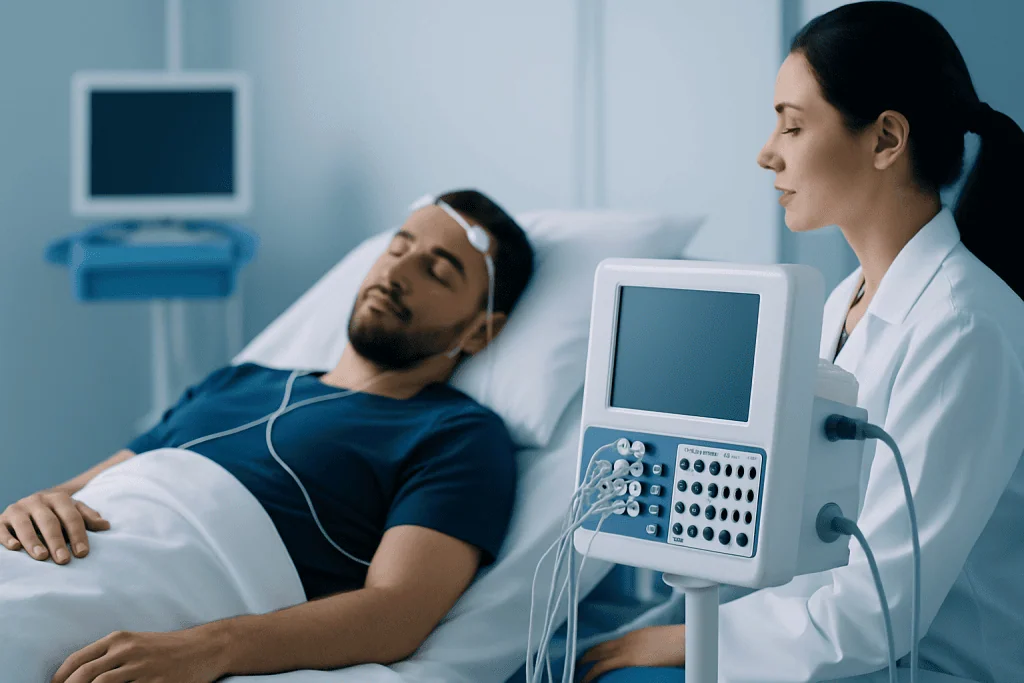
Dreaming can occur in both REM and non-REM sleep, but it is often most vivid and story-like during REM sleep. During REM sleep, brain activity becomes more similar to wakefulness in some regions, while the body is normally in a state of temporary muscle relaxation. This combination may help explain why dreams can feel intense, emotional, and immersive.
Different parts of the brain appear to contribute in different ways. Areas involved in emotion, visual imagery, and memory are active during dreaming, while regions linked to logic and self-monitoring may be less active. This may be one reason dreams can seem realistic in the moment but unusual or inconsistent when remembered later.
People do not always remember their dreams because dream recall depends on timing and arousal. A person is more likely to remember a dream if they wake during or just after a dream period. Frequent awakenings, stress, and lighter sleep can increase dream recall, even if they do not increase dreaming itself.
Leading theories: why the brain may dream

Several scientific theories help explain why people dream, and each is supported by some evidence. One major idea is that dreaming helps process emotions. This theory fits with the observation that dreams often contain social situations, fear, conflict, loss, or other emotionally significant themes. Sleep may allow the brain to revisit emotional experiences in a different neurochemical state and gradually reduce their intensity.
Another leading theory is that dreams are related to memory consolidation. During sleep, the brain sorts, strengthens, and reorganizes information from the day. Dream content may include fragments of recent events, older memories, and imagined situations because the brain is integrating new information with past knowledge. This may be especially relevant after learning new skills or having emotionally important experiences.
Some researchers also view dreams as part of threat simulation or problem rehearsal. In this model, dreams allow the brain to practice responses to danger or social challenges in a safe state. Others emphasize that dreams may result from the brain trying to make sense of spontaneous neural activity during sleep. These explanations are not mutually exclusive, and dreaming may serve more than one function at the same time.
- Emotion processing and stress adaptation
- Memory organization and learning
- Creative association and problem-solving
- Threat rehearsal or social simulation
- Meaning-making from spontaneous brain activity
Why dreams can feel vivid, strange, or emotional
Dreams often combine familiar people, places, fears, and memories in unusual ways. This does not necessarily mean they contain hidden predictions or a fixed symbolic meaning. In many cases, dream content reflects the brain’s flexible way of linking emotional memories, sensory impressions, and recent experiences while normal waking logic is reduced.
Stress is one of the most common reasons dreams feel more vivid or more negative. Anxiety, major life changes, grief, and trauma can increase dream intensity and nightmare frequency. Sleep deprivation may also lead to more intense REM sleep once sleep is restored, which can make dreams easier to remember.
Certain medicines and medical conditions can affect dreaming as well. Antidepressants, some blood pressure medicines, sleep medicines, alcohol withdrawal, fever, and neurological conditions may alter dream frequency or dream recall. Persistent nightmares may sometimes be linked with mental health conditions or sleep disorders, while dream-enactment behaviors can raise concern for Parkinson's disease or other neurological disorders in some adults.
When dreaming may point to a sleep or health problem
Most dreams are harmless, but some sleep-related symptoms deserve medical attention. Red flags include shouting, punching, kicking, or falling out of bed during dreams; repeated nightmares that disrupt sleep; excessive daytime sleepiness; sudden weakness triggered by emotions; breathing pauses during sleep; or confusion and unusual behaviors at night. These patterns can suggest a sleep disorder rather than ordinary dreaming.
Examples include nightmare disorder, REM sleep behavior disorder, narcolepsy, sleep apnea, and certain neurological or psychiatric conditions. In REM sleep behavior disorder, the usual muscle relaxation of REM sleep becomes incomplete, allowing the person to act out dreams. Obstructive sleep apnea can fragment sleep, increase awakenings, and sometimes make dream recall or disturbing dreams more noticeable.
If a doctor suspects an underlying condition, the evaluation usually begins with a detailed sleep and medical history. They may ask about the timing of symptoms, medications, alcohol use, stress, snoring, witnessed breathing pauses, injuries during sleep, and daytime function. Depending on the findings, the next steps may include referral for neurological evaluation or sleep disorders treatment.
How doctors evaluate troubling dreams
A doctor first tries to understand whether the main issue is normal dreaming, poor sleep quality, nightmares, dream enactment, or another nighttime event such as panic attacks, seizures, or parasomnias. The pattern matters. For example, a person who simply remembers vivid dreams but sleeps well may need reassurance, while someone who moves violently during dreams needs prompt assessment.
Assessment may include questions about bedtime routine, mental health, recent stress, medications, substance use, and any history of trauma. The doctor may ask a bed partner to describe snoring, pauses in breathing, talking, or movements during sleep. A sleep diary can also help identify patterns and triggers.
In some cases, testing is recommended. A sleep study records breathing, oxygen levels, heart rate, brain activity, and body movements during sleep. This can help diagnose sleep apnea, REM sleep behavior disorder, periodic limb movements, and other sleep problems. If symptoms suggest a broader nervous system condition, additional neurological tests may be considered.
What can help: treatment and self-care
Treatment depends on the cause. If dreams are related to stress, improving sleep habits and addressing anxiety often help. Regular sleep and wake times, limiting alcohol close to bedtime, reducing sleep deprivation, and creating a calm sleep environment can lessen vivid dreams for many people. If a medication may be contributing, a doctor can review whether an adjustment is appropriate.
For recurrent nightmares, clinicians may recommend psychological approaches such as imagery rehearsal therapy, trauma-focused care when relevant, or treatment for anxiety, depression, or post-traumatic stress disorder. If a sleep disorder is diagnosed, targeted treatment can improve both sleep quality and dream-related symptoms. For example, breathing support may be used for sleep apnea, while safety measures and specialist care are important for REM sleep behavior disorder.
People should not try to interpret every dream as a direct warning about their health. More often, the useful question is whether the person feels rested, safe, and well during the day. Near the end of the evaluation pathway, some patients may choose care at specialized centers; Acibadem International’s multidisciplinary specialists and JCI-accredited hospitals evaluate sleep and neurological symptoms for international patients when needed.
- Keep a regular sleep schedule
- Avoid heavy alcohol use and sleep deprivation
- Manage stress with relaxation, counseling, or mindfulness
- Review medicines with a doctor if dreams changed after starting one
- Make the sleep environment safe if dream enactment is possible
When to seek medical care
Medical care is appropriate if dreams or nightmares are frequent, frightening, or cause insomnia, daytime fatigue, mood changes, or fear of going to sleep. A person should also seek help if they injure themselves or a bed partner during sleep, leave the bed while dreaming, or develop snoring, choking, gasping, or witnessed pauses in breathing.
Urgent review is especially important when dream-enactment behaviors begin later in adulthood, when there are fainting spells, sudden muscle weakness, memory changes, or other new neurological symptoms. Children can also have nightmares and parasomnias, but persistent or dangerous events should still be discussed with a clinician.
While dreaming itself is normal, a change in dream pattern together with disturbed sleep can be a useful clue that something else deserves attention. A qualified doctor can determine whether reassurance is enough or whether further sleep or neurological evaluation is the safer next step.
Frequently asked questions
Do dreams have a proven purpose?
There is no single proven explanation for all dreams. The best current evidence suggests dreams may be related to emotional processing, memory organization, learning, and the brain's activity during sleep.
Why do some people remember dreams more than others?
Dream recall is more likely when a person wakes during or soon after a dream. Light sleep, frequent awakenings, stress, and individual differences in attention to dreams can all make dreams easier to remember.
Are vivid dreams a sign of illness?
Not usually. Vivid dreams are often linked with stress, sleep deprivation, medications, fever, or normal differences in REM sleep, but they should be discussed with a doctor if they are new, severe, or disruptive.
Can dreams predict the future or reveal hidden truths?
Science does not support the idea that dreams reliably predict future events. Dreams may reflect emotions, concerns, memories, and recent experiences, but their meaning is usually personal rather than medically diagnostic.
What is the difference between nightmares and normal bad dreams?
A bad dream becomes a nightmare when it causes significant fear and often wakes the sleeper. Nightmares become a medical concern when they happen repeatedly, disrupt sleep, or lead to distress during the day.
When should someone worry about acting out dreams?
Dream enactment should not be ignored, especially if there is yelling, punching, kicking, falling, or injury during sleep. This can be a sign of REM sleep behavior disorder or another sleep problem and should be evaluated by a doctor.
References
- National Institute of Neurological Disorders and Stroke
- American Academy of Sleep Medicine
- National Heart, Lung, and Blood Institute
- MedlinePlus
- Cleveland Clinic
This article is for general information only and is not a substitute for professional medical advice. Please consult a qualified doctor about your individual situation.
Explore treatments in Turkey — costs, top hospitals & a free quote
JCI-accredited · board-certified surgeons · reply within 24h
Add us as a Preferred Source to see more of our trusted health content across Google Search, AI Overviews and Discover.
Check your numbers in seconds
BMI, calories, due date, blood pressure and 30+ more clinical calculators — free, instant, doctor-reviewed ranges.