Fungal Rash: Possible Causes and When to Seek Care

A fungal rash is caused by fungi on the skin, not by worms, poor hygiene alone, or an allergy in every case. Common forms include ringworm, athlete's foot, jock itch, and yeast rashes in skin folds.
Key Takeaways
- A fungal rash is caused by fungi on the skin, not by worms, poor hygiene alone, or an allergy in every case.
- Common forms include ringworm, athlete's foot, jock itch, and yeast rashes in skin folds.
- Warmth, sweating, tight clothing, shared surfaces, and weakened immunity can increase risk.
- Diagnosis is often based on the rash's appearance, but a skin scraping or culture may be needed.
- Treatment usually includes antifungal creams, powders, or sometimes prescription oral medicine.
- Medical review is important if the rash spreads, returns often, becomes painful, or does not improve.
A fungal rash is a common skin infection caused by fungi that grow on the skin, especially in warm, moist areas. It often leads to itching, redness, scaling, or a ring-shaped rash, and many cases improve with antifungal treatment and simple skin-care measures.
Overview: what a fungal rash is
A fungal rash is a skin infection caused by organisms such as dermatophytes or yeasts that grow on the outer layers of the skin. It commonly appears as an itchy, red, scaly, or irritated patch and is often found where the skin is warm, moist, or frequently rubbed. Although many fungal rashes are mild, they can look similar to eczema, psoriasis, contact dermatitis, or bacterial skin problems, so correct identification matters.
Different types of fungi can affect different parts of the body. Ringworm may affect the body, scalp, groin, hands, or feet; athlete’s foot affects the feet; jock itch affects the groin; and yeast-related rashes often develop in skin folds such as under the breasts, in the armpits, or around the groin. A fungal rash can also affect the nails or scalp in some people.
Fungal infections are common and usually treatable. Many improve with good skin care and antifungal medications, but some need a medical assessment to confirm the diagnosis or to rule out other conditions such as psoriasis or bacterial infections. Early treatment may shorten recovery time and reduce spread to other areas of the body or to other people.
How a fungal rash can look and feel
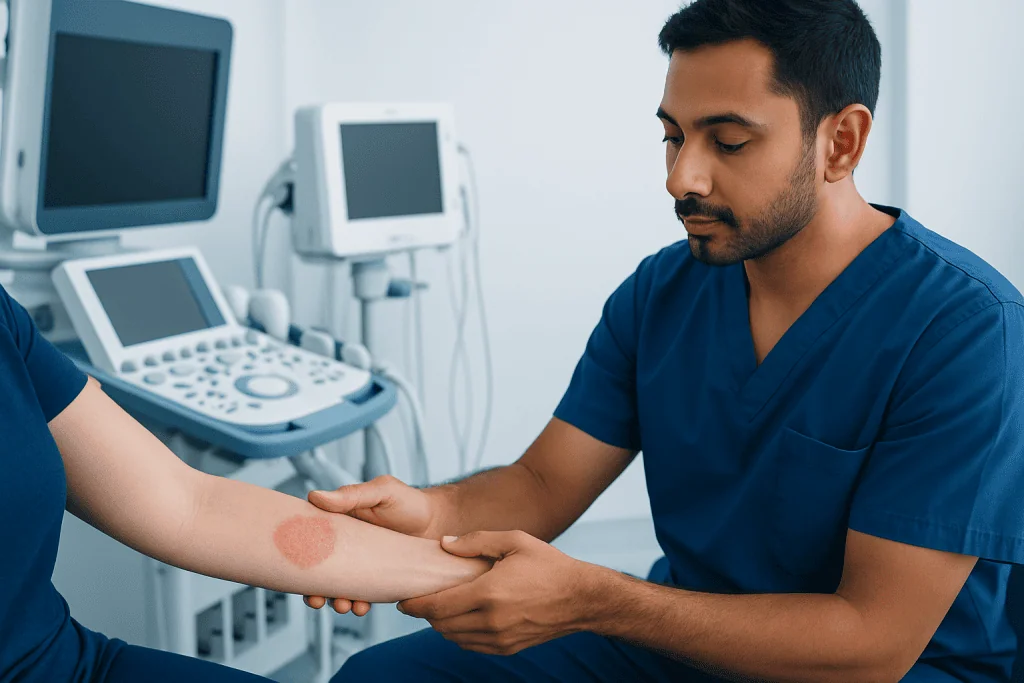
The symptoms of a fungal rash vary by location and the type of fungus involved. Many people notice itching first, followed by redness, flaking, or a change in skin texture. Some rashes form a clearly outlined border, while others look more diffuse and inflamed.
Typical features may include:
- Itching, burning, or stinging
- Red, pink, brown, or lighter-than-usual patches, depending on skin tone
- Scaling, peeling, or cracking skin
- A ring-shaped patch with a clearer center
- Moist, shiny, or macerated skin in folds
- Small bumps, blisters, or satellite spots around the main rash
Location can offer clues. Athlete’s foot often causes peeling between the toes or on the soles. Jock itch usually affects the upper inner thighs and groin, often sparing the scrotum. Yeast rashes in folds may appear bright red and sore, with smaller spots nearby. A scalp fungal infection may cause scaling, broken hairs, or patchy hair loss and should be assessed promptly, especially in children.
Not every itchy rash is fungal. Steroid creams may temporarily reduce redness while allowing a fungal infection to spread more widely, a pattern sometimes called tinea incognito. For that reason, ongoing or unusual rashes are best evaluated before self-treating repeatedly.
Possible causes and risk factors

Fungal rashes develop when fungi grow more easily than normal on the skin. Fungi thrive in warm, damp environments, so sweating, tight clothing, occlusive shoes, and skin-to-skin friction can create ideal conditions. The infection may come from another person, an animal, contaminated objects, or overgrowth of fungi already living on the body.
Common risk factors include:
- Hot or humid weather
- Heavy sweating or exercise
- Tight, non-breathable clothing or shoes
- Walking barefoot in communal showers, locker rooms, or pool areas
- Obesity or deep skin folds
- Diabetes
- Recent antibiotic use
- A weakened immune system
- Sharing towels, clothing, hats, combs, or sports equipment
Some conditions make fungal infection more likely or more persistent. People with diabetes, circulation problems, chronic skin irritation, or immune suppression may have more extensive disease or slower healing. Similar-looking symptoms can also occur with eczema, irritation from personal care products, or inflammatory skin conditions, so a doctor’s review may be helpful when the diagnosis is uncertain.
Fungal infections are not simply a sign of being unclean. Even people with good hygiene can develop them, particularly if they exercise frequently, wear occlusive footwear, or spend time in shared changing facilities.
How doctors diagnose a fungal rash
Doctors often diagnose a fungal rash by looking at the skin and asking about symptoms, duration, previous treatments, recent travel, sports, contact with animals, and any similar symptoms in family members. The rash’s pattern, location, and border can provide important clues.
If the appearance is not typical, a doctor may gently scrape a small amount of skin for microscopic examination or send a sample for fungal culture. In some cases, a Wood’s lamp examination or a biopsy may be considered, especially if the rash is unusual, severe, recurrent, or not improving as expected.
Diagnosis is important because treatment depends on the cause. Fungal rashes are treated differently from bacterial infections, allergic rashes, and inflammatory skin conditions. If nail or scalp involvement is suspected, further testing may be needed because these forms often require longer treatment than superficial skin infections.
Treatment options for fungal rash
Treatment depends on the type of fungal rash, where it appears, and how extensive it is. Many mild skin infections respond to over-the-counter or prescription antifungal creams, sprays, powders, or lotions. These medicines work by stopping fungal growth or killing the fungus. It is usually important to continue treatment for the full recommended period, even if the rash starts to look better earlier.
Some infections need stronger or longer treatment. Extensive ringworm, scalp infections, nail infections, repeated infections, or rashes that do not improve with topical treatment may require prescription oral antifungal medicines. If there is uncertainty about the diagnosis or the rash is severe, a dermatologist may advise a more detailed evaluation such as dermatology assessment.
Good skin care supports treatment. This includes keeping the area clean and dry, changing socks or underwear daily, using breathable fabrics, and avoiding sharing personal items. In people with recurring fungal rashes linked to high blood sugar, doctors may also look for underlying issues such as diabetes care needs. If a rash involves the feet and causes deeper skin cracks or signs of poor circulation, related evaluation in vascular surgery or a diabetic foot clinic may sometimes be relevant.
It is best not to use topical steroid creams alone unless advised by a doctor. Steroids can change the appearance of a fungal rash and may worsen or mask the infection, making diagnosis and treatment more difficult.
Self-care and prevention
Daily habits can help both prevent fungal rashes and reduce recurrence. Because fungi grow best in moist environments, the main goals are to reduce dampness, friction, and skin irritation. Gentle cleansing and careful drying are often just as important as medication.
Helpful self-care and prevention measures include:
- Dry the skin well after bathing, especially between the toes and in skin folds
- Change out of sweaty clothes promptly after exercise
- Wear breathable shoes, cotton socks, and loose-fitting clothing when possible
- Alternate shoes to allow them to dry fully
- Use sandals in communal showers and pool changing areas
- Avoid sharing towels, razors, hats, combs, or shoes
- Wash clothing, towels, and sports gear regularly
- Manage underlying conditions such as diabetes with a doctor’s guidance
If a person is prone to repeated athlete’s foot or groin rash, antifungal powders or preventive measures suggested by a clinician may help. Household pets with hair loss or skin patches should also be checked by a veterinarian, since some fungal infections can spread from animals to humans.
Skin that is broken from scratching may become more irritated and more vulnerable to secondary bacterial infection. Keeping nails short and avoiding scratching as much as possible may help protect the skin while treatment takes effect.
When to seek medical care
Medical care is advisable if a fungal rash is severe, spreading, very painful, or not improving after a reasonable trial of antifungal treatment. A doctor should also assess a rash that keeps returning, affects the scalp, beard area, nails, face, or genitals, or causes significant cracking, swelling, or drainage.
More urgent evaluation is important if there is fever, rapidly increasing redness, pus, severe tenderness, or signs that the infection may not be fungal alone. People with diabetes, poor circulation, cancer treatment, organ transplantation, or other causes of reduced immunity should seek care earlier because skin infections can be more complicated in these settings.
Children with scalp symptoms, adults with extensive body rash, and anyone unsure whether the problem is fungal may benefit from specialist review. Near the end of the care pathway, a dermatologist may also help distinguish fungal infection from conditions such as seborrheic dermatitis or other inflammatory rashes. Acibadem International’s multidisciplinary specialists and JCI-accredited hospitals diagnose and treat skin conditions for international patients when expert assessment is needed.
Frequently asked questions
What does a fungal rash usually look like?
A fungal rash often appears as an itchy red or scaly patch with a defined edge. Some types form a ring-like shape, while others cause peeling between the toes or a moist red rash in skin folds.
Can a fungal rash go away on its own?
Some mild fungal rashes may improve if the skin is kept dry and the environment becomes less favorable for fungal growth. However, many persist or spread without antifungal treatment, so it is sensible to treat symptoms early and seek advice if the rash continues.
Is a fungal rash contagious?
Some fungal rashes are contagious and can spread through direct skin contact or through shared towels, clothing, shoes, and communal surfaces. Good hygiene, not sharing personal items, and treating the infection promptly can reduce spread.
Why did steroid cream make my rash worse?
Steroid creams can reduce redness and itching temporarily, but they do not treat the fungus itself. In some cases they allow the fungal infection to spread or become harder to recognize, which is why unexplained rashes should be assessed if they do not improve.
How long does treatment for a fungal rash take?
The time varies depending on the type and location of the infection. Many mild skin rashes improve within a few weeks with topical treatment, while scalp or nail infections often need longer and may require prescription oral medication.
When should someone see a doctor for a fungal rash?
A doctor should be consulted if the rash is spreading, painful, recurrent, or not improving with appropriate self-care or antifungal treatment. Medical review is also important for scalp, nail, facial, or genital rashes and for people with diabetes or weakened immunity.
References
- American Academy of Dermatology
- Centers for Disease Control and Prevention
- National Health Service
- Mayo Clinic
- Merck Manual Consumer Version
This article is for general information only and is not a substitute for professional medical advice. Please consult a qualified doctor about your individual situation.
Explore treatments in Turkey — costs, top hospitals & a free quote
JCI-accredited · board-certified surgeons · reply within 24h
Add us as a Preferred Source to see more of our trusted health content across Google Search, AI Overviews and Discover.

More from the Health Library



Related Specialists

Prof. Dr. Necmettin Pamir
Neurosurgery
Dr. Behrim Malişi
Emergency Service
Dt. Memduha Merve Kara
Oral & Dental Health
Prof. Dr. İftahar Köksal
Infectious Diseases & Clinical Microbiology