Over the Counter Remedies for Lower Back Pain Explained: Common Triggers and Red Flags

Many cases of lower back pain improve with time, movement, and simple self-care. OTC options may include acetaminophen, nonsteroidal anti-inflammatory drugs, and topical pain relievers, but they are not right for everyone.
Key Takeaways
- Many cases of lower back pain improve with time, movement, and simple self-care.
- OTC options may include acetaminophen, nonsteroidal anti-inflammatory drugs, and topical pain relievers, but they are not right for everyone.
- Bed rest for more than a day or two can slow recovery; gentle activity is usually better.
- Red flags such as numbness, leg weakness, fever, trauma, or bowel or bladder changes need prompt medical evaluation.
- Persistent, severe, or recurring pain may need a professional assessment to look for disc, nerve, joint, or other spine-related causes.
Over the counter remedies for lower back pain can ease mild to moderate, short-term discomfort, especially when combined with heat, gentle movement, and short periods of rest. They are most appropriate when pain follows a common strain or flare-up and there are no warning signs such as weakness, fever, or loss of bladder control.
Overview: what OTC remedies can and cannot do
Over the counter remedies for lower back pain are often used for short-term relief when discomfort begins after lifting, overuse, awkward movement, prolonged sitting, or a mild flare of an ongoing back problem. In many people, simple self-care helps reduce pain enough to keep moving, and staying reasonably active is one of the most helpful parts of early recovery.
These remedies do not fix every cause of back pain. They can reduce pain or inflammation, relax tight muscles indirectly by improving comfort, and make daily activity easier, but they cannot treat serious structural problems, infections, fractures, or nerve compression on their own. This is why symptom pattern and warning signs matter as much as the choice of medicine.
A practical approach usually combines more than one strategy: brief rest if needed, heat or sometimes cold, careful return to routine movement, and an OTC product used safely. If pain is severe, lasts longer than expected, keeps returning, or comes with neurological symptoms, medical assessment is important to rule out conditions such as a herniated disc or sciatica.
Common triggers of lower back pain
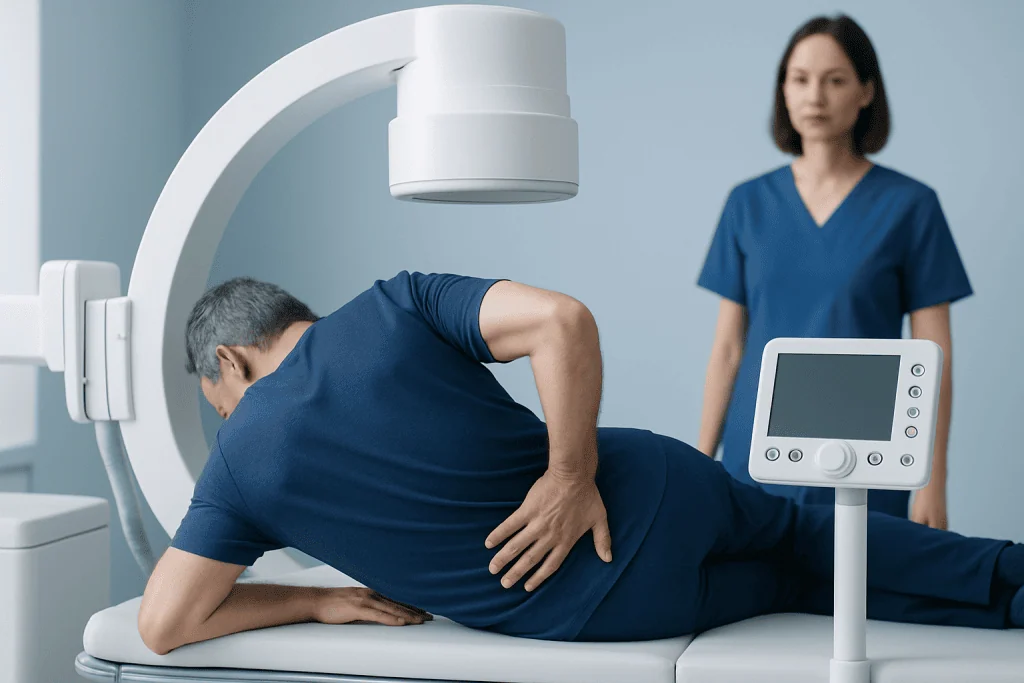
Lower back pain often starts with a mechanical trigger, meaning a problem involving muscles, ligaments, joints, or discs rather than a disease affecting the whole body. Common examples include lifting with poor body mechanics, twisting suddenly, repetitive bending, starting unfamiliar exercise, spending long hours seated, or sleeping in an unsupported position. Stress and poor sleep can also increase muscle tension and make pain feel worse.
In other cases, pain builds gradually. Weak core and hip muscles, reduced flexibility, deconditioning, extra strain from weight gain, and age-related wear in the spine can all contribute. Pain may also follow a minor strain that would otherwise settle, but lingers because movement becomes limited and the back stiffens further.
Sometimes lower back pain is linked to an underlying condition rather than a simple strain. Disc problems, spinal arthritis, narrowing around the nerves, or pain traveling down the leg can all change what treatment is most useful. People with recurring episodes may benefit from evaluation by specialists in physical therapy and rehabilitation to improve posture, strength, and movement patterns that reduce future flare-ups.
Over-the-counter options: medicines, creams, heat, and supports

Several OTC approaches can help with lower back pain. Oral pain relievers commonly include acetaminophen and nonsteroidal anti-inflammatory drugs, often called NSAIDs, such as ibuprofen or naproxen. Acetaminophen may be considered when inflammation is not the main issue or when NSAIDs are not suitable, while NSAIDs may help more when pain is linked to irritation and inflammation. However, no OTC medicine is ideal for every person, so reading labels and checking with a pharmacist or doctor is important.
Topical products can also be useful, especially when people want to avoid or reduce oral medicines. These may include gels, creams, patches, or roll-ons containing anti-inflammatory ingredients, menthol, capsaicin, or lidocaine. Topicals may not reach deep structures in the spine, but they can ease surface discomfort and muscle tenderness for some people.
Non-medicine remedies are often underused but helpful. Heat, such as a warm shower, heating pad, or heat wrap, can reduce stiffness and help tight muscles relax. Cold packs may be soothing in the first day or two after a clear strain or minor injury, particularly if there is swelling or a fresh flare. Some people also find short-term benefit from a supportive pillow, lumbar roll, or brief use of a back support during activity, though relying on braces for long periods is generally not advised.
- Acetaminophen may relieve pain but does not reduce inflammation.
- NSAIDs may help pain and inflammation, but they can irritate the stomach and affect kidneys or blood pressure.
- Topical pain relievers can be a good option for localized symptoms.
- Heat is often especially helpful for stiffness and muscle spasm.
- Cold may help early after a strain or sudden flare-up.
How to use OTC remedies safely
Using OTC remedies safely starts with matching the option to the person, not just the symptom. A medicine that is appropriate for one adult may be unsafe for another because of age, pregnancy, stomach ulcers, kidney disease, liver disease, blood thinners, heart conditions, or interactions with other medicines. Following the package directions matters, and taking more than recommended does not speed healing.
NSAIDs deserve particular caution in people with a history of stomach bleeding, kidney problems, uncontrolled high blood pressure, heart disease, or regular alcohol use. Acetaminophen should be used carefully in anyone with liver disease or frequent alcohol intake, and people should avoid taking more than one product containing acetaminophen at the same time. Topical products can also cause skin irritation and should not be applied to broken skin unless the label specifically allows it.
It is also important to remember that pain relief can mask symptoms without treating the cause. If medication makes movement possible, that can be helpful, but it should support a sensible return to activity rather than encourage heavy lifting or intense exercise too soon. If a person is unsure which OTC product is safest, a pharmacist or doctor can help choose based on medical history.
What else helps at home besides medication
For many people, the best home plan includes movement rather than prolonged bed rest. Short periods of rest may help during the most painful stage, but staying in bed for more than a day or two can weaken muscles and increase stiffness. Gentle walking, changing position often, and returning to light routine activities as tolerated usually support recovery better.
Simple stretching may help, but it should be comfortable and controlled. Movements that sharply worsen pain, especially pain shooting down the leg, are best avoided until the cause is clearer. Attention to posture can also matter: sitting with the feet supported, avoiding slumped positions, and taking frequent standing breaks may reduce strain during desk work or travel.
If pain lasts beyond a brief flare-up or keeps interfering with sleep or activity, structured rehabilitation may be more useful than repeated self-treatment alone. Professional evaluation can help identify whether the main issue is muscular strain, joint irritation, disc-related pain, or nerve involvement. In selected cases, doctors may also consider imaging such as MRI or specialist spine care, including spine surgery when conservative measures are not enough and a clear structural problem is present.
When to seek medical care
Most episodes of lower back pain are not dangerous, but some symptoms should not be ignored. Prompt medical care is important if pain starts after a significant fall, sports injury, or car accident, or if there is new leg weakness, numbness in the groin or saddle area, or trouble controlling the bladder or bowels. These symptoms can point to urgent nerve or spine problems.
Medical evaluation is also recommended if back pain comes with fever, unexplained weight loss, a history of cancer, pain that is constant at night, or signs of infection. People with osteoporosis, long-term steroid use, or older age may need assessment sooner because even minor trauma can sometimes cause a fracture.
Even without emergency warning signs, a person should contact a doctor if pain is severe, lasts more than a few weeks, keeps returning, or limits walking, work, or sleep. Depending on the symptoms, doctors may evaluate for conditions such as spinal stenosis or other causes that need more targeted treatment. Near the end of the care pathway, Acibadem International’s multidisciplinary specialists in JCI-accredited hospitals also diagnose and treat lower back pain causes for international patients.
Diagnosis and treatment if OTC care is not enough
When lower back pain does not improve as expected, doctors begin with a medical history and physical examination. They usually ask where the pain is located, whether it travels to the buttock or leg, what movements trigger it, and whether there are red-flag symptoms. Nerve testing, strength, reflexes, and flexibility can help distinguish a simple strain from a disc or spinal nerve problem.
Imaging is not needed for every episode of back pain, especially in the first weeks when symptoms are mild and uncomplicated. However, imaging may be appropriate if there are red flags, persistent neurological symptoms, suspected fracture, or pain that continues despite treatment. MRI is often most useful when a disc, nerve, or soft-tissue cause is suspected, while other scans or X-rays may be chosen in different situations.
Treatment beyond OTC care depends on the cause. Options may include prescription medicines, supervised exercise, posture training, targeted injections, or referral to spine, neurology, rehabilitation, or pain specialists. Surgery is usually reserved for selected cases, such as significant nerve compression, structural instability, or persistent symptoms that do not respond to appropriate conservative treatment.
Frequently asked questions
What is the best over the counter remedy for lower back pain?
There is no single best option for everyone. Many people use an NSAID for short-term pain linked to inflammation, while others prefer acetaminophen or a topical product because of medical history or side-effect concerns. The safest choice depends on age, other medicines, and health conditions.
Is heat or ice better for lower back pain?
Both can help, but they are used a little differently. Ice may feel better in the first day or two after a sudden strain, while heat is often more helpful for stiffness and muscle tightness. Many people prefer heat once the very early stage has passed.
Should a person rest in bed when lower back pain starts?
Usually no, at least not for long. Brief rest may be reasonable during severe discomfort, but extended bed rest can increase stiffness and delay recovery. Gentle walking and light activity are generally more helpful as tolerated.
When is lower back pain a medical emergency?
Emergency care is needed if back pain is accompanied by new bowel or bladder control problems, numbness around the groin, major leg weakness, or follows a serious injury. These features can suggest urgent spinal or nerve compression. Severe pain with fever or signs of infection also needs prompt evaluation.
Can over the counter remedies cure the cause of lower back pain?
No. OTC remedies mainly reduce pain or inflammation and help people stay active while the body heals. If the pain is caused by a disc problem, nerve compression, fracture, infection, or another underlying condition, additional medical treatment may be needed.
How long should someone try OTC treatment before seeing a doctor?
If symptoms are mild and there are no red flags, a short trial of self-care is reasonable. A doctor should be consulted sooner if pain is severe, getting worse, radiates below the knee, or interferes with sleep and daily function. Persistent pain lasting more than a few weeks also deserves assessment.
References
- National Institute of Arthritis and Musculoskeletal and Skin Diseases
- American Academy of Orthopaedic Surgeons
- National Institute for Health and Care Excellence
- American College of Physicians
- Mayo Clinic
This article is for general information only and is not a substitute for professional medical advice. Please consult a qualified doctor about your individual situation.
Joint and spine care in Turkey — expert assessment & treatment
JCI-accredited · board-certified surgeons · reply within 24h
Add us as a Preferred Source to see more of our trusted health content across Google Search, AI Overviews and Discover.
Check your numbers in seconds
BMI, calories, due date, blood pressure and 30+ more clinical calculators — free, instant, doctor-reviewed ranges.

More from the Health Library



Related Specialists

Dr. Nazife Kartal Kara
Gynecology & Obstetrics
Assoc. Prof. Dr. Onur Taşar
Cardiology
Prof. Dr. Murat Şamlı
Urology
Assoc. Prof. Dr. Oğuz Durakbaşa
Orthopedic Surgery & Traumatology