Types of Bug Bites: What Patients Need to Know

Most bug bites cause mild itching, redness, and small areas of swelling that settle within days. The appearance, location, and timing of a bite can help suggest the likely insect or arthropod.
Key Takeaways
- Most bug bites cause mild itching, redness, and small areas of swelling that settle within days.
- The appearance, location, and timing of a bite can help suggest the likely insect or arthropod.
- Warning signs such as trouble breathing, spreading rash, fever, severe pain, or signs of infection need prompt medical care.
- Basic treatment includes cleaning the area, applying a cold compress, avoiding scratching, and using clinician-approved symptom relief when needed.
- Prevention focuses on insect repellents, protective clothing, checking skin after outdoor activity, and reducing exposure at home and while traveling.
Types of bug bites can look similar, but common patterns help patients tell apart mosquito, flea, bed bug, tick, spider, and bee or wasp bites. Most are mild and improve with simple care, while severe swelling, infection, or allergic reactions should be assessed by a doctor.
Overview of the main types of bug bites
Types of bug bites include bites or stings from mosquitoes, fleas, bed bugs, ticks, spiders, bees, wasps, and some ants. In everyday use, people often call all of these “bug bites,” although some are technically stings and some come from arachnids rather than insects. For patients, the most useful approach is to recognize common patterns, know what symptoms are normal, and understand when a bite may need medical attention.
Most bug bites cause a small, localized skin reaction. This may include itching, redness, warmth, tenderness, or mild swelling. Many improve on their own with simple home care. However, certain bites can trigger larger allergic reactions, become infected after scratching, or rarely transmit disease. Tick bites deserve particular attention because they can be linked with tick-borne illness, while bee or wasp stings can occasionally cause severe allergy.
It is not always possible to identify the exact cause by appearance alone. A doctor usually considers the rash pattern, the body area involved, recent outdoor exposure, travel, pets in the home, and whether other household members are affected. This practical, symptom-based method is often more reliable than trying to match a bite to a single photograph.
How bug bites usually look and feel

Many bug bites appear as small raised bumps that are pink, red, or skin-colored. They may itch more than they hurt, especially with mosquito, flea, or bed bug bites. Some people develop only a faint mark, while others have a stronger local reaction with more obvious swelling. Children and people with sensitive skin may react more noticeably.
Several clues can help. A single swollen spot on exposed skin after time outdoors may suggest a mosquito bite. Multiple tiny itchy bumps around the ankles may fit flea bites. Bites in lines or clusters on the arms, shoulders, or torso can be seen with bed bugs. A tick bite may be painless at first, and the tick may still be attached. Bee and wasp stings often cause immediate sharp pain followed by swelling.
Not every itchy rash is a bug bite. Hives, eczema, contact dermatitis, folliculitis, and some viral rashes can look similar. In some cases, skin infections such as cellulitis may begin after scratching breaks the skin barrier. If a skin reaction is spreading, very painful, or not improving, medical review is important.
- Common mild features: itch, redness, small bump, mild swelling
- Less typical features: blistering, marked pain, enlarging rash, pus, fever
- Emergency features: wheezing, lip or tongue swelling, fainting, severe widespread hives
Common types of bug bites and what they may suggest
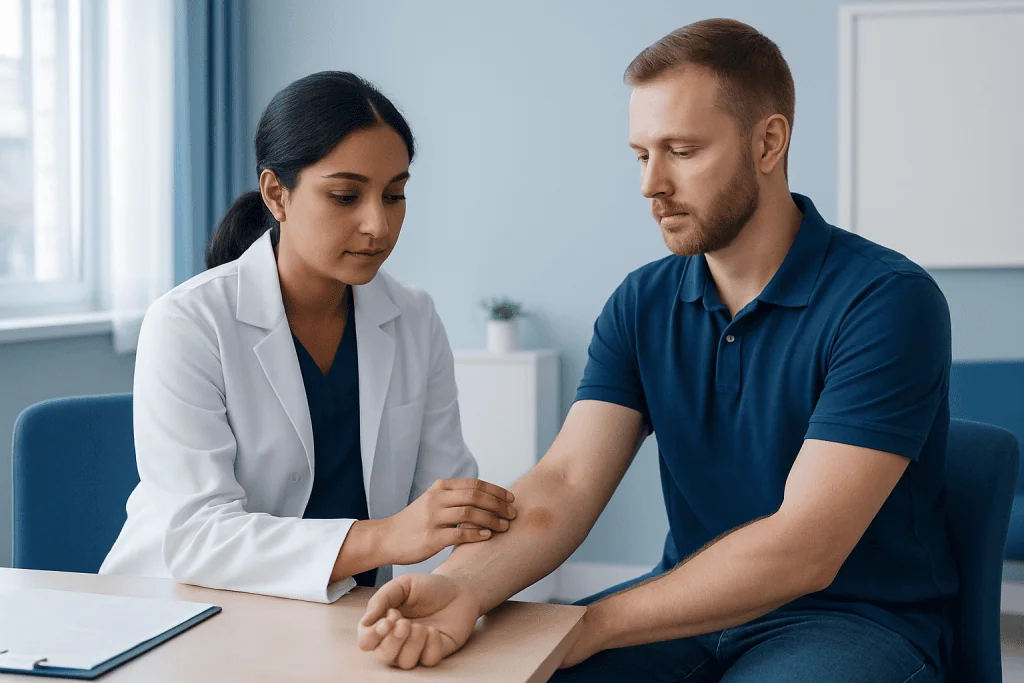
Mosquito bites are among the most common. They usually cause soft, itchy, round bumps on exposed skin such as the arms, legs, face, or neck. The reaction often appears soon after the bite and improves over a few days. Some people develop larger local swelling, especially on the face or around the eyes.
Flea bites tend to be small, very itchy, and grouped, often on the lower legs or ankles. They are more likely when there are pets in the home or exposure to infested carpets or bedding. Bed bug bites may appear overnight on skin that is uncovered during sleep. They are often found in lines or clusters and may affect the arms, shoulders, back, or trunk. Not everyone reacts visibly to bed bug bites, so one household member may show spots while another does not.
Tick bites may be noticed because the tick is attached to the skin. The bite itself may cause only a small mark, but follow-up observation matters because some tick-borne illnesses can cause rash, fever, fatigue, or body aches days later. A circular expanding rash can raise concern for a condition such as Lyme disease, though not every tick bite causes infection. Spider bites are less common than people often assume; many suspected spider bites turn out to be other skin problems. True spider bites may cause pain, redness, or localized swelling, and uncommon medically significant bites can lead to blistering or tissue injury.
Bee and wasp stings usually cause immediate burning pain, redness, and swelling. A stinger may remain after a bee sting but not after a wasp sting. Ant bites or stings, especially from fire ants in some regions, can cause painful bumps or small pustules. While these reactions are often localized, anyone with signs of severe allergy should seek urgent care without delay.
Causes, risk factors, and possible complications
Bug bites happen when insects or arachnids feed, defend themselves, or become trapped against the skin. Exposure risk rises with outdoor activity, warm weather, travel, gardening, hiking, camping, and time spent near standing water. At home, pets can carry fleas, and bed bugs can spread through luggage, furniture, or shared living spaces. Children may be bitten more often because they spend more time outdoors and may not notice early symptoms.
Individual reactions vary. Some people have very mild marks, while others develop large itchy areas due to sensitivity to insect saliva or venom. People with a history of severe allergy to bee or wasp stings have a higher risk of anaphylaxis. Those with eczema or broken skin may experience more irritation, and scratching increases the chance of secondary bacterial infection.
Complications are uncommon but important. Infection can develop if the skin becomes broken and bacteria enter, leading to increasing redness, warmth, tenderness, swelling, or pus. Tick bites may be linked to tick-borne diseases depending on the geographic area. In some cases, symptoms like fever, body aches, headache, or an unusual rash after a bite warrant medical assessment. Patients with immune system problems, diabetes, or poor circulation should be especially cautious about any wound that is slow to heal.
Diagnosis: how doctors assess a suspected bug bite
Doctors usually diagnose bug bites based on the history and a physical examination. Helpful details include when the spots appeared, whether they itch or hurt, where they are located, recent time outdoors, travel, pet exposure, whether anyone else at home has similar marks, and whether a tick or insect was actually seen. Photos taken when the rash first appears can also be useful because the look of a bite may change quickly.
Testing is not needed for most mild bites. If a doctor suspects infection, they may look for signs of skin inflammation or, less commonly, consider tests based on the clinical picture. After a tick bite, the need for further evaluation depends on the region, symptoms, and timing. If a patient develops generalized hives, breathing symptoms, or faintness after a sting, the immediate priority is urgent treatment rather than identification of the exact insect.
Sometimes the main goal of assessment is ruling out conditions that mimic bug bites. These may include eczema, scabies, allergic rash, fungal infection, hives, and bacterial skin infection. If the diagnosis is uncertain or the skin reaction is severe, a specialist in dermatology evaluation and care may help clarify the cause and guide treatment.
Treatment options and safe symptom relief
Most bug bites can be managed with simple first aid. The skin should be washed gently with soap and water. A cold compress can help reduce itching, pain, and swelling. Scratching should be avoided because it can worsen irritation and increase the risk of infection. If a bee stinger is present, it should be removed carefully as soon as possible.
For symptom relief, clinicians may recommend measures such as soothing lotions, anti-itch creams, or oral antihistamines, depending on the patient’s age, medical history, and symptoms. Pain relief may also be appropriate for tender bites or stings. It is important for patients to follow medical advice or product instructions and to be cautious when treating young children, pregnant patients, or people with medication sensitivities.
If there is a large local reaction, worsening inflammation, or suspected infection, medical review is appropriate. Bacterial skin infections may need professional treatment, and severe allergic reactions require urgent emergency care. When skin findings are extensive or unclear, doctors may coordinate with allergy assessment or skin specialists. In more significant cases of skin infection after scratching, treatment may overlap with care pathways used for infectious diseases evaluation.
Near the end of the care pathway, some international patients may prefer assessment in a large multidisciplinary center. Acibadem International’s specialists and JCI-accredited hospitals diagnose and treat skin reactions, allergies, and complications related to bug bites when needed.
Prevention and self-care at home
Prevention starts with reducing exposure. Insect repellents can help when used as directed, and long sleeves, long trousers, and closed shoes add protection in wooded, grassy, or mosquito-prone areas. Sleeping areas should be kept clean, and window screens, bed nets, or air conditioning may help lower insect contact in some settings. After walks or outdoor activities, checking the skin and scalp for ticks is a good habit.
At home, fleas and bed bugs need environmental control as well as skin care. Pets may need veterinary evaluation if fleas are suspected. Bedding and clothing should be washed according to care instructions, and home inspection may be necessary if bed bugs are a concern. Simply treating the bites without addressing the source often leads to repeated exposure.
Self-care after a bite includes cleaning the area, using a cold pack, keeping fingernails short to reduce scratching damage, and monitoring for change. Tick removal should be done carefully with fine-tipped tweezers, pulling steadily upward without twisting or crushing the tick. If patients are unsure what bit them, the safest approach is to watch for symptom progression rather than apply multiple harsh home remedies that may further irritate the skin.
When to seek medical care
Most bug bites do not need urgent treatment, but certain symptoms should never be ignored. Immediate emergency care is needed for trouble breathing, throat tightness, lip or tongue swelling, dizziness, fainting, or a rapidly spreading hive-like rash after a sting or bite. These can be signs of a serious allergic reaction.
Prompt medical care is also recommended if the bite area becomes increasingly red, hot, swollen, painful, or starts draining pus, as these signs may suggest infection. Fever, body aches, headache, a large expanding rash after a tick bite, blistering, blackened skin, or severe pain are other reasons to contact a doctor. Patients should also seek advice if symptoms are not improving, if the diagnosis is uncertain, or if the person affected is very young, elderly, pregnant, or has a weakened immune system.
For non-emergency concerns, a clinician can help determine whether the reaction is a straightforward insect bite, an allergy, a skin condition that mimics a bite, or a complication that needs treatment. Early assessment is often the best way to prevent a small skin problem from becoming a larger one.
Frequently asked questions
How can patients tell the difference between types of bug bites?
The pattern, body location, and symptoms can offer clues. Mosquito bites are often isolated and itchy on exposed skin, flea bites are commonly grouped around the ankles, and bed bug bites may appear in lines or clusters after sleep. Still, many bites look alike, so exact identification is not always possible without considering recent exposures.
Are bug bites dangerous?
Most bug bites are mild and settle with basic care. The main exceptions are severe allergic reactions, infected bites, and bites linked to disease transmission, especially some tick bites depending on location. Warning signs such as breathing trouble, fainting, fever, or a spreading rash should be assessed promptly.
What is the best first aid for a bug bite?
The area should be washed gently with soap and water, then cooled with a cold compress to reduce swelling and itching. Scratching should be avoided because it can damage the skin and lead to infection. If symptoms are troublesome, a doctor or pharmacist can advise on suitable anti-itch or pain-relief options.
When should a tick bite be checked by a doctor?
A doctor should be contacted if a patient develops fever, headache, body aches, or an expanding rash after a tick bite. Medical advice is also helpful if the tick was attached for an uncertain length of time, if removal was difficult, or if the patient is unsure about follow-up. Monitoring for symptoms over the following days and weeks is important.
Can bug bites become infected?
Yes, especially if the skin is scratched repeatedly. Signs of infection include increasing redness, warmth, swelling, pain, and pus or crusting at the site. If these changes appear, medical assessment is recommended because treatment may be needed.
Do bed bug bites mean the home is unclean?
No. Bed bugs can affect many types of homes, hotels, and shared spaces, and their presence does not mean a place is dirty. What matters most is identifying the source and arranging proper environmental control so exposure does not continue.
This article is for general information only and is not a substitute for professional medical advice. Please consult a qualified doctor about your individual situation.
Explore treatments in Turkey — costs, top hospitals & a free quote
JCI-accredited · board-certified surgeons · reply within 24h
Add us as a Preferred Source to see more of our trusted health content across Google Search, AI Overviews and Discover.

More from the Health Library

Epispadias: What Patients Need to Know

Spiders and Spider Bites: A Complete Medical Overview

Donnatal: An Evidence-Based Guide for Patients

Methylmalonic Acid: A Complete Medical Overview

Nub Theory: What Patients Need to Know