Spiral Fracture: A Complete Medical Overview

A spiral fracture happens when a bone breaks due to a rotational or twisting force. Common symptoms include pain, swelling, bruising, deformity, and difficulty moving or bearing weight.
Key Takeaways
- A spiral fracture happens when a bone breaks due to a rotational or twisting force.
- Common symptoms include pain, swelling, bruising, deformity, and difficulty moving or bearing weight.
- Diagnosis usually involves a physical exam and imaging, most often X-rays.
- Treatment depends on the bone involved, fracture alignment, and whether the injury is stable or severe.
- Proper immobilization, follow-up, and rehabilitation help support healing and reduce complications.
- Urgent medical care is needed if there is severe deformity, an open wound, numbness, or loss of circulation.
A spiral fracture is a type of broken bone caused by a twisting force, creating a fracture line that wraps around the bone. It can range from a stable injury treated with immobilization to a more complex fracture needing surgery, so timely medical evaluation is important.
Overview of Spiral Fracture
A spiral fracture is a bone break caused by a twisting force. Instead of cracking straight across, the fracture line winds around the bone in a spiral pattern. This can happen during sports injuries, falls, vehicle accidents, or any event in which part of the body stays fixed while the rest rotates.
Spiral fractures can occur in both children and adults, and they may affect long bones such as the tibia, femur, humerus, or bones in the arm and leg. The severity varies. Some spiral fractures are relatively stable and can be treated with a cast or brace, while others are displaced, involve nearby soft tissues, or require surgery to restore normal alignment.
Because the mechanism is rotational, a spiral fracture may sometimes be more complex than it first appears. Nearby muscles, ligaments, blood vessels, and nerves may also be affected. For this reason, medical assessment is important even when the injury seems manageable at first.
How a Spiral Fracture Happens
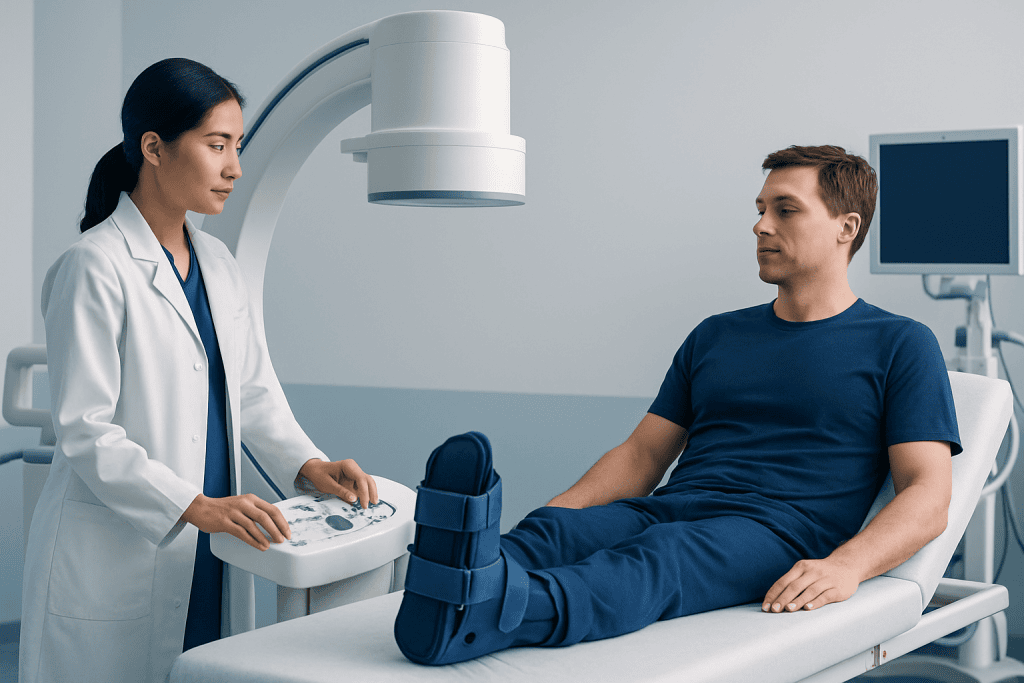
The defining feature of a spiral fracture is the force behind it: torsion, or twisting. If one end of a limb remains planted while the body turns, the bone can be stressed beyond its limit. A classic example is the lower leg twisting while the foot stays firmly on the ground.
This pattern differs from other fractures, such as transverse fractures, which often result from a direct blow, or compression fractures, which are linked to crushing forces. Understanding the injury mechanism helps clinicians judge whether the fracture may be stable, whether surrounding structures could be injured, and what type of treatment may be needed.
Spiral fractures are also described by whether the skin is intact or broken, whether the bone ends remain aligned, and whether the break extends into a joint. These details influence both healing time and the treatment plan.
Symptoms and Possible Complications

Symptoms of a spiral fracture usually begin immediately after injury. Most people have sudden pain, swelling, tenderness, and difficulty using the affected limb. There may also be bruising, visible deformity, or an inability to bear weight or grip normally, depending on the bone involved.
Sometimes the symptoms are less obvious, especially if the fracture is not severely displaced. Even then, ongoing pain with movement, increasing swelling, or a sense that the limb is unstable should prompt medical evaluation. In children, refusal to walk or use an arm may be an important clue.
Complications are not inevitable, but they can occur. These may include:
- Bone displacement or poor alignment
- Damage to nearby nerves or blood vessels
- Open fracture, in which the skin is broken
- Delayed healing or nonunion
- Joint stiffness and muscle weakness after immobilization
- Compartment syndrome, a rare but urgent rise in pressure within the limb
A fracture may also occur alongside related injuries such as other types of bone fractures or joint damage, especially after high-energy trauma.
Causes and Risk Factors
Spiral fractures most often happen after trauma. Common causes include sports injuries, falls, skiing accidents, twisting injuries during running or pivoting, and road traffic accidents. In some cases, workplace injuries or heavy machinery accidents may produce the same rotational force.
Certain factors can make a person more likely to sustain a fracture or have a more complicated recovery. These include low bone density, older age, poor balance, reduced muscle strength, and underlying bone conditions. Children may be more vulnerable during active play because their bones are still developing, although their healing capacity is often strong.
Risk may also increase in contact sports or activities that involve rapid turning. For some people, a spiral fracture may occur on top of weakened bone, such as in osteoporosis or after previous injury. If there is concern about fragile bones or repeated fractures, a doctor may consider evaluation for broader bone health issues.
Diagnosis and Imaging
Diagnosis begins with a medical history and physical examination. The clinician usually asks how the injury happened, where the pain is located, whether the limb can move or bear weight, and whether there are symptoms such as numbness, tingling, or coldness. The affected area is checked for swelling, deformity, tenderness, skin injury, and circulation.
X-rays are the main test used to confirm a spiral fracture and show its position and alignment. More than one view is often needed to understand the full pattern of the break. If the fracture extends into a joint, is difficult to see clearly, or appears complex, advanced imaging such as CT may be recommended. MRI is less commonly needed for the bone itself but may help when associated soft-tissue injury is suspected.
The diagnosis also includes deciding whether the fracture is stable, displaced, open, or associated with nerve or blood vessel injury. This step helps guide whether treatment can be non-surgical or whether orthopedic intervention is needed. In some cases, patients may be referred for specialist orthopedic care and follow-up planning.
Treatment Options and Recovery
Spiral fracture treatment depends on which bone is broken, how well the bone ends line up, whether the fracture is open or closed, and the person’s age and general health. Initial care usually includes protecting the limb, controlling pain, and preventing further movement. A splint is often used first, especially while swelling is present.
If the fracture is well aligned and stable, treatment may involve a cast, brace, or another form of immobilization until healing progresses. Doctors usually schedule repeat imaging to make sure the bone remains in a good position. Weight-bearing or normal use may need to be limited for a period of time to allow safe healing.
When the fracture is displaced, unstable, involves the joint, or cannot be kept in correct alignment with casting alone, surgery may be recommended. Surgical management may use plates, screws, rods, or other fixation methods to hold the bone in place. Depending on the injury, this may form part of broader trauma and emergency surgery or advanced orthopedic surgery planning.
Recovery does not end when the bone starts to unite. Rehabilitation helps restore movement, strength, and confidence in the injured limb. Some patients benefit from physical therapy and rehabilitation to improve range of motion, reduce stiffness, and support a gradual return to daily activities. Healing time varies, so follow-up with a qualified clinician is essential.
Self-care, Prevention, and Day-to-Day Support
After diagnosis, following the treatment plan closely is one of the most important ways to support healing. Keeping weight off the injured limb when instructed, protecting the cast or brace, attending follow-up appointments, and reporting new symptoms promptly can all help reduce complications. Patients should not adjust or remove immobilization devices unless advised by their care team.
General self-care may include rest, elevation, and using cold packs around the injured area if recommended by a clinician, particularly during the early stage. Pain relief should be guided by a doctor, especially for children, older adults, or those with other medical conditions. Good nutrition, including adequate protein and bone-supporting nutrients, can also play a helpful role in recovery.
Prevention focuses on lowering the risk of falls and twisting injuries. Practical steps may include wearing suitable footwear, strengthening the muscles that support balance and joints, using protective sports equipment, and maintaining bone health through exercise and medical care when needed. For older adults, home safety measures and bone density assessment may be appropriate if fracture risk is a concern.
When to Seek Medical Care
Any suspected spiral fracture should be assessed by a medical professional, especially if there is marked pain, swelling, inability to use the limb, or visible deformity. Prompt care is important because some fractures that look minor can shift over time or involve nearby soft tissues.
Urgent medical attention is needed if the skin is broken, the bone appears exposed, the limb looks pale or feels cold, or there is numbness, severe weakness, or worsening pain that seems out of proportion to the injury. These signs can suggest problems with circulation, nerve injury, or compartment syndrome and should not be ignored.
People should also seek review if pain is not improving, the cast feels too tight, swelling increases, fever develops, or movement remains very limited after the expected healing period. Near the end of care, a specialist may advise when it is safe to return to work, sports, or travel. For international patients, Acibadem International’s multidisciplinary specialists in JCI-accredited hospitals diagnose and treat fractures with coordinated orthopedic and rehabilitation support.
Frequently asked questions
Is a spiral fracture always serious?
Not always, but it should always be evaluated by a clinician. Some spiral fractures are stable and heal well with immobilization, while others are displaced or involve nearby tissues and may need surgery.
How is a spiral fracture different from a simple fracture?
A spiral fracture refers to the pattern of the break, which wraps around the bone due to twisting force. "Simple fracture" is often used more broadly and may refer to a closed fracture without a skin wound, so the terms do not mean the same thing.
Can a spiral fracture heal without surgery?
Yes, many spiral fractures can heal without surgery if the bone remains well aligned and stable. The treatment may involve a splint, cast, or brace along with regular follow-up imaging to monitor healing.
How long does spiral fracture recovery take?
Recovery time varies based on the bone involved, the person's age, the severity of the fracture, and whether surgery is needed. Bone healing often takes weeks to months, and full recovery of strength and movement may continue beyond that.
What should someone do right after a suspected spiral fracture?
The injured area should be kept still and protected from further movement. A person should seek medical care promptly, especially if there is deformity, severe pain, inability to bear weight, numbness, or an open wound.
Can children get spiral fractures?
Yes, children can develop spiral fractures, often after falls or twisting injuries during play or sports. Because children may not describe symptoms clearly, limping, refusal to walk, or not using an arm normally should be checked by a doctor.
This article is for general information only and is not a substitute for professional medical advice. Please consult a qualified doctor about your individual situation.
Joint and spine care in Turkey — expert assessment & treatment
JCI-accredited · board-certified surgeons · reply within 24h
Add us as a Preferred Source to see more of our trusted health content across Google Search, AI Overviews and Discover.

More from the Health Library

Endometrium — Explained by Medical Evidence, Not Myths

Clover Honey: A Complete Medical Overview

Areolas: An Evidence-Based Guide for Patients

Creatine Water Retention: A Complete Medical Overview

Sensorineural Hearing Loss: An Evidence-Based Guide for Patients

Poison Arsen: A Complete Medical Overview
Physical Medicine & Rehabilitation Specialists at Acibadem

Dr. Atiye Ayral
Physical Medicine & Rehabilitation
Prof. Dr. Ayhan Aşkın
Physical Medicine & Rehabilitation
Dr. Ayhan Ulusoy
Orthopedic Surgery & Traumatology
Dr. Aykut Türken
Orthopedic Surgery & Traumatology