Eardrum Drops — Explained by Medical Evidence, Not Myths

“Eardrum drops” can refer to different types of ear drops, including pain-relieving, wax-softening, and antibiotic drops. Not all ear drops are safe if the eardrum is perforated or if ear tubes are present.
Key Takeaways
- “Eardrum drops” can refer to different types of ear drops, including pain-relieving, wax-softening, and antibiotic drops.
- Not all ear drops are safe if the eardrum is perforated or if ear tubes are present.
- Ear pain does not always mean an infection, and middle ear problems often need a medical exam rather than self-treatment.
- Persistent pain, fever, drainage, hearing loss, or dizziness should prompt medical evaluation.
- Correct diagnosis helps avoid ineffective treatment and reduces the risk of complications.
Eardrum drops are not a single medicine but a broad term people use for ear drops meant to relieve pain, soften wax, or treat certain ear canal infections. Whether they are safe depends mainly on why the ear hurts and whether the eardrum is intact, so medical guidance is important before using them when there is discharge, injury, or suspected perforation.
What are eardrum drops, really?
Eardrum drops is a nonmedical phrase that many people use when they mean ear drops for ear pain, blockage, or infection. In practice, these drops may be designed to soften earwax, reduce inflammation in the ear canal, relieve discomfort, or treat bacterial infection in the outer ear. They are not usually medicines that are placed “on the eardrum” itself, and the right choice depends on what part of the ear is affected.
One of the most important medical facts is that the ear canal and the middle ear are separated by the eardrum. If the eardrum is intact, some drops may be appropriate for the ear canal. If the eardrum has a hole, tear, or pressure-equalizing tube, certain drops can reach deeper structures and may be unsuitable unless prescribed by a doctor.
This is why ear symptoms should not be treated by guesswork alone. Ear pain can come from wax buildup, swimmer’s ear, a middle ear infection, skin irritation, trauma from cotton swabs, pressure changes, or a perforated eardrum. A simple symptom like pain may have very different causes, and each has a different treatment approach.
Common reasons people look for eardrum drops
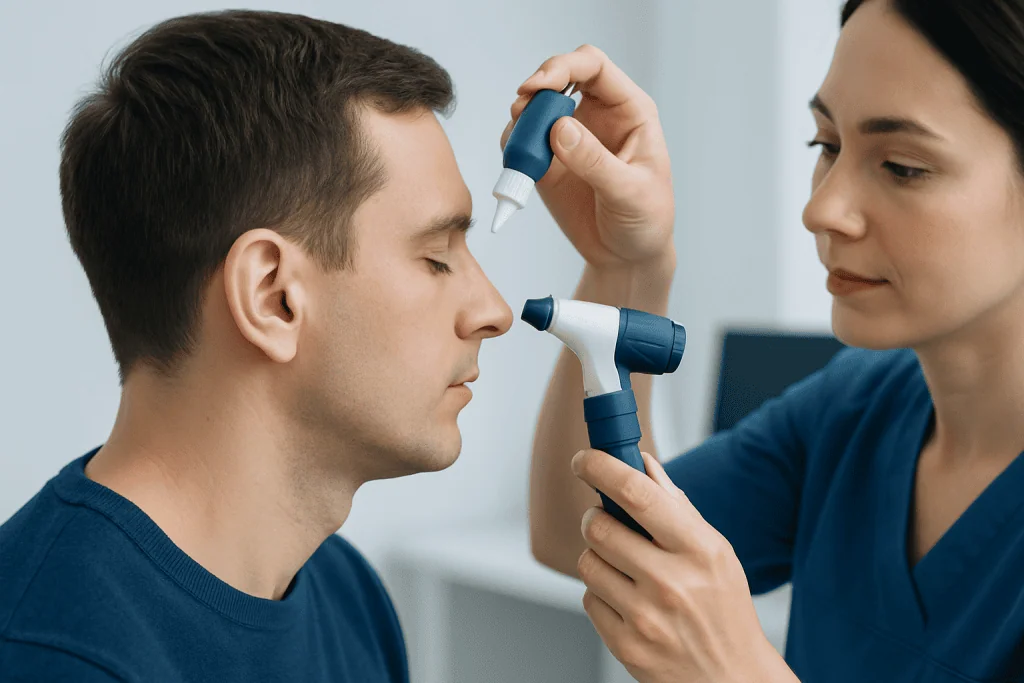
People often search for eardrum drops when they have earache, a blocked feeling, itching, ringing, discharge, or reduced hearing. In many cases, the problem is in the outer ear canal, where topical treatment may help. For example, wax-softening drops may help loosen earwax, and prescription antibiotic or anti-inflammatory drops may be used for some outer ear infections.
However, symptoms can also come from conditions behind the eardrum, such as a middle ear infection. In those situations, ear drops may not solve the underlying problem because the medicine does not always reach the affected area in a useful way. This is one reason a medical exam is often needed if symptoms are significant or do not improve.
Children and adults may both develop ear infections, but they do not all behave the same way. Problems such as otitis media can cause pain, pressure, fever, and muffled hearing, while ear infection is a broader term that may include both outer and middle ear conditions. Distinguishing between them helps guide safe treatment.
Which ear drops may be used and which should be avoided?

Ear drops fall into several main groups. Wax-softening drops are used for impacted earwax. Antibiotic or antiseptic drops may be used for outer ear infections. Some prescription drops combine an antibiotic with a steroid to reduce inflammation and swelling. In selected cases, doctors may also recommend drops to help with pain in the ear canal.
What should be avoided is using leftover, borrowed, or nonprescribed drops without knowing the diagnosis. Drops made for one problem may irritate another. Home remedies such as oils, alcohol, hydrogen peroxide, or herbal preparations can also be risky if the skin is inflamed or the eardrum is not intact.
Some ear drops are specifically chosen because they are considered safer when a perforated eardrum or ear tube is present, while others are generally avoided in that setting. This decision depends on the product and the clinical situation. For that reason, anyone who has ear drainage, a recent ear injury, a sudden pop followed by pain relief, or a known eardrum perforation should speak with a doctor before using over-the-counter drops.
- Use only products labeled for the ear, never eye drops unless specifically instructed.
- Do not insert cotton swabs or objects into the ear before applying drops.
- Do not use another person’s prescription ear medicine.
- Ask a clinician before using drops if there is discharge, bleeding, severe pain, or hearing loss.
How doctors tell whether the eardrum is involved
A clinician usually begins with questions about the symptoms: when they started, whether there is fever, swimming exposure, recent upper respiratory infection, trauma, ear cleaning, airplane travel, or discharge. These details can suggest whether the issue is wax, outer ear inflammation, pressure-related pain, or infection behind the eardrum.
The key part of the examination is looking into the ear with an otoscope. This allows the doctor to assess the ear canal, the color and position of the eardrum, and whether there is fluid, redness, perforation, or wax obstruction. Sometimes the exam is enough to make the diagnosis. In more complicated cases, hearing tests or referral to an ENT specialist may be needed.
Diagnosis matters because treatment differs widely. A blocked ear from wax may need softening drops or professional removal. Outer ear infection may respond to topical medicines. A perforation often requires keeping the ear dry and avoiding inappropriate drops. Persistent or complex ear disease may need specialist assessment, including ENT evaluation and treatment.
Evidence-based treatment options
Treatment depends on the cause rather than the symptom alone. For wax impaction, doctors may advise wax-softening drops and sometimes irrigation or manual removal if appropriate. For inflammation or bacterial infection of the outer ear canal, prescription ear drops are commonly used because they deliver medicine directly to the affected area.
Middle ear problems are different. In many cases of acute middle ear infection, care may include observation, pain relief, and in selected patients oral antibiotics rather than topical ear drops. If there is a perforation or chronic drainage, a doctor may prescribe specific drops that are appropriate for that situation and may also investigate the reason for the eardrum damage.
When a perforation does not heal or repeated middle ear infections continue to cause problems, further treatment may be discussed. This can include management of chronic ear disease and, in selected cases, tympanoplasty to repair the eardrum. If enlarged adenoids or recurrent ear infections contribute to ear pressure problems in children, doctors may also consider related treatments such as adenoidectomy when clinically indicated.
The most useful approach is not simply finding a stronger drop, but matching treatment to the diagnosis. This helps avoid unnecessary medicines and supports better symptom relief, hearing outcomes, and recovery.
Safe self-care and common myths
Many ear problems improve with simple supportive care, but the ear is delicate and should be treated gently. Keeping the ear dry during active infection or after suspected perforation is often helpful. Pain may be eased with general pain relief recommended by a clinician, and warm compresses on the outer ear area may provide comfort for some people.
Several common myths can lead to poor choices. One myth is that all ear pain needs antibiotic drops. Another is that earwax should be removed aggressively at home. Earwax actually protects the ear canal, and trying to dig it out often pushes it deeper or injures the skin. A third myth is that if pain improves after fluid drains out, the problem has solved itself; in fact, drainage may indicate a perforation and deserves medical advice.
It is also a myth that natural products are automatically safe. Oils, garlic mixtures, undiluted peroxide, and other home remedies can irritate the ear canal or be unsafe if the eardrum is open. Safer self-care means not putting anything into the ear unless the product is intended for ear use and appropriate for the person’s condition.
- Keep ears as dry as possible if there is drainage or suspected perforation.
- Avoid swimming until a doctor says it is safe.
- Do not use cotton swabs, hairpins, or ear candles.
- Follow the full prescribed course if medicated ear drops are recommended.
When to seek medical care
Medical care is important if ear symptoms are severe, persistent, or concerning. A prompt assessment is especially wise if there is fever, ear drainage, sudden hearing loss, significant dizziness, facial weakness, a recent blow to the ear, or symptoms in a young child who seems very unwell. These features may signal a problem that needs more than home care.
People should also seek advice before using ear drops if they think the eardrum may be perforated, have ear tubes, recently had ear surgery, or have repeated ear infections. A clinician can determine whether drops are appropriate, whether the ear should be kept dry, and whether other treatment is needed.
If symptoms recur frequently or hearing seems affected, specialist assessment may help identify chronic inflammation, eardrum damage, or another structural issue. Multidisciplinary specialists at Acibadem International, in JCI-accredited hospitals, diagnose and treat ear conditions for international patients, including cases that may require imaging, hearing evaluation, or procedures such as ear surgery.
Frequently asked questions
Can eardrum drops heal a perforated eardrum?
No drop can reliably close a hole in the eardrum on its own. Some prescription drops may be used safely when there is drainage or infection, but the choice depends on the product and the situation. A perforated eardrum should be assessed by a doctor.
Are over-the-counter ear drops safe for all ear pain?
No. Ear pain has many causes, including wax, outer ear infection, middle ear infection, pressure changes, and injury. Over-the-counter drops may help some problems but can be ineffective or inappropriate for others, especially if the eardrum is not intact.
What symptoms suggest that ear drops should not be used without medical advice?
Ear discharge, bleeding, sudden hearing loss, severe pain, dizziness, recent trauma, or a known eardrum perforation are important warning signs. People with ear tubes or recent ear surgery should also check with a clinician first. These situations need a more careful treatment choice.
Can ear drops treat a middle ear infection?
Middle ear infections are located behind the eardrum, so routine ear drops may not address the main problem. Management often depends on age, symptoms, and whether the eardrum is intact. A doctor can decide whether observation, pain relief, oral medicine, or specific ear drops are appropriate.
How should ear drops be used correctly?
Hands should be washed first, and the bottle should be used exactly as directed. The ear should not be probed with cotton swabs or other objects before application. If symptoms worsen, or if there is no improvement within the expected time, medical review is important.
Is it safe to use home remedies like oil or hydrogen peroxide in the ear?
Not always. These remedies can irritate the ear canal, worsen inflammation, or be unsafe if there is a perforation or tube. It is better to use only products intended for ear use and to ask a doctor when the diagnosis is uncertain.
This article is for general information only and is not a substitute for professional medical advice. Please consult a qualified doctor about your individual situation.
Explore treatments in Turkey — costs, top hospitals & a free quote
JCI-accredited · board-certified surgeons · reply within 24h
Add us as a Preferred Source to see more of our trusted health content across Google Search, AI Overviews and Discover.

More from the Health Library

Resistant Starch: What Patients Need to Know

Normal Size Ball: A Complete Medical Overview

Nightshade Allergy — Explained by Medical Evidence, Not Myths

Excessive Yawning — Explained by Medical Evidence, Not Myths

Heart Palpitations at Night: What Patients Need to Know