

Femur Fracture — Explained by Medical Evidence, Not Myths

A femur fracture is a serious injury that commonly causes severe pain, swelling, and difficulty or inability to stand or walk. Most femur fractures happen after trauma, but weaker bone from osteoporosis, cancer, or other conditions can increase risk.
Key Takeaways
- A femur fracture is a serious injury that commonly causes severe pain, swelling, and difficulty or inability to stand or walk.
- Most femur fractures happen after trauma, but weaker bone from osteoporosis, cancer, or other conditions can increase risk.
- Diagnosis usually involves a physical examination and imaging such as X-rays, and sometimes CT or MRI scans.
- Treatment depends on the fracture type, location, and the patient’s overall health; many cases require surgery followed by rehabilitation.
- Prompt treatment helps reduce complications such as blood loss, malalignment, stiffness, and delayed healing.
A femur fracture is a break in the thigh bone, the longest and strongest bone in the body. It is usually caused by major trauma in younger adults or a fall in older adults, and it often needs urgent medical assessment, imaging, and sometimes surgery.
What is a femur fracture?
A femur fracture is a break in the femur, or thigh bone. This bone connects the hip to the knee and carries much of the body’s weight during standing, walking, and movement. Because it is very strong, a broken femur often reflects a significant injury, although in older adults or people with weakened bones it may happen after a lower-impact fall.
The term can describe several different injuries rather than one single pattern. A fracture may affect the shaft of the femur, the upper part near the hip, or the lower part near the knee. Doctors also describe whether the bone is cracked, completely broken, displaced out of alignment, or broken into several pieces.
Not every femur fracture looks the same, and this matters because treatment and recovery can differ. Some fractures are stable and relatively straightforward, while others damage nearby muscles, blood vessels, or soft tissues and need more complex care. This is one reason medical teams rely on imaging rather than myths or assumptions about what a “simple leg break” means.
How a femur fracture usually feels and looks
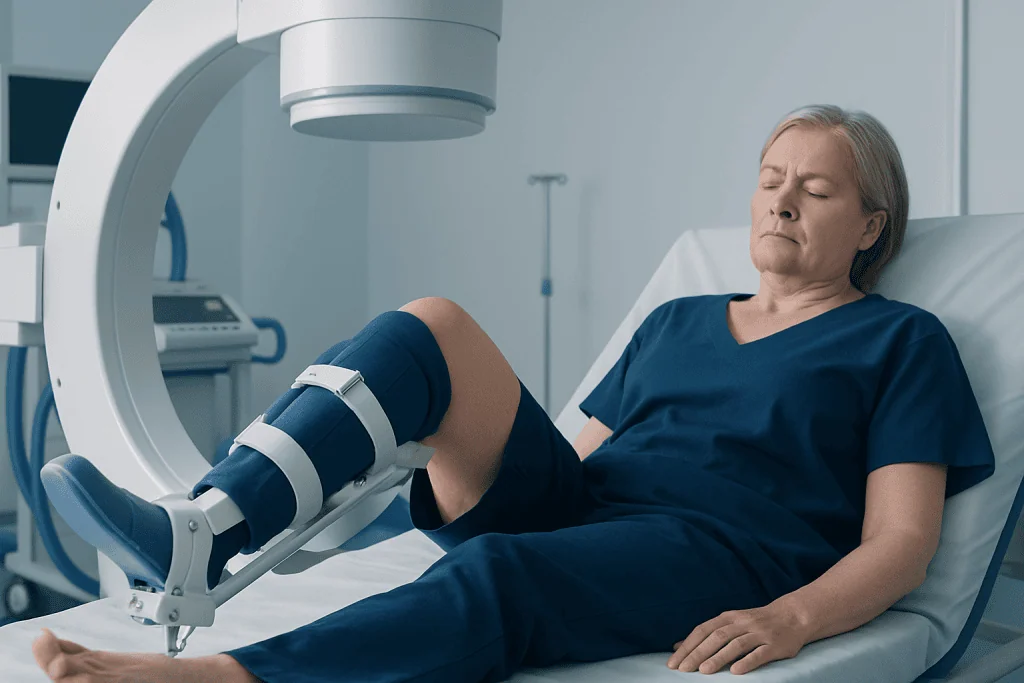
Most people with a femur fracture have sudden, severe pain in the thigh, hip, or knee area right after the injury. The pain typically becomes worse with movement or any attempt to bear weight. Many people are unable to stand or walk, and the injured leg may look deformed or shorter than the other leg.
Visible swelling and bruising are common, but these signs may develop over time rather than immediately. In some cases, the leg turns outward, or the thigh appears misshapen because the broken bone fragments have shifted. If the fracture is open, bone may break through the skin, which increases the risk of infection and requires urgent treatment.
Some symptoms are less obvious. A fracture closer to the hip can feel like deep groin pain, while a fracture lower down may feel more like knee pain. In older adults, pain after a fall should not be dismissed even if the injury does not look dramatic. Related injuries, including knee pain or hip trauma, may also need evaluation when the mechanism of injury is unclear.
- Sudden thigh, hip, or knee pain
- Swelling, tenderness, or bruising
- Difficulty or inability to bear weight
- Visible deformity or leg shortening
- Abnormal leg rotation
- Open wound near the fracture site in severe cases
Why femur fractures happen and who is at risk
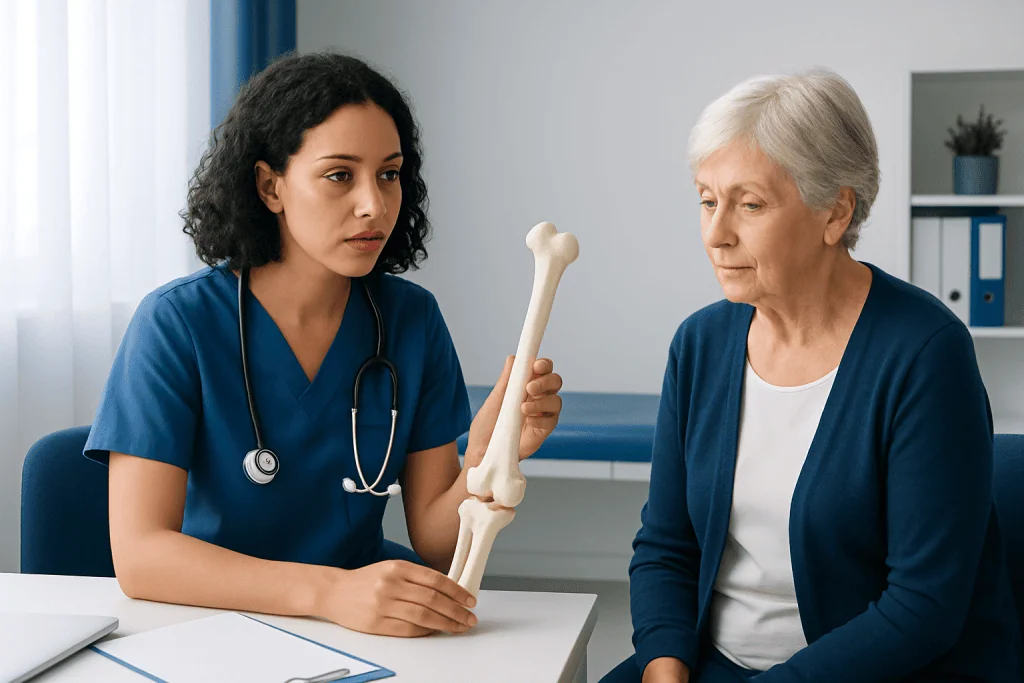
In younger adults, femur fractures most often result from high-energy trauma such as road traffic collisions, sports injuries, or falls from height. The force required to break a healthy femur is usually substantial, so doctors also look for injuries elsewhere in the body when this fracture occurs.
In older adults, the pattern is often different. A lower-energy fall can cause a fracture if bone strength has been reduced by age-related bone loss. Osteoporosis is one of the most important risk factors, but long-term steroid use, poor nutrition, reduced mobility, and certain chronic illnesses can also weaken bone. In some situations, a femur fracture may be a sign of osteoporosis that was not previously diagnosed.
Less commonly, a femur fracture is called pathologic, meaning it occurs in bone already weakened by disease. Bone tumors, metastatic cancer, infection, and some inherited bone disorders can contribute. Stress fractures can also develop from repetitive loading, especially in athletes or military recruits, although these usually start with gradually increasing pain rather than one sudden injury.
How doctors diagnose a femur fracture
Diagnosis starts with a medical history and physical examination. The doctor asks how the injury happened, where the pain is located, whether the patient can move the leg, and whether there are symptoms such as numbness or bleeding. The exam also checks circulation, skin condition, nerve function, and signs of injuries to the hip, knee, or pelvis.
X-rays are the main imaging test used to confirm a femur fracture and show its location and alignment. In more complex injuries, a CT scan may be used to provide a more detailed view of the fracture pattern, especially around joints. MRI may be helpful when a stress fracture or an occult fracture is suspected but not clearly seen on plain X-rays.
Blood tests may be ordered depending on the situation, particularly after major trauma or before surgery. If the fracture happened after minimal trauma, doctors may also investigate why the bone broke, including bone density testing or evaluation for underlying disease. This evidence-based approach helps distinguish accidental trauma from fractures related to poor bone health or other medical conditions.
Treatment options: from emergency care to surgery
Early treatment focuses on stabilizing the patient, controlling pain, and preventing further injury. The leg is usually immobilized, and open fractures need urgent wound care and antibiotics. Because the femur is a large bone with a rich blood supply, some fractures can involve significant blood loss, so emergency teams monitor the patient carefully.
Many femur fractures are treated surgically because surgery can restore alignment, stabilize the bone, and allow earlier movement. Common procedures include internal fixation with rods, plates, or screws. For shaft fractures, intramedullary nailing is a widely used method and may be discussed as part of orthopedic traumatology care. Fractures near the hip or knee may need different surgical techniques depending on the exact location and severity.
Not every patient needs the same approach. Non-surgical treatment may be considered in selected cases, such as some stable fractures or when surgery would carry unusually high risk. After either approach, physical therapy is an important part of healing. If the fracture involves a joint or causes complex limb problems, rehabilitation planning may include physical therapy and rehabilitation to improve strength, motion, and walking ability.
In some situations, doctors also address the cause of weakened bone. This may include assessment through orthopedics and traumatology services, fall prevention strategies, and treatment for underlying metabolic bone disease. The goal is not only to repair the current fracture, but also to reduce the risk of another one.
Recovery, healing time, and possible complications
Recovery after a femur fracture depends on the fracture type, the patient’s age and health, and whether surgery was needed. Healing often takes weeks to months, and the return to full activity can be gradual. Early milestones may include pain control, safe transfer from bed to chair, protected walking with support, and later progression to more independent movement.
Physical therapy often begins early to reduce stiffness and muscle loss. Exercises are tailored to the location of the fracture, the stability of the repair, and the patient’s overall condition. Some people are asked to limit weight-bearing for a period, while others may begin carefully supervised movement sooner.
Possible complications include infection, blood clots, delayed union, nonunion, malunion, stiffness, and persistent pain. Nerve or blood vessel injury is less common but important to recognize. Follow-up visits and repeat imaging help doctors confirm that the bone is healing in the right position and that mobility is improving as expected.
Recovery is not only physical. A major fracture can affect confidence, independence, sleep, and daily routines. Reassurance, realistic planning, and support from clinicians and family can make rehabilitation more manageable. Near the end of care planning, some international patients may choose centers such as Acibadem International, where multidisciplinary specialists in JCI-accredited hospitals diagnose and treat complex bone injuries.
Can femur fractures be prevented?
Not all femur fractures can be prevented, especially those caused by major accidents. Still, several practical steps can reduce risk. Seat belt use, sports safety equipment, workplace protection, and fall prevention all matter because they reduce the chance of the kind of trauma that commonly causes these injuries.
For older adults, preventing falls and protecting bone health are especially important. A home safety review, supportive footwear, balance training, vision checks, and medication review may lower the risk of falling. Adequate calcium and vitamin D intake, regular weight-bearing exercise when appropriate, and medical treatment for osteoporosis can help maintain stronger bones.
People with ongoing thigh or groin pain during exercise should not ignore symptoms that build up gradually. Stress fractures can start subtly and become worse if activity continues without evaluation. Early assessment may prevent a small bone injury from progressing to a complete fracture.
When to seek medical care
Immediate medical care is needed after a major blow to the leg, a fall followed by severe thigh or hip pain, or any injury that leaves a person unable to stand or bear weight. Urgent evaluation is also important if the leg looks deformed, there is heavy swelling, the foot feels numb or cold, or there is an open wound near the injury.
Medical advice should also be sought for persistent thigh, hip, or knee pain after a fall, even if walking is still possible. This is particularly true for older adults, people with osteoporosis, and anyone with a history of cancer or bone disease. A stress-related injury should be checked if pain increases with activity and does not improve with rest.
Prompt assessment improves the chance of proper alignment, safe healing, and a smoother recovery. If there is any doubt about the seriousness of the injury, it is safest to seek professional evaluation rather than trying to walk on the leg or waiting for symptoms to settle on their own.
Frequently asked questions
Is a femur fracture always an emergency?
A femur fracture is usually treated as an urgent medical problem because the thigh bone is large and the injury can involve severe pain, bleeding, and loss of mobility. Immediate assessment is especially important after trauma, if the leg is deformed, or if there is an open wound.
Can someone walk with a femur fracture?
Many people cannot walk at all because the pain is intense and the bone is unstable. However, some incomplete fractures or stress fractures may still allow limited walking, which is why persistent thigh or groin pain should not be ignored.
Does every femur fracture need surgery?
Not every case needs surgery, but many do because surgical fixation often provides better alignment and stability. The decision depends on the fracture location, whether the bone is displaced, the patient’s age, and overall health.
How long does a femur fracture take to heal?
Healing time varies widely based on the type of fracture and the treatment used. In general, bone healing may take several weeks to months, and full recovery of strength and mobility can continue beyond that period with rehabilitation.
What complications can happen after a femur fracture?
Possible complications include infection, blood clots, stiffness, delayed healing, and the bone healing in an imperfect position. Doctors monitor recovery with follow-up examinations and imaging to reduce these risks and address problems early.
Can osteoporosis cause a femur fracture?
Yes. Osteoporosis weakens bone and can make a femur fracture more likely after a relatively minor fall, especially in older adults. When a fracture happens with low-impact trauma, doctors may recommend evaluation and treatment for bone loss.
This article is for general information only and is not a substitute for professional medical advice. Please consult a qualified doctor about your individual situation.
Joint and spine care in Turkey — expert assessment & treatment
JCI-accredited · board-certified surgeons · reply within 24h
Add us as a Preferred Source to see more of our trusted health content across Google Search, AI Overviews and Discover.

More from the Health Library

Rocuronium: An Evidence-Based Guide for Patients

Social Media Addiction: An Evidence-Based Guide for Patients

Fingernails and Toenails Peeling: A Complete Medical Overview

Compression Gloves: What Patients Need to Know

Prune Juice for Babies — Explained by Medical Evidence, Not Myths

Cyclopia: A Complete Medical Overview
Orthopedic Surgery & Traumatology Specialists at Acibadem

Dr. Coşkun Akalın
Physical Medicine & Rehabilitation
Fzt. A.Sercan Soyarslan
Physical Medicine & Rehabilitation
Dr. Abdullah Yener İnce
Orthopedic Surgery & Traumatology
Dr. Adnan Abbasoğlu
Orthopedic Surgery & Traumatology