Pilates Exercises: A Complete Medical Overview
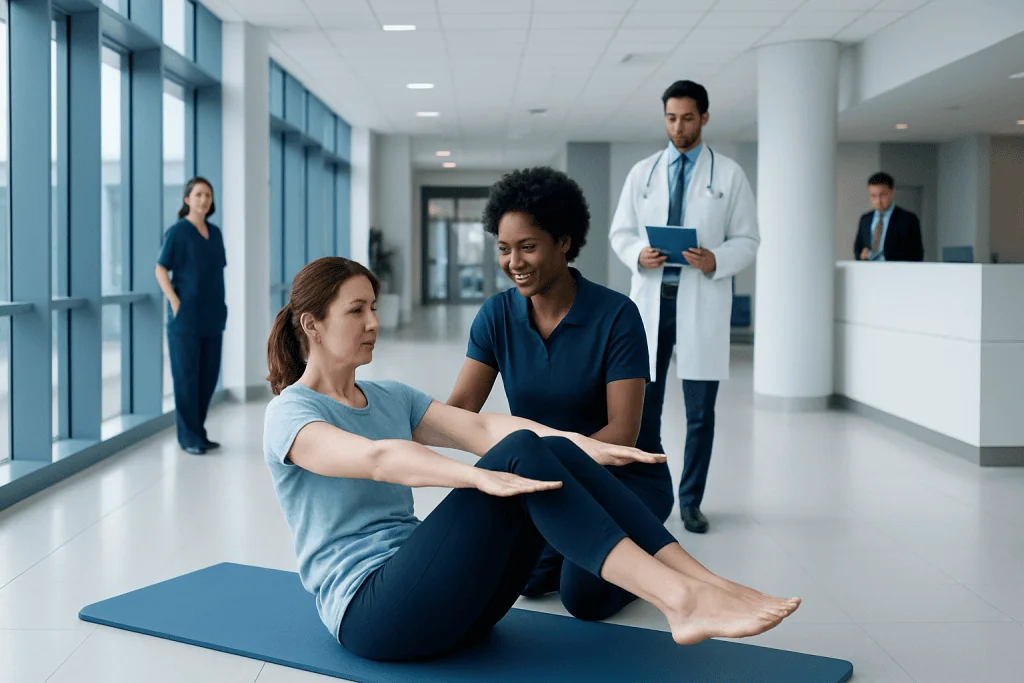
Pilates exercises focus on controlled movement, breathing, alignment, and core stability rather than speed or heavy resistance. They may help improve posture, flexibility, balance, and muscle endurance, and can support recovery from some musculoskeletal problems.
Key Takeaways
- Pilates exercises focus on controlled movement, breathing, alignment, and core stability rather than speed or heavy resistance.
- They may help improve posture, flexibility, balance, and muscle endurance, and can support recovery from some musculoskeletal problems.
- Pilates is not one-size-fits-all; exercises often need modification for pregnancy, osteoporosis, joint pain, recent surgery, or chronic back or neck symptoms.
- Good technique matters more than intensity, especially for beginners and people using Pilates as part of rehabilitation.
- Persistent pain, numbness, weakness, or dizziness during exercise should be assessed by a qualified healthcare professional.
Pilates exercises are low-impact movements designed to improve core strength, posture, flexibility, balance, and body awareness. When taught well and matched to a person’s health status, Pilates can be a safe and effective part of general fitness, rehabilitation, and long-term musculoskeletal health.
Overview: what Pilates exercises are and what they do
Pilates exercises are structured, low-impact movements that train the body to move with better control, alignment, and coordination. They are commonly used to strengthen the muscles of the abdomen, back, hips, and pelvic region, often described together as the body’s “core.” Unlike workouts that emphasize speed or high repetition, Pilates usually focuses on precision, breathing, and smooth, deliberate movement.
From a medical and functional point of view, Pilates is best understood as a movement system rather than a single exercise routine. It may include mat-based exercises, small props, or specialized equipment such as the reformer. A program can be tailored to different goals, including improved general fitness, better posture, support during recovery after injury, or gradual return to activity after a period of inactivity.
Pilates exercises may benefit healthy adults, older adults, people with sedentary lifestyles, and some individuals with musculoskeletal complaints. For example, clinicians may suggest supervised exercise strategies for posture-related discomfort or deconditioning, sometimes alongside evaluation for conditions such as low back pain. However, Pilates is not a replacement for medical diagnosis when symptoms are ongoing, severe, or unexplained.
How Pilates works in the body
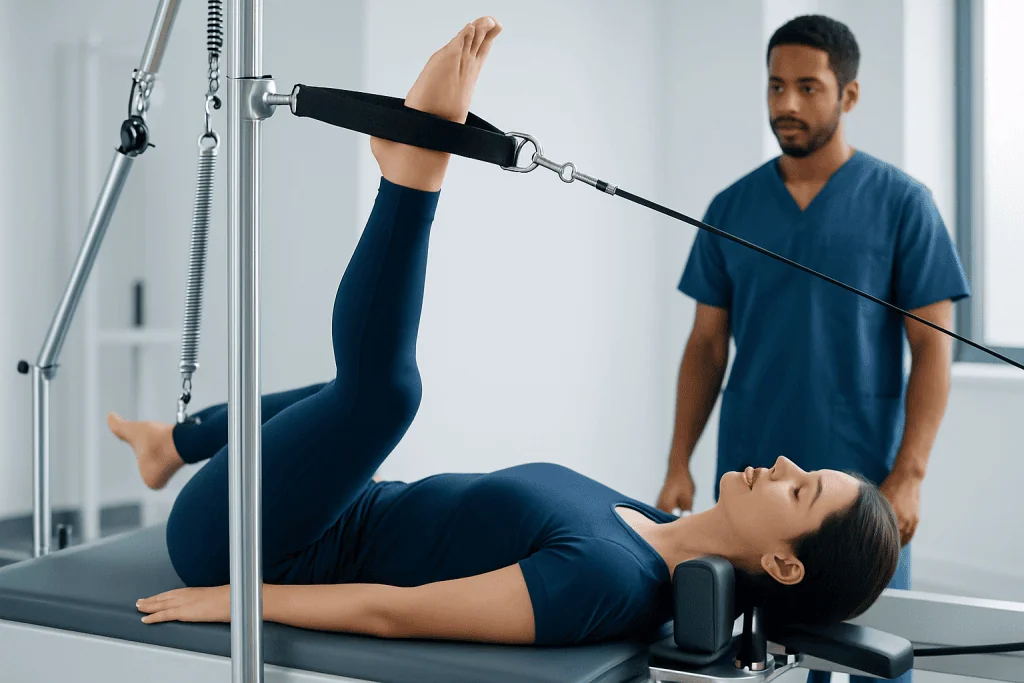
The main principles behind Pilates exercises are breathing, concentration, centering, control, precision, and flow. In practice, this means learning how to engage deep stabilizing muscles while keeping the spine and joints in a comfortable, supported position. Many exercises begin with awareness of neutral alignment and coordinated breathing, which can help reduce unnecessary tension in the neck, shoulders, and lower back.
Pilates commonly targets muscle endurance and neuromuscular control rather than maximum strength. This can be especially useful for people who have weak postural muscles, poor movement habits, or reduced body awareness after pain or inactivity. By repeating controlled patterns, the nervous system learns more efficient movement, which may carry over into walking, lifting, desk work, sports, and daily tasks.
Another reason Pilates is widely used is that it can often be scaled up or down. A beginner may start with basic pelvic control, breathing drills, and gentle leg or arm movements. A more advanced participant may progress to resistance-based reformer work, balance challenges, or dynamic full-body patterns. When selected carefully, Pilates can also complement rehabilitation programs such as physical therapy and rehabilitation for movement-related problems.
Potential health benefits of Pilates exercises
Research and clinical experience suggest that Pilates exercises may help improve several aspects of physical function. Commonly reported benefits include better core endurance, improved flexibility, enhanced balance, greater postural awareness, and more efficient movement patterns. Many people also notice that regular practice helps them become more aware of how they sit, stand, bend, and breathe throughout the day.
For some individuals, Pilates may help reduce non-specific aches linked to muscle imbalance, prolonged sitting, or poor movement control. It is often discussed in relation to posture-related neck or back discomfort, although results vary and improvement depends on exercise selection, technique, and whether an underlying condition is present. In this sense, Pilates is often most helpful as one part of a broader plan that may include activity modification, medical evaluation, and targeted rehabilitation.
Pilates can also support healthy aging by encouraging joint mobility, balance, and confidence in movement. Because many forms are low impact, they may suit people who do not tolerate jumping, running, or high-load training well. Some patients recovering from orthopedic issues may later be guided toward Pilates-based exercise after assessment and treatment, including orthopedic rehabilitation, when appropriate.
- Core strength and trunk stability
- Posture and spinal alignment awareness
- Flexibility and joint mobility
- Balance and coordination
- Breathing control and relaxation
- Confidence returning to regular exercise
Who may benefit most, and who needs extra caution
Pilates exercises can be suitable for many people, including beginners, office workers, older adults, and those returning to activity after a break. They may also be used as part of conditioning for dancers, runners, and athletes who want better trunk control and movement efficiency. The key is matching the type and intensity of the exercises to the person’s age, baseline fitness, symptoms, and medical history.
Extra caution is important for people with recent injury, surgery, severe osteoporosis, uncontrolled pain, significant balance problems, hernia, pregnancy-related complications, or known spine disorders. Certain positions, ranges of motion, or abdominal pressure strategies may need to be avoided or changed. A person with persistent neck pain, radiating arm or leg pain, or a diagnosis such as herniated disc should not rely on self-directed online routines without professional guidance.
People with heart disease, uncontrolled high blood pressure, severe dizziness, or major neurological problems should also ask a clinician before starting a new exercise program. In these situations, Pilates may still be possible, but a more individualized plan is safer. Supervision is especially valuable when symptoms are complex, exercises trigger pain, or previous attempts at exercise have been difficult.
Common types of Pilates exercises and how to start safely
Pilates is often divided into mat Pilates and equipment-based Pilates. Mat Pilates uses body weight and sometimes small props such as bands, rings, or balls. Equipment-based Pilates uses spring resistance and guided movement from machines such as the reformer, Cadillac, or chair. Neither approach is automatically better; the safest and most effective choice depends on the person’s goals, skill level, and physical condition.
Beginners usually do best with simple exercises that teach breathing, pelvic stability, spinal alignment, and controlled movement of the arms and legs. Examples may include gentle imprint or neutral spine work, pelvic tilts, modified bridges, leg slides, side-lying hip work, and carefully taught abdominal activation. Starting slowly helps the body learn technique before more challenging exercises are added.
To begin safely, it is wise to choose a qualified instructor who can screen for injuries, ask about medical conditions, and offer modifications. Discomfort from working muscles can be normal, but sharp pain, pinching, numbness, or worsening symptoms are not expected. If pain is a limiting issue, a clinician may recommend medical assessment or supportive services such as pain management before or alongside exercise.
- Wear comfortable clothing and allow free movement.
- Start with short sessions and basic exercises.
- Prioritize form, breathing, and control over difficulty.
- Stop if symptoms radiate, intensify, or feel unusual.
- Progress gradually rather than forcing flexibility or abdominal effort.
Safety, limits, and common mistakes
Pilates is generally considered low impact, but “low impact” does not always mean risk-free. Problems can arise when exercises are too advanced, repeated with poor alignment, or done despite pain. Common mistakes include holding the breath, over-tucking the pelvis, pulling on the neck during abdominal work, locking the joints, and pushing through ranges of motion that the body cannot control comfortably.
Another common misunderstanding is that stronger abdominal effort is always better. In fact, over-bracing can increase tension and may aggravate some back, rib, pelvic floor, or breathing-related issues. Good Pilates teaching usually emphasizes balanced support rather than constant tightening. The goal is efficient, coordinated movement, not strain.
Home videos and social media routines can be useful for motivation, but they cannot assess whether a movement is appropriate for a specific spine, joint, or medical condition. People with recurring back pain, recent surgery, or chronic stiffness may need individualized progression, sometimes with support from rehabilitation or sports medicine specialists. This is particularly important if symptoms interfere with walking, sleep, work, or routine activity.
Using Pilates as part of a broader health plan
Pilates exercises are often most effective when they are part of an overall approach to health. For many adults, that means combining Pilates with regular walking or aerobic exercise, general strength training, adequate sleep, and balanced nutrition. A single exercise method rarely addresses every aspect of fitness, so a well-rounded plan usually brings the best long-term results.
People using Pilates for symptom relief should also pay attention to daily habits that influence musculoskeletal health. These may include workstation setup, lifting technique, time spent sitting, footwear, stress, and recovery time. If neck, shoulder, or back discomfort keeps returning, the issue may not be the exercise alone; it may reflect repetitive strain, deconditioning, or an underlying problem that needs assessment.
Near the end of a care pathway, some patients transition from treatment-focused rehabilitation to supervised exercise programs that include Pilates-based work. Multidisciplinary teams can help decide when this is appropriate and how to adapt the program safely. Acibadem International’s multidisciplinary specialists and JCI-accredited hospitals diagnose and treat musculoskeletal and rehabilitation needs for international patients when further evaluation is required.
When to seek medical care
A healthcare professional should assess pain that is severe, recurrent, or getting worse despite rest and exercise modification. Medical review is also important if discomfort lasts more than a few weeks, starts after a fall or injury, or regularly interrupts sleep, work, or daily activities. Exercise should not be expected to solve unexplained symptoms without first understanding the cause.
Prompt evaluation is recommended if Pilates exercises bring on numbness, tingling, muscle weakness, loss of balance, chest pain, severe shortness of breath, or pain that radiates into an arm or leg. These symptoms may point to a problem that needs diagnosis before exercise continues. The same applies to swelling, fever, marked joint instability, or sudden loss of function.
People who are pregnant, newly postpartum, recovering from surgery, or living with osteoporosis, inflammatory joint disease, or significant heart or neurological conditions should ask for individualized guidance. In these situations, the safest exercise plan is one designed around the person’s medical needs rather than a generic class or online routine.
Frequently asked questions
Are Pilates exercises good for beginners?
Yes. Pilates exercises can be very beginner-friendly when they start with simple, low-load movements and clear instruction on breathing and alignment. A gradual approach is usually safer and more effective than beginning with advanced routines found online.
Can Pilates help with back pain?
Pilates may help some people with non-specific back pain by improving movement control, posture, and core endurance. However, it does not treat every cause of back pain, so persistent, severe, or radiating pain should be assessed by a doctor or physical therapist.
Is Pilates better than yoga?
Neither is universally better; they have different emphases. Pilates usually focuses more on core control, alignment, and movement precision, while yoga often includes broader flexibility, balance, and mindfulness components. The best choice depends on personal goals, symptoms, and preferences.
How often should someone do Pilates exercises?
Many people start with two to three sessions per week and adjust based on recovery, goals, and overall activity level. Consistency usually matters more than intensity, especially at the beginning.
Can Pilates help with posture?
It may. Pilates often improves awareness of spinal alignment, shoulder position, breathing, and trunk support, which can support better posture over time. Lasting change usually depends on both regular practice and everyday habits such as sitting and lifting mechanics.
Is Pilates safe during pregnancy?
It can be, but pregnancy-specific modifications are important. Certain positions and abdominal strategies may need to change as pregnancy progresses, so pregnant individuals should seek advice from their doctor and, ideally, work with a qualified prenatal exercise instructor.
This article is for general information only and is not a substitute for professional medical advice. Please consult a qualified doctor about your individual situation.
Joint and spine care in Turkey — expert assessment & treatment
JCI-accredited · board-certified surgeons · reply within 24h
Add us as a Preferred Source to see more of our trusted health content across Google Search, AI Overviews and Discover.

More from the Health Library
Magnesium Oil on Feet: What Patients Need to Know

Fetal Fibronectin: What Patients Need to Know

Diplopia: What Patients Need to Know

Types of Stomach Bugs: What Patients Need to Know

Lip Flip — Explained by Medical Evidence, Not Myths