Pinched Nerve in Upper Back: An Evidence-Based Guide for Patients

Upper-back nerve symptoms may arise from the thoracic spine, nearby muscles and joints, or conditions outside the spine. Pain may feel sharp, burning, electric, or band-like and can travel around one side of the rib cage.
Key Takeaways
- Upper-back nerve symptoms may arise from the thoracic spine, nearby muscles and joints, or conditions outside the spine.
- Pain may feel sharp, burning, electric, or band-like and can travel around one side of the rib cage.
- A medical assessment is important when symptoms persist, worsen, follow an injury, or include weakness or numbness.
- Treatment commonly starts with activity modification, guided exercise, pain management, and physical therapy.
- Urgent evaluation is needed for chest pain, breathing difficulty, loss of coordination, bowel or bladder changes, or rapidly progressing weakness.
A pinched nerve in the upper back occurs when a nerve is irritated or compressed, often causing burning, aching, tingling, numbness, or pain that may wrap around the chest or travel toward the shoulder. Many cases improve with conservative care, but new weakness, severe symptoms, or signs of a more serious condition should be assessed promptly.
Overview: What Is a Pinched Nerve in the Upper Back?
A pinched nerve in upper back describes irritation, inflammation, or pressure affecting a nerve in or near the thoracic spine, the middle portion of the back between the neck and lower back. The term is commonly used for nerve-related pain, although the exact cause may be compression from a spinal disc, age-related joint changes, muscle tension, injury, or another health condition.
Thoracic nerve irritation is less common than nerve irritation in the neck or lower back. When it occurs, it may create pain between the shoulder blades, along the ribs, or on one side of the chest or upper abdomen. Because chest discomfort has many possible causes, including heart and lung conditions, new or unexplained chest pain should not automatically be attributed to the back.
Most upper-back nerve symptoms are manageable and may settle with time and appropriate care. A clinician can help distinguish nerve pain from muscle strain, shoulder problems, rib conditions, shingles, and other causes that can produce similar symptoms.
How Symptoms May Feel and Where They Can Spread
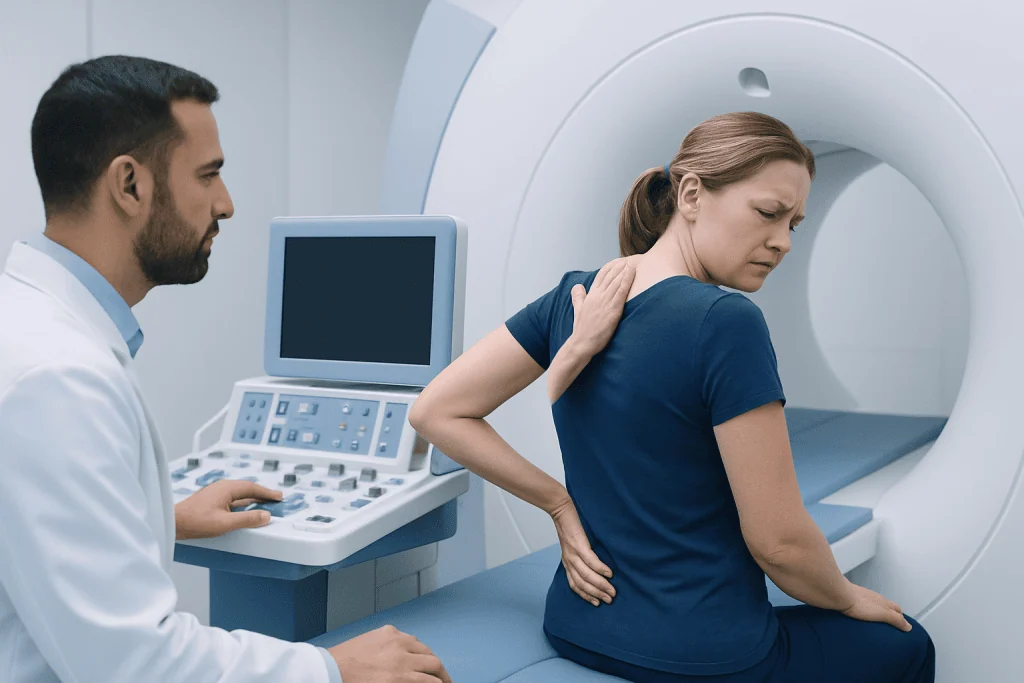
Symptoms depend on which nerve is affected and what is causing the irritation. Nerve pain is often described as sharp, stabbing, burning, shooting, or electric. Some people notice pain after twisting, reaching, coughing, prolonged sitting, or certain sleeping positions, while others have symptoms that are more constant.
In the thoracic region, a nerve may produce a band-like pattern of discomfort that travels from the spine around one side of the rib cage toward the front of the chest or upper abdomen. There may also be sensitivity to touch, tingling, pins-and-needles sensations, or a patch of numbness along the same path.
- Aching or sharp pain between the shoulder blades
- Pain that wraps around the ribs or chest wall
- Tingling, burning, numbness, or altered skin sensation
- Muscle tightness or protective spasm around the upper back
- Less commonly, weakness involving muscles served by the affected nerve
Muscle pain and nerve pain can occur together. For example, painful movement may cause surrounding muscles to tighten, while muscle spasm can make an already irritated nerve feel more sensitive.
Why an Upper-Back Nerve Can Become Irritated

A nerve can be irritated when nearby structures narrow its space or when inflammation affects the nerve. One possible cause is a thoracic disc bulge or herniation, in which disc material extends beyond its usual boundary and may contact a nerve. This is less frequent in the thoracic spine than in the neck or lower back, but it can occur.
Other potential causes include osteoarthritis-related changes in spinal joints, thickening of ligaments, spinal narrowing, rib or vertebral injuries, and postural strain. Long periods of working at a desk, repetitive lifting, sudden unaccustomed activity, or poor movement mechanics may aggravate symptoms, although these factors do not always directly “pinch” a nerve.
Not all pain around the upper back and ribs comes from spinal compression. Shingles may cause burning pain followed by a rash, while heart, lung, digestive, or gallbladder conditions can sometimes be felt in the chest or upper back. Rarely, infection, inflammatory disease, osteoporosis-related fracture, or cancer may affect the spine. This is why persistent or unexplained symptoms deserve an individualized assessment.
How Doctors Evaluate Upper-Back Nerve Symptoms
Diagnosis begins with a history of the symptoms, including when they started, their exact location, what makes them better or worse, and whether there has been an injury, fever, rash, weight change, or other health concern. A clinician will also ask about medical history, medicines, work and activity demands, and any prior spine conditions.
A physical examination may assess posture, spinal movement, muscle tenderness, strength, reflexes, sensation, balance, and coordination. The pattern of symptoms can help determine whether a thoracic nerve is likely involved or whether pain is more likely related to muscles, joints, the shoulder, or a non-spinal condition.
Imaging is not always needed immediately. If symptoms are severe, do not improve with initial care, follow significant trauma, or are accompanied by concerning neurological findings, a doctor may recommend X-rays, magnetic resonance imaging (MRI), or other tests. Blood tests, nerve testing, or evaluation by another specialty may be appropriate when the history suggests a cause outside the spine.
Treatment Options and Recovery
Initial treatment usually focuses on reducing irritation while maintaining gentle, comfortable movement. Short-term modification of activities that clearly worsen symptoms may help, but prolonged bed rest is generally not recommended. A clinician may advise heat or cold according to individual comfort, along with non-prescription pain-relief options when they are appropriate for the person’s health history.
Physical therapy can be particularly useful for persistent symptoms. A therapist may guide posture training, thoracic mobility work, gradual strengthening of the back and shoulder-blade muscles, and movement strategies for work, exercise, and daily tasks. Exercises should be tailored, because forceful stretching or manipulation can worsen pain in some situations.
If pain remains significant, doctors may consider prescription medicines or selected image-guided procedures to reduce inflammation or help clarify the pain source. Surgery is uncommon and is generally considered only when there is a clear structural cause, persistent disabling symptoms despite appropriate non-surgical care, or worsening neurological impairment. Care for spinal conditions may involve spine disorder assessment and, when indicated, physical therapy and rehabilitation.
Recovery varies with the cause, symptom duration, overall health, and response to treatment. Gradual improvement is common, but follow-up is important if symptoms are not moving in the right direction or if new symptoms develop.
Self-Care and Reducing Recurrence
For many people, everyday habits can reduce strain on the upper back. Regular movement breaks during desk work, screen positioning that limits sustained forward-head posture, and changing positions frequently can be helpful. When lifting, keeping objects close to the body and avoiding sudden twisting may reduce stress on the spine and rib area.
Gentle activity such as walking may support recovery if it does not substantially increase symptoms. Once acute pain is settling, a structured program that improves upper-back mobility, trunk strength, and shoulder-blade control can help restore confidence in movement. A qualified clinician or therapist can recommend safe progression based on the suspected cause.
Good sleep support, stress management, and avoiding tobacco may also support musculoskeletal health and pain recovery. It is important not to ignore symptoms simply because they come and go. Repeated episodes, increasing numbness, or pain that limits normal function should be discussed with a healthcare professional.
When to Seek Medical Care
Medical assessment is appropriate for upper-back pain with tingling, numbness, or radiating discomfort that lasts more than a short period, repeatedly returns, interferes with sleep or normal activities, or does not improve with sensible self-care. Assessment is also advisable after a fall, collision, heavy lifting injury, or other trauma.
Urgent medical care is needed for chest pressure or pain accompanied by shortness of breath, sweating, nausea, fainting, or pain spreading to the jaw or arm. These symptoms may not be caused by a pinched nerve and should be treated as a potential emergency.
Prompt evaluation is also important for new or worsening weakness, difficulty walking or balancing, loss of hand coordination, fever with severe back pain, unexplained weight loss, a new rash with burning pain, or changes in bowel or bladder control. Acibadem International’s multidisciplinary specialists and JCI-accredited hospitals evaluate and treat spine and nerve-related conditions for international patients.
Frequently asked questions
Can a pinched nerve in the upper back cause chest pain?
Yes. A thoracic nerve can cause pain that travels around the ribs toward the chest, often on one side and sometimes with tingling or skin sensitivity. However, chest pain can also indicate heart, lung, or other urgent conditions, so new or unexplained chest pain should be assessed promptly.
How long does a pinched nerve in the upper back last?
The duration varies depending on the cause and how irritated the nerve is. Some cases improve over days to weeks with activity adjustments and guided conservative care, while symptoms related to structural spinal changes may take longer. Ongoing, worsening, or recurrent symptoms should be reviewed by a clinician.
Is heat or ice better for upper-back nerve pain?
Either may provide short-term comfort, and the better choice is often the one that feels more helpful. Ice may be preferred soon after a new strain or flare, while gentle heat can help muscle tightness. Both should be used cautiously, with a barrier protecting the skin and limited application time.
Can poor posture cause a pinched nerve in the upper back?
Sustained posture may contribute to muscle tension and joint strain that aggravate upper-back symptoms. However, posture alone does not explain every case of nerve pain, and a clinician may need to assess for disc, joint, rib, or non-spinal causes. Improving ergonomics and movement habits can still be part of recovery.
What is the difference between a muscle knot and a pinched nerve?
A muscle knot usually refers to tender, tight muscle tissue that causes local aching or referred discomfort. A pinched or irritated nerve is more likely to cause burning, electric pain, tingling, numbness, or symptoms following a line around the ribs or into another area. The two can occur together, so an examination may be needed to tell them apart.
Can exercise make an upper-back pinched nerve worse?
High-impact activity, heavy lifting, or movements that sharply reproduce symptoms may worsen an active flare. Gentle movement is often beneficial, but the right exercises depend on the cause and the person’s symptoms. A physical therapist or doctor can recommend a safe plan, particularly when numbness or weakness is present.
This article is for general information only and is not a substitute for professional medical advice. Please consult a qualified doctor about your individual situation.
Joint and spine care in Turkey — expert assessment & treatment
JCI-accredited · board-certified surgeons · reply within 24h
Add us as a Preferred Source to see more of our trusted health content across Google Search, AI Overviews and Discover.

More from the Health Library

Apple Cider Vinegar and Gout: A Complete Medical Overview

Iliac: An Evidence-Based Guide for Patients

Indapamide — Explained by Medical Evidence, Not Myths

Ab Workouts — Explained by Medical Evidence, Not Myths

Sinus Rhythm: What Patients Need to Know