Ab Workouts — Explained by Medical Evidence, Not Myths

Ab workouts strengthen the abdominal and deeper core muscles, but they do not selectively burn fat from the stomach area. A strong core supports posture, balance, breathing mechanics, lifting, and everyday movement.
Key Takeaways
- Ab workouts strengthen the abdominal and deeper core muscles, but they do not selectively burn fat from the stomach area.
- A strong core supports posture, balance, breathing mechanics, lifting, and everyday movement.
- Exercise quality matters more than doing very high numbers of repetitions.
- People with back pain, hernia symptoms, pregnancy-related changes, or recent surgery may need personalized advice before starting ab exercises.
- The best results come from combining core training with full-body exercise, sleep, stress management, and balanced nutrition.
Ab workouts can improve core strength, trunk control, posture, and exercise performance when they are done with good form and as part of a balanced fitness plan. Medical evidence does not support the common myth that ab workouts alone remove belly fat, but they can play an important role in overall health and function.
Overview: What ab workouts can and cannot do
Ab workouts are exercises designed to train the muscles of the abdomen and the larger core system. This includes the rectus abdominis, internal and external obliques, transverse abdominis, pelvic floor, diaphragm, and muscles that support the spine and hips. When these muscles work well together, they help the body transfer force, maintain alignment, and move more efficiently.
Medical evidence supports ab workouts as part of a general exercise program. They can improve core endurance, stability, body awareness, and physical function. For some people, better core conditioning may also reduce the strain placed on the lower back during daily activities, although it is not a universal cure for back pain and should not replace a full assessment when pain is persistent.
A common myth is that ab workouts alone flatten the stomach by “spot reducing” fat. The body does not lose fat from one specific area just because that area is exercised. Visible abdominal definition depends on many factors, including genetics, total body fat, nutrition, age, hormones, sleep, and overall activity level.
In practical terms, ab workouts are most helpful when they are part of a broader routine that includes aerobic activity, strength training, mobility work, and recovery. A medically sound approach focuses less on appearance claims and more on strength, movement quality, and long-term health.
How the core works in everyday health
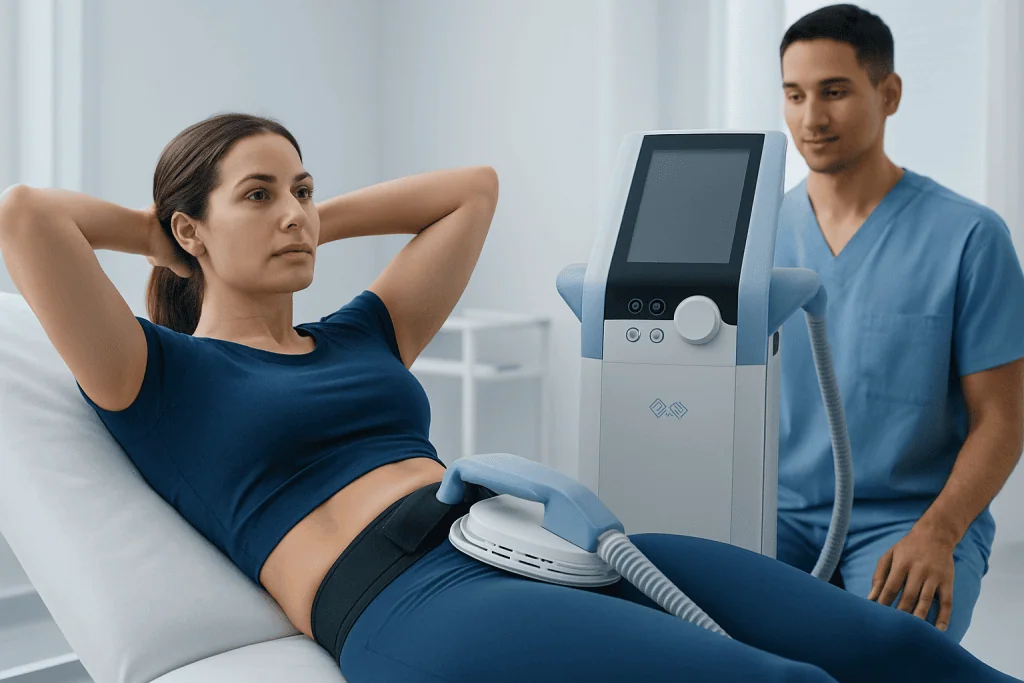
The abdominal muscles do much more than create a “six-pack” appearance. They help stabilize the trunk while sitting, standing, walking, reaching, carrying, coughing, and lifting. The deeper core muscles act like a supportive cylinder around the torso, working with the back and hip muscles to control pressure and movement.
Core strength can matter for athletes, office workers, older adults, and people returning to activity after illness or pregnancy. A well-conditioned core may help improve exercise technique, reduce unnecessary spinal motion, and support balance. This is one reason core training often appears in physical therapy and rehabilitation programs.
Good core function is also linked to breathing mechanics. The diaphragm, abdominal wall, and pelvic floor coordinate with each other to manage pressure inside the abdomen. This may influence how comfortably and efficiently a person breathes during effort and how well they brace during lifting.
Because the core is a system rather than a single muscle, the most effective ab workouts usually include a mix of anti-extension, anti-rotation, controlled flexion, and hip-stability exercises rather than endless crunches alone.
Common myths about ab workouts

One of the most persistent myths is that hundreds of sit-ups will remove belly fat. Research on exercise and body composition shows that fat loss is generally systemic, not local. Ab exercises can build or maintain abdominal muscles, but they do not specifically force the body to burn fat from the waist.
Another myth is that harder always means better. Very intense or poorly controlled abdominal training can place stress on the neck, hip flexors, or lower back, especially when technique is rushed. More repetitions are not necessarily more effective if the movement is no longer controlled or if the wrong muscles are taking over.
Some people also assume that a strong core means only doing flexion-based exercises such as crunches. In reality, planks, dead bugs, bird-dogs, carries, and resisted rotation exercises may train the core more functionally for everyday movement. Different exercises challenge the trunk in different ways.
Finally, visible abdominal muscles are not a reliable measure of health. Someone may have defined abs and still have poor sleep, low fitness, pain, or an unbalanced routine. Health-focused ab workouts should support movement and resilience, not unrealistic body expectations.
What types of ab workouts are evidence-based
Evidence-based ab training usually emphasizes controlled movement, gradual progression, and exercise selection that matches a person’s fitness level and goals. Beginners often benefit from low-load stabilization work before advanced movements are added. The goal is to learn how to brace, breathe, and move without compensating through the neck or lower back.
Examples of commonly used core exercises include planks, side planks, dead bugs, bird-dogs, glute bridges, and Pallof presses. These can improve trunk endurance and control with relatively low spinal stress when they are performed correctly. Crunches, curl-ups, and leg raises may also be used selectively, but they are not essential for everyone.
A balanced approach often includes:
- Anti-extension work, such as planks
- Anti-rotation work, such as Pallof presses
- Lateral stability work, such as side planks or carries
- Controlled spinal flexion when appropriate
- Hip and glute strengthening to support pelvic control
People with ongoing lower back symptoms may benefit from clinical guidance before increasing core training intensity. In some cases, abdominal exercises should be modified as part of a broader evaluation of back pain or movement-related discomfort. Where rehabilitation is needed, structured physical therapy and rehabilitation can help tailor exercises to the person’s condition and goals.
How to build a safe and effective ab routine
For most healthy adults, ab workouts do not need to be long to be useful. Two to four sessions per week, added to a general exercise program, may be enough for meaningful progress. A short routine done consistently with proper technique is usually more beneficial than occasional very intense sessions.
Form is important. The neck should stay relaxed, breathing should remain steady, and the movement should be controlled rather than jerky. If a person feels mostly neck strain, hip-flexor gripping, or sharp lower-back discomfort, the exercise may need to be changed or regressed. Starting with shorter holds or fewer repetitions is often appropriate.
Progression can come from increasing time under tension, adding resistance, changing leverage, or making the exercise less stable. However, progression should be gradual. Rest and recovery matter because the abdominal muscles, like all muscles, adapt over time rather than instantly.
General strength training and aerobic exercise should not be ignored. Walking, cycling, swimming, resistance training, and mobility work complement core exercises and help support weight management, cardiovascular health, and daily function. For some people, a broader plan that includes medical nutrition therapy may be helpful when body composition goals are part of the discussion.
Who may need caution with ab workouts
Ab workouts are safe for many people, but certain situations call for extra care. People with recent abdominal surgery, hernia symptoms, significant pelvic floor problems, uncontrolled high blood pressure, severe osteoporosis, or an acute back injury should speak with a qualified clinician before starting or intensifying core exercises.
Pregnancy and the postpartum period also deserve individualized guidance. Some abdominal exercises may need to be modified depending on comfort, pelvic floor symptoms, abdominal wall separation, or delivery recovery. This does not mean a person must avoid all core work; it means the program should fit the stage of recovery and medical advice.
If there is persistent abdominal bulging, groin discomfort, or a new lump that worsens with straining, a hernia may need to be ruled out before exercise continues. In that setting, symptoms may overlap with hernia concerns, and self-directed high-pressure exercises may not be appropriate until a doctor has evaluated the problem.
People with obesity, deconditioning, chronic illness, or pain may still benefit from core exercise, but a lower-impact starting point is often better. In some cases, supervised exercise planning or obesity surgery follow-up support may be part of a broader health strategy, depending on the individual’s medical needs.
When to seek medical care
Medical attention is appropriate if ab workouts cause sharp pain, chest symptoms, fainting, severe shortness of breath, or pain that radiates down the leg or into the groin. Exercise should also be stopped if there is sudden swelling, a visible abdominal or groin bulge, or symptoms that suggest injury rather than normal muscle fatigue.
A doctor should also assess pain that persists for more than a few days, discomfort that repeatedly returns with core exercise, or abdominal symptoms such as nausea, bowel changes, fever, or unexplained weight loss. These features are not typical signs of simple post-exercise soreness.
For people with chronic back pain, postpartum changes, previous surgery, or uncertainty about safe progression, a clinical evaluation can be useful before starting a more demanding routine. This is especially true when the goal is not only fitness but also symptom relief or rehabilitation.
Acibadem International’s multidisciplinary specialists and JCI-accredited hospitals diagnose and treat movement-related, musculoskeletal, and abdominal conditions for international patients, helping determine whether symptoms are exercise-related or need further medical care.
Frequently asked questions
Do ab workouts burn belly fat?
Ab workouts strengthen the abdominal muscles, but they do not directly burn fat only from the stomach area. Fat loss usually happens throughout the body and depends on total activity, nutrition, sleep, stress, and individual biology.
How often should a person do ab workouts?
Many people do well with core training two to four times per week as part of a balanced exercise plan. The ideal schedule depends on fitness level, recovery, exercise intensity, and whether there are any medical issues or injuries.
Are planks better than crunches?
Neither is universally better for every person or every goal. Planks can improve trunk stability and endurance with less spinal motion, while crunches emphasize abdominal flexion; a balanced program may use one, both, or neither depending on the individual.
Can ab workouts help lower back pain?
They may help some people by improving trunk control and movement patterns, but they are not a guaranteed solution. Back pain has many causes, so persistent or severe symptoms should be assessed by a qualified clinician.
Is it normal to feel ab workouts in the neck or hip flexors?
Mild involvement of nearby muscles can happen, but strong neck strain or dominant hip-flexor discomfort often suggests that technique or exercise choice should be adjusted. Reducing intensity, improving form, or switching to a simpler exercise can help.
Should people with a hernia or after surgery do ab workouts?
They should first get medical guidance. Depending on the type of hernia, surgery, and stage of recovery, some exercises may be safe while others may increase pressure in ways that are not advisable.
References
- World Health Organization
- American College of Sports Medicine
- National Institute of Arthritis and Musculoskeletal and Skin Diseases
- National Institute of Diabetes and Digestive and Kidney Diseases
- American Physical Therapy Association
This article is for general information only and is not a substitute for professional medical advice. Please consult a qualified doctor about your individual situation.
Medical weight-loss options in Turkey — costs & eligibility
JCI-accredited · board-certified surgeons · reply within 24h
Add us as a Preferred Source to see more of our trusted health content across Google Search, AI Overviews and Discover.
Check your numbers in seconds
BMI, calories, due date, blood pressure and 30+ more clinical calculators — free, instant, doctor-reviewed ranges.