Breast augmentation Risks & Side Effects Explained by Surgeons

Breast augmentation risks include bleeding, infection, scarring, changes in nipple or breast sensation, implant-related complications and anesthesia risks. Breast implants are not lifetime devices; some people need additional surgery later because of rupture, capsular contracture, cosmetic changes or personal preference.
Key Takeaways
- Breast augmentation risks include bleeding, infection, scarring, changes in nipple or breast sensation, implant-related complications and anesthesia risks.
- Breast implants are not lifetime devices; some people need additional surgery later because of rupture, capsular contracture, cosmetic changes or personal preference.
- Recovery usually involves temporary swelling, soreness and activity restrictions, with healing continuing over several weeks to months.
- Careful candidate selection, accredited surgical facilities, following aftercare instructions and attending follow-up visits can reduce avoidable risks.
- Urgent assessment is important for chest pain, shortness of breath, fever, rapidly increasing swelling, severe pain or wound concerns after surgery.
Breast augmentation is a commonly performed surgical procedure, but it involves real short- and long-term risks that should be understood before making a decision. A consultation with a qualified plastic surgeon helps a person weigh potential benefits, alternatives, recovery needs and the likelihood of future procedures.
Overview: understanding breast augmentation risks
Breast augmentation risks include common surgical concerns such as bleeding, infection, scarring and anesthesia reactions, as well as implant-specific issues including capsular contracture, rupture and changes in breast sensation. Most people recover without serious complications, but no operation is risk-free and breast implants may require monitoring or further surgery over time.
Breast augmentation, also called augmentation mammoplasty, is surgery to increase breast volume or change breast shape using implants or, in selected cases, fat transfer. People may consider it for cosmetic reasons, after pregnancy-related volume changes, or as part of breast reconstruction. The decision is personal and should be based on clear information rather than pressure or expectations of perfection.
This article focuses on safety, realistic outcomes and the questions that support informed consent. For a fuller overview of the operation itself, patients can review breast augmentation treatment information and discuss their individual health circumstances with a board-qualified plastic surgeon.
How the procedure works and who may be a candidate
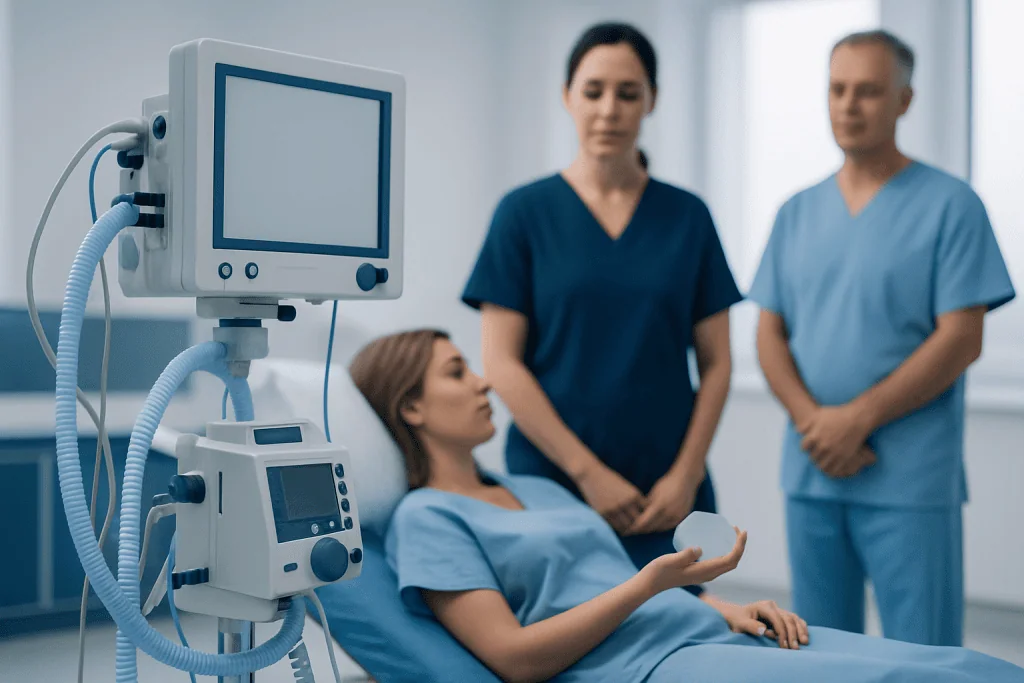
Implant-based breast augmentation involves placing a silicone gel-filled or saline-filled implant behind the breast tissue or beneath the chest muscle. The surgeon and patient decide on implant type, size, shape, surface, incision location and implant position before surgery. These choices can affect appearance, recovery and the pattern of possible complications.
A suitable candidate is generally an adult in good overall health who has fully developed breasts, understands the limitations of surgery and has realistic goals. A surgeon will ask about medical conditions, medications, allergies, prior breast operations, smoking or nicotine use, family history of breast cancer and plans for pregnancy or breastfeeding. Augmentation does not necessarily prevent breastfeeding, but some people may have changes in milk production or nipple sensation depending on surgical factors.
People with uncontrolled health conditions, active infection, poorly managed diabetes, certain bleeding disorders or ongoing nicotine use may be advised to postpone surgery. It is also important to discuss body image concerns openly. Surgery can improve breast size or contour, but it cannot reliably resolve distress related to appearance or guarantee a particular emotional outcome.
- Implants are medical devices, not permanent lifetime devices.
- Weight change, aging, pregnancy and skin elasticity can alter breast appearance after surgery.
- Future breast imaging and any later breast surgery should take implants into account.
What happens during breast augmentation
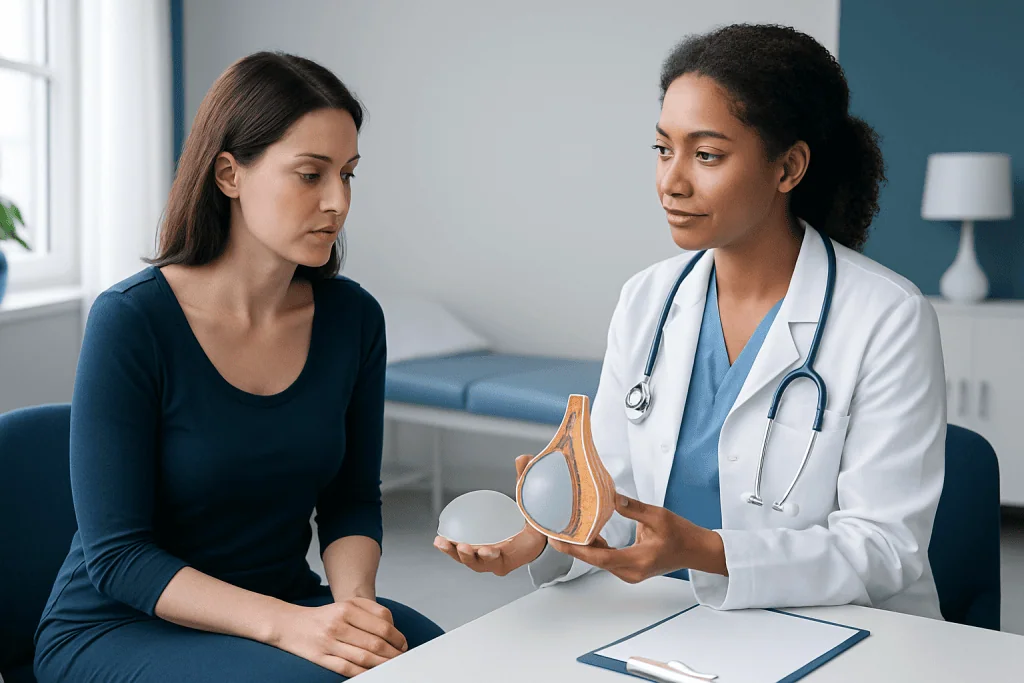
Before surgery, the clinical team reviews the treatment plan, medical history and consent documents. The patient may have preoperative tests when clinically appropriate and receives instructions about food and drink, medications, nicotine avoidance and arranging support at home. The operation is usually performed under general anesthesia in an appropriately equipped surgical facility.
During the procedure, the surgeon makes an incision, creates a pocket for the implant and places the implant in the planned position. Incisions may be located in the breast crease, around the edge of the areola or, less commonly, in the armpit. The surgeon then checks breast symmetry and closes the incisions with sutures, surgical tape or skin adhesive.
The operation is followed by monitoring in a recovery area while anesthesia wears off. Many patients return home the same day, although individual arrangements vary. A surgical bra or support garment may be recommended, and the team provides written instructions for wound care, medication use, activity and scheduled follow-up appointments.
Possible side effects and surgical risks
Short-term side effects are expected during healing and may include soreness, tightness, swelling, bruising, temporary numbness, sensitivity changes and fatigue. The breasts can initially sit high or feel firm before tissues gradually settle. One side may heal differently from the other, particularly in the early weeks.
Less common but important complications include bleeding around an implant, known as a hematoma; fluid buildup, called a seroma; wound-healing problems; infection; poor scarring; and anesthesia-related complications. Infection can sometimes require antibiotics, drainage or removal of the implant. A deep infection, severe bleeding or tissue damage needs prompt medical care.
Implant-specific complications can occur months or years later. Capsular contracture happens when the scar tissue naturally formed around an implant tightens excessively, causing firmness, distortion, discomfort or changes in breast position. Implants may also shift, rotate, wrinkle, become visible or palpable, or lead to asymmetry. Some of these concerns may be managed with observation, while others require revision surgery.
Rupture or leakage is another possible complication. With saline implants, the breast usually loses volume as the sterile saltwater is absorbed by the body. Silicone implant rupture may be less obvious and can require imaging to assess. People with silicone gel implants should follow their surgeon’s and local regulatory guidance about ongoing clinical review and imaging when indicated.
- Changes in nipple or breast sensation may be temporary or permanent.
- Some people experience persistent pain or discomfort after breast surgery.
- Breast implant-associated anaplastic large cell lymphoma (BIA-ALCL) is an uncommon lymphoma linked mainly to certain textured implants; it is not breast cancer.
- Very rarely, a mass, persistent swelling or fluid around an implant may need testing to exclude implant-associated disease or another breast condition.
Benefits, long-term expectations and follow-up
For appropriately selected patients, breast augmentation can increase breast volume, improve symmetry or restore fullness that has changed with time. Satisfaction is often linked to having goals that are achievable for a person’s anatomy, skin quality and existing breast shape. A detailed consultation and clear communication about desired outcomes are central to planning.
However, augmentation does not stop natural breast changes. Pregnancy, weight fluctuations, hormonal changes and aging can affect breast shape and skin support. Some individuals eventually choose a breast lift, implant exchange, implant removal or another revision procedure. The possibility of future surgery is a fundamental part of long-term planning rather than a sign that the original procedure necessarily failed.
Breast implants do not eliminate the need for routine breast health care. Patients should continue age- and risk-appropriate breast cancer screening. They should tell mammography staff that they have implants, as special views may be used to examine as much breast tissue as possible. New lumps, persistent pain, skin changes or nipple discharge should be assessed rather than assumed to be implant-related.
Recovery timeline and self-care
In the first few days, swelling, pressure, discomfort and reduced arm movement are common. Pain relief and other medicines should be used exactly as prescribed or advised by the surgical team. Rest, hydration, gentle walking and help with daily tasks can support early recovery. Driving should wait until the person is no longer taking sedating medication and can comfortably control the vehicle.
Many people can return to light desk-based work within about one to two weeks, but recovery varies with the surgical approach, job demands and individual healing. Heavy lifting, vigorous upper-body exercise, swimming and activities that could strain the incisions are usually restricted for a period set by the surgeon. Support garments should be worn as instructed.
Swelling and implant position continue to change over several weeks, and scars mature over months. Patients should not compare their healing closely with another person’s timeline. Keeping follow-up appointments allows the surgeon to check incision healing, breast symmetry, implant position and any concerns that may need early attention.
Risk reduction begins before surgery. Avoiding smoking, vaping and other nicotine products as advised is especially important because nicotine can impair blood flow and wound healing. Patients should also disclose all supplements and medicines, follow preoperative instructions carefully and avoid changing treatment plans without clinical advice.
When to seek medical care
Patients should contact their surgical team promptly if they develop increasing redness, warmth, drainage, worsening one-sided swelling, a fever, pain that is not controlled by the agreed plan, an opening in the incision or a sudden change in breast shape. These symptoms do not always mean a serious complication, but timely assessment is the safest approach.
Emergency medical care is needed for chest pain, shortness of breath, fainting, confusion, signs of a severe allergic reaction or sudden severe symptoms after surgery. These may have causes unrelated to implants, but they should never be managed at home.
Long after healing, new swelling, a lump, persistent breast pain, hardening, noticeable asymmetry or skin and nipple changes should be evaluated by a clinician. Acibadem International’s multidisciplinary specialists and JCI-accredited hospitals assess and treat breast augmentation concerns for international patients, with care tailored to the individual’s surgical history and needs.
Frequently asked questions
Are breast augmentation risks common?
Mild swelling, bruising, discomfort and temporary sensation changes are common during recovery. Serious complications are less common, but they can occur, which is why informed consent, qualified surgical care and follow-up are important.
Can breast implants cause capsular contracture?
All implants develop a scar tissue capsule as part of normal healing. Capsular contracture occurs when that capsule becomes unusually tight, which can make the breast feel firm, look distorted or become uncomfortable. Treatment depends on severity and may sometimes involve further surgery.
How can a person tell if a breast implant has ruptured?
A saline implant rupture often causes a noticeable loss of breast volume. A silicone implant rupture may not cause obvious symptoms, so a clinical examination and imaging may be needed if there is a concern. Any new change in shape, firmness or discomfort should be discussed with a doctor.
Do breast implants need to be replaced after a set number of years?
There is no universal schedule requiring replacement at a specific time if an implant is functioning well and there are no concerns. However, implants are not lifetime devices, and replacement or removal may become necessary because of complications, cosmetic changes or personal preference.
Can someone have mammograms after breast augmentation?
Yes. People with implants should continue recommended breast screening and inform the imaging center before the appointment. Radiology staff can use additional views to help evaluate breast tissue around implants.
Does breast augmentation affect breastfeeding?
Many people can breastfeed after augmentation, but outcomes vary. Incision placement, implant position, prior breast function and nerve or glandular tissue changes can affect milk production or sensation. This should be discussed before surgery, especially for people planning future pregnancy.
References
- U.S. Food and Drug Administration
- American Society of Plastic Surgeons
- National Health Service
- American Cancer Society
- World Health Organization
This article is for general information only and is not a substitute for professional medical advice. Please consult a qualified doctor about your individual situation.
Breast Augmentation in Turkey — costs, top hospitals & a free quote
JCI-accredited · board-certified surgeons · reply within 24h
Add us as a Preferred Source to see more of our trusted health content across Google Search, AI Overviews and Discover.

Plastic, Reconstructive & Aesthetic Surgery
Reconstructive and aesthetic procedures for the face and body, performed by experienced surgeons.
35 specialists in this unit