

Knee Effusion Remedies: An Evidence-Based Guide for Patients

Knee effusion means excess fluid inside or around the knee joint, often called a swollen knee or "water on the knee." Helpful first-line remedies usually include rest, ice, compression, elevation, and avoiding activities that worsen pain.
Key Takeaways
- Knee effusion means excess fluid inside or around the knee joint, often called a swollen knee or "water on the knee."
- Helpful first-line remedies usually include rest, ice, compression, elevation, and avoiding activities that worsen pain.
- The most effective treatment is to address the underlying cause, such as injury, osteoarthritis, gout, or infection.
- Urgent medical care is needed for fever, severe pain, inability to bear weight, a hot red joint, or sudden swelling after trauma.
- A doctor may use examination, imaging, or joint fluid analysis to confirm the cause and guide treatment.
Knee effusion remedies can help reduce pain and swelling, but the right approach depends on why fluid has built up in the joint. Many people improve with rest, ice, compression, and elevation, while others need medical treatment for injury, arthritis, infection, or inflammation.
Overview: What Knee Effusion Means and What Helps
Knee effusion remedies are aimed at reducing swelling, easing discomfort, and treating the reason fluid has collected in the joint. For many patients, the most useful first steps are rest, ice, compression, and elevation, along with temporarily avoiding kneeling, squatting, running, or other activities that increase pain.
Knee effusion is the medical term for excess fluid in or around the knee joint. People often describe it as a swollen knee or “water on the knee.” The swelling may appear gradually, as with osteoarthritis, or come on suddenly after an injury such as a ligament tear or meniscus damage.
Although home care can be appropriate for mild cases, knee effusion is a sign rather than a diagnosis. The best treatment depends on the cause. Common reasons include overuse, arthritis, injury, crystal-related inflammation such as gout, and less commonly infection. Understanding that difference helps patients choose safe self-care while knowing when medical evaluation is important.
Symptoms and How Knee Effusion May Feel
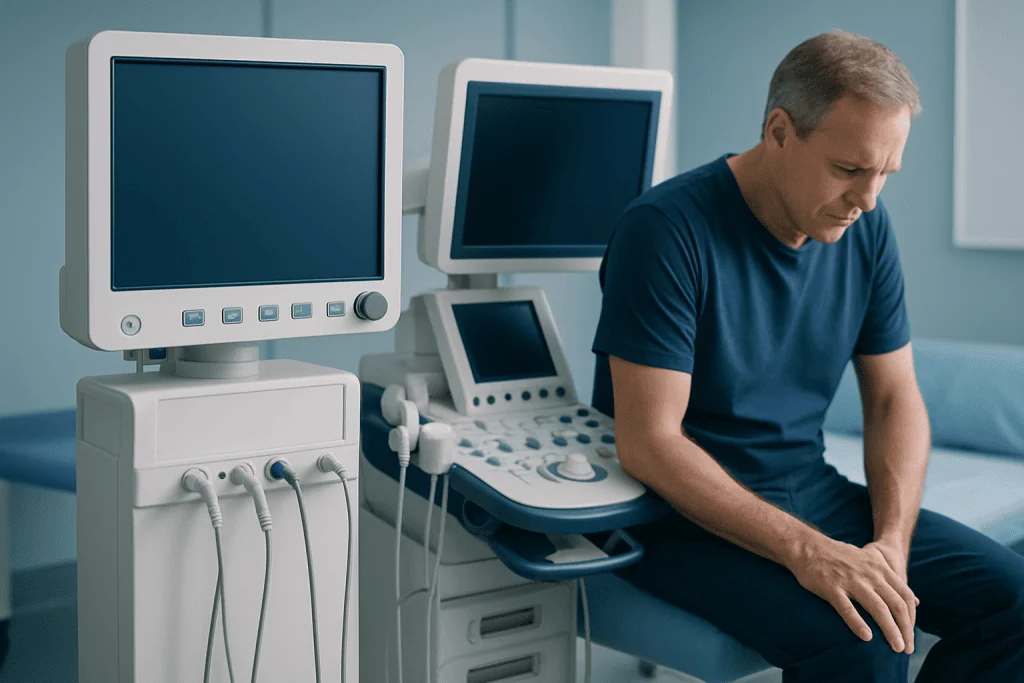
The most noticeable symptom is swelling around the knee. The joint may look puffy, feel tight, or seem larger than the other knee. Some people notice a feeling of fullness behind the kneecap or around the sides of the joint.
Pain varies widely. In mild cases, the knee may feel only stiff or uncomfortable after activity. In more significant effusion, bending and straightening the knee can become difficult, and walking, climbing stairs, or standing up from a chair may cause pain. The skin may feel warm, and shoes or clothing may fit differently because of altered movement.
Other symptoms can suggest the cause. A popping injury followed by swelling may point to internal knee damage. Morning stiffness and long-term aching may suggest osteoarthritis or another inflammatory joint condition. Sudden severe pain with swelling can occur in crystal arthritis. Fever, pronounced warmth, or redness raises concern for infection and needs prompt medical attention.
- Visible swelling or puffiness around the knee
- Stiffness and reduced range of motion
- Pain with walking, bending, or bearing weight
- Warmth, tenderness, or a feeling of pressure in the joint
- Instability or the sense that the knee may give way
Common Causes and Risk Factors
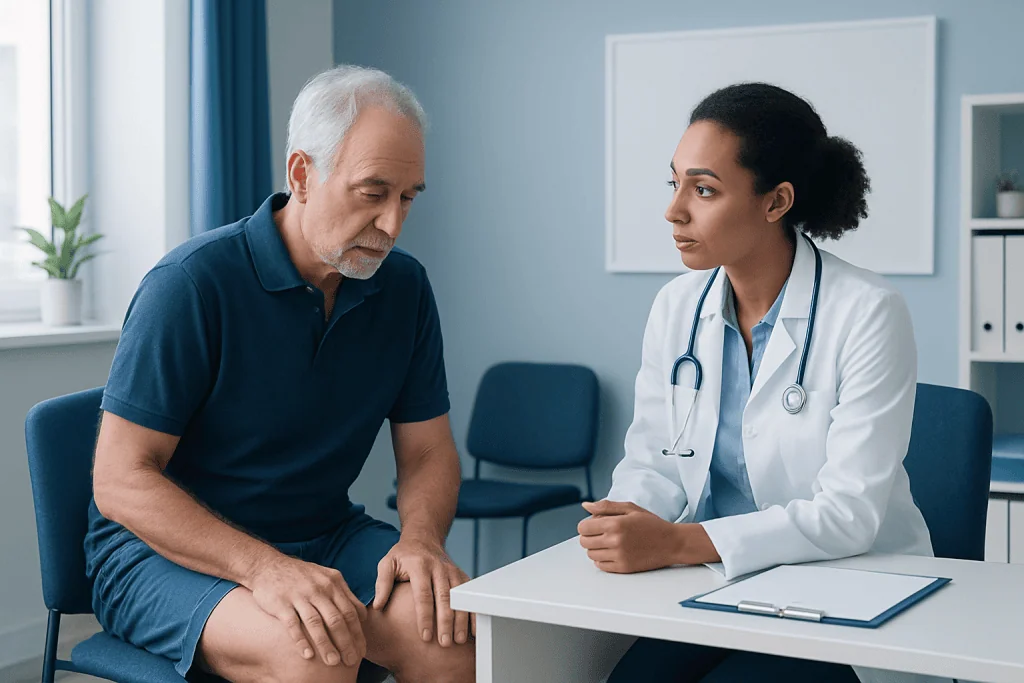
Knee effusion can happen for several reasons. Trauma is a common cause, especially in sports or falls. Damage to cartilage, ligaments, or the meniscus can trigger bleeding or inflammation inside the joint. Patients with recurrent pain after twisting injuries may need evaluation for structural problems that sometimes overlap with a meniscus tear.
Non-traumatic causes are also common. Osteoarthritis can lead to swelling when the joint lining becomes irritated. Inflammatory conditions such as rheumatoid arthritis may cause persistent swelling in one or both knees. Crystal-related arthritis, including gout and pseudogout, may lead to sudden episodes of pain and effusion.
Infection is less common but especially important to rule out. Septic arthritis can damage the joint quickly and usually causes severe pain, warmth, and illness symptoms. Risk factors for knee effusion overall include prior knee injury, repetitive impact activity, obesity, older age, inflammatory arthritis, and certain metabolic conditions such as gout.
Sometimes fluid builds up because the body is reacting to strain rather than major damage. Long periods of kneeling, abrupt increases in exercise, or muscle weakness around the knee may contribute. Even in these milder situations, ongoing or repeated swelling deserves assessment because hidden joint problems can be present.
Evidence-Based Home Remedies for Mild Knee Effusion
For mild swelling without red-flag symptoms, conservative care is often the starting point. Rest does not always mean complete inactivity; it means reducing the movements that aggravate symptoms. Short-term relative rest can calm irritation while allowing gentle walking or stretching as tolerated.
Ice may help reduce pain and swelling, especially after activity or a minor injury. A cold pack wrapped in cloth can be applied for short intervals several times a day. Compression with an elastic knee sleeve or bandage may provide support and help limit swelling, as long as it is not so tight that it causes numbness, tingling, or increased pain. Elevation, ideally with the leg supported above heart level when resting, may also help.
Over-the-counter pain relief may be appropriate for some adults, but it should be used carefully and according to the product label. Not everyone can safely take anti-inflammatory medicines, especially people with kidney disease, stomach ulcers, blood thinner use, or some heart conditions. A pharmacist or doctor can advise on what is suitable.
Gentle movement is usually better than prolonged immobility once severe pain is excluded. Light range-of-motion exercises can help prevent stiffness. If symptoms settle, a guided strengthening program may reduce recurrence. In some cases, a doctor may recommend physical therapy and rehabilitation to improve muscle support around the joint and restore function safely.
How Doctors Diagnose the Cause
Because knee effusion has many possible causes, diagnosis begins with the story and physical examination. A doctor will ask when the swelling started, whether there was an injury, if symptoms come and go, and whether fever, redness, locking, or instability are present. The examination may assess swelling, warmth, tenderness, range of motion, and signs of ligament or meniscus injury.
Imaging can be helpful when the cause is unclear or when injury is suspected. X-rays may show arthritis or fractures. Ultrasound can identify fluid collections and guide aspiration. Magnetic resonance imaging is often used when doctors need a closer look at soft tissues such as ligaments, cartilage, or menisci; this may be part of a broader orthopedics and traumatology assessment.
In some cases, removing a small sample of joint fluid with a needle is the most informative test. This procedure, called arthrocentesis, can check for infection, bleeding, or crystals related to gout or pseudogout. It can also temporarily relieve pressure from a tense, swollen joint.
Blood tests may be used when inflammatory arthritis, infection, or metabolic causes are suspected. The goal is not only to confirm that fluid is present, but to identify why it is present so that treatment is targeted and safe.
Medical Treatment Options Beyond Home Care
When home remedies are not enough, treatment is guided by the cause. If knee effusion comes from osteoarthritis, doctors may recommend a combination of exercise therapy, weight management when appropriate, bracing, and pain-relieving or anti-inflammatory medicines. If there is a significant flare or persistent swelling, some patients may benefit from procedures or injections discussed with a specialist.
For inflammatory arthritis, treatment usually focuses on controlling the underlying immune or inflammatory process. Crystal arthritis may require medications that reduce inflammation and help prevent future attacks. If the swelling is due to infection, prompt antibiotics and urgent joint care are essential.
Injury-related effusion may need targeted management. A torn meniscus, ligament injury, or cartilage damage can sometimes improve with rehabilitation, while other cases may require procedures. Some patients with ongoing mechanical symptoms, recurrent swelling, or unstable injury patterns may be evaluated for knee arthroscopy or other orthopedic treatment options.
If symptoms relate to age-related joint wear, evaluation may also include knee osteoarthritis. Near the end of the care pathway, and only when clearly indicated, advanced options may be considered for severe joint damage. Acibadem International’s multidisciplinary specialists and JCI-accredited hospitals diagnose and treat knee conditions for international patients using coordinated orthopedic, radiology, and rehabilitation care.
Prevention and Self-Care for Recurring Swelling
Not every episode of knee effusion can be prevented, but recurrence may be reduced by protecting joint health. Building strength in the quadriceps, hamstrings, hips, and core can improve alignment and reduce stress on the knee. A gradual approach to exercise is important; sudden increases in distance, speed, or intensity often trigger irritation.
Supportive footwear, proper technique during sports, and attention to recovery days can also help. For people who kneel often for work or daily activities, knee pads and regular breaks may reduce repeated pressure on the joint. If body weight is contributing to joint load, even modest long-term changes can support knee comfort and function.
Managing underlying health conditions matters too. Patients with gout may benefit from ongoing medical care to reduce attacks. Those with arthritis often do better when they stay active with low-impact exercise such as walking, cycling, or swimming rather than avoiding movement completely.
Self-care works best when patients monitor patterns. Repeated swelling after specific movements, exercise sessions, or minor twists may indicate an untreated structural issue. Keeping a simple symptom diary can help a doctor identify triggers and suggest more personalized prevention strategies.
When to Seek Medical Care
Medical care is recommended if knee swelling is significant, keeps returning, or does not improve after a few days of home treatment. It is also wise to seek assessment when the knee feels unstable, locks, or cannot fully bend or straighten. These symptoms can suggest internal joint injury rather than simple overuse.
Urgent evaluation is needed if the knee becomes very hot, red, or extremely painful; if there is fever; or if the person cannot bear weight. Sudden swelling after trauma, especially with a pop or immediate difficulty walking, should also be checked promptly. These features may signal infection, fracture, bleeding, or a major soft tissue injury.
For children, older adults, or anyone with immune system problems, threshold for medical review should be lower. Prompt assessment helps protect the joint and can prevent complications by ensuring the real cause is identified early.
Frequently asked questions
What is the best remedy for knee effusion?
The best initial remedy for mild knee effusion is usually rest, ice, compression, and elevation while avoiding activities that worsen symptoms. However, the most effective treatment overall is addressing the underlying cause, such as arthritis, injury, gout, or infection.
Can knee effusion go away on its own?
Yes, mild knee effusion from minor overuse or a small strain may improve on its own with conservative care. If swelling is severe, keeps coming back, or is associated with fever, redness, or difficulty bearing weight, medical assessment is important.
Is walking good for a swollen knee?
Gentle walking may be reasonable if it does not increase pain and the knee feels stable. High-impact exercise, deep squats, and twisting movements are usually better avoided until the swelling improves and the cause is clearer.
Should fluid be drained from a swollen knee?
Not every swollen knee needs drainage. Doctors may remove fluid when they need to test it for infection or crystals, or when the swelling is tense and painful enough that pressure relief may help.
How long does knee effusion take to heal?
Recovery time depends on the cause. Minor irritation may settle in days to a couple of weeks, while arthritis flares, ligament injuries, or meniscus problems can take longer and may require structured treatment.
When is a swollen knee an emergency?
A swollen knee needs urgent medical attention if it is hot, red, very painful, associated with fever, or if the person cannot bear weight. Sudden swelling after a serious injury also requires prompt evaluation.
References
- American Academy of Orthopaedic Surgeons
- National Institute of Arthritis and Musculoskeletal and Skin Diseases
- National Health Service
- Mayo Clinic
- Centers for Disease Control and Prevention
This article is for general information only and is not a substitute for professional medical advice. Please consult a qualified doctor about your individual situation.
Joint and spine care in Turkey — expert assessment & treatment
JCI-accredited · board-certified surgeons · reply within 24h
Add us as a Preferred Source to see more of our trusted health content across Google Search, AI Overviews and Discover.

More from the Health Library

Organic Green Tea: An Evidence-Based Guide for Patients

Insulin Resistance — Explained by Medical Evidence, Not Myths

Gentle Exfoliator for Milia — Explained by Medical Evidence, Not Myths

50kg: Symptoms, Causes, and Treatment — Complete Patient Guide

Sprained Ankle: An Evidence-Based Guide for Patients

Gut Feeling: An Evidence-Based Guide for Patients
Orthopedic Surgery & Traumatology Specialists at Acibadem
Prof. Dr. Arel Gereli
Orthopedic Surgery & Traumatology
Fzt. Asım Sakallı
Physical Medicine & Rehabilitation
Fzt. Aslı Hacıoğlu
Physical Medicine & Rehabilitation
Assoc. Prof. Dr. Ata Can
Orthopedic Surgery & Traumatology