Humidifier for Voice Loss — Explained by Medical Evidence, Not Myths

A humidifier may ease dryness and irritation that contribute to temporary hoarseness. It works best as supportive care alongside voice rest, hydration, and avoiding irritants.
Key Takeaways
- A humidifier may ease dryness and irritation that contribute to temporary hoarseness.
- It works best as supportive care alongside voice rest, hydration, and avoiding irritants.
- Not all voice loss is caused by dry air; infection, reflux, allergies, and vocal strain are common causes.
- A cool-mist humidifier is generally preferred and should be cleaned regularly to avoid mold and bacteria.
- Medical evaluation is important if voice loss lasts more than two to three weeks or comes with warning signs.
A humidifier for voice loss can be helpful when dry air is worsening throat and vocal cord irritation, but it is supportive care rather than a cure. Whether it helps depends on the cause of hoarseness, which may range from a simple viral illness to reflux, allergies, overuse, or a vocal cord problem.
Overview: Can a Humidifier Help Voice Loss?
A humidifier for voice loss can help in some situations, especially when indoor air is dry and the throat and vocal cords are irritated. By adding moisture to the air, a humidifier may reduce the feeling of dryness, soothe the upper airway, and make speaking more comfortable while the voice recovers.
Medical evidence supports humidification as a reasonable comfort measure, but not as a stand-alone treatment for every cause of hoarseness. Voice loss may happen because of viral laryngitis, heavy voice use, allergies, acid reflux, smoking, or irritation from pollutants. In those cases, a humidifier may relieve symptoms, but it will not correct the underlying problem by itself.
This is why it is helpful to think of a humidifier as part of a broader care plan. Resting the voice, drinking enough fluids, avoiding throat clearing, and treating the cause are usually more important than any single home remedy. If symptoms persist, evaluation by an ENT specialist may be needed to rule out conditions such as laryngitis or other vocal cord disorders.
How Dry Air Affects the Voice
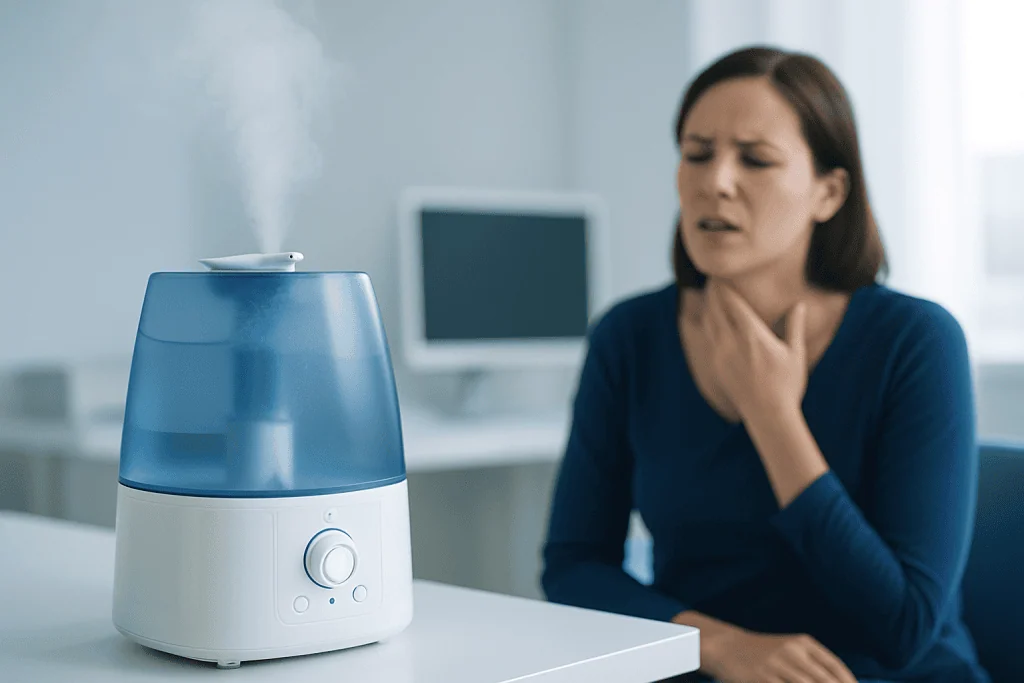
The voice is produced when air moves through the larynx, also called the voice box, causing the vocal cords to vibrate. For clear sound, the tissues of the vocal tract need adequate surface moisture. When the air is very dry, the lining of the throat and larynx can lose moisture more easily, which may increase friction during speaking.
This can lead to symptoms such as scratchiness, throat discomfort, a dry cough, and a weak or rough voice. Dryness may be more noticeable in winter, in air-conditioned spaces, on airplanes, or in homes heated without enough humidity. People who talk a great deal for work, sing, or already have mild throat irritation may notice symptoms sooner.
Humidification may improve comfort by reducing environmental dryness around the airway. However, hydration from drinking fluids remains important because moisture in room air does not replace the body’s own fluid balance. In other words, humidified air may support the vocal tract, but it works best when combined with general self-care.
When a Humidifier Is Likely to Help — and When It Is Not

A humidifier is most likely to help when voice loss is linked to dryness, mild irritation, or recovery from a short-term upper respiratory infection. For example, after a cold, the throat may feel dry and the voice may remain hoarse for a few days even after the fever or congestion improves. In that setting, moist air may reduce irritation and help the person feel more comfortable.
It may also be useful for people whose symptoms are worse at night or on waking, especially if they sleep in a very dry room. Some people with seasonal allergies or mild postnasal drip also find that balanced humidity eases throat discomfort. That said, too much humidity can worsen mold exposure and may irritate some people, so more is not always better.
A humidifier is less likely to solve voice loss caused by vocal overuse, bacterial infection, significant acid reflux, nerve-related voice problems, or growths such as nodules or polyps. It also will not treat more serious causes of persistent hoarseness. If there is an ongoing problem with swallowing, pain, or recurrent hoarseness, a doctor may recommend detailed assessment and, in some cases, ENT diagnosis and treatment.
What Else Causes Voice Loss?
Voice loss, also called hoarseness or dysphonia, has many possible causes. Short-term causes include viral laryngitis, shouting, prolonged speaking, coughing, and throat irritation from smoke or pollution. Reflux can also affect the voice, particularly when stomach contents reach the throat and larynx, leading to chronic irritation.
Allergies, postnasal drip, asthma inhalers, and dehydration can also contribute. In some people, the vocal cords develop swelling, nodules, polyps, or cysts after repeated strain. Less commonly, persistent hoarseness may be related to thyroid problems, neurologic conditions, or tumors involving the larynx.
Because the range of causes is so broad, the time course matters. A hoarse voice that follows a cold and improves within days is different from a voice change that slowly worsens over weeks. Persistent or unexplained symptoms may need review for conditions affecting the throat, voice box, or reflux.
- Common short-term causes: colds, viral laryngitis, shouting, dry air
- Common ongoing causes: reflux, allergies, smoking, chronic voice strain
- Less common but important causes: vocal cord lesions, nerve problems, tumors
Evidence-Based Self-Care for Temporary Hoarseness
For temporary voice loss, the most evidence-based steps are simple and practical. Voice rest is one of the most important. This means reducing talking when possible and avoiding whispering, which can strain the voice as much as speaking loudly. Gentle use of the voice is usually better than forcing sound through a strained throat.
Hydration is also important. Drinking water regularly helps support overall tissue moisture, while avoiding smoking and secondhand smoke reduces irritation. Many clinicians also advise limiting alcohol and excess caffeine if they seem to worsen dryness. If reflux is contributing, avoiding late meals and trigger foods may be helpful.
Humidified air can be added to these measures, especially in dry environments. Steam from a shower may provide short-term comfort, but hot steam should be used carefully to avoid burns. If symptoms are frequent or linked to chronic throat irritation, an evaluation may be needed to identify whether treatment such as voice disorders treatment or reflux care would be more effective than repeated home remedies alone.
How to Use a Humidifier Safely and Effectively
If someone wants to try a humidifier for voice loss, a cool-mist device is generally the simplest choice for home use. The goal is to maintain comfortable indoor humidity, not to create a damp room. Excess humidity can encourage mold, dust mites, and musty air, which may worsen allergies and throat symptoms rather than improve them.
Good cleaning habits matter. Humidifiers that are not emptied and cleaned regularly can release irritants, mold, or bacteria into the air. Following the manufacturer’s instructions, changing the water daily, and cleaning the tank as recommended are important safety steps. Distilled or demineralized water may reduce mineral buildup in some devices.
Placement also helps. Keeping the humidifier near, but not directly against, the bed can make nighttime air more comfortable. It is best to monitor the room so that windows are not fogging and surfaces are not staying damp. If a person develops worsening cough, allergy symptoms, or a musty smell in the room, the device may need adjustment or more thorough cleaning.
How Doctors Evaluate Ongoing Hoarseness
When voice loss does not improve as expected, medical evaluation focuses on identifying the cause. A doctor will usually ask how long the hoarseness has lasted, whether there was a cold or heavy voice use before it began, and whether there are symptoms such as reflux, cough, trouble swallowing, neck swelling, or breathing difficulty. Smoking history and occupational voice use are also important.
An ENT specialist may examine the throat and larynx directly, often with a small flexible camera passed through the nose. This allows the specialist to look for swelling, inflammation, nodules, polyps, reduced vocal cord movement, or other structural problems. Depending on the findings, care may include medication, voice therapy, reflux management, or occasionally a procedure.
For some patients, the best next step is treatment of the underlying source rather than symptom relief alone. For example, people with long-standing sinus drainage, allergy-related irritation, or recurrent infections may benefit from broader ear, nose and throat care. Near the end of the care journey, some international patients choose centers such as Acibadem International, where multidisciplinary specialists in JCI-accredited hospitals evaluate and treat voice and throat conditions.
When to Seek Medical Care
Most short episodes of voice loss improve with time, hydration, and rest. However, medical advice is important if hoarseness lasts longer than two to three weeks, keeps coming back, or does not fit a simple cold or short period of voice strain. Persistent symptoms deserve evaluation because treatment depends on the exact cause.
Prompt care is especially important if voice loss is accompanied by trouble breathing, difficulty swallowing, coughing up blood, severe throat pain, a neck lump, unexplained weight loss, or hoarseness after surgery or a neck injury. Children with breathing noise, distress, or poor fluid intake should also be assessed without delay.
In general, a humidifier can support comfort, but it should not delay medical attention when warning signs are present. A qualified doctor can decide whether the issue is minor irritation or a condition that needs targeted treatment.
Frequently asked questions
Does a humidifier really help voice loss?
It can help when dry air is adding to throat and vocal cord irritation. It is most useful as a comfort measure and works best alongside hydration, voice rest, and treatment of the cause. It does not cure every reason for hoarseness.
Is a cool-mist or warm-mist humidifier better for hoarseness?
A cool-mist humidifier is often preferred for home use because it adds moisture without the burn risk of hot steam. What matters most is keeping the device clean and maintaining comfortable humidity rather than making the air overly damp.
How long should voice loss last before seeing a doctor?
If hoarseness lasts more than two to three weeks, medical evaluation is recommended. Earlier assessment is important if there are red-flag symptoms such as breathing trouble, swallowing difficulty, coughing blood, or a neck lump.
Can dry air alone cause voice loss?
Dry air can contribute to a weak, rough, or scratchy voice by irritating the throat and vocal cords. However, complete or persistent voice loss is often related to another factor as well, such as infection, reflux, allergies, or vocal overuse.
Should someone whisper when they lose their voice?
Usually no. Whispering can strain the vocal cords and may make recovery slower. Gentle speaking only when necessary and resting the voice as much as possible is generally better.
What other home measures help with temporary hoarseness?
Helpful steps include drinking enough water, avoiding smoking and secondhand smoke, resting the voice, and limiting behaviors that dry or irritate the throat. If reflux seems to be involved, avoiding late meals and personal trigger foods may also help.
References
- American Academy of Otolaryngology–Head and Neck Surgery
- National Institute on Deafness and Other Communication Disorders
- Cleveland Clinic
- Mayo Clinic
- MedlinePlus
This article is for general information only and is not a substitute for professional medical advice. Please consult a qualified doctor about your individual situation.
Persistent digestive symptoms? Get evaluated in Turkey
JCI-accredited · board-certified surgeons · reply within 24h
Add us as a Preferred Source to see more of our trusted health content across Google Search, AI Overviews and Discover.

More from the Health Library

Peritubular Capillaries: A Complete Medical Overview

2 Year Old Milestones: A Complete Medical Overview

Scalene Muscles — Explained by Medical Evidence, Not Myths

Acr Test in Urine: What Patients Need to Know

Labotomy: An Evidence-Based Guide for Patients