Greater Omentum — Explained by Medical Evidence, Not Myths

The greater omentum is a normal part of abdominal anatomy, not a disease by itself. It cushions organs, carries blood vessels, stores fat, and helps contain infection and inflammation.
Key Takeaways
- The greater omentum is a normal part of abdominal anatomy, not a disease by itself.
- It cushions organs, carries blood vessels, stores fat, and helps contain infection and inflammation.
- Problems involving the greater omentum usually relate to another condition, such as appendicitis, peritonitis, hernia, torsion, trauma, or cancer.
- Symptoms are often nonspecific and may include abdominal pain, bloating, fever, nausea, or a tender abdominal mass.
- Diagnosis commonly relies on physical examination, blood tests, ultrasound, or CT imaging.
- Treatment depends on the cause and may range from observation and medication to surgery.
The greater omentum is a large fold of fatty tissue that hangs from the stomach and drapes over the intestines. It helps protect abdominal organs, supports immune defense, stores fat, and can become involved in conditions such as infection, inflammation, hernias, and cancer spread.
Overview: what the greater omentum is
The greater omentum is a broad, apron-like layer of fatty tissue inside the abdomen. It starts from the greater curvature of the stomach, hangs down in front of the intestines, and then folds back to attach near the transverse colon. In simple terms, it is a protective internal covering that lies over many abdominal organs.
Although it is often described as “fatty tissue,” the greater omentum is much more than stored fat. It contains blood vessels, lymphatic channels, immune cells, and connective tissue. These features help it support healing and defense within the abdominal cavity.
Many people only hear about the greater omentum after a scan, surgery, or pathology report. On its own, the term usually refers to normal anatomy. It becomes medically important when it is affected by infection, inflammation, injury, reduced blood flow, hernias, or tumor spread.
What the greater omentum does in the body

The greater omentum has several roles that help explain why doctors pay attention to it. It acts as a soft cushion between organs, helping reduce friction as the intestines and stomach move. It also serves as a pathway for blood vessels and lymphatic drainage.
One of its most important functions is immune support. The greater omentum contains clusters of immune tissue that help detect and respond to inflammation or infection inside the abdomen. For this reason, it is sometimes called the “policeman of the abdomen,” because it can move toward areas of irritation and help wall them off.
It also stores fat and can vary in size from one person to another. In some situations, this tissue may limit the spread of infection. In others, however, disease can involve the omentum itself, especially when abdominal inflammation is severe or when cancers spread within the peritoneal cavity.
How the greater omentum can be involved in illness
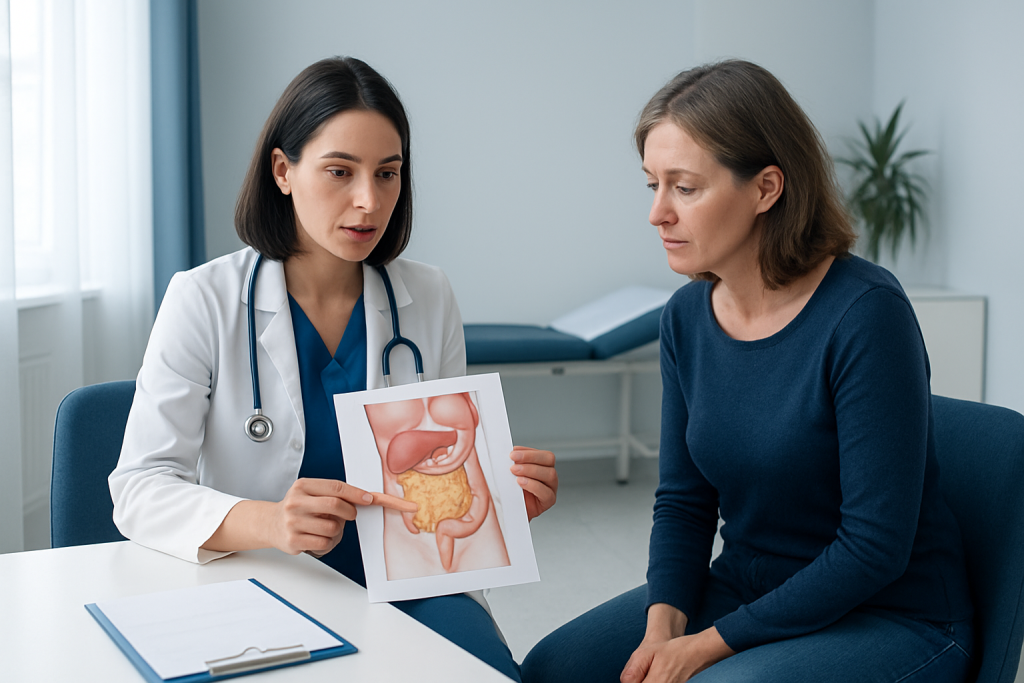
The greater omentum is not usually the original cause of symptoms, but it can become involved in many abdominal conditions. Infection and inflammation in nearby organs may extend into the omentum. Examples include appendicitis, diverticulitis, gallbladder inflammation, or widespread abdominal infection known as peritonitis.
Less commonly, the omentum itself can develop problems such as torsion, where it twists and loses blood supply, or infarction, where part of the tissue becomes damaged because circulation is reduced. These conditions can cause sudden abdominal pain and may look similar to appendicitis or other urgent causes of abdominal pain on first assessment.
The greater omentum may also protrude into a hernia sac, bleed after trauma, or show changes related to prior surgery. In oncology, it can be a site where disease spreads within the abdomen, especially from ovarian, stomach, colon, or other abdominal cancers. When scans mention “omental caking,” doctors consider the possibility of significant inflammation or cancer involvement and investigate further.
Symptoms linked to greater omentum problems
There is no single symptom that proves the greater omentum is the source of a problem. Most people present with general abdominal symptoms that overlap with many other conditions. The pattern depends on the underlying cause rather than the omentum alone.
Possible symptoms can include:
- Abdominal pain, which may be sudden or gradual
- Bloating or abdominal fullness
- Nausea or vomiting
- Fever or chills if infection is present
- Loss of appetite
- Tenderness in one area of the abdomen
- A palpable lump or swelling, sometimes related to a hernia or mass
In cases related to cancer spread, symptoms may be more subtle at first and can include increasing abdominal girth, unexplained weight loss, early fullness after eating, or fluid buildup in the abdomen. Because these complaints are nonspecific, evaluation by a qualified clinician is important when symptoms are persistent, worsening, or severe.
How doctors diagnose conditions involving the greater omentum
Diagnosis usually starts with a careful history and physical examination. Doctors ask where the pain began, how it has changed, whether there is fever, vomiting, change in bowel habits, or recent surgery or injury. Examination helps identify tenderness, guarding, hernias, or signs of fluid in the abdomen.
Blood tests may look for inflammation, infection, anemia, or organ dysfunction. Imaging is often the most useful next step because the omentum cannot usually be assessed fully from symptoms alone. Ultrasound may help in some cases, but CT scanning is often especially useful for seeing inflammation, torsion, infarction, abscess, hernia contents, or spread of tumors within the abdomen.
If there is concern for a tumor or unclear abdominal process, additional imaging or procedures may be needed. These can include MRI, diagnostic laparoscopy, or tissue sampling. Doctors then decide whether the findings fit a self-limited inflammatory process, an urgent surgical condition, or a disease that requires specialist care such as gastroenterology evaluation or oncology care.
Treatment options and what recovery depends on
Treatment is based on the cause, not simply on the presence of the greater omentum in a report. If the omentum is reacting to another abdominal illness, that underlying problem is treated first. For example, bacterial infection may require antibiotics, while appendicitis, hernia complications, abscesses, or reduced blood flow may need surgery.
Some cases of omental infarction or limited inflammation can improve with rest, pain control, fluids, and close follow-up. Other situations require an operation, particularly when symptoms are severe, diagnosis is uncertain, or there is dead tissue, obstruction, or concern for cancer. Minimally invasive laparoscopic surgery may be an option in selected patients, depending on the clinical picture.
If scans or surgery suggest tumor spread to the omentum, treatment may involve a multidisciplinary plan. This can include surgery, systemic therapy, and disease-specific follow-up. When ovarian cancer is suspected, for example, doctors may also assess related findings and consider referral for gynecologic oncology treatment as part of broader care planning.
Recovery varies widely. A self-limited inflammatory condition may settle within days to weeks, while recovery after abdominal surgery or cancer treatment takes longer and depends on overall health, nutrition, the exact diagnosis, and the presence of complications.
Prevention, self-care, and when to seek medical care
There is no direct way to “protect” the greater omentum because it is part of normal anatomy. The most practical approach is to reduce the risk of abdominal disease in general. This includes seeking timely treatment for persistent digestive symptoms, following advice after abdominal surgery, using seat belts to reduce trauma risk, and maintaining overall health through balanced nutrition, physical activity, and smoking avoidance.
Self-care at home may help while waiting for medical advice if symptoms are mild and a doctor has already assessed the situation. Rest, hydration, and avoiding heavy meals can be reasonable supportive steps. However, ongoing or worsening abdominal symptoms should not be managed at home without guidance, because important conditions can look similar early on.
Medical care should be sought promptly for severe or worsening abdominal pain, fever, repeated vomiting, a swollen or rigid abdomen, blood in stool or vomit, fainting, unexplained weight loss, or a new painful lump in the groin or abdomen. These symptoms do not always mean the omentum is involved, but they do need assessment.
For patients who need further evaluation, Acibadem International’s multidisciplinary specialists and JCI-accredited hospitals diagnose and treat abdominal conditions for international patients, including disorders that may involve the greater omentum.
Frequently asked questions
Is the greater omentum an organ?
The greater omentum is usually described as a fold of peritoneal tissue rather than a separate organ in the usual sense. It contains fat, blood vessels, lymphatics, and immune cells, and it plays several helpful roles inside the abdomen.
Can a person live without the greater omentum?
Yes, part or all of the omentum can sometimes be removed during surgery when medically necessary. People can still live without it, but the decision to remove it depends on the condition being treated and the surgeon’s judgment.
What does pain from the greater omentum feel like?
Pain related to the greater omentum is not distinctive enough to identify on its own. It may feel like localized or generalized abdominal pain and can mimic appendicitis, gallbladder disease, or other abdominal conditions.
Does the greater omentum cause belly fat?
No, the greater omentum itself does not directly cause visible belly fat, although it does contain fatty tissue inside the abdomen. Abdominal body shape is influenced by many factors, including subcutaneous fat, visceral fat, muscle tone, age, hormones, and overall health.
What does it mean if a scan mentions the omentum?
A scan may mention the omentum because it looks inflamed, thickened, involved in a hernia, or affected by fluid or tumor spread. The wording alone does not confirm a diagnosis, so doctors interpret it together with symptoms, examination findings, and other tests.
Is omental caking always cancer?
No, omental caking is concerning but not always caused by cancer. Severe inflammation, infection, and some other abdominal diseases can also produce similar imaging changes, which is why further evaluation is often needed.
This article is for general information only and is not a substitute for professional medical advice. Please consult a qualified doctor about your individual situation.
Persistent digestive symptoms? Get evaluated in Turkey
JCI-accredited · board-certified surgeons · reply within 24h
Add us as a Preferred Source to see more of our trusted health content across Google Search, AI Overviews and Discover.

More from the Health Library

Nabumetone: An Evidence-Based Guide for Patients

CT Pet CT — Explained by Medical Evidence, Not Myths

Collagen Peptides Benefits: A Complete Medical Overview
Laser Dental Whitening: What Patients Need to Know

Tylenol Pm: What Patients Need to Know