

Head Tumors Signs: What Patients Need to Know

Head tumors signs depend more on a tumor’s size and location than on whether it is cancerous. Persistent headaches, new seizures, weakness, confusion, vision changes, and balance problems deserve medical assessment.
Key Takeaways
- Head tumors signs depend more on a tumor’s size and location than on whether it is cancerous.
- Persistent headaches, new seizures, weakness, confusion, vision changes, and balance problems deserve medical assessment.
- Many symptoms can also be caused by non-tumor conditions, so proper diagnosis usually includes a neurological exam and brain imaging.
- Treatment may involve monitoring, surgery, radiation therapy, medication, chemotherapy, or a combination of approaches.
- Urgent care is important for sudden severe symptoms such as a first seizure, rapidly worsening headache, or new weakness.
Head tumors signs often develop when a growth affects brain tissue, nerves, or pressure inside the skull. Common warning signs include ongoing headaches, seizures, vision or speech changes, weakness, personality changes, and balance problems, but symptoms vary widely by tumor type and location.
Overview: what head tumors signs can look like
Head tumors signs are the symptoms that appear when a tumor inside the skull affects brain tissue, nearby nerves, blood flow, or the normal movement of cerebrospinal fluid. In everyday language, people may say “head tumor,” but doctors usually describe these growths as brain tumors or tumors involving nearby structures such as the meninges, pituitary gland, or cranial nerves. Some are benign, meaning they do not spread like cancer, while others are malignant. Even benign tumors can cause symptoms if they press on important parts of the brain.
The most useful point for patients is that symptoms often depend on where the tumor is located rather than what it is called. A small tumor in a sensitive area can cause obvious changes, while a larger tumor elsewhere may remain silent for some time. Symptoms may appear gradually over weeks or months, or less commonly become noticeable more quickly.
Because these signs can overlap with migraine, inner ear problems, stroke, infections, medication effects, and other neurological conditions, symptoms alone cannot confirm a tumor. That is why a medical assessment is important when symptoms are new, persistent, or getting worse.
Common symptoms patients may notice
One of the best-known head tumors signs is headache, but not every headache suggests a tumor. Headaches that deserve attention are those that are new, steadily worsening, different from a person’s usual pattern, or associated with vomiting, confusion, weakness, or visual changes. Some people notice headaches that are more intense in the morning or worsen with coughing, bending, or straining.
Seizures are another important symptom, especially a first seizure in an adult with no prior history. A seizure may look dramatic with loss of consciousness and shaking, but it can also be subtle, such as brief staring, unusual smells or tastes, repeated lip-smacking, confusion, or jerking of one arm or leg.
Changes in brain function can vary widely. Depending on the area involved, a person may experience:
- Blurred vision, double vision, or loss of part of the visual field
- Speech difficulty or trouble understanding words
- Weakness or numbness in the face, arm, or leg
- Problems with balance, walking, or coordination
- Memory problems, slower thinking, or confusion
- Personality or behavior changes
- Hearing changes or ringing in the ears
- Nausea and vomiting, especially with raised pressure inside the skull
In children, symptoms can differ and may include irritability, developmental regression, poor feeding, enlarged head size in infants, or school performance changes. In adults, subtle symptoms such as reduced concentration or a change in usual mood may be the first clue that something is affecting the brain.
Why these signs happen: tumor type, location, and risk factors

Head tumors signs happen mainly for three reasons: direct pressure on brain tissue, swelling around the tumor, or blockage of normal fluid flow that raises pressure in the skull. A tumor in the frontal lobe may affect personality, judgment, or movement. One in the temporal lobe may trigger seizures, memory issues, or language problems. A tumor near the cerebellum can cause imbalance, dizziness, or poor coordination. Pituitary tumors may lead to hormone-related symptoms such as menstrual changes, fatigue, or vision problems.
Tumors may begin in the brain itself, called primary brain tumors, or spread there from another cancer in the body, called metastases. Common primary tumors include gliomas, meningiomas, and pituitary tumors. Some symptoms can overlap with other neurological disorders such as brain tumors in general, which is why imaging and specialist evaluation are often needed to define the exact problem.
For most people, there is no single clear cause. Known risk factors for some brain tumors include prior radiation exposure to the head, certain inherited genetic syndromes, and a personal history of cancer elsewhere in the body. However, many patients with a brain tumor have no obvious risk factors at all, so the absence of risk factors does not rule anything out.
How doctors diagnose a suspected head tumor
Diagnosis starts with a careful history and neurological examination. A doctor will ask when symptoms began, whether they are constant or episodic, and whether there have been seizures, weakness, language changes, or personality changes. The neurological exam may assess strength, coordination, sensation, reflexes, vision, speech, memory, and walking.
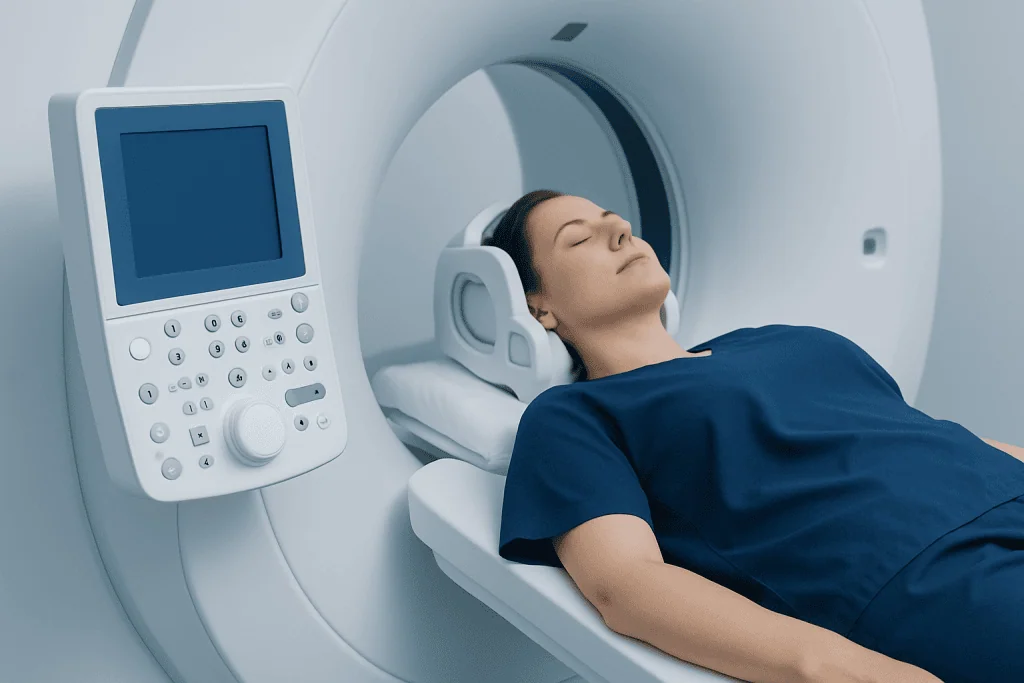
Brain imaging is the next key step. A CT scan may be used urgently, especially in emergency situations, because it is fast and can identify bleeding, major swelling, or a mass. An MRI usually provides more detailed information about the brain and is often the preferred test for characterizing a suspected tumor. In some cases, contrast dye is used to help define the lesion more clearly.
Additional tests depend on what imaging shows. Blood tests may help evaluate overall health or hormone function, especially if a pituitary problem is suspected. If a tumor is found, the care team may recommend a biopsy or surgery to obtain tissue, since the exact tumor type usually can only be confirmed by looking at cells under a microscope.
Doctors also consider other possible causes, including stroke, abscess, multiple sclerosis, migraine, and inflammatory conditions. This step-by-step process helps guide treatment and prevents assumptions based only on symptoms.
Treatment options and what they aim to do
Treatment depends on the tumor’s type, size, grade, location, growth pattern, and the person’s age and overall health. In some situations, careful monitoring with repeated scans is appropriate, especially for slow-growing tumors that are not causing major symptoms. In other cases, treatment needs to begin promptly to relieve pressure or prevent further neurological problems.
Surgery is often considered when the tumor can be safely removed or when tissue is needed for diagnosis. The goals may include removing as much of the tumor as possible, reducing pressure, improving symptoms, and confirming the exact diagnosis. For many patients, neurosurgery is one part of a broader care plan rather than the only treatment.
Other treatments may include radiation therapy, chemotherapy, targeted medicines, steroid medication to reduce swelling, and anti-seizure medication when seizures are present. Depending on the diagnosis, doctors may recommend radiation therapy or support from medical oncology specialists. Rehabilitation can also be important if a person has weakness, speech difficulty, or balance problems after the tumor itself or its treatment.
Many patients benefit from care coordinated by a multidisciplinary team that may include neurologists, neurosurgeons, oncologists, radiation specialists, neuroradiologists, endocrinologists, and rehabilitation experts. This team approach helps tailor treatment to both the tumor and the patient’s day-to-day needs.
Living with symptoms before and during treatment
While waiting for evaluation or during treatment, symptom tracking can be useful. Keeping a simple record of headaches, seizure-like episodes, vomiting, sleep changes, vision problems, or episodes of confusion can help doctors understand whether symptoms are progressing. Family members may also notice changes in mood, memory, or behavior that the patient does not fully recognize.
Safety matters, especially if seizures, fainting, or balance problems have occurred. A person with possible seizure activity should avoid driving, swimming alone, climbing heights, or using dangerous machinery until they have been medically assessed and advised about safety. If walking is unsteady, extra fall precautions at home may be needed.
Self-care does not replace treatment, but practical steps can help. These include taking prescribed medicines exactly as directed, resting regularly, staying hydrated, attending follow-up appointments, and asking for help with work or household demands when concentration is reduced. Emotional support is also important, since uncertainty during testing can be stressful for both patients and families.
When to seek medical care
Medical care should be arranged soon for head tumors signs that are new, persistent, or progressive. Examples include a headache pattern that is changing, repeated vomiting without a clear cause, new difficulty speaking, unexplained weakness, worsening balance, or changes in memory and personality. A non-urgent but timely evaluation is also reasonable when symptoms are mild but continue to recur.
Emergency care is needed for certain warning signs. These include a first seizure, sudden severe headache unlike usual headaches, loss of consciousness, new confusion, sudden vision loss, or weakness or numbness affecting one side of the body. These symptoms may be caused by a tumor, but they can also signal stroke, bleeding, or another urgent neurological problem.
If a tumor is diagnosed, specialist follow-up is important even when symptoms improve. Ongoing monitoring can help detect changes early and guide decisions about treatment timing. Near the end of the care journey, some patients may seek assessment at centers such as Acibadem International, where multidisciplinary specialists and JCI-accredited hospitals diagnose and treat neurological tumors for international patients.
Frequently asked questions
Are headaches always one of the main head tumors signs?
No. Headaches are common in the general population and most are not caused by a tumor. A headache is more concerning when it is new, progressively worsening, different from usual headaches, or accompanied by vomiting, seizures, weakness, confusion, or vision changes.
Can a benign tumor cause serious symptoms?
Yes. A benign tumor does not spread like cancer, but it can still press on important areas of the brain or raise pressure inside the skull. Because the skull is a closed space, even noncancerous growths may need close monitoring or treatment.
What is the difference between a head tumor and a brain tumor?
People often use the term head tumor informally, but doctors usually describe tumors by their exact location, such as a brain tumor, meningioma, or pituitary tumor. In practice, the symptoms patients notice may be similar because all of these can affect structures inside the skull.
If symptoms come and go, could a tumor still be the cause?
Sometimes, yes. Seizures, headaches, visual disturbances, or changes in concentration can be intermittent, especially early on. However, many non-tumor conditions can also cause fluctuating symptoms, so medical evaluation is needed to identify the true cause.
How quickly do head tumors signs appear?
There is no single pattern. Some tumors grow slowly and cause subtle changes over months, while others cause symptoms more quickly because of swelling, bleeding, or blockage of fluid flow. The speed of symptom onset depends on the tumor type, location, and how the surrounding brain reacts.
What tests are usually done if a doctor suspects a tumor?
Doctors usually begin with a medical history and neurological examination, followed by brain imaging such as CT or MRI. If a tumor is found, further tests may include blood work, hormone testing, or a biopsy to determine the exact tumor type and guide treatment.
References
- National Cancer Institute
- American Brain Tumor Association
- National Institute of Neurological Disorders and Stroke
- World Health Organization
- National Health Service
This article is for general information only and is not a substitute for professional medical advice. Please consult a qualified doctor about your individual situation.
Explore treatments in Turkey — costs, top hospitals & a free quote
JCI-accredited · board-certified surgeons · reply within 24h
Add us as a Preferred Source to see more of our trusted health content across Google Search, AI Overviews and Discover.

More from the Health Library

Delusional: What Patients Need to Know

Erotomania: An Evidence-Based Guide for Patients

Blue Chews for Men: What Patients Need to Know

Camphor: An Evidence-Based Guide for Patients

Potassium — Explained by Medical Evidence, Not Myths

Testes — Explained by Medical Evidence, Not Myths
Medical Oncology Specialists at Acibadem

Prof. Dr. Gül Başaran
Medical Oncology
Dr. Gülhan İpek Deniz
Medical Oncology
Assoc. Prof. Dr. Gürbüz Görümlü
Medical Oncology
Prof. Dr. H. Armağan Arıcan
Radiation Oncology