Understanding Graves Disease Eyes: A Complete Patient Guide

Graves disease eyes is also called thyroid eye disease or Graves ophthalmopathy. Common symptoms include dry, irritated, watery, red, swollen, or bulging eyes.
Key Takeaways
- Graves disease eyes is also called thyroid eye disease or Graves ophthalmopathy.
- Common symptoms include dry, irritated, watery, red, swollen, or bulging eyes.
- Smoking, uncontrolled thyroid disease, and delayed care can worsen eye symptoms.
- Treatment depends on severity and may include lubricating drops, medicines, prisms, or surgery.
- Urgent medical care is needed for vision loss, severe eye pain, or double vision that suddenly worsens.
Graves disease eyes refers to eye problems linked to Graves disease, an autoimmune thyroid condition. It can cause dryness, redness, swelling, light sensitivity, and bulging eyes, but many people improve with timely evaluation and appropriate treatment.
Overview: what Graves disease eyes means
Graves disease eyes describes eye changes caused by the immune system reacting abnormally in people with Graves disease. The same autoimmune process that affects the thyroid can also target tissues around the eyes, leading to inflammation, swelling, and changes in the muscles and fat behind the eye. Doctors often call this condition thyroid eye disease or Graves ophthalmopathy.
The condition does not affect everyone with Graves disease, and symptoms can range from mild irritation to more noticeable changes in appearance or vision. Some people develop eye symptoms around the same time as thyroid problems, while others notice them before or after the thyroid condition is diagnosed. Eye symptoms may occur even when thyroid hormone levels are being treated.
Understanding that Graves disease eyes is an immune-related condition can help explain why treatment often involves both thyroid care and eye care. A person may need support from an endocrinologist and an eye specialist, especially if symptoms are progressing. For related background on the underlying thyroid condition, patients may also read about Graves disease.
How the eyes can be affected
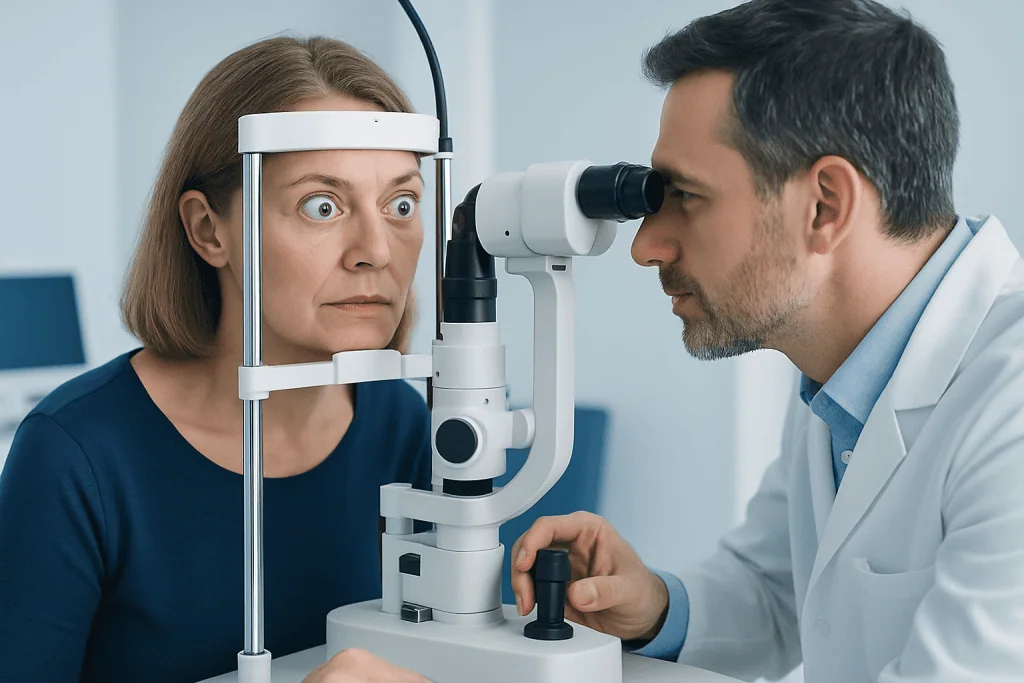
In thyroid eye disease, inflammation develops in the tissues around the eyes. The muscles that move the eyes can become swollen and stiff, and the fatty tissue behind the eyes can expand. This may push the eyes forward, reduce blinking, and make it harder for the eyelids to fully close.
These changes can affect comfort, appearance, and vision. When the eyelids do not close well, the surface of the eye may dry out and become irritated. If the eye muscles are affected unevenly, the eyes may not move together, which can cause double vision. In more severe cases, pressure inside the eye socket can affect the optic nerve.
Thyroid eye disease often has an active inflammatory phase followed by a more stable phase. During the active phase, symptoms may change over time and need closer monitoring. Once inflammation settles, some changes improve on their own, while others may remain and require targeted treatment to restore comfort or function.
Symptoms of Graves disease eyes

Symptoms vary from person to person. Mild cases may cause discomfort without major vision problems, while moderate or severe cases can interfere with daily activities. Symptoms often affect both eyes, but one eye may appear worse than the other.
Common symptoms include:
- Dry, gritty, burning, or watery eyes
- Redness and irritation
- Swollen eyelids or puffiness around the eyes
- Sensitivity to light
- A feeling of pressure behind the eyes
- Eyes that appear more prominent or bulging
- Difficulty fully closing the eyes, especially during sleep
- Blurred vision or double vision
- Eye fatigue, especially when reading or using screens
Not all eye bulging is caused by Graves disease, and not everyone with Graves disease will develop obvious bulging. In some people, the earliest signs are subtle, such as increased tearing, dryness, or a staring appearance. Because symptoms can overlap with other eye conditions, proper assessment is important.
If double vision, reduced color vision, worsening blur, or pain with eye movement develops, a prompt medical review is especially important. These can be signs that the condition is more active or affecting structures that need urgent attention.
Causes and risk factors
Graves disease eyes is caused by an autoimmune response. The immune system mistakenly attacks tissues in and around the eye socket, leading to inflammation and swelling. This process is closely linked to Graves disease, but the severity of the eye condition does not always match the severity of the thyroid hormone imbalance.
Several factors can increase the likelihood of developing thyroid eye disease or make it worse. Smoking is one of the most important known risk factors and is strongly linked with more severe disease and poorer response to treatment. Poorly controlled thyroid hormone levels may also contribute to ongoing symptoms.
Other factors that may be relevant include a personal history of autoimmune disease, recent changes in thyroid status, and treatment transitions during thyroid care. In some cases, people with an overactive thyroid may need ongoing monitoring and treatment for hyperthyroidism alongside eye-specific care. Early recognition and coordinated management can reduce the risk of complications.
How doctors diagnose thyroid eye disease
Diagnosis usually begins with a medical history and physical examination. The doctor asks about eye discomfort, changes in vision, thyroid symptoms, smoking, and the timing of any eye changes. The eye examination may include checking visual acuity, color vision, eye movements, eyelid position, corneal surface health, and whether the optic nerve appears affected.
Blood tests may be used to assess thyroid hormone levels and thyroid-related antibodies. These help confirm the broader thyroid disorder, but eye findings themselves are central to diagnosing thyroid eye disease. Many patients are evaluated by both endocrinology and ophthalmology teams to build a complete picture.
Imaging tests such as CT or MRI may be recommended if the diagnosis is unclear, if symptoms are severe, or if surgery is being considered. Imaging can show enlargement of the eye muscles and swelling of tissue behind the eyes. In complex cases, specialist assessment in neuro-ophthalmology may be useful when visual symptoms need closer evaluation.
Treatment options and what they aim to do
Treatment depends on how active and how severe the condition is. The main goals are to protect vision, reduce inflammation, ease discomfort, and improve eye position or function where needed. Some people need only supportive care, while others benefit from medicines or surgery.
For mild symptoms, treatment often focuses on comfort and eye surface protection. This may include lubricating eye drops, ointments at night, sunglasses, and practical steps such as elevating the head during sleep. If the eyelids do not close well, the doctor may suggest specific strategies to protect the cornea. Prism lenses can sometimes help manage double vision.
When inflammation is more active or symptoms are moderate to severe, doctors may consider medicines that reduce immune activity or swelling. In selected cases, radiation or surgery may be recommended. Surgical care can address pressure in the eye socket, eyelid position, or persistent double vision after the active phase settles. For some patients, management may involve dedicated orbital decompression surgery or oculoplastic surgery to improve function and eye protection.
Treatment plans are individualized. Stabilizing thyroid hormone levels and avoiding smoking are important parts of care at every stage. Even when symptoms are not severe, follow-up matters because the condition can evolve over time.
Self-care and prevention of worsening
Although Graves disease eyes cannot always be prevented, there are sensible steps that may reduce irritation and lower the chance of worsening symptoms. Stopping smoking is one of the most important actions a person can take. This includes avoiding secondhand smoke where possible.
Daily self-care may also help protect the surface of the eyes and improve comfort. Useful measures include:
- Using artificial tears if the eyes feel dry or gritty
- Applying prescribed nighttime ointment if the eyes do not fully close
- Wearing sunglasses in wind or bright light
- Keeping thyroid follow-up appointments and taking medicines as directed
- Sleeping with the head slightly elevated if swelling is worse in the morning
- Limiting eye strain with regular breaks from screens and reading
People should not start supplements or alternative remedies without asking a doctor, especially if they have thyroid disease or other medical conditions. New or worsening symptoms should not be attributed to dryness alone. Eye changes deserve review if they persist, especially in someone with known or suspected thyroid disease.
When to seek medical care
Medical advice should be sought if a person with Graves disease develops ongoing eye dryness, redness, swelling, light sensitivity, or a change in the appearance of the eyes. An assessment is also appropriate if the eyes seem more prominent, the eyelids do not fully close, or there is new discomfort when moving the eyes. Early evaluation can help identify whether symptoms are mild or need more active treatment.
Urgent care is important if there is sudden or progressive double vision, reduced vision, trouble seeing colors, severe eye pain, or increasing pressure around the eyes. These symptoms can suggest more significant involvement that needs prompt specialist review to protect sight.
Patients often benefit from care shared between endocrinology and ophthalmology. Near the end of the care pathway, if reconstructive or advanced specialist treatment is needed, Acibadem International’s multidisciplinary specialists and JCI-accredited hospitals diagnose and treat thyroid eye disease for international patients.
Frequently asked questions
Are Graves disease eyes the same as Graves disease?
Not exactly. Graves disease is an autoimmune thyroid disorder, while Graves disease eyes refers to the eye involvement that can happen with that condition. A person can have thyroid symptoms, eye symptoms, or both.
Can Graves disease eyes improve?
Yes, many people improve with proper treatment and follow-up. Mild cases may settle with supportive care, while more active disease may need medicines or surgery. The outlook is often better when symptoms are recognized early.
Does everyone with Graves disease get bulging eyes?
No. Some people have only mild dryness, irritation, or eyelid changes and never develop obvious eye bulging. The severity of eye symptoms can vary widely from one person to another.
Why does smoking matter in thyroid eye disease?
Smoking is strongly associated with a higher risk of developing thyroid eye disease and with more severe symptoms. It can also reduce how well treatment works. Quitting smoking is one of the most important steps a patient can take.
Can thyroid treatment alone fix the eye problems?
Treating the thyroid is important, but it may not fully resolve the eye condition on its own. Some people need separate eye-focused treatment to manage dryness, inflammation, double vision, or changes in eye position. Coordinated care is often the best approach.
When is Graves disease eyes an emergency?
Urgent assessment is needed if there is sudden vision loss, worsening double vision, severe eye pain, or trouble seeing colors. These symptoms can suggest pressure on important eye structures. Prompt medical care helps protect vision.
References
- American Thyroid Association
- National Eye Institute
- American Academy of Ophthalmology
- National Institute of Diabetes and Digestive and Kidney Diseases
- European Thyroid Association
This article is for general information only and is not a substitute for professional medical advice. Please consult a qualified doctor about your individual situation.
Graves Disease in Turkey — costs, top hospitals & a free quote
JCI-accredited · board-certified surgeons · reply within 24h
Add us as a Preferred Source to see more of our trusted health content across Google Search, AI Overviews and Discover.